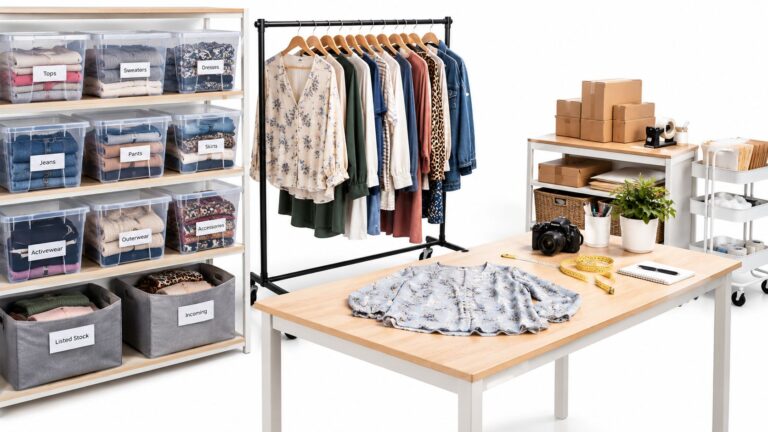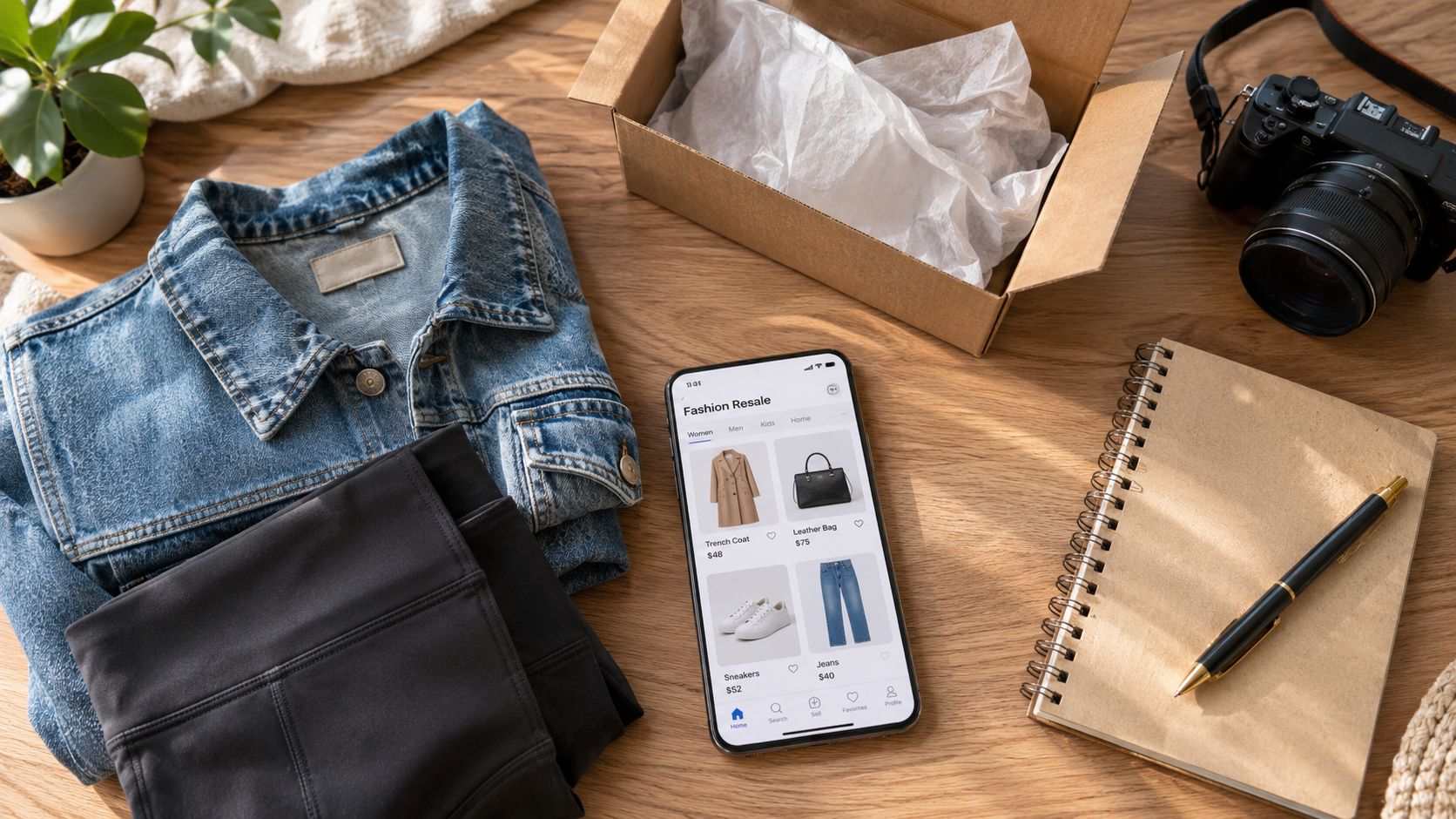
Most beginner advice about Poshmark starts with “list everything and price it low.” That sounds practical, but it can turn a closet into a storage problem before the first profitable sale. Poshmark rewards selection, presentation, and realistic margins more than a huge pile of cheap listings.
The platform has been a major resale channel for years. Poshmark launched in 2011, reported more than 50 million users nationwide and 7 million seller stylists by September 2019, and said sellers had collectively earned $1 billion since launch in 2018. More recent reporting described the marketplace as having 130 million active users in 2025, so the audience is substantial, but audience size doesn't make weak inventory profitable. (Poshmark's community payout announcement)
The right way to think about how to start selling on Poshmark is simple: choose inventory that can survive fees, offers, supplies, and your time before you list it. The sellers who last aren't necessarily the ones who upload the most items. They're the ones who understand what each sale leaves behind.
Table of Contents
- Why Most Poshmark Beginners Lose Money Before Their First Sale
- Setting Up Your Poshmark Seller Account for Credibility
- Understanding Poshmark Fees and Pricing for Profit
- Photography and Listing Best Practices That Drive Sales
- Sourcing Inventory That Sells on Poshmark
- Growing Your Closet and Avoiding Costly Mistakes
Why Most Poshmark Beginners Lose Money Before Their First Sale
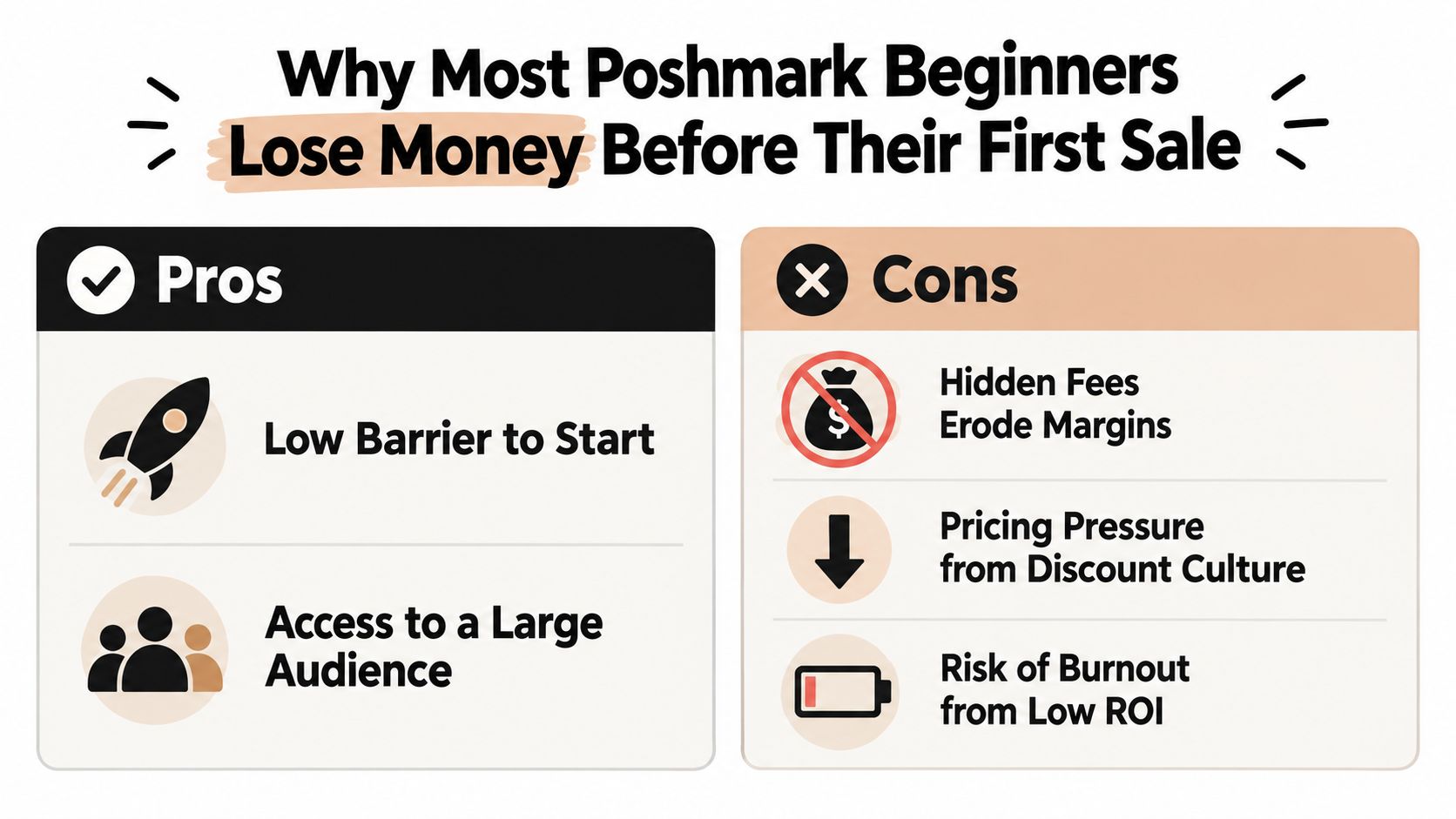
The first sale can create a loss. A low-priced top may sell quickly while leaving too little cash to cover the item, supplies, and your time. Poshmark's fee cliff at $15 should shape your inventory strategy before you list, not after a few disappointing sales.
Poshmark charges a flat $2.95 fee on sales under $15 and a 20% commission on sales of $15 or more, according to Poshmark fee guidance summarized by Spocket. A $12 sale leaves $9.05 before packaging, acquisition cost, measuring, photography, listing, buyer messages, and shipping are considered. The fee is not the only problem. Your labor and overhead remain nearly the same on a cheap item as on a higher-priced one.
Liquidation boxes make the calculation less forgiving. The apparent unit cost understates the true cost when some pieces have damage, weak demand, missing size information, or no realistic path to a profitable sale. A closet can show constant activity while producing very little usable cash.
Treat the $15 threshold as a sourcing filter
Ask whether an item can support the work required to sell it. A lightly worn fast-fashion shirt may collect likes at a low price, yet a better-branded garment can produce a healthier margin even if it takes longer to source and sell.
Before listing, check:
- Can the item reasonably sell for $15 or more? If not, bundle it with related pieces or leave it out.
- Does the condition support the asking price? Stains, missing buttons, pilling, and stretched elastic reduce buyer confidence and pricing power.
- Will offers leave room for profit? The listed price is not the amount you will necessarily accept.
- Does the item match current buyer demand? A recognizable brand, useful category, strong silhouette, or seasonal purpose gives you more room to price well.
Experienced resellers do not treat every liquidation piece as inventory. They sort aggressively, photograph the strongest items first, and reject stock that requires a deep discount to move. If you are comparing resale formats, the economics of auctions for clothes differ from a fixed-price Poshmark listing, particularly when the starting price does not protect your costs.
Practical rule: A listing that cannot survive the fee structure, an ordinary offer, and your handling time is not a bargain. It is a liability with a photo attached.
Setting Up Your Poshmark Seller Account for Credibility
A polished closet will not rescue weak margins, but an unclear profile can make good inventory harder to sell. Buyers scan your username, photo, bio, and listings before deciding whether to ask a question or send an offer. Set up the account to show what you sell and how reliably you operate.
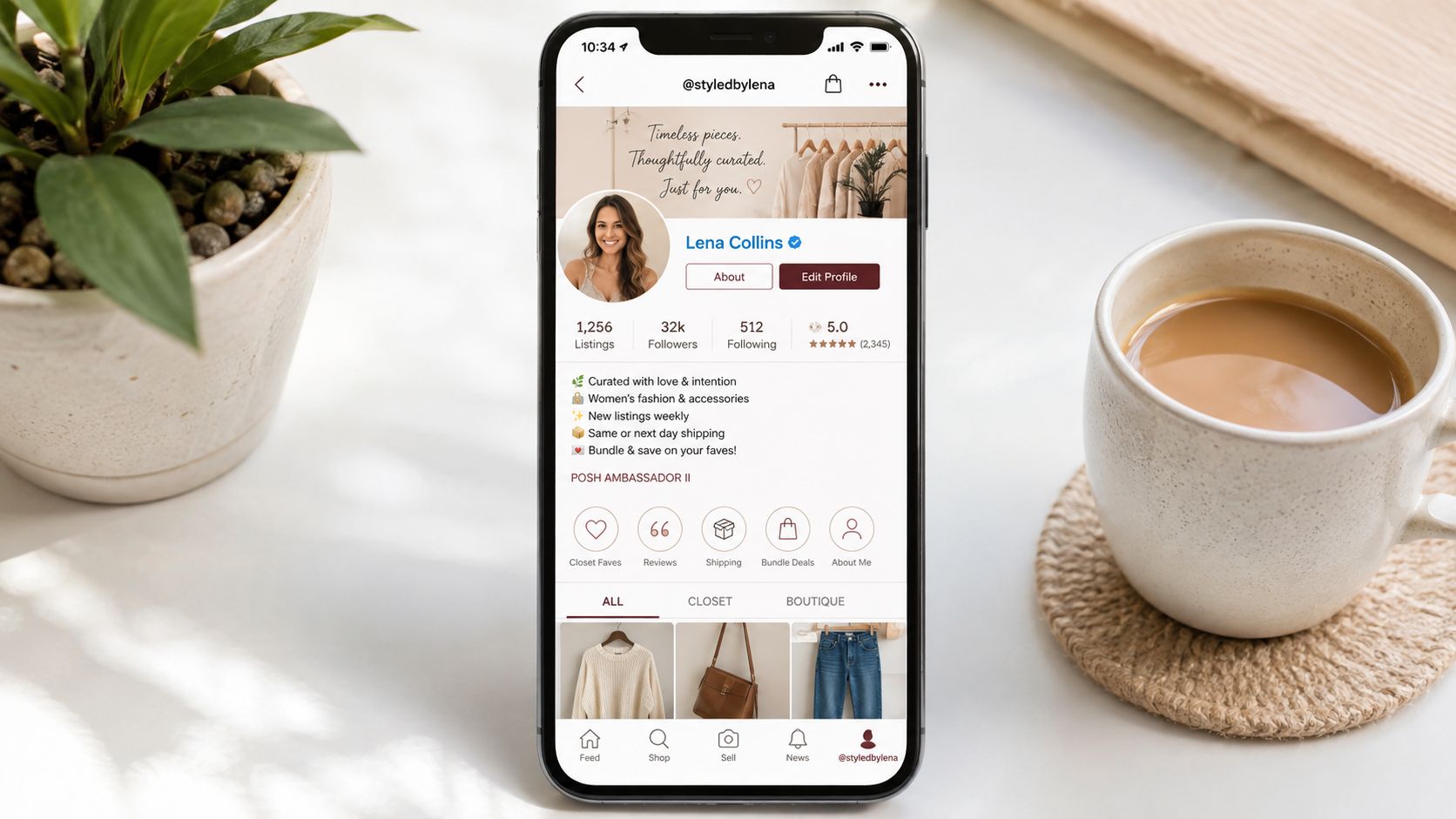
Choose a readable username tied to your niche. Curated denim, contemporary apparel, or athleisure gives shoppers a reason to remember your closet. Avoid random strings, excessive punctuation, or a name that promises categories you do not carry.
Build trust before you have reviews
Use a clear profile photo with good lighting. It can be simple, but it should look intentional rather than cropped from a dark group picture. Write a short bio that names your specialty and operating habits, such as “Curated athleisure and contemporary denim, carefully measured and shipped promptly.”
Add your location if you are comfortable sharing it. That detail helps shoppers understand who operates the closet and can make a new account feel more established. Connecting available social accounts may give buyers another way to confirm that the closet represents a real resale operation.
Make the profile support the promises in your listings:
- Brand focus: Name the categories or labels you know well.
- Condition standards: State that flaws are disclosed and photographed.
- Shipping expectations: Describe your normal handling routine without promising a speed you cannot maintain.
- Communication style: Let buyers know you answer questions about measurements and fit.
A credible profile also helps you protect margin. Clear expectations reduce avoidable questions, disputes, and hesitation around higher-priced pieces. That matters more than filling the bio with generic claims.
Configure the practical account details
Review shipping settings, payout preferences, and seller verification requirements before your first order. Poshmark's prepaid label workflow generally has the buyer paying for packages up to 5 lb, as described in the Poshmark shipping and fee overview. You still need suitable mailers, tape, storage, and a dependable handoff routine. Include those supplies in your cost calculations before accepting low offers.
For qualifying luxury items, Posh Authenticate can add buyer confidence. The program applies to qualifying luxury sales at $500 or more, with free authentication. Accurate descriptions, photographs, and careful packaging matter especially for these listings.
Set up direct deposit or another available payout method, then prepare your return address and shipping supplies. Credibility comes from consistency across your profile, listings, packing, and communication. A professional account does not need elaborate branding. It needs to make buyers comfortable purchasing items priced high enough to justify the work.
Understanding Poshmark Fees and Pricing for Profit
Poshmark's fee cliff should shape your sourcing plan before you buy inventory. There are no listing fees, but sales under $15 incur a $2.95 fee, while sales at $15 or more incur a 20% commission. That structure makes cheap, individual listings less attractive than selective items with room for a higher selling price.
A $10 sale leaves $7.05 after the platform fee. A $25 sale leaves $20 after the 20% commission. The $25 item sells for 2.5 times more, yet leaves nearly three times as much before acquisition cost, packaging, discounts, and labor. Neither net figure is profit until those expenses are deducted.
| Sale Price | Poshmark Fee | Net Earnings | Margin on $5 Cost Item |
|---|---|---|---|
| $10 | $2.95 | $7.05 | $2.05 before supplies and labor |
| $15 | 20% | $12 | $7 before supplies and labor |
| $25 | 20% | $20 | $15 before supplies and labor |
Price from the acceptable outcome backward
Set the minimum amount you need to retain, then work backward from the fee. At $15 or more, Poshmark leaves 80% of the sale price before other costs. With a $5 acquisition cost, the $25 example leaves $15 before supplies and labor. Cheaper inventory improves the margin, but low cost cannot compensate for an item that buyers will not price high enough.
Your listing price must also allow for Poshmark's offer culture. Choose the lowest price you will accept first, add a controlled negotiation cushion, and compare the result with similar active listings. An inflated price can reduce interest, while a price set too close to your floor leaves no room for offers or discounts.
The margin-first approach changes what belongs in your inventory. A liquidation box may contain many inexpensive basics, but listing every piece individually can turn packing, messaging, and storage into unpaid work. Prioritize recognizable brands, desirable categories, strong condition, and items that can reasonably clear the fee threshold.
Use bundling to rescue weak individual pieces
Low-value pieces can work when they form a useful bundle. Matching activewear separates, coordinated workwear, or several basics in one size can produce an order that earns more efficiently than separate sub-$15 sales. The bundle still needs accurate photos, measurements, and a clear reason to buy the pieces together.
Shipping also belongs in the calculation. Buyers typically pay Poshmark's prepaid label for packages up to 5 lb, although sellers may offer shipping discounts or absorb other fulfillment costs. Record the expected sale price, platform fee, acquisition cost, supplies, and any discount before publishing.
One independent tracking source reported a $24 median sale price, an 84-day average sell time, 497,661 unique sellers, and more than 2.18 million tracked items sold in its 2026 data. Those figures do not predict an individual closet's results. They do support a practical rule: price with realistic sell-through expectations, and source inventory for margin rather than listing volume. (Spocket's cited market tracking discussion)
Photography and Listing Best Practices That Drive Sales
Strong photos and precise copy protect your margin before a buyer ever submits an offer. On low-priced inventory, weak presentation can turn a sellable item into storage, while a clear listing helps you spend time on pieces that can clear Poshmark's fee threshold.
Start with a repeatable photo sequence. Use a clean flat lay or uncluttered hanging shot in natural daylight, then add front and back views. Photograph the brand tag, size tag, fabric and care labels, hardware, texture, and every flaw. A window and plain white poster board are often enough for consistent images.
Make the first image do the selling
The cover photo should show the entire item clearly. Straighten the garment, use a neutral background, and remove props that compete with it. A hanger or mannequin can show the shape of a structured jacket, while a flat lay often makes soft knitwear's texture and proportions easier to judge.
Show damage directly. Photograph pilling, pulled threads, discoloration, and small marks in close-up, then describe them in the condition field. Honest flaw photos may reduce impulse clicks, but they also prevent disappointed buyers, return disputes, and margin loss.
Write for search and fit questions
Put the strongest identifying details near the start of the title: brand, style, garment type, color, size, and a useful descriptor. “Nike Dri-FIT Running Shorts Black Medium” gives shoppers more usable information than “Cute Workout Shorts.” Keep keywords relevant. Unrelated terms may attract views, but they bring the wrong shoppers and waste listing effort.
A dependable description includes:
- Measurements: Provide pit-to-pit, length, rise, inseam, or waist measurements that suit the garment.
- Material: Copy the fabric content from the tag when available.
- Condition: State whether the item is new, gently used, or visibly worn, and identify specific flaws.
- Fit notes: Explain stretch, silhouette, lining, pockets, and closures without promising how it will fit a particular body.
- Source context: Mention professional inspection only when accurate. Do not imply authentication or provenance you cannot document.
Use category, brand, and buyer-use filters to make related pieces easy to browse. Review sold and stale listings instead of letting them consume closet space indefinitely. Refresh details when measurements, condition notes, or pricing change.
Poshmark's discovery guidance emphasizes complete details, clear photos, competitive pricing, active participation, and responsive communication as factors that support visibility and buyer trust. (Poshmark's discovery guidance)
Sourcing Inventory That Sells on Poshmark
Sourcing by volume can destroy your margin before the first listing goes live. Poshmark rewards selective inventory, not a closet packed with every garment category. Independent coverage of 2025 resale activity identified luxury handbags, athletic wear, vintage pieces, seasonal fashion, and selected mid-tier brands as categories that can turn faster on the platform. (Closo's Poshmark trend analysis)
Use those categories as screening filters, not guarantees. A Lululemon legging or Nike sweatshirt can still lose money if the condition, color, size, style, authenticity, season, or acquisition cost is wrong. Poshmark's fee cliff at $15 makes low-priced inventory especially risky, because a sale can consume the margin that looked attractive at the sourcing stage.
Match the box to the marketplace
Review a liquidation manifest for recognizable brands, current silhouettes, wearable condition, and a category mix you can photograph and describe confidently. A box dominated by generic basics may appear inexpensive, but unsellable pieces and slow-moving stock raise the effective cost of every item you keep.
| Liquidation Category | Poshmark Demand | Avg Margin After Fees | Sourcing Verdict |
|---|---|---|---|
| Athletic wear | Often strong when brand, condition, and style align | Calculate item by item | Favor focused, condition-checked lots |
| Contemporary denim | Useful demand when measurements and fit details are clear | Calculate item by item | Test a small batch before scaling |
| Luxury handbags | Can support higher prices when authenticity and condition are documented | Potentially stronger, with authentication eligibility for qualifying items | Buy only with reliable provenance |
| Generic fast-fashion basics | Often price-sensitive | Frequently vulnerable to fee drag | Avoid large blind quantities |
| Vintage and distinctive pieces | Can attract niche buyers | Depends heavily on curation | Source selectively and style well |
A desirable label does not rescue poor condition. A smaller lot with cleaner, more current pieces can outperform a larger box filled with recognized brands that require repairs, heavy cleaning, or steep discounts.
Calculate effective cost, not invoice cost
For mixed apparel, divide the purchase cost by the number of pieces you expect to list in sellable condition, rather than the total received. Add supplies, expected discounts, and the platform fee to your planning sheet. If some items can sell only below the fee-friendly threshold, their contribution may be negative even when the box appeared cheap.
Thrift stores and clearance racks let you inspect each garment and buy only what meets your margin rules. Estate lots may provide distinctive vintage pieces, but sorting, cleaning, and product knowledge take time. Liquidation boxes provide speed and volume, while their manifest and condition policy require careful review before a larger commitment.
Start with a small test batch. Track brand fit, condition consistency, packing quality, sell-through, and the listing workload each item creates. Guidance on buying lots of clothing can help compare bulk sourcing formats, but the purchase decision should rest on inspection standards and expected margin, not the apparent size of the lot.
Growing Your Closet and Avoiding Costly Mistakes
A larger closet can hide weaker margins. Each new item needs a SKU, storage location, condition record, and minimum acceptable price, or growth turns into misplaced inventory, slower shipping, and avoidable losses.
Set up a simple inventory system with the first listing. Assign every garment a SKU, record its source cost, place it in a labeled bin, and save measurements in the listing notes. When an offer arrives, you should know the lowest price you can accept without rebuilding the calculation. This matters even more for low-priced items because Poshmark's fee structure makes the margin change sharply around the $15 threshold. Selective, higher-margin sourcing often beats listing every inexpensive piece you can find.
Build visibility through useful activity
Share your own listings when appropriate, keep descriptions accurate, and answer comments and offers promptly. Sharing can refresh a listing's position in the Just Shared sort in Search, while following does not determine how shoppers discover listings in the Feed, as Poshmark explains in its seller guidance.
New listings, price drops, Offer to Likers, and relevant Posh Parties can support discovery. None repairs poor inventory selection. A stale listing may need a stronger cover photo, clearer title, corrected measurement, or different price instead of another routine share.
Margin discipline matters more than a busy notification screen.
Accepting every low offer can produce sales while weakening the closet's economics. Set a floor before listing, counter when the buyer is near it, and bundle items when the combined order makes the transaction worthwhile.
Protect your reputation with repeatable operations
Ship promptly, package garments cleanly, and make sure orders receive a carrier scan. Fast, consistent fulfillment and avoiding cancellations support a healthier seller record, but they also protect cash flow by reducing avoidable service problems.
Accurate condition notes help during disputes. Photograph flaws before shipment, confirm that the item matches the listing, and keep communication on the platform rather than making side agreements. Clear tags, measurements, condition photos, and a consistent packing record make counterfeit accusations, fit complaints, and return disputes easier to address.
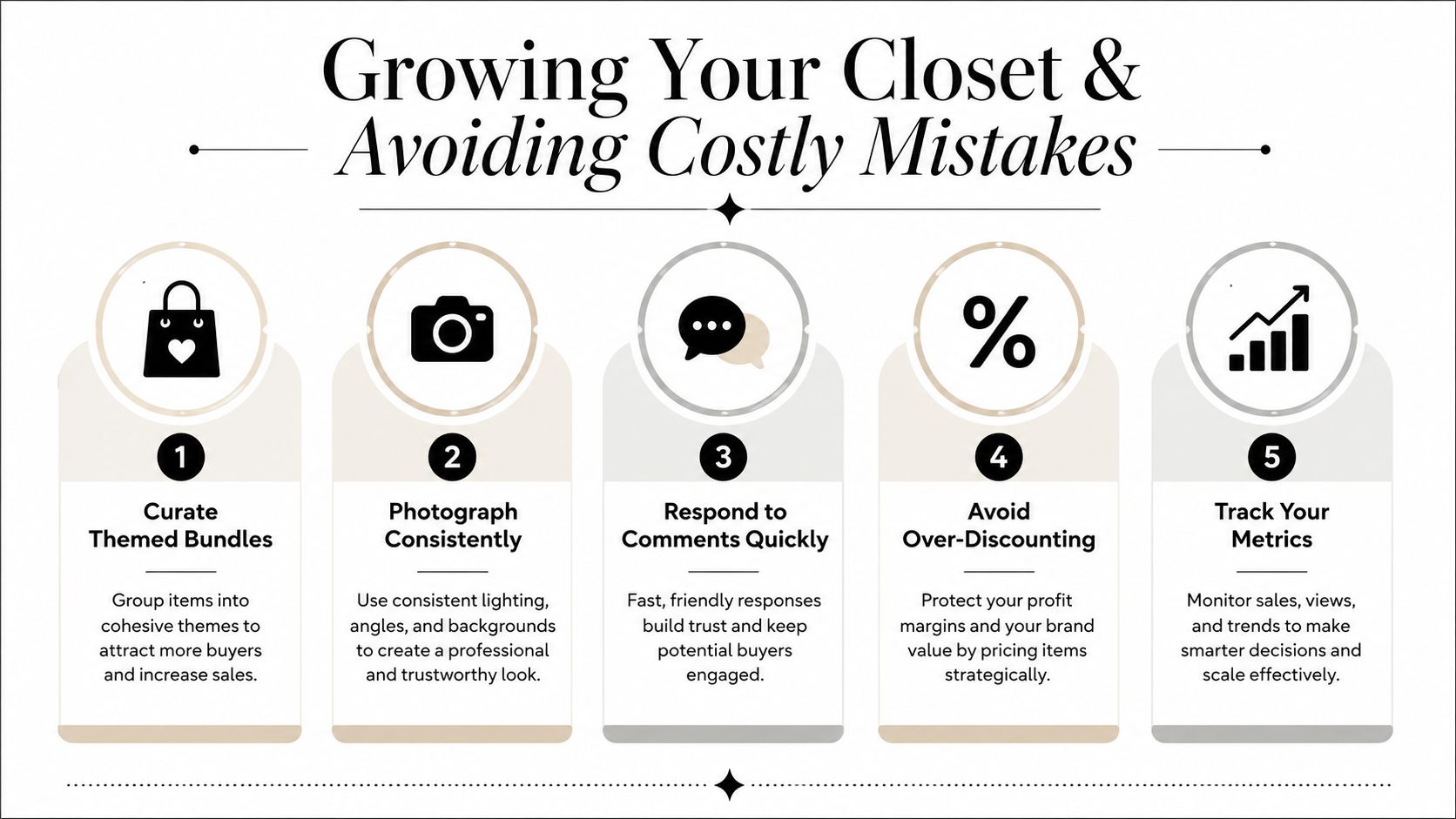
Referral programs and ambassador-style status can support community activity, but they should not replace sound sourcing, accurate listings, or reliable fulfillment. If you compare small boxes with larger pallets for sale, scale only after test inventory proves that your categories, storage process, and pricing floor work together.
OneTrendyCloset offers curated brand-name apparel liquidation boxes, mix-and-match brand selection, and custom quotes for resellers building inventory for Poshmark and other marketplaces. Visit OneTrendyCloset to review available sourcing options, then start with a box that fits your budget and margin rules before considering a larger lot.