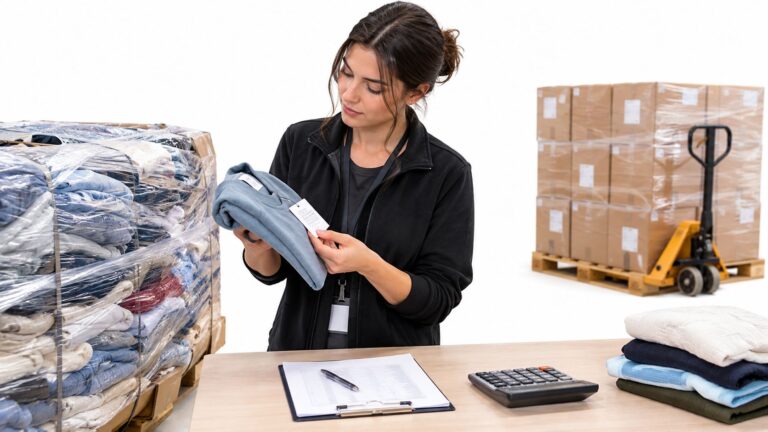
You're staring at two pallet listings that look close enough on price, but one is a gamble and the other is a plan. That's the trap new resellers fall into. Pallets for sale aren't just cheap bulk inventory, they're a buying decision about margin, labor, brand mix, and where that stock will sell.
If you move apparel, the difference is even sharper. A mixed load can look exciting on paper and still clog your racks with wrong sizes, weak brands, or condition issues that eat your time. The right move is to treat every pallet like a channel fit problem, not a treasure hunt.
Table of Contents
- Why Pallets for Sale Matter More Than You Think
- The Three Main Types of Pallets for Sale
- Liquidation vs Returns vs Overstock Compared
- What Pallets Cost in the Current Market
- Logistics, Freight, and Storage Before You Buy
- Why Brand Mix and Supplier Transparency Win
- The Hidden Cost Most Buyers Forget
- Smart Buying Checklist and Final Take
Why Pallets for Sale Matter More Than You Think
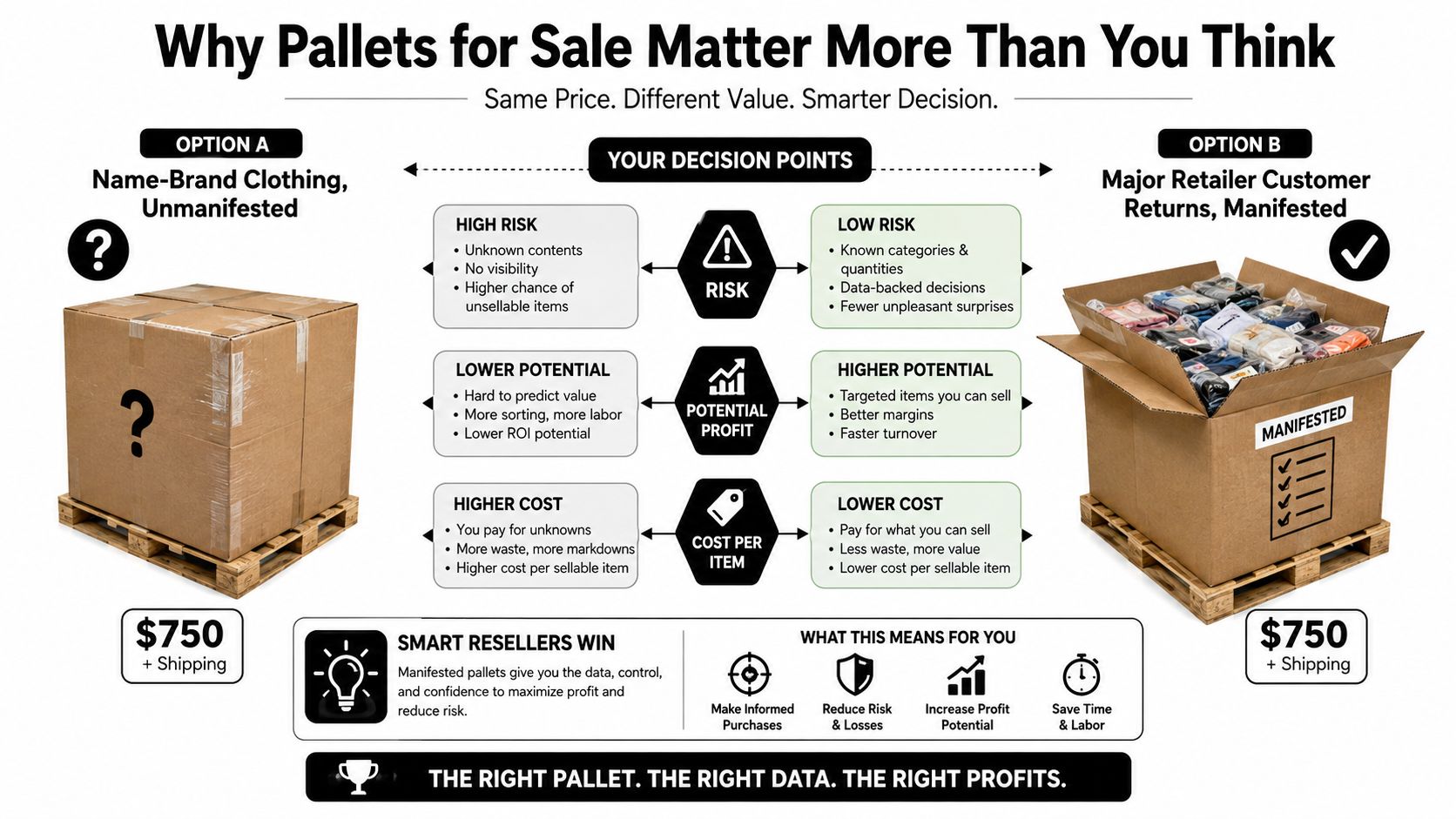
A new reseller usually sees two things first, the asking price and the product category. That's the wrong order. The key question is whether the pallet matches your resale model, because the same truckload can be a good buy for one seller and a headache for another.
A buyer selling women's apparel on live sales can handle a very different mix than someone building fixed-size bundles for eBay or a boutique rack. A pallet full of random returns might still be attractive if you have staff to sort, steam, photograph, and relist. If you don't, the cheap load becomes expensive fast.
Think in landed cost, not sticker price
The number that matters is what you pay per item that you can resell. That includes freight, inspection time, sorting, marketplace fees, and disposal of junk. If you skip that math, you'll keep buying pallets that feel cheap and perform like overpaying.
Practical rule: buy for the channel you already have, not the channel you hope to build later.
For apparel resellers, that means being honest about your audience. If your buyers want branded basics, don't load up on mystery assortments. If you sell higher-touch fashion pieces, you need tighter brand control and cleaner condition than a flea-market seller does.
The global pallets market also shows why this isn't a fringe game. It's estimated at USD 92.11 billion in 2026 and projected to reach USD 118.84 billion by 2031, which is about 29% growth over five years at a 5.22% CAGR (Mordor Intelligence pallets market report). That scale tells you pallet buying sits inside a mature logistics system, not a side hobby.
The Three Main Types of Pallets for Sale
Liquidation pallets
Liquidation pallets usually come from excess retail stock, shelf pulls, discontinued inventory, or returned merchandise moving through reverse logistics. The label is broad, which is why you need the manifest and the grading details before you bid. “Liquidation” doesn't mean a single condition, it means a mixed path from seller to buyer.
In practice, liquidation loads can be new, open-box, damaged, or incomplete. That's why they can work well for experienced resellers who know how to separate strong pieces from dead weight. If you run apparel, you need to know whether the load is heavy on basics, seasonal fashion, or random filler.
Returns pallets
Returns pallets are exactly what they sound like, customer returns. They tend to carry the most uncertainty because condition can range from like-new to damaged, missing parts, or clearly unsellable. If you buy returns, you're paying for the chance to recover value through sorting skill.
That makes returns a better fit for sellers who already have testing, inspection, and multiple outlets. Some items will go to full-price resale, some to discount channels, and some straight to salvage. If you don't have a workflow for that, returns will drain your time.
Overstock pallets
Overstock is usually the cleanest category because it comes from excess, seasonal, or canceled inventory that was never really used. These loads are more likely to be new and shelf-ready, which makes them easier to list and photograph. For apparel, that means fewer condition surprises and faster turnaround.
The catch is simple, cleaner stock usually costs more. You're paying for predictability. If you want less sorting and tighter brand control, overstock is often the safer lane.
A useful comparison is this, liquidation tells you how the pallet entered resale, returns tell you why it came back, and overstock tells you it never sold in the first place. Those are different sourcing stories, and they carry different risk profiles. Always ask for the item count, condition grade, and exclusions before you compare prices.
Liquidation vs Returns vs Overstock Compared
A reseller staring at three pallet quotes should not ask which one sounds cheapest. Ask which one fits the way you sell, how much sorting you can handle, and how much junk you can absorb before the margin is gone.
| Type | Best fit | Risk level | What you're really buying |
|---|---|---|---|
| Liquidation | Sellers who can sort mixed inventory | Medium to high | Variety and deal spread |
| Returns | Experienced processors and multi-channel sellers | High | Recovery potential |
| Overstock | Online sellers who want cleaner listings | Lower | Predictability |
Liquidation gives you the widest mix. That can help if you want category spread, but it also means more sorting and more surprises. Returns are narrower on source and broader on condition risk, so they fit operators who can inspect fast and route imperfect pieces into the right outlet.
Overstock is easier to run. It usually behaves more like normal inventory, which makes listing, photo work, and count control simpler. For apparel resellers who want repeatable SKU creation, that cleaner flow matters more than chasing the lowest headline price.
Price still decides the deal, but only after the inventory fits your channel. A cheaper returns pallet can beat a cleaner overstock load if you have a strong defect-handling process and multiple resale paths. If your business depends on fast listing and low-touch fulfillment, pay for cleaner stock and stop pretending every low bid is a win.
For apparel buyers, curated category buying often beats blind lots. A controlled box model cuts noise and gives you more say over brand mix, which matters when you need inventory you can move. This apparel-focused overview of curated category buying shows why some resellers prefer tighter assortment control over random volume.
What Pallets Cost in the Current Market
A quote can swing fast because condition, region, and supply tightness all affect the number. Recent 2025 U.S. pricing data put averages at about $8.41 for new pallets, $6.27 for Grade A used, $4.19 for Grade B, and $1.42 for cores, while a separate live index showed overall averages around $5.07, with Grade A at $6.71 and new at $12.48 (2025 used pallet pricing report). There is no single “real” pallet price.
Why one pallet costs more than another
Condition comes first. A cleaner pallet with stronger brand mix and better grading usually brings a higher quote because it moves faster. Location matters too, since freight and regional demand can push the same load into very different final costs.
For apparel resellers, the cheap quote is only useful if the inventory works. A low-priced load can still miss the mark when it brings too many rejects, off-season pieces, or weak brands. A higher-priced pallet can win if it gives you cleaner sell-through and less dead stock.
Use the right cost frame
Do not compare pallet price to pallet price. Compare cost per sellable unit. Factor in the buying price, freight, sorting, returns, and the items you will never list.
If two pallets are close in price, the one with better manifest quality usually wins because your labor bill drops.
Apparel buyers should also separate brand desirability from raw quantity. Ten strong pieces can beat fifty weak ones if your channel rewards branded inventory. That is why list price should never be the final decision point.
Lower recycled pallet inventories and steady demand are keeping prices firm or rising in many markets, and lumber costs are pushing some buyers toward used pallets instead of new ones. That matters because cheap is relative, and the market will keep rewarding buyers who know how to read the quote, not just the number.
Logistics, Freight, and Storage Before You Buy
Most first-time buyers lose money before the pallet even arrives. They get excited about the merchandise, then ignore freight class, accessorial fees, delivery setup, and storage. That's backward. The best inventory in the world is useless if the truck can't unload it where you need it.
Check the pallet itself first
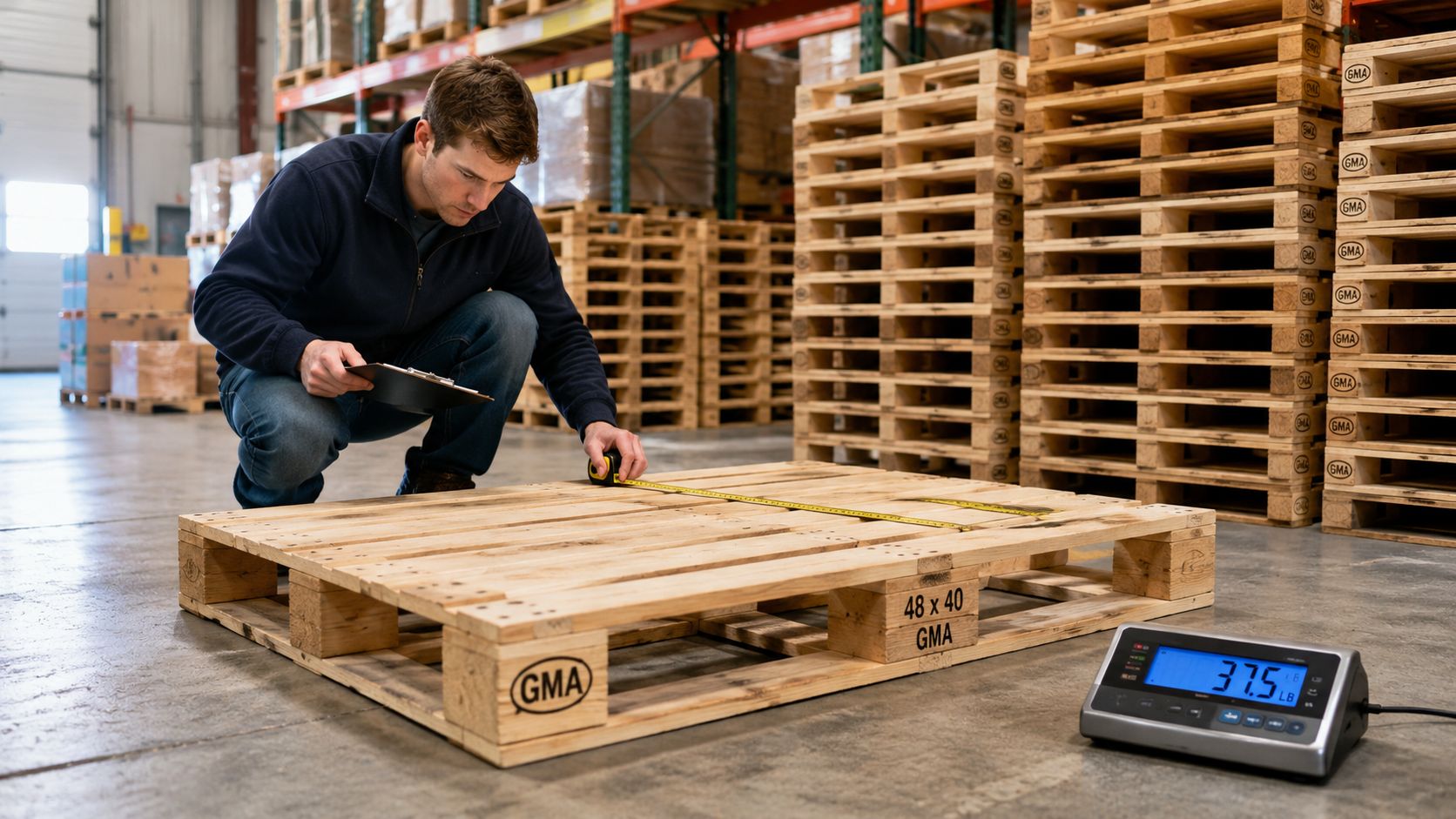
A standard North American 48 × 40 GMA wooden pallet typically weighs about 33–48 lb empty, with common dynamic load ratings around 2,000–2,500 lb and static load ratings around 5,000–7,500 lb (pallet dimensions guide). That gap matters because moving a load with a forklift stresses the pallet differently than stacking it in a warehouse.
The dominant North American footprint is 48 × 40 in, and standard wood pallet tare weights are often around 37 lb on average, with common ranges from roughly 30–50 lb depending on construction and moisture (standard pallet sizes chart). If you're buying in bulk, that tare weight affects freight density and what fits on the truck.
Freight terms can make or break the deal
Ask whether the quote is FOB origin or delivered. Ask if the shipment is LTL or full truckload. Ask about liftgate service, appointment scheduling, and whether the carrier can handle a residential address. Those details are not small print, they're margin killers.
For apparel sellers, one missed delivery detail can turn a decent buy into a bad one. Confirm dock hours, non-dock delivery options, and whether the site will accept a pallet jack or only a forklift. If the seller can't answer those questions cleanly, keep shopping.
Storage matters just as much. You need floor space, dry conditions, shrink-wrap discipline, and a plan for dunnage or disposable pallets. If your processing area is already crowded, one load can choke your operation and slow listings for days.
Operational rule: if you don't know where the pallet will sit before it ships, you're not ready to buy it.
For apparel-focused sourcing, a controlled lot can be easier than a random pallet. A tighter assortment reduces sorting time, and this kind of planning makes clothing lots easier to process than a blind mixed load.
Why Brand Mix and Supplier Transparency Win
A low sticker price means little if the pallet is full of brands your buyers skip. Resellers get paid on fit, speed, and trust. That starts with a brand mix you can sell and a clear idea of what is in the load before freight leaves the dock.
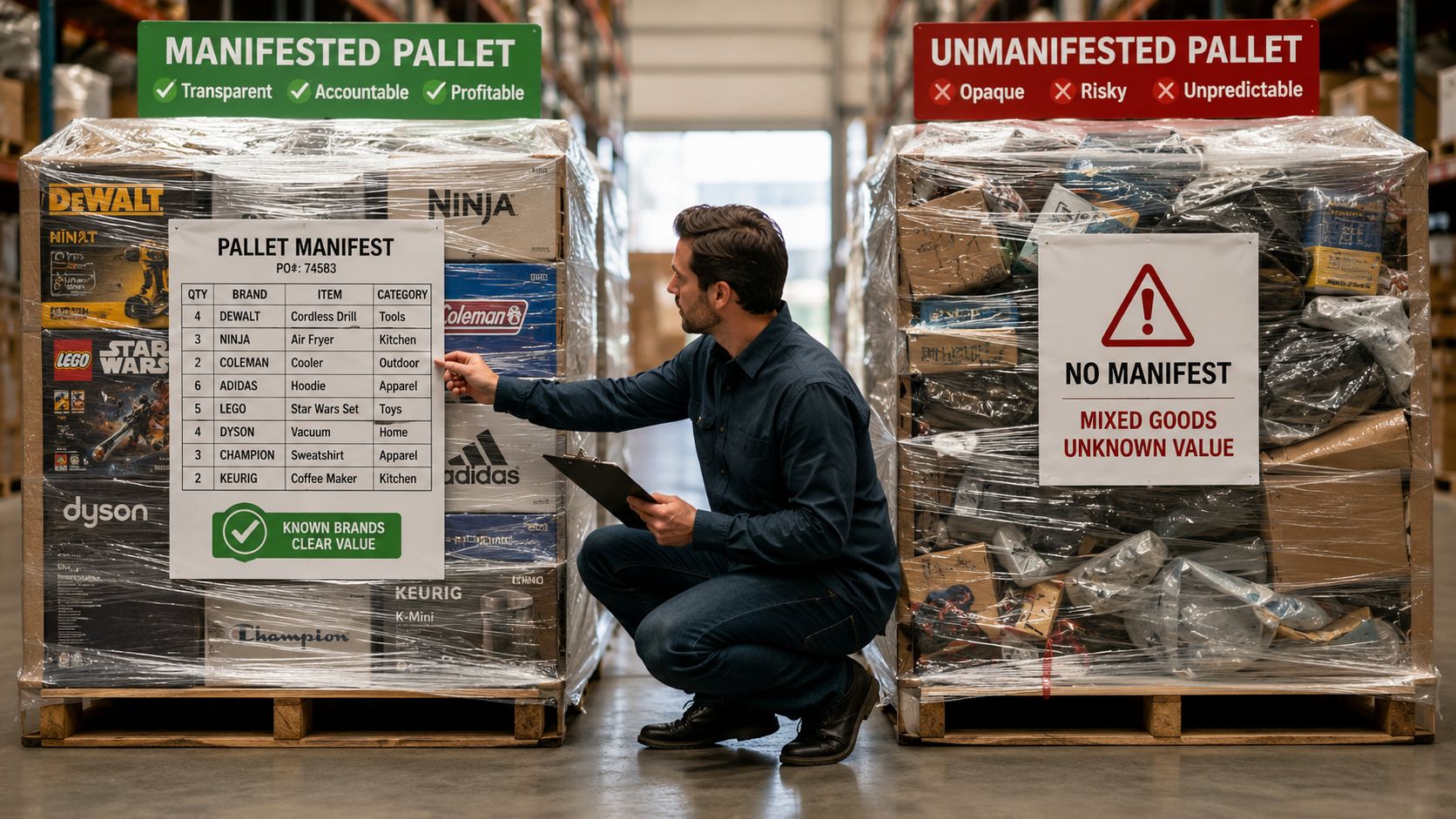
Opaque loads force guesses. Transparent suppliers publish counts, categories, and condition notes, so you buy on real information instead of hope. For apparel sellers, that matters even more because a recognizable brand usually moves faster than generic inventory.
Match the supplier to the channel
Amazon FBA sellers need prep-ready merchandise that does not create an account problem. eBay sellers can handle more variety if they are willing to photograph, measure, and list items one by one. Boutique sellers need tighter curation because their customers expect a coherent rack, not a mixed bin of leftovers.
That is why controlled brand mix is worth paying for. For a closer look at brand-name clothing pallets, the point is simple, tighter control cuts mismatch risk before the freight bill lands. OneTrendyCloset offers custom apparel liquidation boxes and pallets that can be adjusted by budget and selected brands, which is a different buy from a blind grab bag.
Transparent sourcing improves resale speed
If you know the brand mix, you can decide whether the load belongs on Whatnot, eBay, Poshmark, or in a boutique. If you do not, you waste time testing the same piece across too many channels. The right supplier makes listing easier because you are not decoding the pallet after delivery.
The U.S. pallet market is highly standardized, with about 500 million new wood pallets manufactured each year and around 4.6 billion board feet of lumber consumed annually (industry statistics). That scale shows pallets are standard infrastructure, but brand mix and manifest quality still decide whether your resale inventory turns fast or sits.
The U.S. also has an estimated 2.6 billion pallets in circulation, with total production rising from roughly 849 million in 2016 to about 1.18 billion in 2021, a 40% increase, and wood accounting for about 93% of U.S. pallet production volume. Scale does not change the buying rule. Brand mix and manifest quality decide whether your apparel inventory moves fast or gets stuck.
The Hidden Cost Most Buyers Forget
The cheapest pallet is rarely the cheapest deal. Buyers get fooled because they compare purchase price to purchase price instead of comparing the cost of each item that clears their margin target. That's the wrong math.
Start with landed cost. Add the pallet price, freight, buyer premium, storage, processing, packaging, marketplace fees, taxes, and the pieces you expect to lose to defects or returns. Then divide by the number of units you can realistically sell.
Use sellable units, not raw item counts
A pallet with a lot of inventory can still be a weak buy if too many pieces are damaged, off-brand, or too costly to prep. A smaller, cleaner pallet can beat it because the sellable share is better and the labor is lower. That's why condition and brand mix matter more than the headline number.
For apparel, the error is usually overestimating how many items will list cleanly. Missing sizes, damaged tags, and generic styles all eat recovery value. If you sell across multiple channels, apply different expectations to full-price, discount, bundle, and salvage channels instead of pretending every piece has the same value.
Practical rule: the right pallet is the one with the lowest cost per item you can actually move, not the one with the lowest invoice.
A bargain load can turn expensive. If you spend hours sorting through weak inventory, your labor is part of the purchase price. If you need to dump a chunk of the pallet at a discount just to clear space, that lost margin belongs in the decision.
The best buyers are boring about this. They count, estimate, and reject loads that look flashy but don't cash-flow cleanly. That discipline beats excitement every time.
Smart Buying Checklist and Final Take
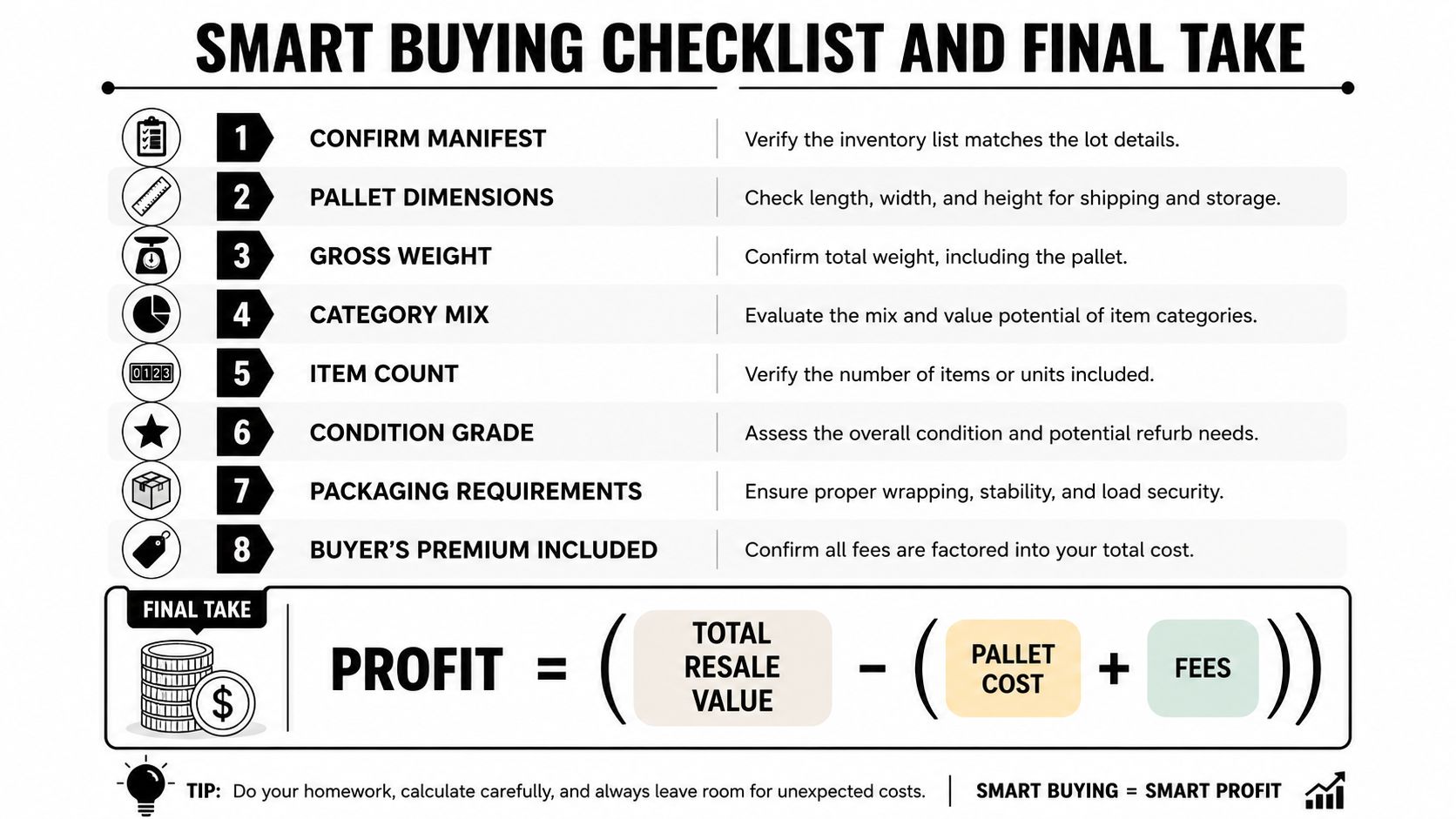
Start with the manifest. If the seller won't tell you what's inside, how it's graded, and whether the price includes a buyer's premium, you're buying blind. That can work for experts, but it's a bad move for a new reseller trying to build reliable turnover.
Verify the numbers before you pay
- Confirm the manifest: Know the categories, item count, and exclusions.
- Check dimensions and weight: Make sure the freight quote matches the load.
- Ask about condition grade: New, shelf pull, inspected return, or salvage are not interchangeable.
- Clarify freight terms: Dock pickup, curbside delivery, liftgate service, and appointment fees all change your total.
- Match the load to your channel: Apparel lots should fit your buyers, not just your budget.
The cleanest first buy is usually a smaller, well-documented load from a supplier that answers questions quickly. That gives you a real test of your process without tying up too much cash. If you want tighter control over apparel brand mix, a custom box or pallet model can be a smarter starting point than a blind mixed load.
The profit test is simple. Estimate total resale value, subtract the pallet cost and every related fee, and only buy if what's left preserves your target margin. If that number doesn't work on paper, it won't work after freight and sorting either.
Pallets for sale are not bargains by default. They become profitable when the landed cost, sellable-unit rate, and resale channel all line up with what you already do well.
If you want apparel inventory that gives you more control over brand mix, budget, and box size, visit OneTrendyCloset and look at the curated wholesale options built for resellers. They offer apparel boxes and pallets, which makes it easier to buy stock that fits your channel instead of forcing your channel to fit the pallet.