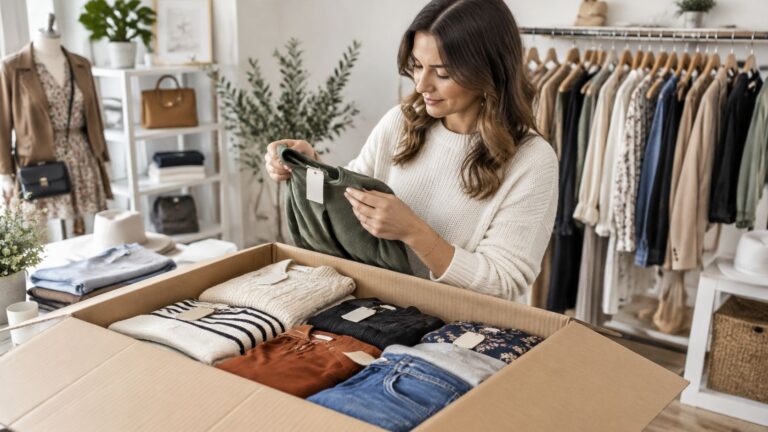
You've got liquidation boxes open in browser tabs, a calculator beside you, and a per-piece price that looks hard to pass up. What you can't see yet is how much of that clothing your customers will buy, how much work it'll need, or how long your cash will sit on a shelf.
Learning how to order wholesale starts with that uncertainty, not the checkout button. Treat the purchase as a sellability test: buy an assortment you can evaluate, document what you're promised, and increase quantity only when your results justify it.
Table of Contents
- Why a Wholesale Order Is a Buying Decision
- How to Request a Quote That Can Be Compared
- Check Sizes and Condition Before You Commit
- How to Choose Boxes Lots or Pallets
- Set Payment Shipping and Inspection Terms
- Test the First Order Then Place the Next
Why a Wholesale Order Is a Buying Decision
A cart full of inexpensive apparel can feel like progress before you've listed a single garment. You can already picture the racks, the live sale, or the new Poshmark listings. But dividing the lot price by the item count tells you only what you're paying to acquire clothing, not whether you're buying useful inventory.
Wholesale purchasing is ordinary business procurement, not a special shortcut to profit. The U.S. Census Bureau's annual wholesale report recorded merchant wholesale sales of $11,382.3 billion in 2022, compared with $9,693.4 billion in 2021, an increase of 17.4%. Your purchase may be smaller, but it deserves the same discipline around cash, inventory, and purchasing records.
Decide what the inventory must do
Start with your own selling history. Compare the proposed order with similar categories, brands, and styles you've sold, rather than the retail prices printed on hangtags.
If you're new, acknowledge that you don't have that evidence yet. Your first purchase should answer a narrow question, such as whether your audience will buy a particular category, rather than stock an entire imagined store.
Buying rule: A low acquisition price isn't a bargain if you can't turn the assortment into cash without excessive work or discounting.
Compare landed cost, meaning the cost of getting the order into your possession, rather than merchandise price alone. Then keep separate allowances for selling expenses, returns, and markdowns so you don't mistake acquisition cost for total business cost.
Storage matters, too. Leave space to sort, inspect, photograph, and retrieve garments, not just stack unopened cartons. Inventory you can't process promptly isn't ready to earn its place in the business.
Write the buying brief before contacting suppliers
Create a purchasing record with these fields:
- Requested assortment: Preferred brands, categories, styles, and exclusions.
- Customer fit: Size preferences and the audience you expect to serve.
- Order boundaries: Total units, available spending budget, and storage limit.
- Delivery needs: Shipping-cost allowance and the latest useful arrival window.
- Purchase protection: Return or dispute policy you need clarified.
- Reorder path: Whether you'll need similar merchandise again.
Mark unknown fields as questions instead of filling them with optimistic assumptions. Keep this brief with the eventual quote and invoice so later supplier comparisons depend on records, not your memory of a friendly sales conversation.
How to Request a Quote That Can Be Compared
Send suppliers the same purchasing requirements. Otherwise, a quote for a tightly selected assortment may look expensive beside a loosely described mixed lot, even though the products aren't comparable.
When you're evaluating a wholesale clothing supplier, distinguish the buying routes you're considering: liquidation suppliers, curated box programs, and larger auction-style marketplaces. Ask each seller what information is available before purchase and which assortment details they'll commit to in writing. Opening an account doesn't answer those questions.
Use a consistent request process rather than restarting the conversation with every seller.
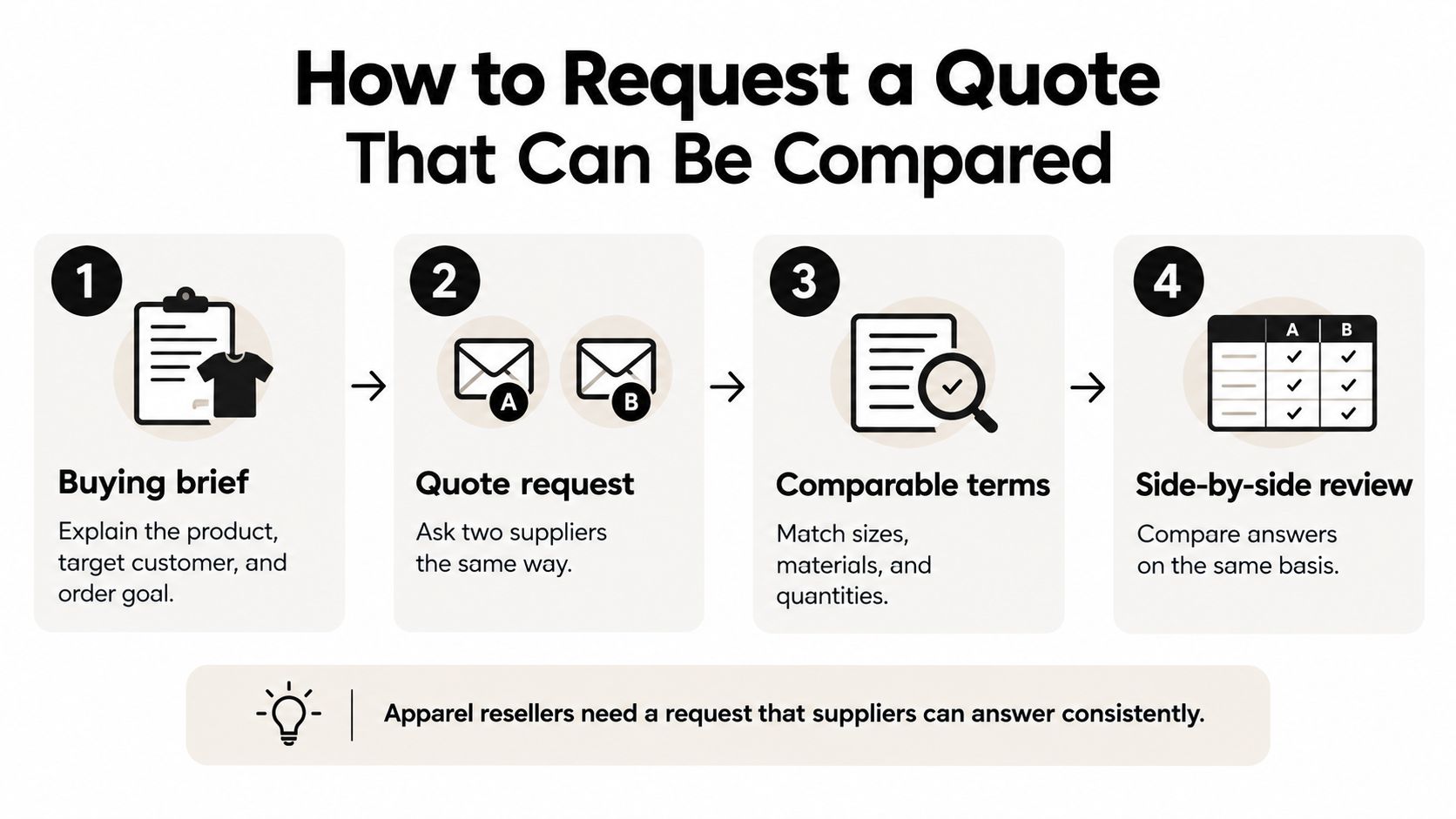
Send a request suppliers can answer
A boutique owner or Poshmark seller could adapt this message, inserting their actual budget, brands, quantity, and delivery location before sending:
I'm requesting a quote for an initial apparel order for my resale business. My total budget must include delivery. Please quote a defined box or custom lot using my attached brand list, category exclusions, requested size distribution, and quantity.
Please state whether those preferences are guaranteed or subject to availability. Don't substitute brands or categories without my approval. Include condition details, available inventory, payment timing, estimated dispatch and arrival windows, and your process for shortages or damaged merchandise.
Make exclusions specific. If you don't sell children's clothing, formalwear, or garments needing repair, say so. “Good brands” and “reseller-friendly” don't give the supplier enough information to build your order.
For quantity, name the format you want quoted and ask for its actual unit count. A box label or pallet description isn't a substitute for knowing what you're purchasing.
Record answers in a quote sheet
Use Google Sheets, Excel, or a simple document with matching fields for each supplier:
| Quote field | What to record |
|---|---|
| Merchandise price | Lot price, unit count, and any separate charges |
| Assortment | Included brands, categories, sizes, and condition |
| Availability | What's available now and whether it's reserved |
| Payment | Currency, payment method, and when payment is due |
| Delivery | Shipping responsibility and estimated delivery window |
| Exceptions | Substitution, shortage, damage, and dispute terms |
A response describing mixed brands and strong value leaves the important purchasing questions unanswered. A usable response identifies the assortment, distinguishes guarantees from preferences, and states what happens when the shipment differs from the agreement.
Don't convert a supplier's estimate into a promise in your spreadsheet. Label it as estimated and ask whether the uncertainty is acceptable for your order.
Keep the original reply alongside your comparison sheet. Before paying, request a revised quotation if anything material changes. The supplier who answers fastest isn't necessarily offering the merchandise you can sell most confidently.
Check Sizes and Condition Before You Commit
A desirable brand doesn't make every size, style, or condition grade a desirable purchase. Apparel has to fit both the customer and the way you sell.
The apparel returns research summarized by Shopify estimated online apparel returns at 19.3% of online sales in 2025 and reported apparel and footwear return rates of 30% or higher for many brands, identifying poor fit and inconsistent sizing as leading drivers. Those figures aren't a forecast for your store, but they're a reason to assess fit before committing cash.
Use the inspection checklist to separate attractive merchandise from an assortment that suits your buyers.
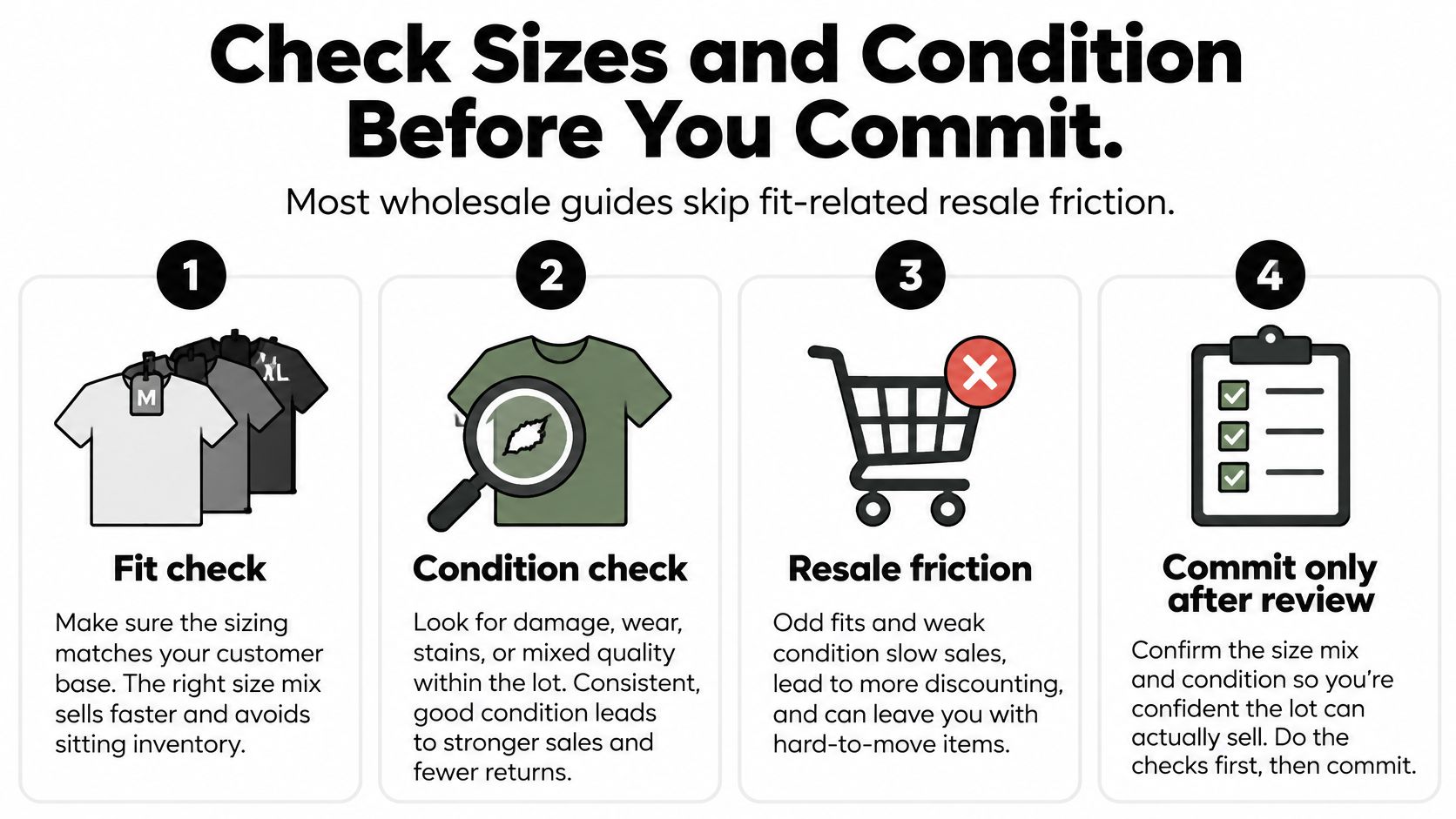
Ask for the size curve, not just the size range
A size curve describes the distribution of garments across sizes. An order that includes your preferred sizes may still contain very few pieces in the sizes your customers request.
Ask for counts by size when available, plus the distinction between labeled sizes and actual garment measurements. For fitted items, request relevant brand-specific measurements or a representative sample note. Decide which measurements you'll need to take yourself before listing.
Consider a hypothetical live-sale host whose regular buyers prefer roomier fits. A discounted lot dominated by fitted styles outside those buyers' needs won't become suitable just because the brands are recognizable. The host would need a different audience, a different sales channel, or a revised assortment.
Cheap inventory can require expensive selling work. Count the measuring, explaining, cleaning, and discounting before you call it a good buy.
Define condition in observable terms
Ask what the supplier's condition grade permits. Clarify whether the order may contain missing tags, stains, odors, damaged closures, fabric wear, or pieces requiring repair.
Request photos of the actual lot when possible. If the images are representative, ask what they do and don't establish about the shipment you'll receive. Include seasonality in the review, particularly if the clothes may arrive after your selling window.
Complete a short pre-order resale-risk worksheet:
- Target customer sizes: Record sizes buyers request and buy, not just what gets likes.
- Outlier tolerance: Set your acceptable share of sizes or styles outside that audience.
- Measurement workload: Identify the measurements and fit notes each listing will require.
- Condition workload: Separate ready-to-list pieces from those needing cleaning or repair.
- Markdown assumptions: Note which categories might need discounts and what that does to expected proceeds.
- Maximum landed cost: Set the purchase ceiling using a cautious estimate of sellable inventory, allowing for unsold and returned pieces.
Finish with a decision: accept, revise, or pass. If the supplier can't confirm the distribution or condition, treat that as uncertainty you're purchasing, not as evidence that the assortment will probably be fine.
How to Choose Boxes Lots or Pallets
Choose the format that lets you test your buying assumptions without creating a processing backlog. A larger shipment only makes sense when you can receive it, prepare it, and sell it within your business's cash constraints.
The useful comparison isn't box versus pallet. It's how much control you have over the assortment, how much inventory you can handle, and how much uncertainty you're willing to fund.
Which Wholesale Apparel Format to Order First
| Format | Best when | What you can influence | Main cash risk |
|---|---|---|---|
| Small curated box | You're testing a supplier, category, or selling channel | Available box options and stated preferences, subject to the offer | Paying for a mix that doesn't validate your buying idea |
| Custom lot | You have a defined audience and specific assortment needs | Requested brands, categories, quantity, and budget, where agreed | Committing cash to preferences that aren't guaranteed |
| Full pallet | You have proven demand and receiving and processing capacity | Manifest or custom specification, where offered | Funding a large amount of slow-moving or unsuitable inventory |
A curated box suits a controlled trial. It gives you a manageable body of merchandise to inspect and list. The trade-off is that the available selection may not match every preference, so evaluate the actual offer rather than assuming that curated means customized.
A custom lot is more useful when your requirements are specific. You might want certain brands while excluding categories that don't suit your store. Ask which requests the supplier can guarantee and whether stricter selection changes the quotation.
A pallet belongs in a business that can handle the whole shipment, including the less desirable pieces. Before choosing it, identify where you'll unload, sort, store, and process the goods. Don't base the decision on how quickly you could sell only the strongest items.
Compare supplier flexibility with your operating needs
OneTrendyCloset is one apparel option offering brand-name wholesale clothing boxes in multiple sizes, mix-and-match brand selection, in-house curation, packing, and shipping, plus custom box or pallet quotes based on budget, preferred brands, and quantity. Those options are relevant to boutiques, marketplace sellers, and live-sale hosts who want to influence the brand mix rather than buy a fully blind assortment.
Ask how your size and category preferences apply to the specific quote. Brand selection alone doesn't establish the final size distribution or condition of every piece.
Supplier flexibility can justify a higher unit price when it helps you avoid merchandise you wouldn't otherwise buy. But customization is only valuable when the agreed specification reflects your customers, not a longer wish list.
Choose the smallest format that can answer your current buying question credibly. There's no purchasing advantage in receiving more inventory than you can evaluate.
Set Payment Shipping and Inspection Terms
Before paying, read the quotation as an agreement about what happens when something goes wrong. You need more than a merchandise total and a payment button.
Freight, customs duties, brokerage, taxes, insurance, and delivery charges belong in your cost review when applicable. Ask which charges are included, which are estimated, and which you'll pay separately.
Review the quotation and invoice together before authorizing payment.
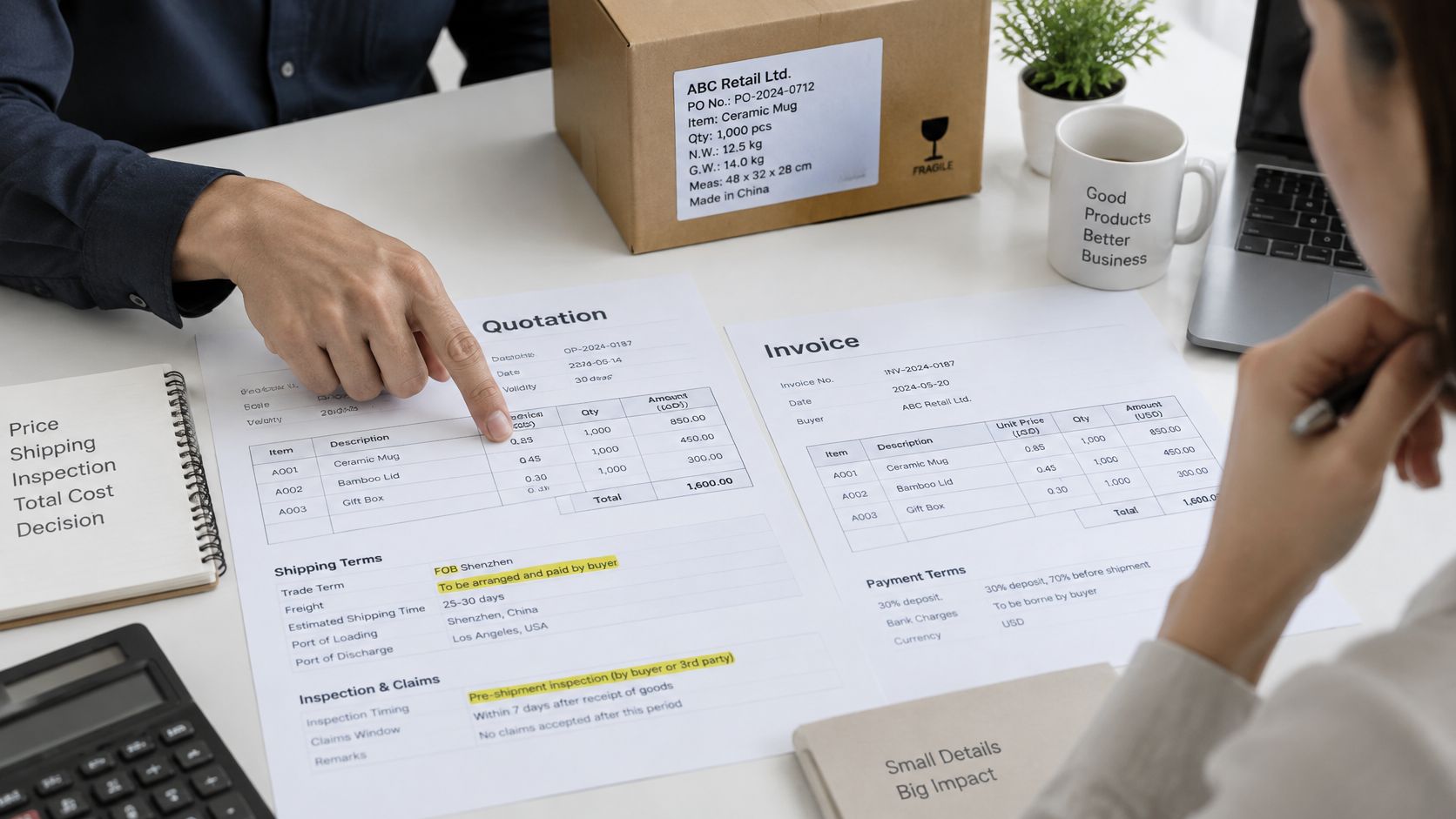
Put delivery responsibility in writing
For a cross-border order, ask the supplier to state the applicable Incoterms rule and named place on the quotation. The International Chamber of Commerce's Incoterms 2020 rules, in force since January 1, 2020, define 11 three-letter trade terms allocating transportation responsibilities, export or import formalities, insurance where applicable, and the point when risk transfers.
Those rules don't independently establish product price, payment method, ownership transfer, or remedies for defective goods. Put those matters in separate written terms rather than assuming the delivery term covers them.
For a domestic shipment, request a plain-language explanation of who books the carrier, who pays, and when responsibility for transit risk shifts. If you're ordering a pallet, confirm receiving arrangements and any delivery services your location requires.
Confirm your inspection and dispute process
Ask the supplier to put these details on the order confirmation or in an attached policy:
- Payment timing: What payment confirms the order, when any balance is due, and whether changes remain possible afterward.
- Inspection rights: When you may inspect and how soon discrepancies must be reported.
- Evidence requirements: Which photos, packaging records, or item details a claim needs.
- Available remedies: Whether an accepted shortage or condition claim results in replacement, credit, refund, or another agreed resolution.
- Return responsibility: Whether authorization is required and who pays return transportation.
Don't assume that a restriction on ordinary returns answers every question about a shipment that differs from its written description. Ask the supplier to explain the distinction before you accept the terms.
Keep the evidence together: Save the accepted quotation, invoice, payment confirmation, shipping records, and inspection photos in the same order folder.
After delivery, count units against the order confirmation before mixing them with existing stock. Photograph packaging damage, affected garments, labels, and shortages as appropriate, then report discrepancies through the agreed channel.
Keep disputed merchandise identifiable rather than cleaning, repairing, or listing it immediately. That makes it easier to show what arrived and follow the supplier's resolution instructions without creating a second disagreement about what happened after delivery.
Test the First Order Then Place the Next
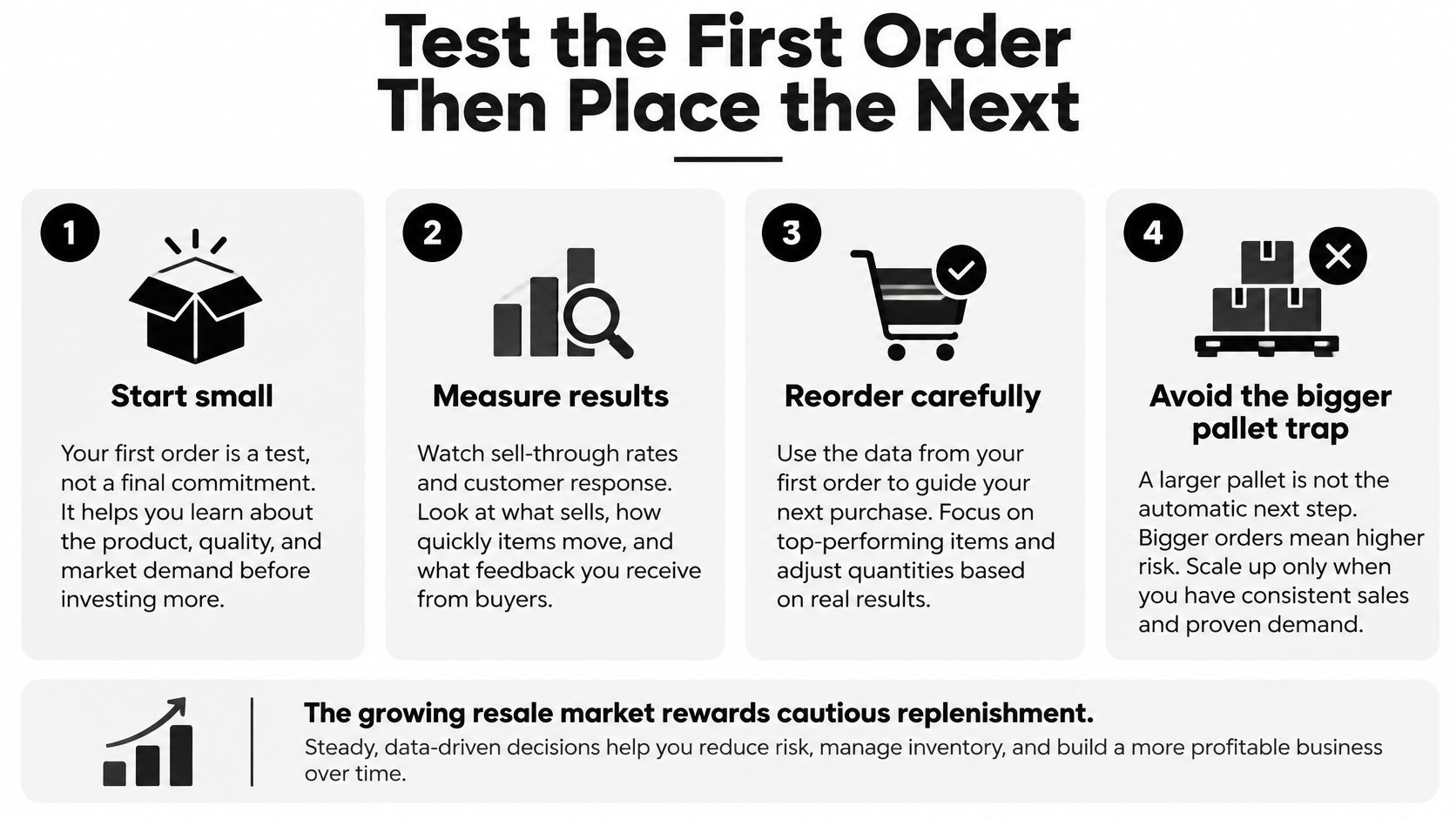
The first shipment gives you evidence for another buying decision. It doesn't create an obligation to order more.
The ThredUp 2025 Resale Report projects the global secondhand apparel market to reach $367 billion by 2029 and U.S. online resale to reach $40 billion by 2029, with 13% annual growth. Those projections describe a broader opportunity, not proof that your particular assortment will sell.
Use the test-and-reorder approach to keep expansion tied to your own results.
Measure the order as a separate inventory group
Give the shipment an order identifier in your inventory sheet. Track each garment back to that purchase so strong sales from older inventory don't disguise a weak new buy.
Set reviews at 30, 60, and 90 days as your operating checkpoints. Start the clock at receipt and record listing dates separately, so you can distinguish slow sales from slow processing.
| Scorecard item | What to examine |
|---|---|
| Sell-through | Units sold relative to units received, with unlisted stock visible |
| Realized margin | Sales proceeds after inventory cost, platform fees, outbound shipping, cleaning, photography, discounts, and returns |
| Remaining inventory | Unsold share, broken down by brand, category, size, and condition |
| Processing effort | Measuring, repairs, photography, and listing work required |
| Cash recovered | Money received compared with the purchase and preparation outlay |
Don't judge the order only by the pieces that sold first. Review what remains and whether you have a realistic route to sell it. Also distinguish listed inventory with weak demand from merchandise you haven't prepared.
Let the results determine the next format
Repeat a small box when the results are promising but your evidence is still limited. Request a custom lot when specific brands, categories, or sizes performed well and you can explain what to remove from the next assortment.
Consider a pallet only when demand, processing capacity, and cash availability support the full commitment. Strong sales from selected garments don't justify scaling every part of the original mix.
Use the next supplier conversation to tighten the purchase:
- Control substitutions: Require approval when a replacement would change the assortment you tested.
- Check repeatability: Ask whether the successful brand mix is available again, without assuming liquidation stock will repeat exactly.
- Quote from results: Send a summary of what sold, what remained, and the revised quantity you can support.
For a supplementary visual resource, use the video alongside your written purchasing records.
Your next step is to send a defined buying brief, not authorize a bigger shipment. Ask for an order you can measure and a quotation that preserves the distinctions between requests, estimates, and guarantees.
OneTrendyCloset offers curated brand-name apparel boxes and custom box or pallet quotes based on your budget, preferred brands, and quantity. Visit the site to request a budget-based box, state your size and category preferences, and confirm the assortment before committing to a larger lot.