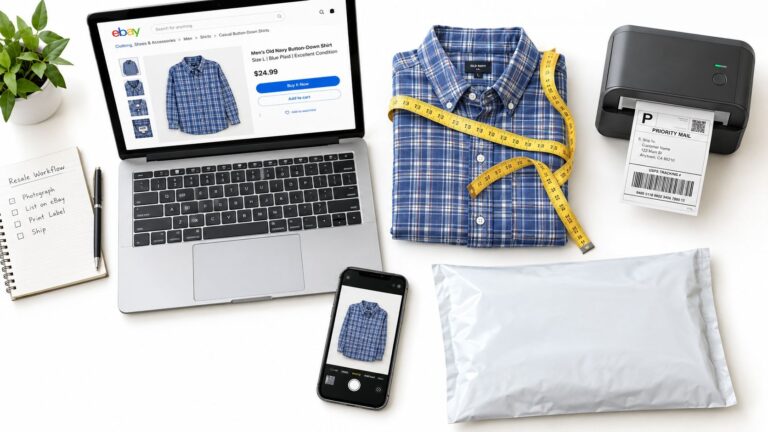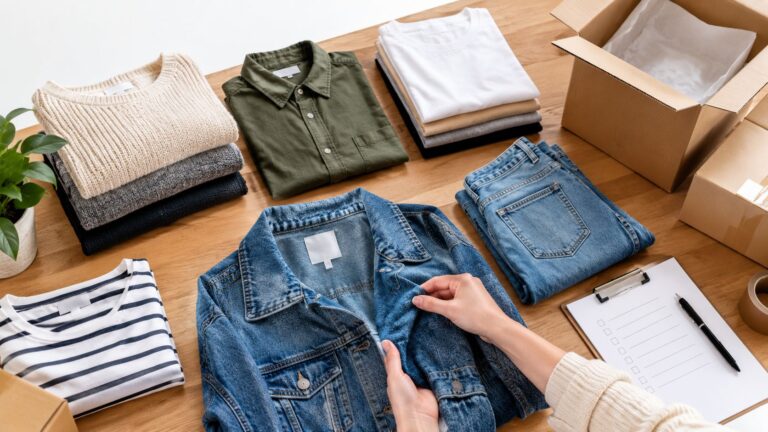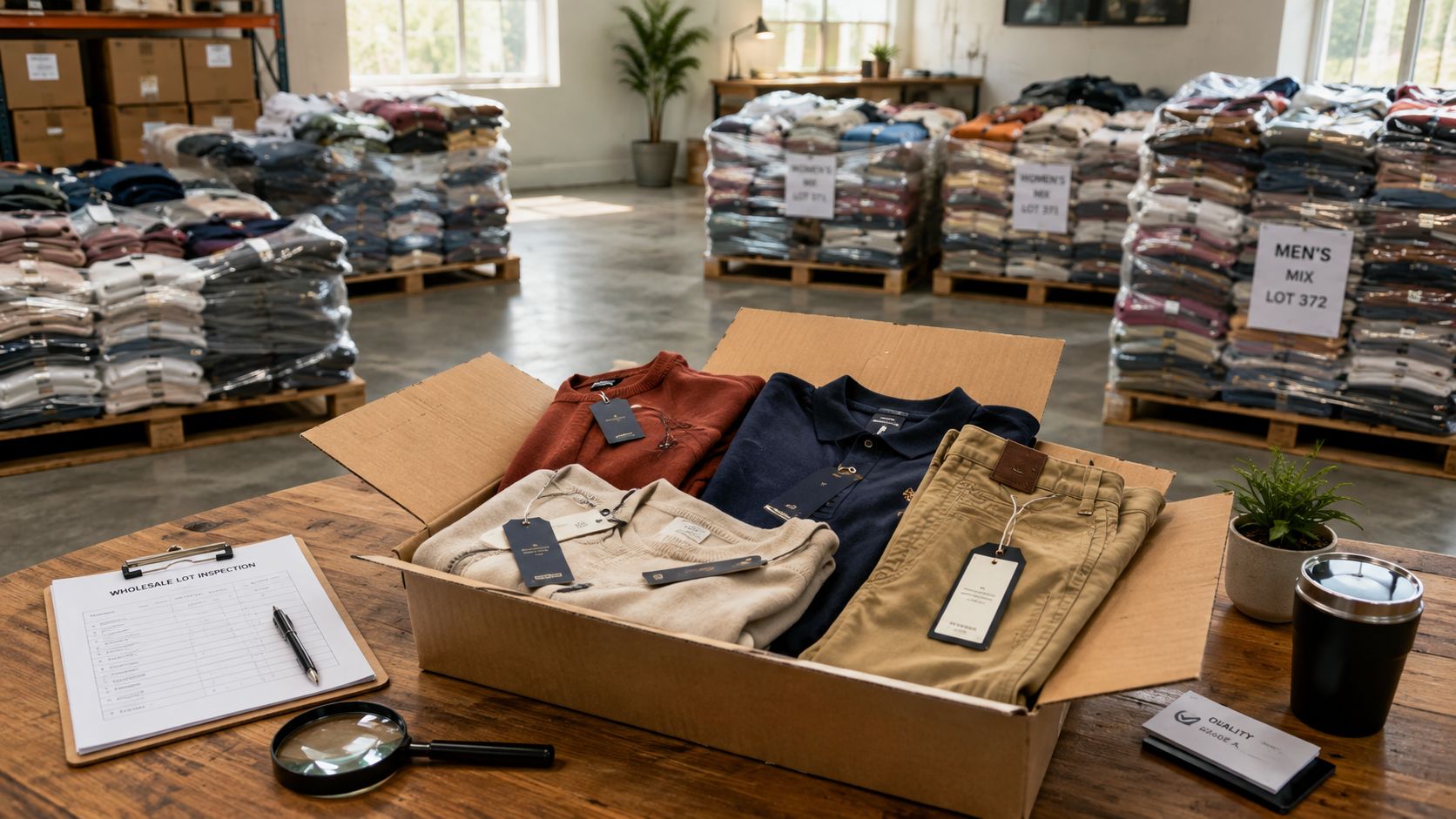
The apparel system pushes out more than 100 billion garments a year, while global textile waste sits around 92 million tonnes annually. That scale explains why lots of clothing are everywhere, from small test boxes to full pallets, and why a reseller can build a business from the industry's leftovers instead of chasing retail shelf space. Industry waste and production figures show the story; there's always another wave of surplus, unsold stock, and returned goods moving into secondary channels.
For resellers, the opportunity isn't just cheap inventory. It's learning how to read a lot before you buy it, especially the hidden grading and sizing quirks that decide whether a shipment becomes fast-moving stock or a storage problem.
Table of Contents
- Why Wholesale Clothing Lots Exist
- Types of Clothing Lots Available to Resellers
- Understanding Grading Systems and Quality Tiers
- Targeting Underserved Market Segments
- Managing Risk When Buying Bulk Inventory
- Matching Lot Types to Sales Channels
- Common Mistakes New Resellers Make
Why Wholesale Clothing Lots Exist
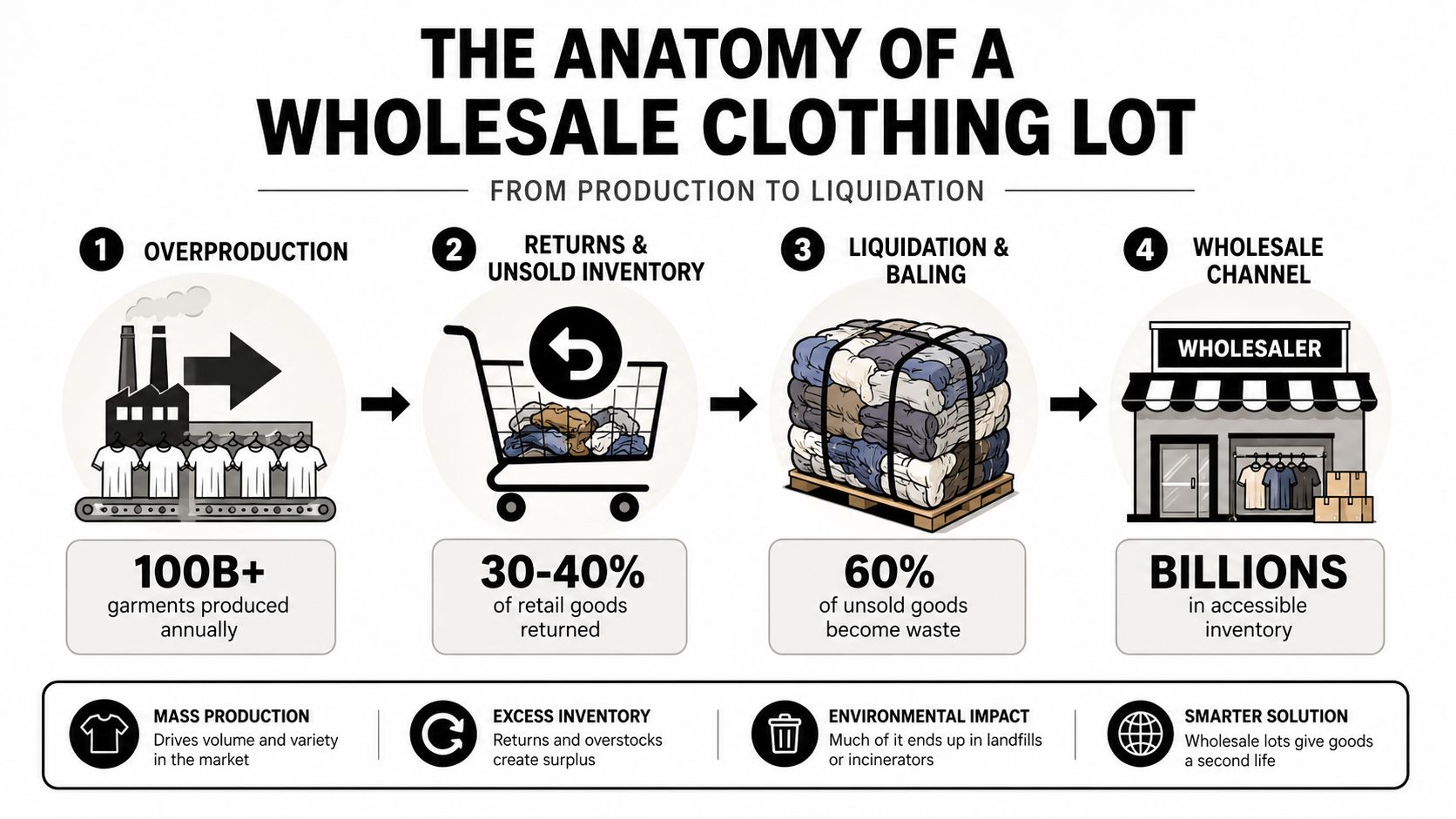
Wholesale lots exist because apparel production keeps moving faster than retail can clear it. The U.S. generated 17 million tons of textiles in 2018, and only 14.7% of that material was recycled, according to the EPA-linked figures summarized here. That overflow creates a steady stream of inventory that brands, distributors, and liquidation partners need to move somewhere, and secondary sellers fill that gap.
Overstock Is a Supply Chain Problem, Not a Mystery Box
Retailers do not order clothing with resale in mind. They buy for seasons, promotions, size curves, and forecasted demand, then they are left with returns, canceled styles, and unsold units. Once that happens, lots of clothing become a practical exit route, because they bundle inventory into manageable quantities for buyers who can sort, list, and resell.
The issue is usually grading, not just volume. Two lots can look similar on paper and still behave very differently once they arrive, because one may be packed with mixed sizes, uneven condition, or styles that only work in a narrow market. A buyer who checks those details before purchase has a much better shot at getting inventory that moves instead of boxes that sit.
That is why liquidation channels are structured, not random. A reseller is not just buying extra stock, they are buying access to surplus that still has retail value when it is matched to the right customer. The better the lot is organized, the less work it takes to turn that overstock into cash flow.
Practical rule: The lot is only cheap if the inventory matches your sales channel, your prep capacity, and your customer's size expectations.
Why Resellers Keep Returning to Bulk Sourcing
Consumer habits keep the secondary market active. The average American buys roughly 53–58 new clothing items per year, and wardrobes are already crowded, with consumer clothing habit data showing that one study cited in the brief says the average person owns 118 clothing items and leaves 26% unworn in the previous year. Those patterns mean buyers are still shopping for variety, but they are also more willing to buy pre-owned or discounted inventory when the price and selection make sense.
That is the business logic behind liquidation boxes and pallets. They sit between overproduction and resale demand, giving boutiques, marketplace sellers, and live-sale hosts a flexible way to stock mixed sizes and styles without negotiating every unit individually.
Types of Clothing Lots Available to Resellers
Not every lot of clothing behaves the same way. The difference between a brand-specific box and a mixed-brand pallet can decide whether you're listing items in a day or sorting through months of mismatched inventory. The category you choose should match your channel, your audience, and how much time you have for prep.
Brand-Specific and Mixed-Brand Lots
Brand-specific lots usually contain items from one label or a tight brand family. That works well when your buyers search by name recognition, because the lot is easier to photograph, price, and position on channels where brand matters. Mixed-brand lots are less predictable, but they can be better for resellers who need variety and don't want to depend on a single label's popularity.
A lot of clothing with mixed brands can be useful for live-selling, where speed and visual appeal matter more than strict brand loyalty. Brand-specific inventory, by contrast, is easier to organize into consistent listings and can support a more curated storefront feel.
Category Focus and Condition
Some lots are grouped by women's, men's, or kids’ apparel. Others are sorted by condition, like new with tags, new without tags, shelf pulls, or customer returns. Those labels matter because they change both prep time and resale strategy.
If the supplier can't explain how the lot was sorted, assume you'll need to do the sorting yourself.
For a buyer who runs a boutique, condition-based lots can be easier to stage for customers. For a marketplace seller, category-focused lots help keep photography and listing work more efficient. If you want a deeper primer on liquidation formats, the liquidation boxes overview is worth comparing against the lot type you're considering.
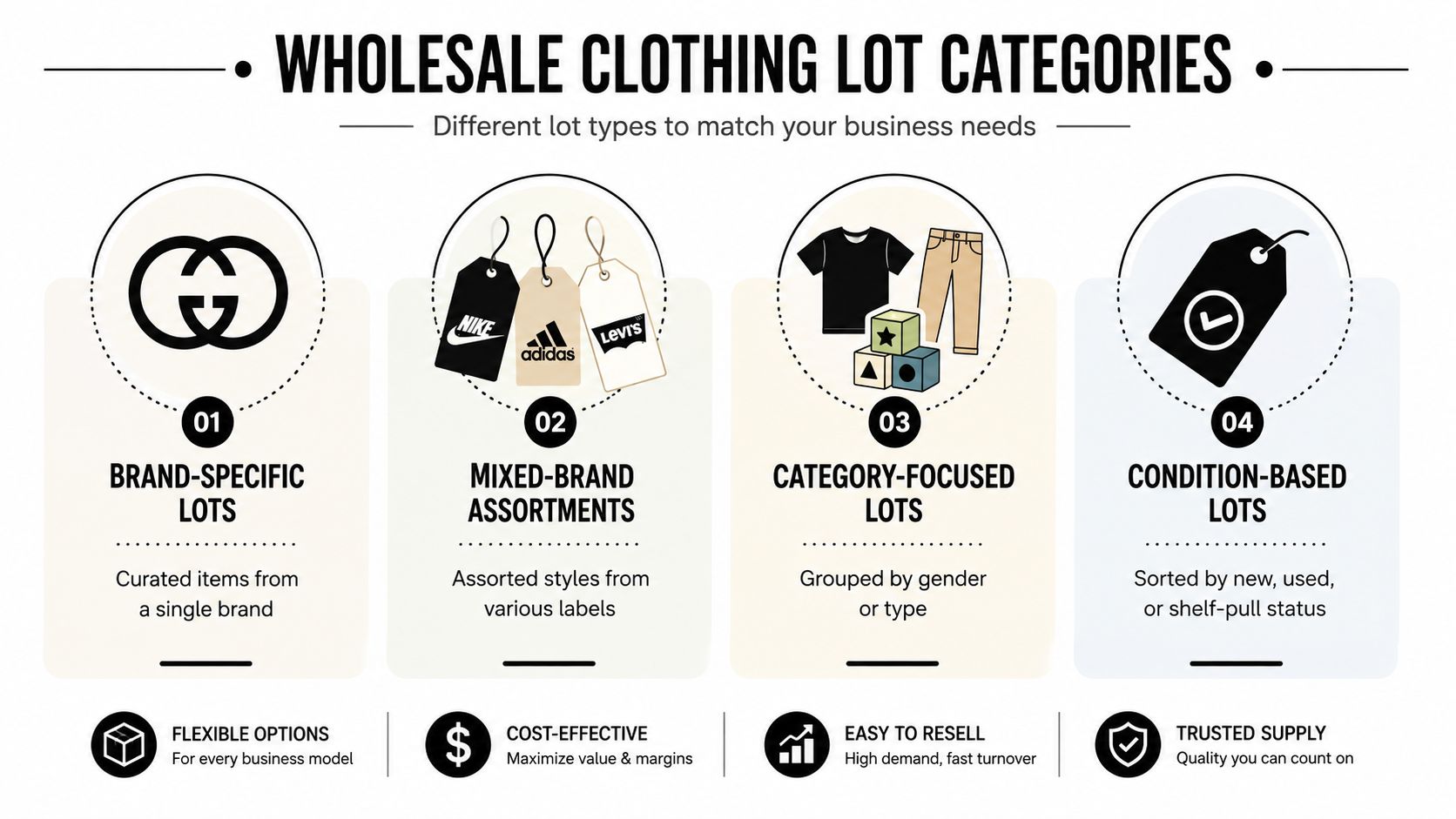
Lot size matters too. Small test boxes are useful when you're checking a new supplier or a new category. Full pallets make sense only when you already know how fast you can sort, list, store, and ship the inventory.
Understanding Grading Systems and Quality Tiers
Grading is where many lot buyers get burned. Two suppliers can use the same word, like “Grade A,” and mean very different things. That's why a lot of clothing should never be judged on price alone, because the grading language can hide condition issues, fit variability, and extra prep work.
Grade A, Grade B, and Grade C Are Not Universal
In common wholesale usage, Grade A usually means like-new condition with minimal wear, while Grade C typically means visible wear and possible repair needs. But those labels are not standardized across every supplier, so the same grade can look different from one warehouse to the next. That's why you need to ask what the seller means by each grade, not just accept the label.
The same caution applies to new with tags and new without tags. A tagged item is easier to price and list because condition is obvious. An untagged piece may still be new, but you'll want to inspect stitching, fabric pilling, and hanger marks before you count on retail-level resale.
Fit Claims Matter as Much as Condition
Technical apparel documentation treats the tech pack/spec sheet as the factory blueprint, not a marketing document, and that's the right mindset for buyers too. A good spec sheet ties together flat sketches, a bill of materials, measurement specs, construction notes, labeling, and packaging instructions, and it uses point-of-measure locations with tolerances so a factory can reproduce fit consistently across sizes, as described in technical apparel documentation.
That matters when you inspect mixed lots, because condition alone doesn't tell you whether a garment will sell cleanly in a given size. If you're seeing strange variance inside a supposedly consistent lot, that's a warning sign. I've seen plenty of shipments where the problem wasn't damage, it was inconsistent interpretation of sizing and cut.
For a practical example of how lot composition can affect expectations, the hoodie lot guide is a useful comparison point. The key takeaway is simple, ask for the grading logic, ask what the average item looks like, and price the lot as if some units will need extra work.
Targeting Underserved Market Segments
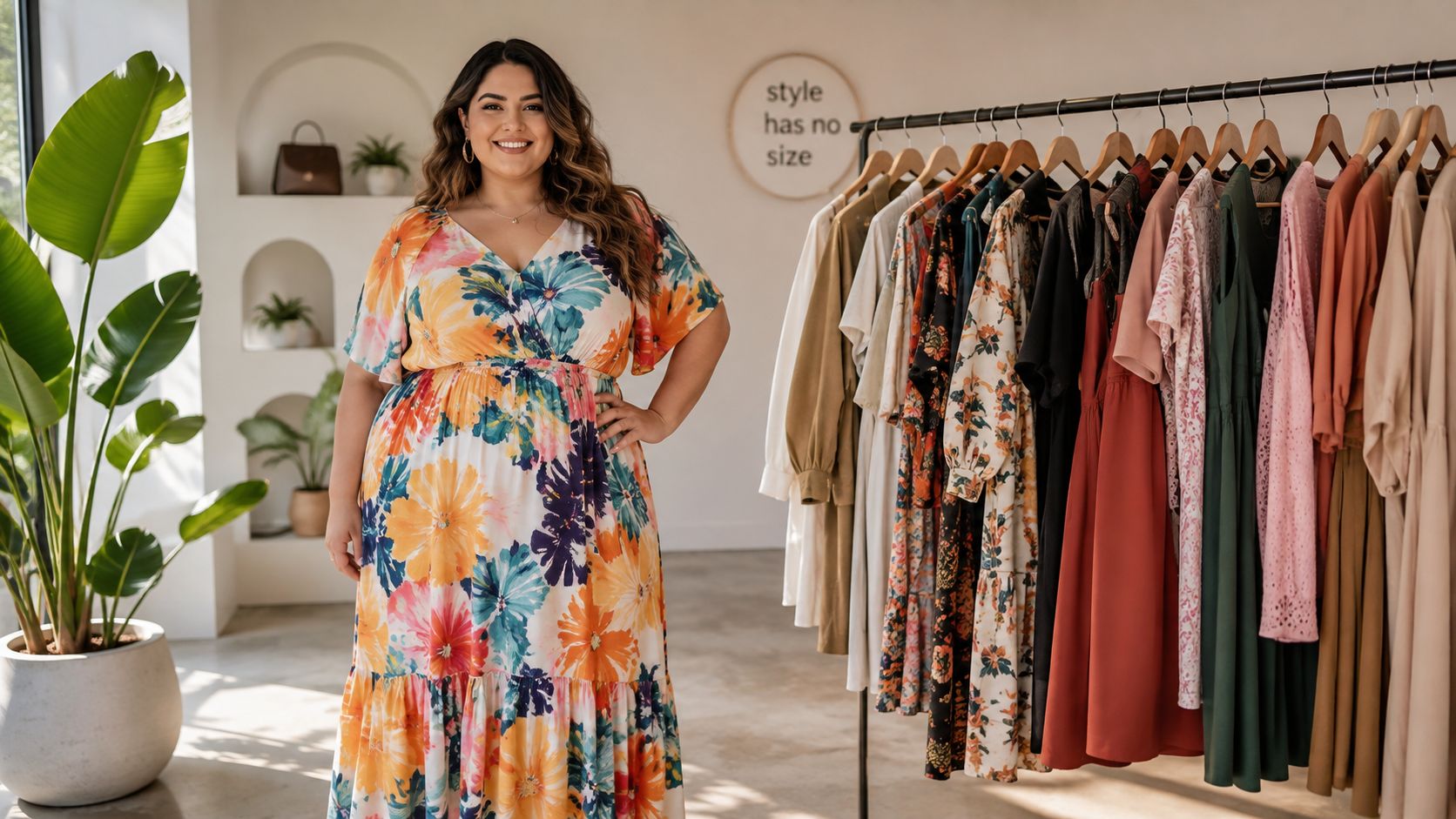
Mainstream clothing categories are crowded. Underserved ones are where a reseller can often build a cleaner, more loyal customer base. That's why plus-size, adaptive, and other size-inclusive lots deserve attention, especially when generic mixed assortments are sitting in the same marketplace as everyone else.
Where Demand Is Steadier Than the Hype
Independent coverage notes that size 14+ apparel remains largely underserved, and adaptive-clothing commentary says about 1 in 20 people in the U.S. has a disability that affects dressing, while mainstream brands still haven't served that market well, according to this market coverage. Those gaps matter because buyers in these segments often know exactly what they need. They're not browsing casually, they're searching for specific fits, closures, stretch, comfort, and ease of wear.
That changes how inventory moves. A generic lot can sit if it's too trend-led or too size-limited. A curated lot that speaks to fit and utility can feel more relevant to boutique shoppers, marketplace buyers, and live-sale audiences who want a practical solution, not another random stack of clothing.
Why This Strategy Cuts Deadstock Risk
Oversupplied categories tend to reward speed, but they also create more competition. Underserved categories reward relevance. If your lot contains size-inclusive basics, comfort-first styles, or easy-to-wear adaptive pieces, you're not fighting every other seller in the same lane.
The win is not “different for the sake of different.” The win is stocking what people already struggle to find.
That's also where a supplier with flexible box building can help, because you can steer inventory toward the customer problem you want to solve. OneTrendyCloset's wholesale boxes are built around brand-name apparel for resellers, boutiques, and live-sale sellers, and that kind of curation can be useful when you're trying to build a tighter assortment instead of a random pile of inventory.
Managing Risk When Buying Bulk Inventory
Buying lots of clothing sight-unseen is a margin game, not a gamble you should excuse with hope. The best buyers protect themselves before the box ships, because once the pallet lands, your losses are already locked into freight, time, and space.
What to Verify Before You Pay
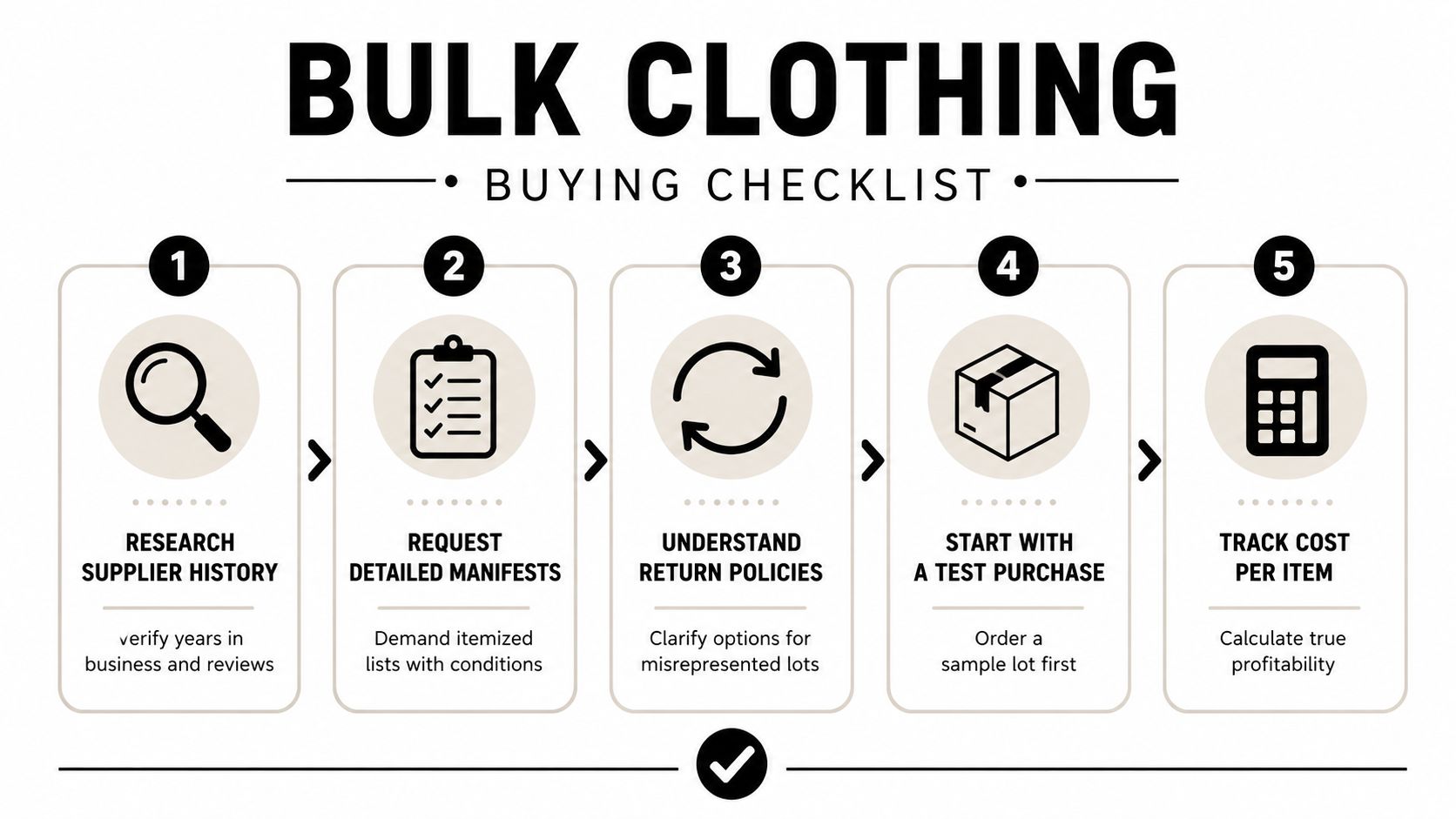
Start with the supplier's history and how they describe the lot. Ask for an itemized manifest when one is available, and read the condition language closely so you can spot vague claims before they reach your warehouse. If a seller won't explain what's in the lot or how they classify damage, that's a warning sign, not a negotiation tactic.
Practical rule: If you can't explain the lot to a customer before buying it, you probably shouldn't buy it.
A return policy matters too, especially when the lot is misrepresented. Keep the policy in writing and compare it against the photos, the manifest, and any notes about sizing or condition. If you're comparing suppliers, the New York wholesalers overview is a useful reminder that communication speed and quote clarity are part of the risk profile, not just the product itself.
How to Protect Your Margin on Arrival
Start with a smaller test order whenever you're unsure about the supplier or lot type. That gives you real data on prep time, size spread, and sell-through behavior without tying up cash in a pallet that may not fit your channel. Once the inventory arrives, sort it quickly into sellable, repairable, and unsellable piles so you know your actual cost per piece.
Track the full cost, not just the invoice. Shipping, storage, photography, steaming, listing time, and disposal all belong in the equation. A lot that looks cheap can become expensive fast if the sizing is chaotic or the condition forces too much prep.
Matching Lot Types to Sales Channels
The smartest lot buyers don't ask what's cheapest first. They ask what will move fastest in their channel. That shift matters because a lot of clothing that performs beautifully on one platform can drag on another.
Brand Recognition and Marketplace Fit
Brand-specific lots often work well for Poshmark and eBay, where brand search behavior and item-level listings support more exact pricing. Buyers on those platforms often compare label, condition, and style before they buy, so cleaner brand alignment can improve how quickly a piece gets traction.
Mixed-brand assortments can be stronger in live-sale formats like Whatnot, where presentation and quick decision-making matter more than precise catalog sorting. If the host can show color, fit, and texture clearly, a mixed lot can move well because the buyer is responding to the deal and the visual appeal together.
Boutique Assortment and Customer Expectation
Boutique owners usually need curated inventory that looks like it belongs in the same store. That doesn't mean every item has to be identical, but it does mean the lot should fit the store's aesthetic, customer age range, and price positioning. Marketplace sellers, on the other hand, can usually handle more variety because volume and search coverage matter more than visual cohesion.
If you're building your buy list, use condition and brand recognition as your first filter, then match that to the platform where the item will be sold. A polished shirt with a strong label might justify a slower, higher-touch listing process. A mixed casual lot may be better for faster turnover and lower per-item expectations.
Common Mistakes New Resellers Make
The most expensive mistake I see is buying a lot of clothing that doesn't match the customer base. A reseller sees a low price, gets excited about the volume, and ends up with styles, sizes, or seasons that don't fit their audience. After that, the lot starts eating storage space and attention instead of producing sales.
Another common problem is ignoring the size spread. A lot can look solid until you realize the majority of pieces are outside the sizes your buyers purchase. That's especially painful when the lot was supposed to be “easy inventory” but turns into a sorting problem that slows everything down.
The fix is simple but not glamorous. Ask better questions, order smaller first, and count every hidden cost before you buy again. A lot of clothing only works when the buyer treats it like an operating decision, not a bargain-bin impulse.
OneTrendyCloset curates wholesale liquidation boxes of brand-name apparel for resellers, boutiques, and live-sale sellers, which makes it easier to start with a lot that fits a real sales channel instead of a random mix. If you're comparing inventory options and want a supplier that handles curation, packing, and shipping, visit OneTrendyCloset and see whether its box format matches the way you sell.