You open a mixed-brand clothing box expecting ready-to-list inventory. Instead, you find stained sleeves, missing size labels, stretched collars, mismatched shades, and garments that look acceptable until you measure them. The supplier described the lot as “quality apparel,” but your afternoon disappears into sorting, cleaning, repairing, photographing, and deciding what you can safely sell.
That experience exposes the meaning of wholesale quality clothing. Quality isn't only the fabric or the brand label. It also includes grading accuracy, product consistency, usable documentation, and the supplier's ability to deliver inventory that matches your resale model. A low unit price can become expensive once hidden labor, unsellable pieces, customer complaints, and return handling enter the calculation.
Table of Contents
- Defining Wholesale Quality Clothing for Resellers
- Measuring Garment Construction and Fabric Standards
- Applying Professional Inspection Thresholds to Bulk Lots
- Comparing First-Quality NWT and Secondhand Sourcing
- Navigating the Wholesale Apparel Market
- Vetting Suppliers and Securing Custom Liquidation Boxes
- Building a Profitable and Sustainable Sourcing Strategy
Defining Wholesale Quality Clothing for Resellers
At receiving, a mixed-brand lot can look profitable until grading differences appear across the rack. One garment matches the stated condition, another needs cleaning, and a third has measurements that do not match its label. Each exception creates another handling decision, another listing risk, and another chance that the final margin disappears.
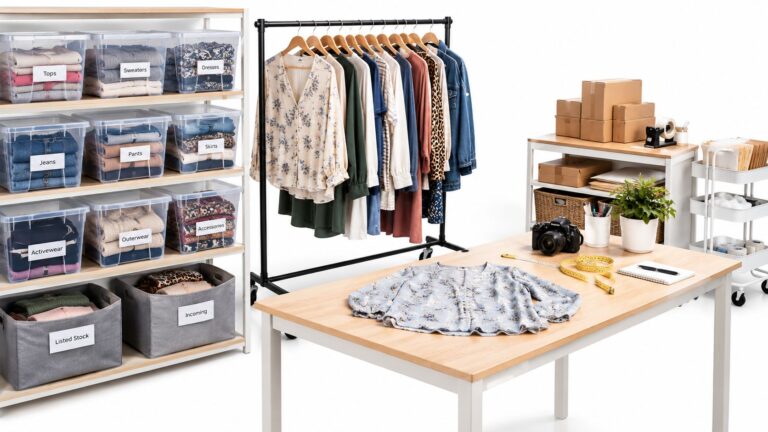
A reseller buys a workflow, not isolated garments. Inventory must move from receiving through inspection, preparation, photography, listing, sale, and fulfillment without creating disproportionate friction. Wholesale quality clothing therefore includes grading accuracy, consistency, usable information, and a supplier's ability to match the agreed standard.
Predictability is the first quality standard.
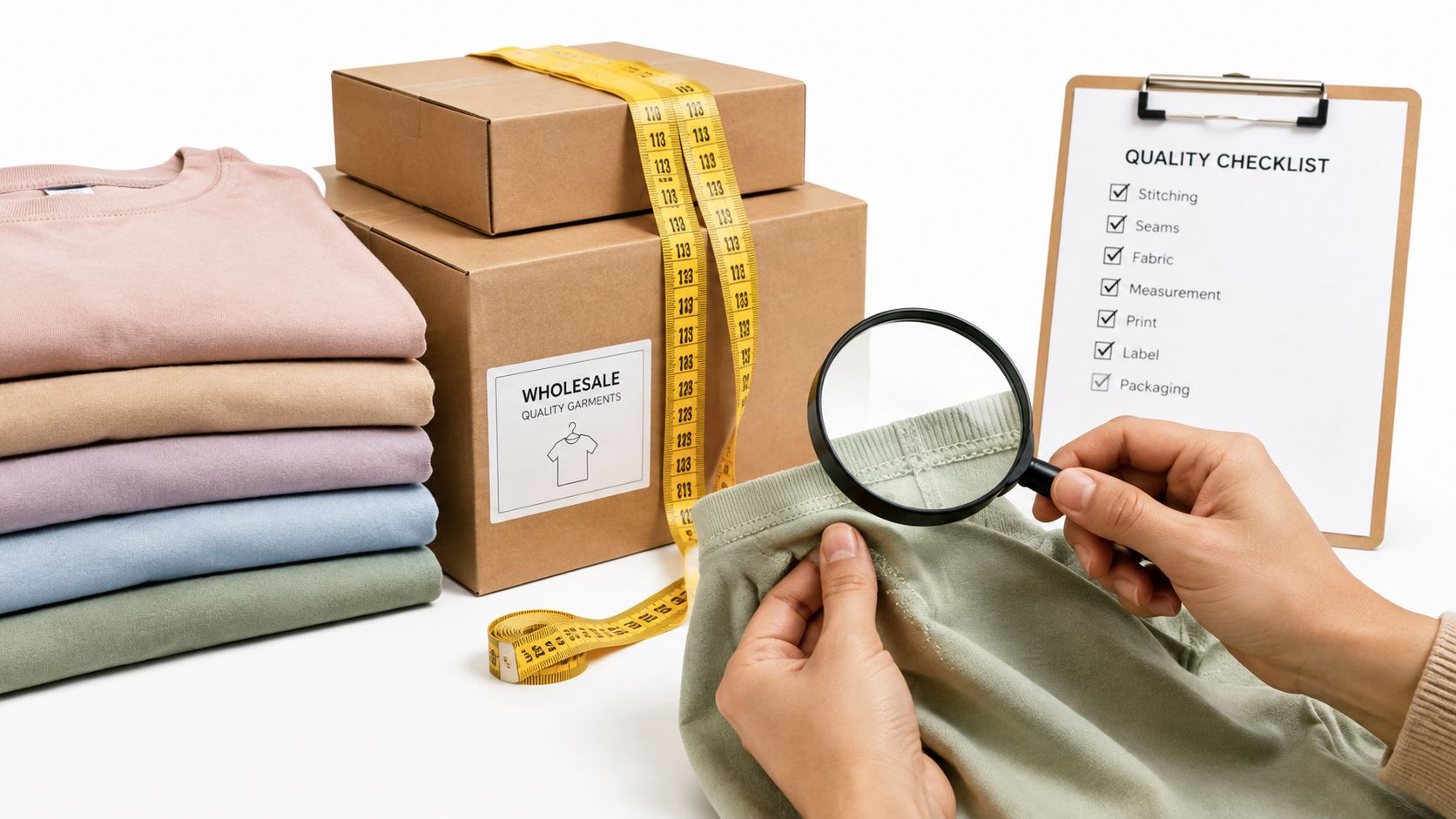
Assess a mixed lot with a receiving sheet that records, for every garment:
- Condition: Compare the item with the promised grade, such as new with tags, like new, or gently used with minimal wear.
- Construction: Record defects in seams, closures, hems, labels, and fabric surfaces.
- Assortment: Check whether brand, category, size, and season distribution fit your customer base.
- Preparation load: Track cleaning, steaming, repairs, relabeling, and photography time.
- Customer suitability: Confirm that measurements, descriptions, and visible condition support accurate listings.
Use the same inspection sequence for samples before purchase and for the full lot after delivery. Calculate sellable yield by dividing accepted pieces by total pieces, then record the reasons for every rejection. Separately, log preparation time per accepted item. These measures show whether a supplier's stated grade produces workable inventory or transfers sorting labor to your team.
A useful costing method separates purchase cost from landed resale cost. Include freight, receiving time, inspection, cleaning supplies, steaming, repairs, photography, storage, platform fees, and rejected inventory. A low-priced box can produce less contribution than a more expensive lot if inconsistent grading slows preparation or leaves too many pieces unsellable.
Practical rule: Ask, “What will each sellable garment cost after preparation and rejection?” The unit price alone cannot answer that question.
The wholesale apparel market is large and crowded, which makes supplier discipline more important. Market pressure can narrow resale margins, so buyers need written acceptance criteria rather than broad descriptions such as “quality apparel.”
For a new reseller, Wholesale quality clothing means dependable inventory that fits your operation. Set the acceptable condition, defect level, brand mix, size range, and preparation requirement before payment. This guide to wholesale liquidation clothing can help compare sourcing approaches, while your receiving sheet should determine whether a lot works.
Measuring Garment Construction and Fabric Standards
Brand perception can help a garment sell, but it can't replace inspection. A familiar label won't compensate for an open seam, distorted measurements, weak hardware, or fabric that loses its shape after routine wear.
Textile quality control has a formal foundation. ASTM Committee D13 originated in 1914, developed its first three cotton tensile-testing standards by 1916, and later expanded as synthetic fibers created new testing needs. The referenced ASTM history records 614 members, 29 subcommittees, and 343 published standards, while ASTM's textile standards overview identifies ASTM D1776 as a widely used practice for conditioning and testing textiles.
You don't need a laboratory to apply the same mindset to sample garments. You need a measurement sheet, a consistent inspection sequence, and a decision rule that prevents attractive branding from overriding physical evidence.
Start with the structure
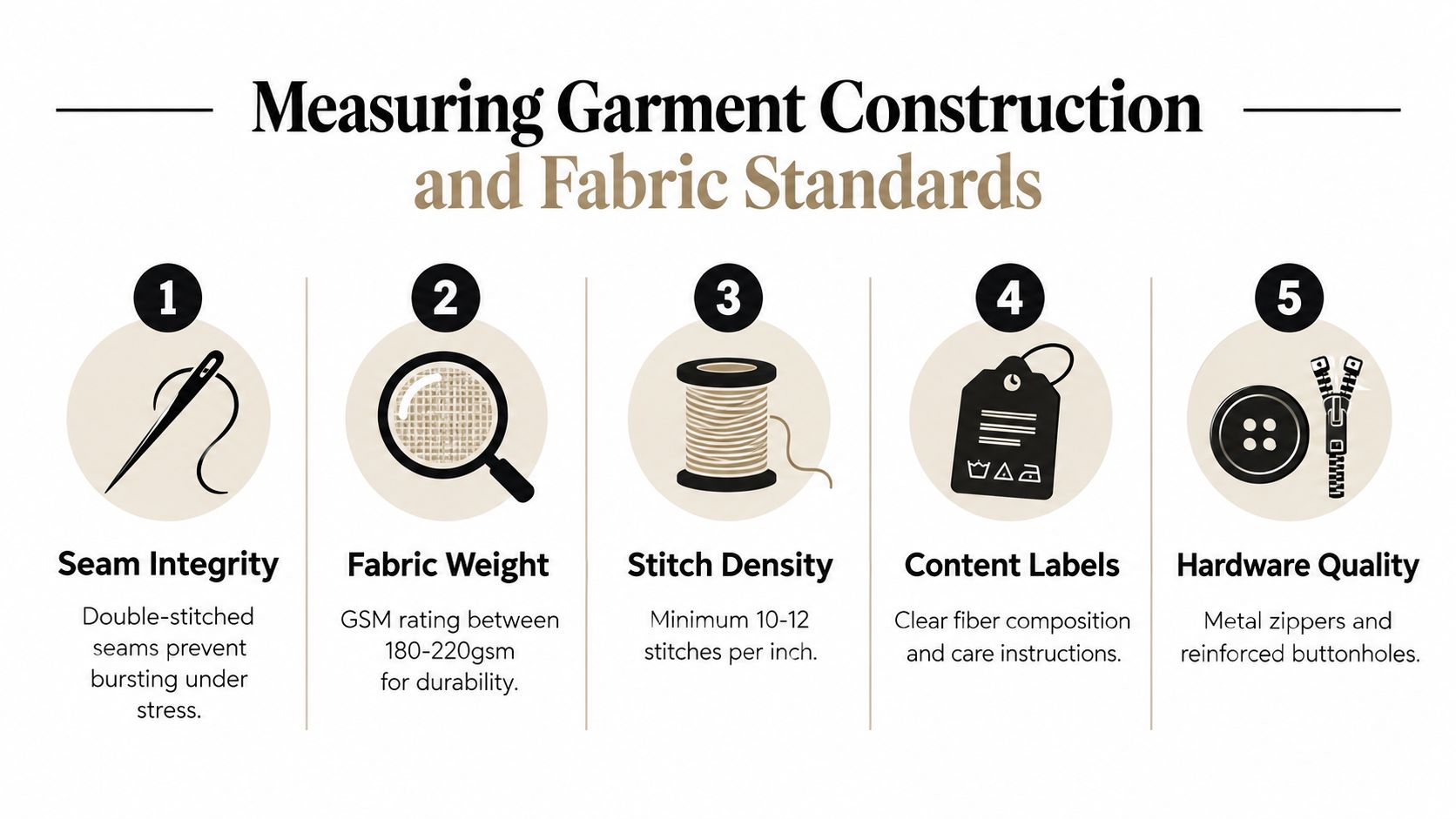
Lay a sample flat and inspect the garment from the outside, then turn it inside out. Check whether seams lie flat, whether the stitch line stays even, and whether the thread is securely locked at stress points. Pull gently across side seams, armholes, crotches, and pocket openings. You're not trying to tear the garment. You're checking whether construction feels stable rather than decorative.
For measurement control, record the chest, body length, sleeve length, waist, rise, and inseam where relevant. A published apparel inspection guide gives sample tolerances of approximately ±2 cm for half-chest and ±0.5 cm for sleeve length, alongside other construction and fabric checkpoints in its apparel quality standards and tolerance guide. Treat those figures as purchasing benchmarks only when the supplier's product specifications and measurement method match yours.
Separate major defects from cosmetic variation
Wrong sizing, color mismatch, open seams, non-functional zippers, visible stains, and labeling errors deserve serious attention because they can make a garment difficult to list accurately or unsafe to sell as described. Loose threads and slight shade differences may be cosmetic, but they still matter when a buyer expects a consistent curated lot.
Fabric performance requires more than touching the surface. Ask for fiber composition, care instructions, shrinkage information, and any available colorfastness or performance testing. The cited inspection guide includes 8 to 12 stitches per inch, with an approximate ±1 stitch-per-inch tolerance, and a minimum wash colorfastness benchmark of grade 3. Use these measures as part of a written specification, not as proof that every garment in a mixed lot meets the same standard.
A practical sample review should record:
- Measurements, compared with the supplier's size chart.
- Stitch density and seam security, especially at stress points.
- Fabric hand and recovery, including whether stretched areas return to shape.
- Surface condition, including pilling, stains, snags, holes, and shade variation.
- Labels and hardware, including composition, care instructions, zippers, snaps, and buttons.
A cotton-polyester blend can be entirely suitable for one resale audience and wrong for another. Compare the label, fabric feel, care requirements, and expected use before judging it. This cotton and polyester blend T-shirt guide can help frame that decision, but a sample inspection should always take priority over a product description.
Applying Professional Inspection Thresholds to Bulk Lots
Inspecting every garment may sound ideal, but it isn't always practical for large or mixed lots. Professional apparel buyers commonly use ISO 2859-1 sampling with AQL thresholds rather than inspecting every unit, as explained in this clothing quality control guide. The method works only when the buyer defines defects clearly before receiving the shipment.
Build a receiving plan
Start by separating the shipment into logical groups. Don't treat a box containing dresses, denim, knitwear, outerwear, and accessories as one uniform population if the products have different risk profiles. Sample each meaningful category or condition grade so a strong group doesn't hide a weak one.
Your written plan should identify:
- Critical defects: Broken needles, restricted chemical or safety issues, or another problem that makes the garment unacceptable for sale.
- Major defects: Open seams, broken stitching, measurements outside tolerance, serious shade variation, wrong size, stains, non-functional zippers, or labeling errors.
- Minor defects: Loose threads, small cosmetic inconsistencies, or slight variation that doesn't affect normal use or accurate listing.
The referenced framework uses AQL 0 for critical defects, AQL 2.5 for major defects, and AQL 4.0 for minor defects. These are commonly applied apparel thresholds, not a guarantee that every supplier or product category should use identical limits. Put the chosen thresholds in your purchase terms and confirm how the supplier counts defects.
Turn the sample into a buying decision
Pull samples randomly. If workers select only the easiest pieces from the top of a box, the result won't represent the shipment. Record the garment identifier, grade, defect type, severity, measurement result, and disposition. Photograph major findings so your negotiation doesn't depend on memory.
A sample that exceeds the agreed limit gives you an evidence-based reason to reject, request a price adjustment, require replacement, or accept only with a documented regrading plan. It also helps distinguish a supplier problem from an isolated garment issue. One stained shirt may be incidental. A pattern of incorrect labels, open seams, and inconsistent sizing indicates that the lot was not controlled to your specification.
A sample is useful only when it leads to a pre-agreed action.
Don't wait until customer returns reveal the defect pattern. Add inspection rights, grading definitions, reporting deadlines, and remedies to the purchase agreement before payment. For mixed-brand liquidation, also specify whether the grade applies to the entire lot, each brand group, or each garment category. That detail prevents a supplier from describing a box as Grade A because part of it meets the standard while the remainder requires heavy preparation.
Comparing First-Quality NWT and Secondhand Sourcing
First-quality, new-with-tags inventory and secondhand or customer-return inventory can both support a resale business. They don't support the same workflow.
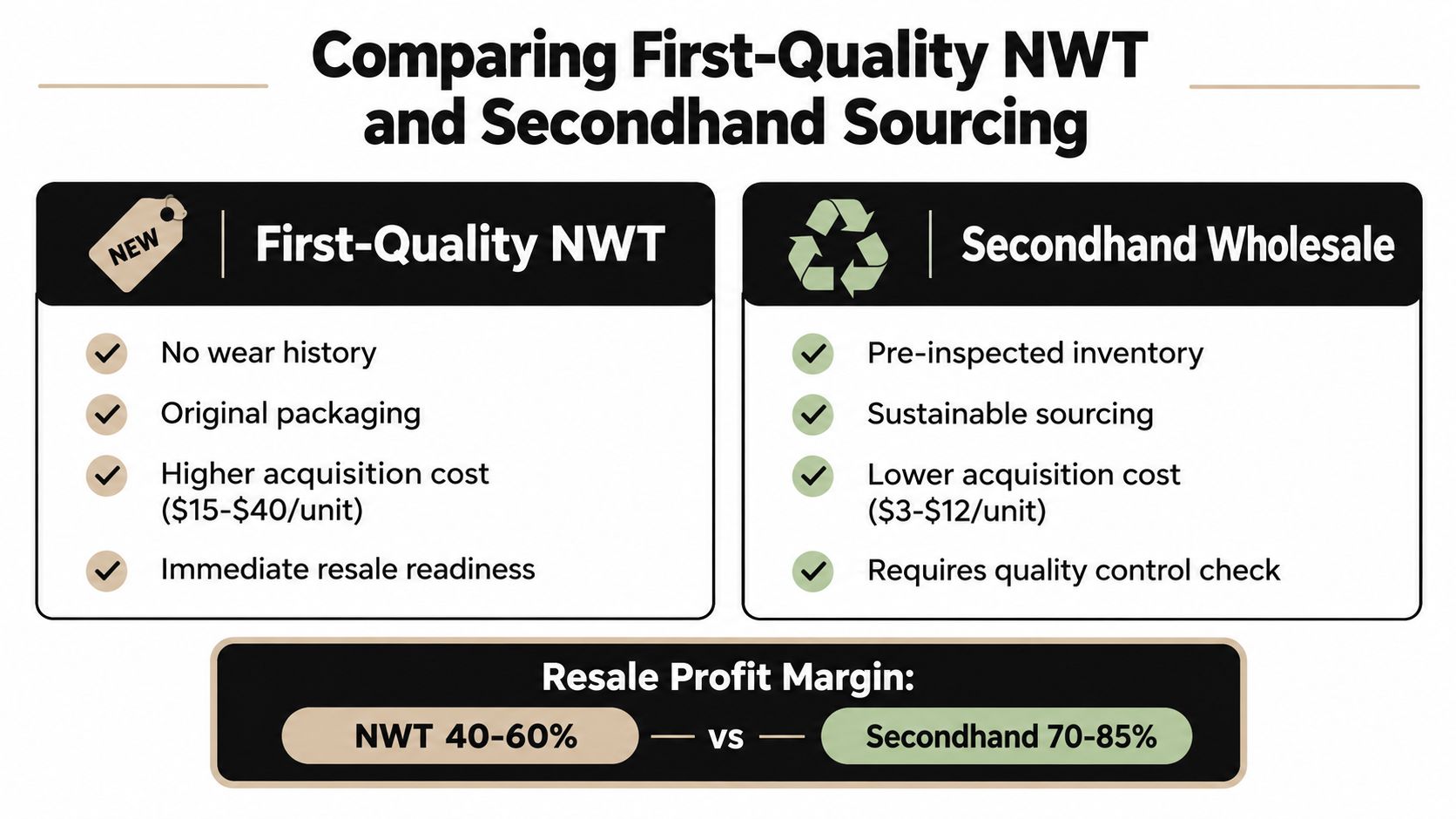
NWT stock usually offers clearer product identification, a more consistent presentation, and less preparation before listing. Original tags can make sizing and composition easier to verify, while clean packaging reduces the time spent restoring the garment. The trade-off is that acquisition cost and competition for desirable inventory can be higher, so the buyer must protect sell-through rather than assuming a tag guarantees profit.
Secondhand and return lots offer a different advantage. They can provide variety, brand discovery, and access to circular inventory, but the buyer must absorb more uncertainty. Wear history, hygiene, missing components, odor, altered hems, faded color, and incomplete labels can all affect whether a piece is ready for resale.
Match the inventory to your available labor
A boutique with limited back-room space may prefer clean, immediately listable products even if the purchase price is less aggressive. A live-sale host with an established sorting process may accept more variation because the selling format allows quick disclosure and different pricing tiers. Neither model is automatically superior.
| Inventory type | Operational advantage | Main risk | Suitable control |
|---|---|---|---|
| First-quality NWT | Faster intake and more straightforward listing | Higher acquisition pressure and possible size or style imbalance | Verify tags, authenticity, measurements, and assortment |
| Customer returns | Potential access to recognizable products and varied categories | Missing parts, wear, stains, and inaccurate original condition | Test closures, inspect surfaces, and separate condition grades |
| Secondhand clothing | Distinctive assortment and circular sourcing potential | Uneven wear, hygiene concerns, and inconsistent labeling | Wash or clean appropriately, grade visibly, and document flaws |
| Curated mixed lots | Brand and category variety without sourcing each item separately | The lot may contain uneven quality across groups | Approve a sample and define acceptance criteria before purchase |
The most damaging mistake is treating secondhand preparation as free. Labor includes receiving, sorting, lint removal, stain assessment, steaming, repair decisions, measurements, photos, copywriting, and storage. If you don't track those activities, you may call a labor-heavy lot profitable because the purchase invoice looks attractive.
Market conditions make that discipline more important. Persistence Market Research's secondhand apparel analysis reports that the U.S. secondhand apparel market is expanding at approximately 7% to 9% annually and could reach $78.8 billion by 2030, based on its market outlook. The same source notes that transaction spending has fallen even as transaction activity rises, a combination that makes predictable grading especially valuable to price-sensitive buyers.
Navigating the Wholesale Apparel Market
A mixed-brand liquidation lot arrives with attractive piece pricing, but its labeled sizes vary, several garments need extra preparation, and the brand mix misses your customers. The invoice looks profitable until you count remeasurement, steaming, repair decisions, markdowns, storage, and unsellable pieces.
The wholesale market rewards resellers who turn uncertain supply into a dependable customer experience. Current conditions include crowded sales channels, changing preferences, and pressure to keep prices attractive without lowering standards. Inconsistent grading affects more than receiving. It disrupts listing accuracy, fulfillment time, pricing, and customer retention.
Use a lot-level quality worksheet before purchase. Record the promised category and brand mix, then sample garments across brands, sizes, and condition grades. Measure key points such as chest, waist, inseam, and length. Log defects by type, preparation minutes per item, missing components, and pieces that fail your resale criteria. Compare those results with your expected selling price and available labor. The goal is to identify operational cost before committing cash, not after the shipment fills your workroom.
A seller cannot photograph a garment accurately if the received piece differs from the sample. Size labels also lose value when measurements drift across the same labeled size. Customers notice quickly when condition descriptions change from listing to listing, and refunds or complaints can erase the apparent margin.
Quality assurance becomes a conversion tool
Inspection is a sales function as well as a receiving task. Clear grading, accurate measurements, honest flaw disclosure, and consistent photography reduce buyer uncertainty at the point of sale. They also make your listings easier to produce because staff can follow the same decision rules.
Assortment quality matters alongside garment quality. A curated lot that matches your audience supports stronger listings and a recognizable storefront. A blind lot may include excellent individual pieces, yet still create costs through rejection, storage, discounting, or liquidation when the styles, sizes, or categories do not fit your customers.
Bank of America's fashion research reports that consumers have been spending less per purchase since April 2025 while still seeking value and circular goods, as described in its sustainable fashion research. That environment favors sellers who can explain an item's price through fabric condition, construction, measurements, and disclosed wear. A brand name alone rarely supports that explanation.
Buyers do not need every lot to be perfect. They need the supplier's definition of acceptable quality to remain stable.
Choose suppliers for operational fit
A useful supplier provides clear grade definitions, representative evidence, manageable test orders, and consistent answers about defects. Ask what “like new” means, how missing tags or damaged hardware are handled, and what remedy applies when a sample fails inspection. If the answers change, record that inconsistency as a sourcing risk before placing the order.
Vetting Suppliers and Securing Custom Liquidation Boxes
Supplier vetting should resemble a receiving audit. Friendly communication helps, but it doesn't replace evidence.
Begin with the supplier's inventory description. Ask for the exact meaning of each condition grade, whether grades apply at garment level or lot level, and how the supplier handles stains, odor, missing labels, alterations, damaged hardware, and counterfeit concerns. If the supplier uses photographs, ask whether they show representative inventory or only selected examples.
Use a staged buying process
A sensible process moves from information to sample to repeat order.
- Request the specification. Confirm brand categories, garment types, condition grades, size distribution, seasonality, and exclusions.
- Ask for representative evidence. Review sample photographs, packing examples, inspection notes, or a small test box when available.
- Calculate your landed cost. Include freight, preparation, platform fees, rejected items, and storage rather than dividing the invoice by the total piece count.
- Write acceptance terms. Define critical, major, and minor defects, along with the remedy for a failed lot.
- Place a controlled first order. Keep the initial purchase small enough that a poor result won't disrupt your cash flow.
- Audit the received goods. Compare the shipment with the promised brand mix, condition, measurements, and defect standard.
- Record supplier performance. Track sellable share, preparation time, recurring defect types, and response quality.
A custom box can be useful when your customer base has a clear identity. You might need women's contemporary apparel, casual basics, denim, seasonal outerwear, or a particular brand profile rather than an assortment chosen entirely by the supplier. Customization doesn't remove risk, so confirm which preferences are guaranteed and which are requests subject to availability.
Negotiate the details that protect margin
Don't focus only on the price per unit. Negotiate the information and process around the goods:
- Condition language: Define what each grade permits and what it excludes.
- Brand selection: Separate guaranteed brands from general brand categories.
- Size expectations: Request a stated size range or assortment approach.
- Defect remedy: Agree on replacement, credit, refund, or negotiated adjustment before shipment.
- Packing format: Confirm whether garments are sorted by category, condition, brand, or size.
- Communication: Establish who handles inspection questions and how quickly issues should be reported.
This wholesale clothing supplier resource can help you compare supplier questions and sourcing considerations. Regardless of the vendor, keep your own inspection records. A supplier's reputation isn't a substitute for a process that tells you whether the box worked for your store.
Building a Profitable and Sustainable Sourcing Strategy
A durable sourcing strategy treats quality as a buying variable, not a pleasant surprise. Before committing funds, decide which risks your business can absorb and which risks will consume your margin.
If your team has limited preparation time, prioritize consistent condition and straightforward listing information. If your audience values uniqueness and circular fashion, secondhand inventory may fit well, but only with visible grading and a realistic cleaning workflow. If your sales channel depends on fast live presentation, avoid boxes that require extensive testing or repair between receipt and sale.
Keep a simple quality scorecard
Score each supplier and lot against the same practical categories:
- Condition accuracy: Did the received grade match the agreement?
- Construction: Did seams, hems, closures, and hardware meet your standard?
- Measurement consistency: Could you list sizes without repeated exceptions?
- Assortment fit: Did the brands, categories, and sizes suit your customers?
- Preparation burden: How much labor did the inventory require before listing?
- Sellable yield: How much of the shipment could you confidently offer for sale?
- Resolution quality: Did the supplier respond constructively when issues appeared?
The point isn't to create a complicated spreadsheet. The point is to prevent one attractive box or one familiar brand from distorting your judgment. A supplier that delivers consistent, usable inventory gives you a stronger foundation for repeat buying than one that occasionally sends an exceptional assortment alongside difficult lots.
Quality assurance also supports sustainability. Rejecting preventable defects before shipment, accurately describing used garments, and matching products to buyers reduces avoidable handling and unnecessary returns. Circular apparel only works commercially when sellers protect trust through honest condition grading.
Your next purchase should begin with a written specification and a receiving plan. Define the acceptable defect categories, inspect representative samples, calculate preparation time, and compare the result with your actual sales channel. That discipline turns wholesale quality clothing from a marketing phrase into a measurable sourcing standard.
OneTrendyCloset offers curated brand-name apparel liquidation boxes, mix-and-match brand selection, and custom quotes for larger or more specific reseller orders. Visit OneTrendyCloset to explore box options and discuss inventory aligned with your budget, preferred brands, and resale workflow.