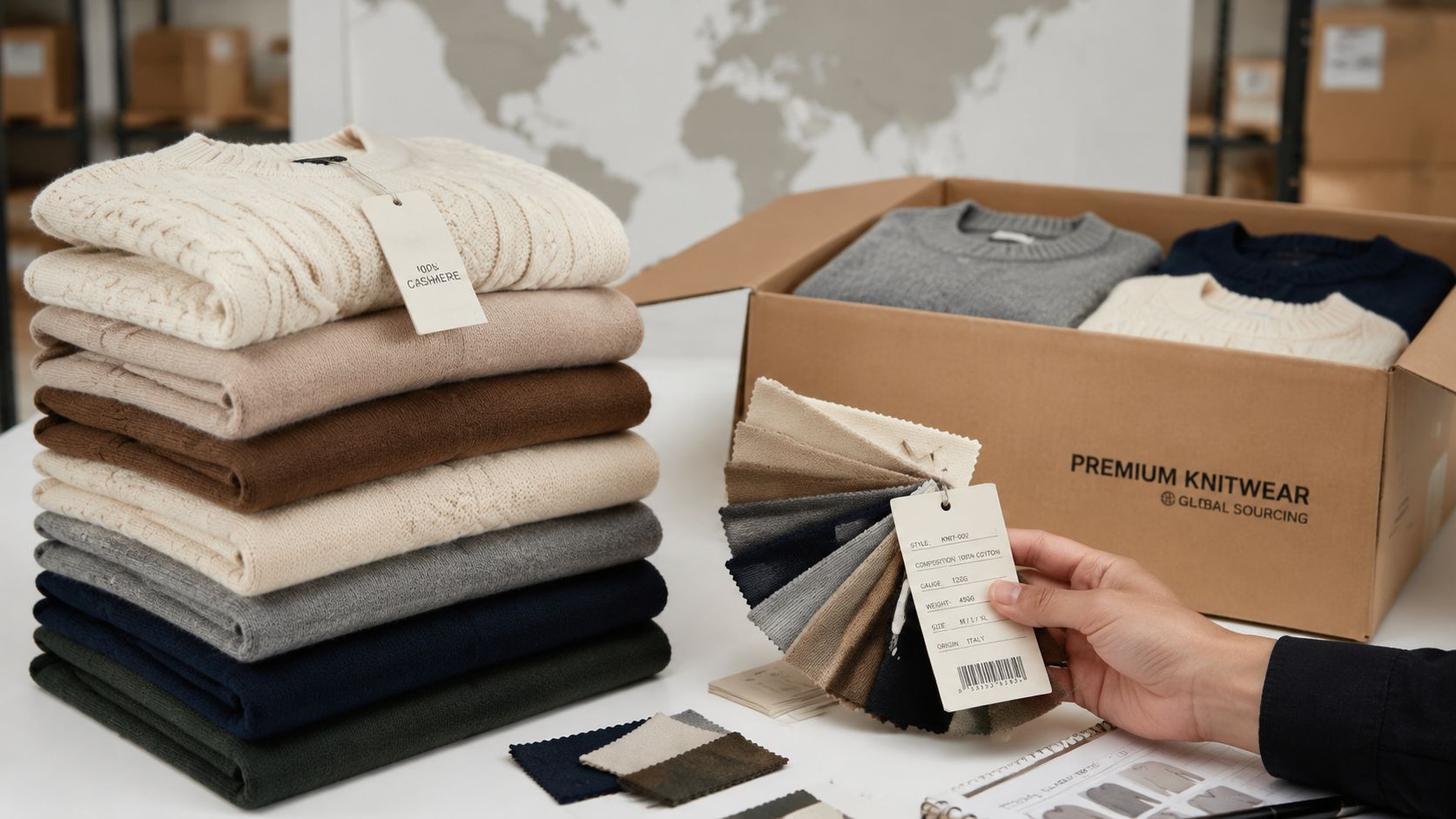
In 2021, global trade in HS code 6110 reached about US$56.25 billion in exports and US$59.17 billion in imports, which tells you sweaters aren't a side pocket of apparel, they sit inside a massive worldwide trade lane shaped by cross-border sourcing, not local convenience (Volza sweater import data). For wholesale buyers, that scale matters because inventory quality, pricing, and replenishment all depend on international supply chains that stretch across multiple exporting hubs and consumer markets. If you buy sweaters like you're buying a simple seasonal basic, you'll miss the core game, which is managing fiber behavior, lead times, and sell-through by region.
The big mistake is assuming every sweater lot behaves the same once it lands in your warehouse. It doesn't. A lot can look profitable on paper, then turn into dead stock because the yarn pills, the sizing runs off after wash, or the style sells in one climate and stalls in another. The buyers who stay profitable know how to read the lot before the tags ever go live.
Table of Contents
- Understanding the Global Sweater Trade Landscape
- Fiber Types and Their Resale Implications
- Seasonality Planning Beyond Trend Chasing
- Price Tiers and What They Actually Deliver
- Grading Systems for Liquidation Lots
- Sustainability Claims Versus Resale Reality
- Realistic Sourcing Timelines and Lead Time Planning
Understanding the Global Sweater Trade Landscape
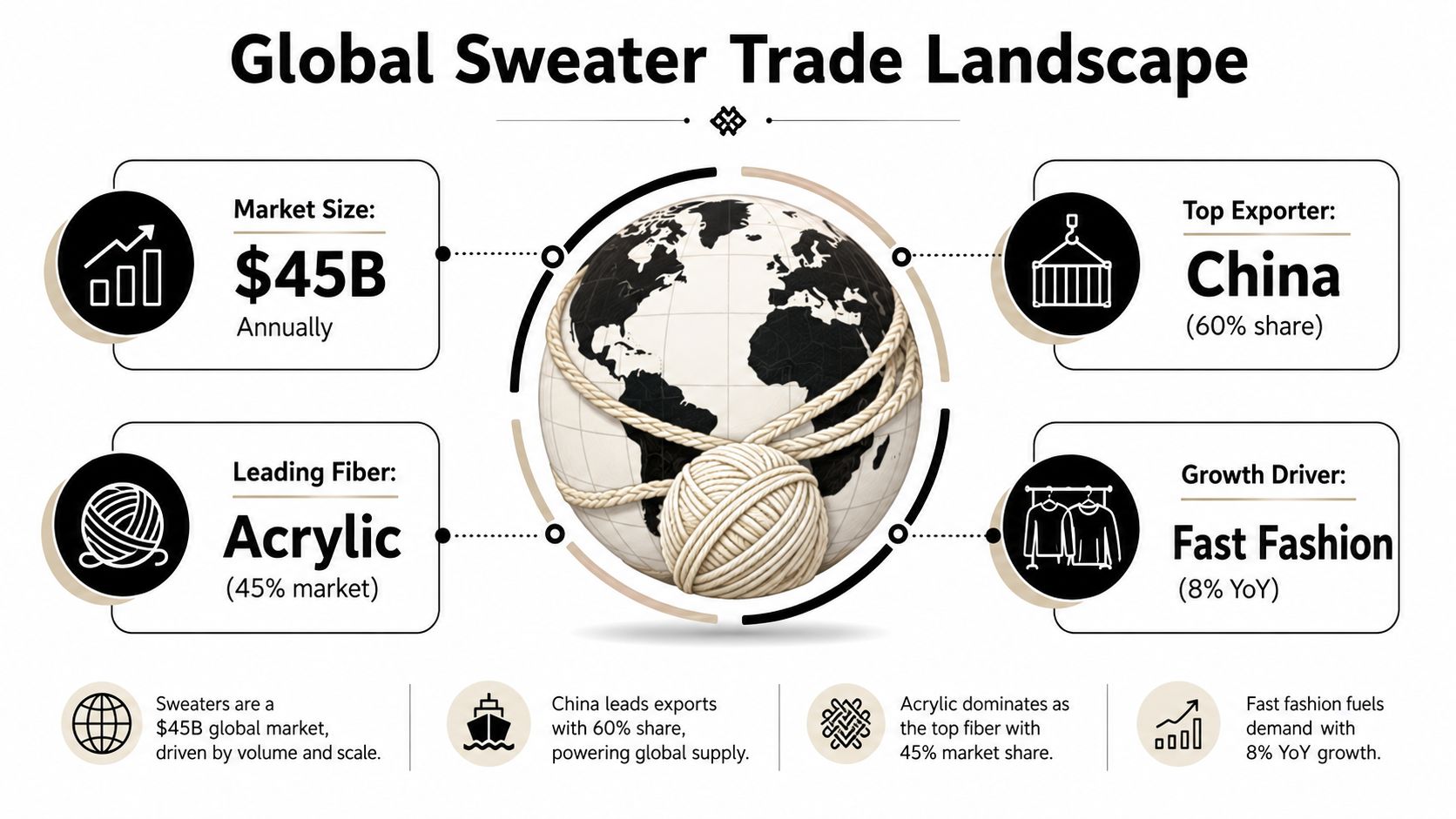
Sweaters move through one of the most international parts of apparel sourcing. In 2021, sweaters and related knitted garments were already embedded in a trade lane worth US$56.25 billion in exports and US$59.17 billion in imports, and that sits inside a much larger apparel-and-textiles economy valued at US$1.14 trillion in exports and US$1.04 trillion in imports (Volza sweater import data). That's the first clue for wholesalers, inventory isn't built in one place, it's assembled through sourcing networks that span multiple countries, mills, and freight cycles.
Why concentration matters
The supply side is concentrated in a handful of exporter hubs, especially China, Vietnam, Bangladesh, and Cambodia (Trade.gov OTEXA import data). That concentration gives buyers scale, but it also creates exposure. If yarn availability tightens, a shipping lane gets slow, or a supplier misses approval timing, the delay doesn't stay isolated. It ripples through the whole order because sweater production is a staged process, not a fast pick-and-pack item.
Practical rule: if a supplier sounds like they can move sweaters as quickly as T-shirts, they're probably glossing over knitting, linking, wash testing, or freight.
The demand side is just as telling. The United States imported US$2.71 billion of sweaters, pullovers, and similar knitted goods from China in 2024, while Canada's knit sweater imports reached C$179 million in December 2024 and its monthly trade balance for that category was significantly negative at C$173 million (Trade.gov OTEXA import data). That pattern shows what many resellers already feel in practice, major consumer markets rely on imports to fill sweater demand, so wholesale planning has to respect international lead times and customs timing.
What this means for resellers
The right question isn't just where a sweater comes from. It's whether the sourcing base can support your calendar, your margin target, and your customer's climate. If you buy for Q4 but your stock arrives late, the market doesn't wait for you. Sweaters are one of those categories where the trade lane is broad, but the selling window is narrow.
For buyers comparing mixed inventory sources, a useful starting point is a curated lot structure like the one described in OneTrendyCloset's lot guidance, especially if you want to balance brand mix and assortment control without taking on fully blind pallets.
Fiber Types and Their Resale Implications
Fiber choice decides whether a sweater becomes a reliable seller or a customer complaint. A pretty knit can still fail in resale if it pills fast, stretches out, or comes back warped after the first wash. That's why I treat fiber content as a profit variable, not a style detail.
Acrylic and blends
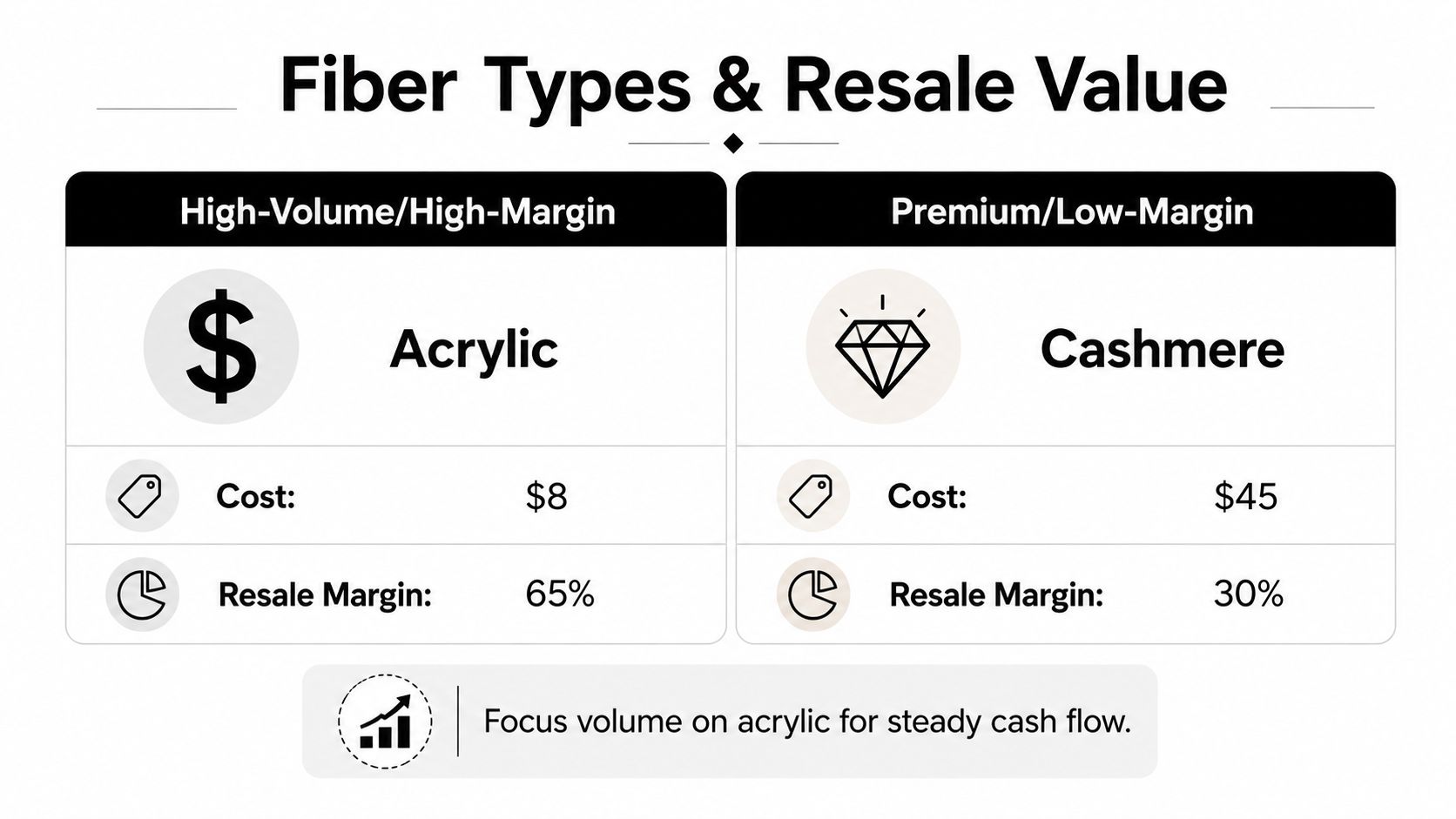
Acrylic-heavy sweaters usually give you the easiest entry point for volume. They're the kind of lots that can keep cash moving because the ticket price stays accessible and the styles are broad enough for everyday buyers, especially when the knit looks soft on camera. The trade-off is simple, low-quality or short-staple yarn is more likely to pill, and pilling is one of the fastest ways to turn a resale listing into a return.
I always inspect the knit under bright light and rub a sample between my fingers before I commit. If the yarn already feels fuzzy, the item rarely improves after washing. The sample may look fresh on the hanger and still fail after the first laundering.
Wool, cashmere, and cotton
Wool and cashmere occupy a different part of the resale ladder. They can justify higher asking prices, but only when the finish, hand feel, and fiber claims hold up under scrutiny. Cotton, meanwhile, tends to be easier for buyers to understand and trust, especially in casual basics and transitional knits.
The problem is that fiber labels don't always tell the whole story. A sweater can claim a premium blend and still use construction that collapses in wear. That's why a laundered sample is more useful than a pristine showroom piece. Approved pre-wash samples catch twisting, shrinkage, and hand-feel changes before you're locked into a bulk run.
A fresh sample can lie to you. The wash sample usually tells the truth.
What to check before buying
- Fiber content on the neck label: Verify that the declared blend matches the hand feel and the supplier description.
- Surface quality under friction: Rub the knit gently, then look for early fuzzing or loose fibers.
- Seams and finishing: Clean linking, even stitching, and consistent ribbing usually signal better production control.
- Wash response: Launder one sample before bulk approval if the lot will be sold as wearable, not just decorative.
For buyers handling mixed apparel lots, it's also worth comparing sweater behavior against other knit categories you source through OneTrendyCloset's hoodie inventory flow, since customers who buy layered basics often compare hand feel across product types.
Seasonality Planning Beyond Trend Chasing
Sweater demand punishes vague planning. The buyer who chases a trendy silhouette without mapping climate zone and sell-through window can end up with a rack full of good-looking inventory that no one needs yet. Oversized and crewneck styles do sell, but they tend to peak in colder periods and then return in bursts, so timing matters as much as design.
Climate first, trend second
I've seen the same knit perform differently in two markets because one region still needed warmth while another had already moved into lighter layers. That's why buy-depth should follow geography. Northern customers will tolerate heavier knits longer, while milder regions often convert better on lighter, transitional pieces and evergreen basics.
The bigger mistake is overbuying statement pieces because they photograph well. Editorial textures, sculptural shapes, and retro updates can help your assortment stand out, but they're less forgiving if you miss the timing. Classic oversized crews and neutral knits are safer when you need consistency, while trend-forward items need a faster exit plan.
Practical rule: if a style can't clear within its first weather window, it should be bought lighter or skipped entirely.
Assortment balance that actually works
The cleanest assortments usually split into three jobs. One group is there to generate steady movement. Another adds visual interest and helps listings feel current. The last group is your test lane, where you sample new silhouettes without tying up too much cash.
That mix matters because sweater demand is seasonal, but not evenly seasonal. If you buy only fashion-forward stock, you're betting on timing. If you buy only basics, you risk dull listings and weak basket size. The more durable model is to keep your core knit range boring enough to move and selective enough to keep margins intact.
How to avoid dead stock
- Match knit weight to region: Heavier styles belong where cold weather lasts longer.
- Limit trend exposure: Buy fewer sculptural or retro pieces unless you already know the buyer base.
- Track sell-through by month: Hold back replenishment if the first drop lags.
- Separate evergreen from seasonal: Don't let one weak trend piece distort the whole lot's performance.
Recent trend coverage also shows the market splitting between classic oversized knits and more editorial updates, so the safest wholesale play is still to treat sweaters as climate-sensitive inventory, not just fashion merchandise (Dear-Lover trend coverage).
Price Tiers and What They Actually Deliver
Sweater pricing can fool new buyers. A low per-unit cost looks efficient until you factor in cleaning, listing, shrinkage, and markdowns. A more expensive tier can sometimes be the cheaper business decision if it arrives with cleaner condition, stronger brand recognition, and less prep time.
Wholesale Sweater Price Tiers Comparison
| Price Tier | Typical Condition | Brand Mix | Avg Margin Range | Best For |
|---|---|---|---|---|
| Budget mixed lots | Variable, often requiring prep | Broad, mixed labels | Lower but volume-driven | Marketplace sellers with fast turnaround |
| Mid-tier curated lots | More consistent, usually easier to sort | Known mall and basic brands | Moderate and steadier | Boutiques and live sellers |
| Premium brand boxes | Cleaner condition, stronger presentation | Brand-forward assortments | Higher per unit, slower turnover risk | Curated storefronts and niche resale |
| Blind liquidation pallets | Uncertain until inspected | Mixed and unpredictable | Highly dependent on sorting skill | Experienced buyers with processing capacity |
What the tiers really hide
Budget lots usually win on initial cost, but they can lose money fast if the condition mix is rough. You spend time steaming, measuring, repairing, and photographing instead of listing. That overhead is real, even when the invoice looks light.
Premium lots feel safer because the presentation is cleaner and the buyer trust is easier to earn. The trap is assuming premium always means better margin. If the brand mix is too narrow or the sizing is off for your audience, you can still end up with slow movers sitting longer than they should.
Matching tier to your model
Marketplace sellers need fast turnover and low prep friction. Boutique owners can sometimes absorb a higher entry price if the lot supports cohesive merchandising. Live-sale hosts often do well with mixed tiers because they can bundle, narrate, and clear inventory in front of buyers.
For a reselling operation that wants mixed brand apparel with controlled ordering, OneTrendyCloset's custom quote workflow can be useful because it lets buyers define quantity and category preferences rather than taking a fully blind pile. That matters when sweaters need to fit a specific sell-through plan instead of just filling a box.
The right question isn't “Which tier is cheapest?” It's “Which tier leaves the most usable inventory after labor, defects, and holding time?”
Grading Systems for Liquidation Lots
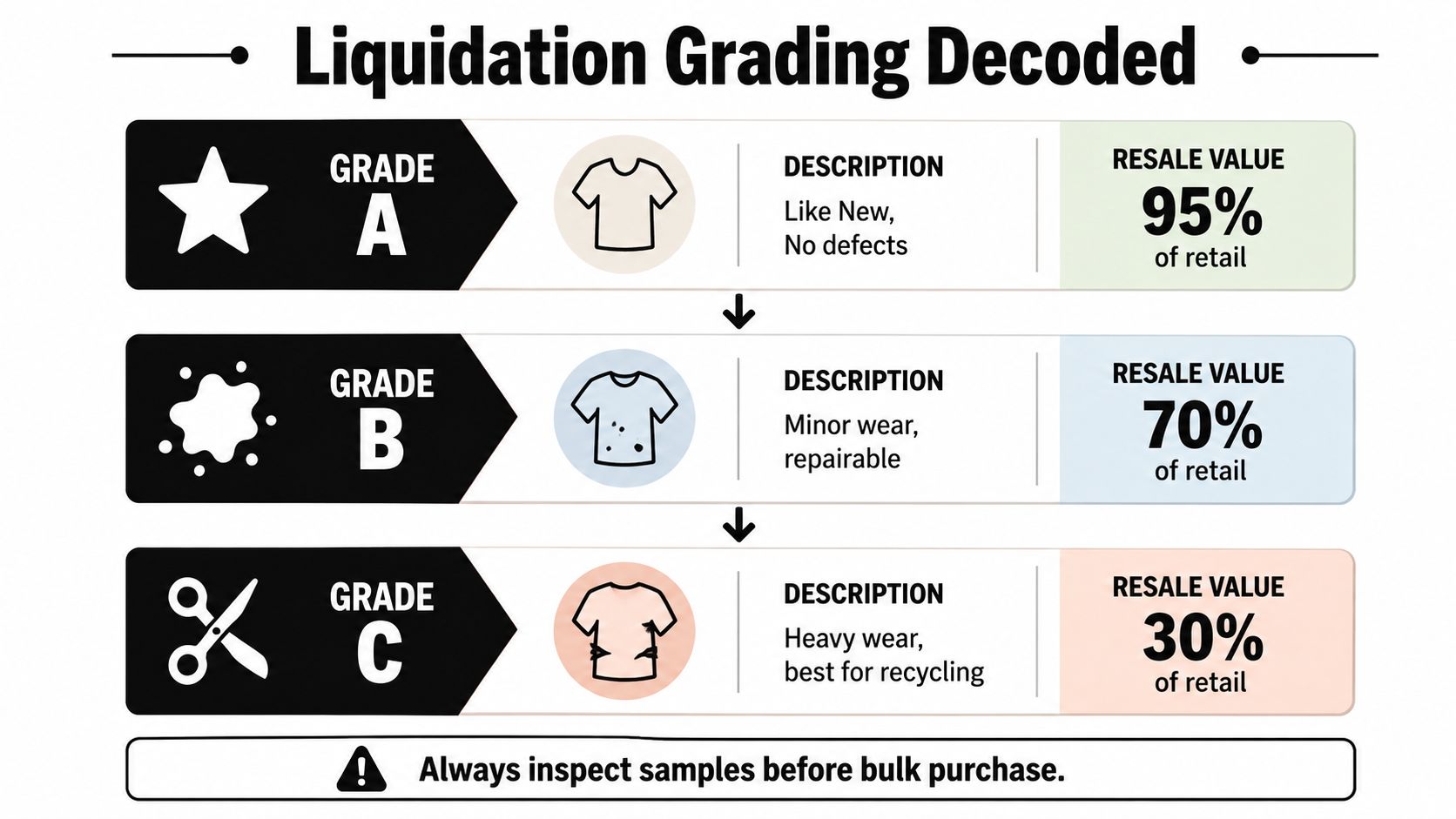
Liquidation grading sounds precise until you inspect the goods. A grade can tell you a lot, but it can also hide a messy prep job behind a clean label. I've bought lots that were called tidy and ended up with loose threads, odor issues, and pieces that needed more work than they were worth.
Reading the grade without trusting it blindly
Grade A usually means the lot should arrive in near-new condition, but that still doesn't replace inspection. Look for pilling at the cuffs, pulled yarn at the underarm, and collar distortion. Those are the spots where even good-looking sweaters reveal wear fast.
Grade B is where wholesale discipline matters most. You can often recover value with cleaning, steaming, and minor repair, but only if the defects are manageable. If the lot description avoids specifics, assume some pieces will need more work than expected.
Grade C is rarely a resale-first buy unless you already have a recycling or upcycle lane. The best use case is usually fiber recovery, fabric projects, or deep clearance bundles where the garment isn't the value driver.
The questions that save money
Before committing to a grading lot, ask for sample photos, defect notes, and condition consistency across sizes. Don't settle for a vague promise that the lot is “good for resale.” That phrase often means the seller expects you to absorb the sorting risk.
Inspect the sample, not the adjectives.
If the supplier won't show close-ups of seams, collars, and cuffs, assume the grading is doing too much work. You're paying for the lot, but you're also paying for the hidden labor that follows it.
Why this matters for customer satisfaction
Buyers don't care what your invoice said. They care whether the sweater arrives clean, wearable, and true to description. The faster you can list an item without repair, the better your cash conversion tends to be.
That's why grading should shape your pricing strategy from the start. Grade A can be listed faster. Grade B needs a labor buffer. Grade C needs a different exit entirely.
For sellers comparing broader garment categories, OneTrendyCloset's box-based apparel sourcing is another reminder that lot structure matters as much as the nominal grade when you're planning prep time.
Sustainability Claims Versus Resale Reality
Sustainability sells the idea of better inventory, but buyers still need to ask a harder question, does it sell better in your market? Eco-friendly sweaters can improve positioning, but they don't automatically improve margin. If the fiber claim is hard to verify or the customer doesn't care, you've just paid more for a label.
What matters and what doesn't
Recycled and organic materials can help when the construction is strong and the buyer base recognizes the value. They can also help you tell a better story in product descriptions, especially for customers who look for lower-impact apparel. But storytelling only works if the garment looks good after wear and wash.
That's why fiber verification matters so much. If a supplier says a sweater is sustainable, check whether the fiber content is clearly labeled and consistent across the lot. The claim should support resale confidence, not replace it.
The margin question
The trade-off is acquisition cost versus actual sell-through. If sustainable construction raises your buy price but doesn't lift conversion, the extra cost just sits on your books. If it reduces returns because the knit feels better or wears more predictably, then it may earn its place.
Recent market coverage notes that roughly 30% of new sweater product launches emphasize eco-friendly knitwear, while one report attributes about 22% of production-cost pressure to raw-material volatility (Accio market coverage). Those figures don't guarantee profit, they just show why sustainable claims have become common and why raw material swings can squeeze sourcing decisions.
What to pay extra for
- Verified fiber content: Clear labeling is worth more than vague eco language.
- Construction quality: Good seams and stable ribbing matter more than buzzwords.
- Wear behavior: A sweater that holds shape after washing protects resale trust.
- Audience fit: If your buyers shop by values, the story can help. If they shop by price alone, it may not.
A lot of wholesale buyers get trapped by branding noise. They pay for “eco” and still receive a sweater that pills, twists, or lists poorly. I'd rather source a plain knit that washes well than a greenwashed piece that looks responsible on the hangtag but creates returns in practice.
Realistic Sourcing Timelines and Lead Time Planning
The fastest way to lose money on sweaters is to order too late. Sweaters move through too many stages for panic buying to work. Yarn availability, sample approval, bulk knitting, finishing, inspection, and shipping all stack up, so a delay in one stage pushes the rest of the calendar.
A real sourcing timeline
A realistic end-to-end lead time for mid-complexity sweaters and cardigans produced in Asia is about 14 to 22 weeks, with yarn sourcing and dyeing taking 1 to 6 weeks, sampling 3 to 8 weeks, bulk knitting and linking 3 to 6 weeks, finishing and inspection 1 to 2 weeks, and shipping adding 1 to 6 weeks depending on mode (Knitwear lead time planning). Those stages don't overlap cleanly in the world if you need approval at each point, so the safest assumption is that every delay compounds.
If your bulk run needs a wash-approved sample before production starts, you've already inserted another checkpoint that can save you from a bad order. That's good for quality, but it means the calendar has to be set before the season gets close.
Where buyers get burned
A lot of new wholesalers misread sweater sourcing as a quick inventory play. They see the garment, the style, and the price, then forget the production clock. By the time the goods arrive, the weather has changed, buyers have moved on, and the lot that looked smart in July feels late in October.
That's why I plan sweaters backward from selling season, not forward from order date. If the sale window is short, the order has to move earlier than feels comfortable. If the supplier promises a fast turnaround that sounds too easy, I ask where the yarn is coming from, who approves the sample, and how long freight takes.
A practical planning checklist
- Build a buffer: Keep time in reserve for sample revisions and freight delays.
- Approve washed samples: Don't release bulk on a sample that hasn't been tested.
- Separate seasonal and evergreen buys: Don't let one calendar drive every SKU.
- Watch the handoff points: Delays usually cluster at yarn, sampling, and shipping.
For buyers who also source through domestic liquidation channels, OneTrendyCloset's wholesale inventory structure can be useful because it gives resellers another way to keep stock flowing while slower factory runs are still in motion. That kind of dual-path sourcing helps keep sweaters from arriving after demand has already moved on.
If you want sweater lots that fit real resale work, not just nice photos, visit OneTrendyCloset and look at their mixed-brand liquidation boxes and custom lot options. Their sourcing model is built for resellers who need inventory planning, brand variety, and a cleaner path from purchase to sellable stock.