You've got a small stack of blank tees on the packing table, a print idea ready to go, and several buyers asking the same question: will these shirts fit the way they expect? A soft hand-feel may win the first sale, but the wrong cut, inconsistent sizing, or a poorly graded liquidation lot can create returns, slow listings, and tie up cash.
That's why Next Level shirts deserve a closer look than a simple softness rating. The fabric blend affects drape and decoration, the style affects perceived size, and the inventory condition affects how quickly each piece can become sellable stock. Once you connect those details, choosing a blank becomes less like guessing at a catalog photo and more like making a controlled buying decision.
Table of Contents
- Why Next Level Shirts Keep Showing Up in Carts and Closets
- What Makes Next Level Shirts Different at the Core
- Understanding Fit Fabric and Feel Across Popular Styles
- How Next Level Shirts Fit and Why Sizing Varies
- Sustainability and Sourcing Claims Behind the Label
- Wholesale Sourcing and Liquidation Math for Resellers
- Smart Ways to Buy List and Resell Next Level Shirts
Why Next Level Shirts Keep Showing Up in Carts and Closets
A boutique owner might start with a familiar calculation. The shirt needs to feel good enough for everyday wear, print cleanly for a branded collection, and leave enough room for resale margin. A marketplace seller faces a slightly different version of the same problem. The listing must communicate fit accurately, the garment must arrive in acceptable condition, and the lot needs enough desirable sizes and styles to prevent dead stock.
Next Level Apparel fits into that overlap between custom decoration, retail basics, and wholesale resale. Buyers often choose it when they want something that feels more polished than a generic promotional tee. The brand's lightweight jerseys, cotton options, and blended fabrics give decorators and sellers several ways to position the same general product category, from casual graphic apparel to softer boutique merchandise.
Softness helps, but it isn't the whole decision. A very light shirt may photograph as fashionable yet feel too narrow for a customer who expects a relaxed fit. A tri-blend may create a premium impression but require more careful product descriptions because its stretch and drape change how the garment sits on the body. A return lot may contain recognizable blanks, but the value depends on inspection, sorting, and whether the sizes form a usable assortment.
Practical rule: Treat the shirt, the fit, and the inventory condition as one product decision, not three separate details.
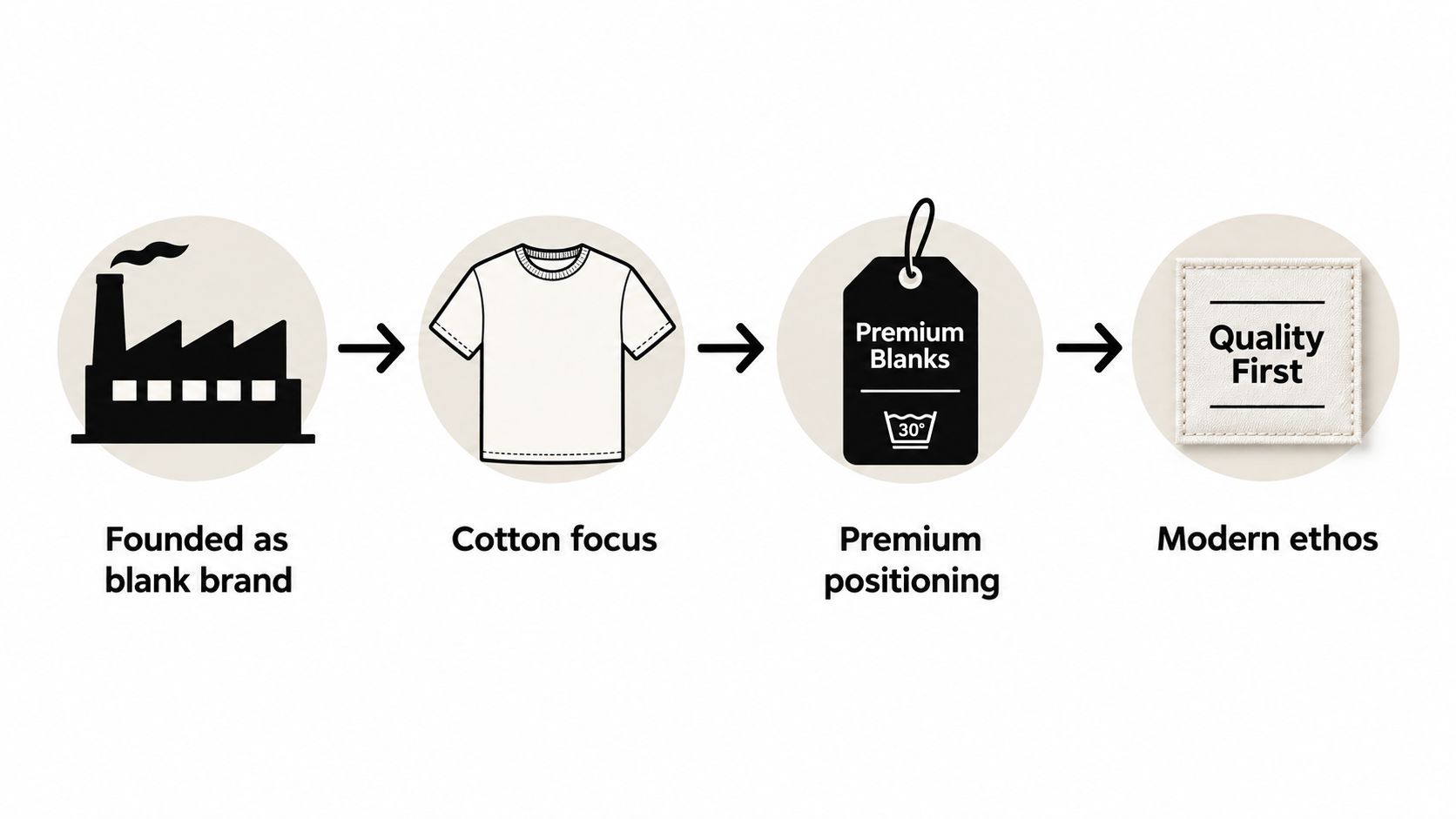
The brand has also maintained continuity in a market where wholesale basics need dependable product families. Next Level Apparel was founded in 2003 in Los Angeles and Gardena as a blank-apparel company focused on premium T-shirts, and the company identifies the 6200 Unisex Festival tee as its first style in its official company history. That background helps explain why the label appears in conversations among print shops, boutique buyers, and resellers.
This guide starts with the garment itself, then moves into fit, sourcing, and resale math. The aim is simple: help you choose styles that customers understand and lots that your operation can process profitably.
What Makes Next Level Shirts Different at the Core
Next Level Apparel began with a specific blank-apparel purpose, not as a seasonal fashion label. The company says it was founded in 2003 in Los Angeles and Gardena and that its first style was the 6200 Unisex Festival tee. That origin matters because blank brands solve a practical problem. They give decorators, clothing companies, teams, and retailers a consistent base on which to build.
Start with the product problem
The company also describes creating a 65% polyester and 35% combed ring-spun cotton fabric to meet sublimation-printing needs in its early development, as outlined in its about-us history. The important lesson isn't that one blend works for every project. It's that the brand's identity grew around matching fabric construction to a specific technical use.
Polyester can support dye-sublimation applications because the decoration process relies on synthetic fiber content. Combed ring-spun cotton contributes a smoother, softer hand than a rougher basic yarn. When those materials are combined, the result gives buyers a blank that can serve a defined printing purpose while still feeling closer to retail apparel.
That technical starting point helps distinguish Next Level shirts from an anonymous tee sold only on price. The label has built a range around different weights, cuts, and blends, so the correct question isn't “Are Next Level shirts good?” It's “Which Next Level style matches this customer, decoration method, and selling channel?”
Think wholesale platform, not one signature tee
By 2025, company and industry profiles continued to describe Next Level Apparel as a major wholesale producer of premium blanks, reflecting more than two decades of continuity in the basics market, according to the company profile on LinkedIn. Public profiles differ on scale. One lists 51 to 200 employees, while another estimate places the company near 300 employees and around $35 million in annual revenue. Those figures come from public profiles and estimates, so buyers should treat them as directional rather than as audited operating data.
The broader point is more useful than any single profile. Next Level shirts sit inside an evolving wholesale basics platform. Industry coverage identifies the 2022 acquisition of Stedman, a 2023 move toward 100% U.S. cotton for its apparel line, and a 2024 nearshore fabric partnership with Honduras-based GK Global intended to shorten lead times and improve supply-chain transparency, all summarized in the cited company profile.
That evolution affects buying decisions. A broad product platform can offer more options, but it also makes SKU-level checking essential. Never assume that one Next Level style represents the fit, weight, or fiber behavior of the entire range.
Understanding Fit Fabric and Feel Across Popular Styles
The easiest way to understand Next Level shirts is to separate fabric behavior from cut. Fabric determines how the shirt hangs, stretches, breathes, and responds to printing. Cut determines where the shoulder seam, chest, sleeve, and hem sit on the body. Two shirts can share a size label and still feel completely different because those two systems aren't identical.
Compare the major fabric families
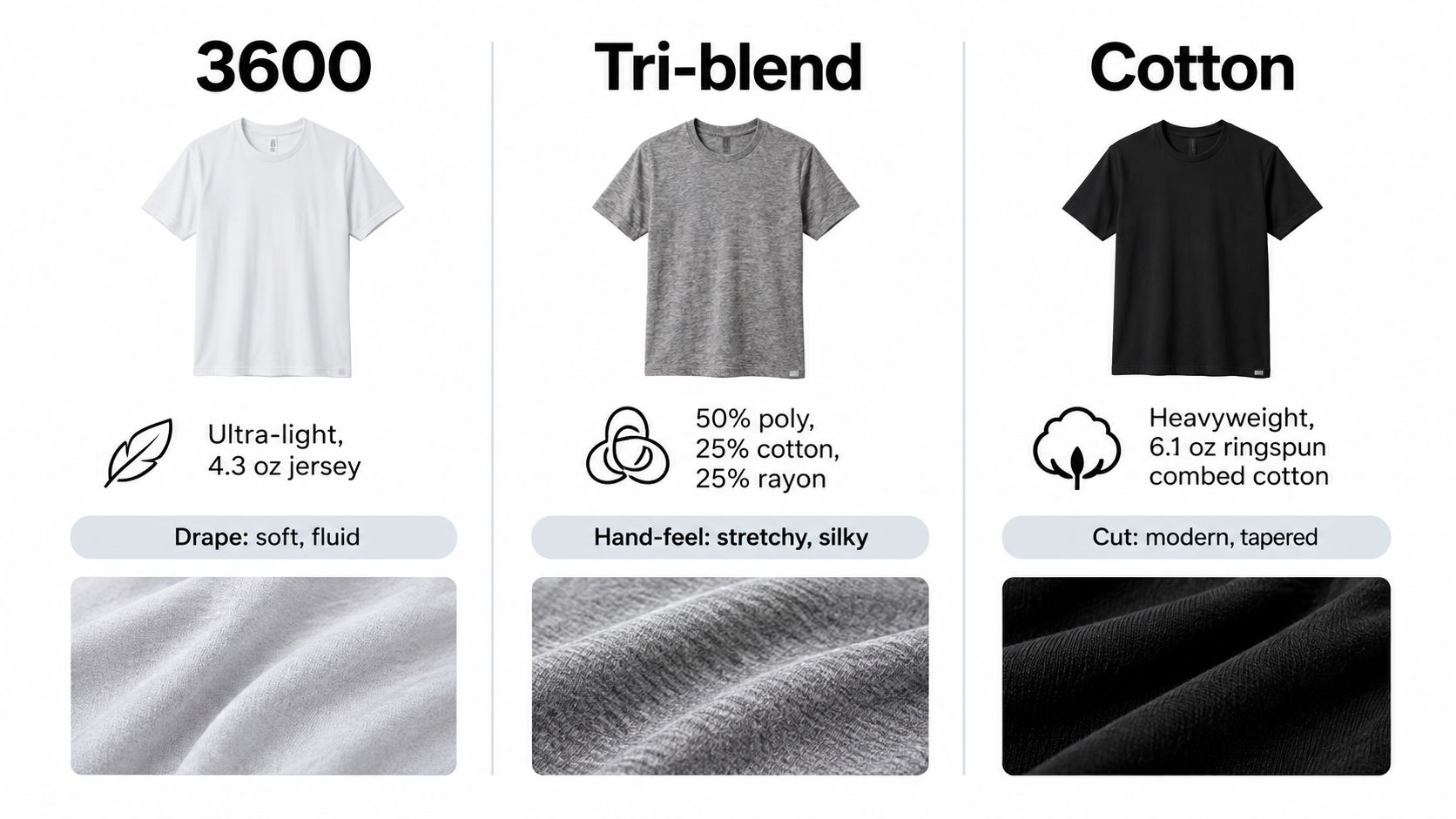
The 3600 is commonly associated with a lightweight jersey construction and a modern blank-shirt silhouette. The provided product comparison identifies it as 4.3 oz jersey, so it behaves more like a light layer than a structured heavyweight tee. That can make it useful for fashion graphics, warm-weather collections, and customers who prefer a softer, less rigid garment.
A tri-blend combines three fibers. The comparison identifies the composition as 50% polyester, 25% cotton, and 25% rayon. Think of it as a fabric designed to move rather than stand away from the body. It typically offers a silky hand, gentle stretch, and fluid drape. Those traits can make a printed garment feel premium, but the surface may also produce a softer, more vintage-looking decoration effect than a dense cotton canvas.
A heavier cotton option sits at the other end of the scale. The comparison describes a 6.1 oz ringspun combed cotton shirt with a more substantial modern cut. It feels closer to a traditional everyday tee, with more body and structure for buyers who don't want a featherweight garment.
For decorators, material choice also affects the finished design. Cotton generally gives a more familiar print surface, while blended fabrics may soften or mute the visual effect depending on the method and ink. Before ordering a large lot, compare the garment specification with the intended process. The sublimated T-shirt guide can help frame that decision, especially when polyester content matters.
Match the cut to the buyer
A unisex cut usually gives you a broader starting point for group orders and general resale, but “unisex” doesn't mean every body will experience the same fit. Women's styles may narrow through the torso or shorten the body. Fitted cuts can make the same labeled size feel smaller across the chest and waist.
Use a simple mental model:
- Lightweight jersey: soft and easy to layer, but more revealing of the body underneath.
- Tri-blend: flexible and fluid, with a more fashion-oriented drape.
- Heavier cotton: more structured, with a familiar everyday-shirt feel.
- Women's or fitted cut: shaped for a closer silhouette, so measurements matter more than the label.
List the actual style whenever possible. “Next Level shirt” is too broad for a customer choosing between a narrow fashion tee and a roomier cotton basic.
How Next Level Shirts Fit and Why Sizing Varies
The short answer to “Do Next Level shirts run small?” is sometimes, but that answer isn't precise enough to guide a purchase. Independent review coverage describes the 3600 and similar blanks as lightweight, soft, and print-friendly, while also noting that they can run small and that fit varies by style and colorway, as shown in this review of the Next Level Ideal T-shirt.
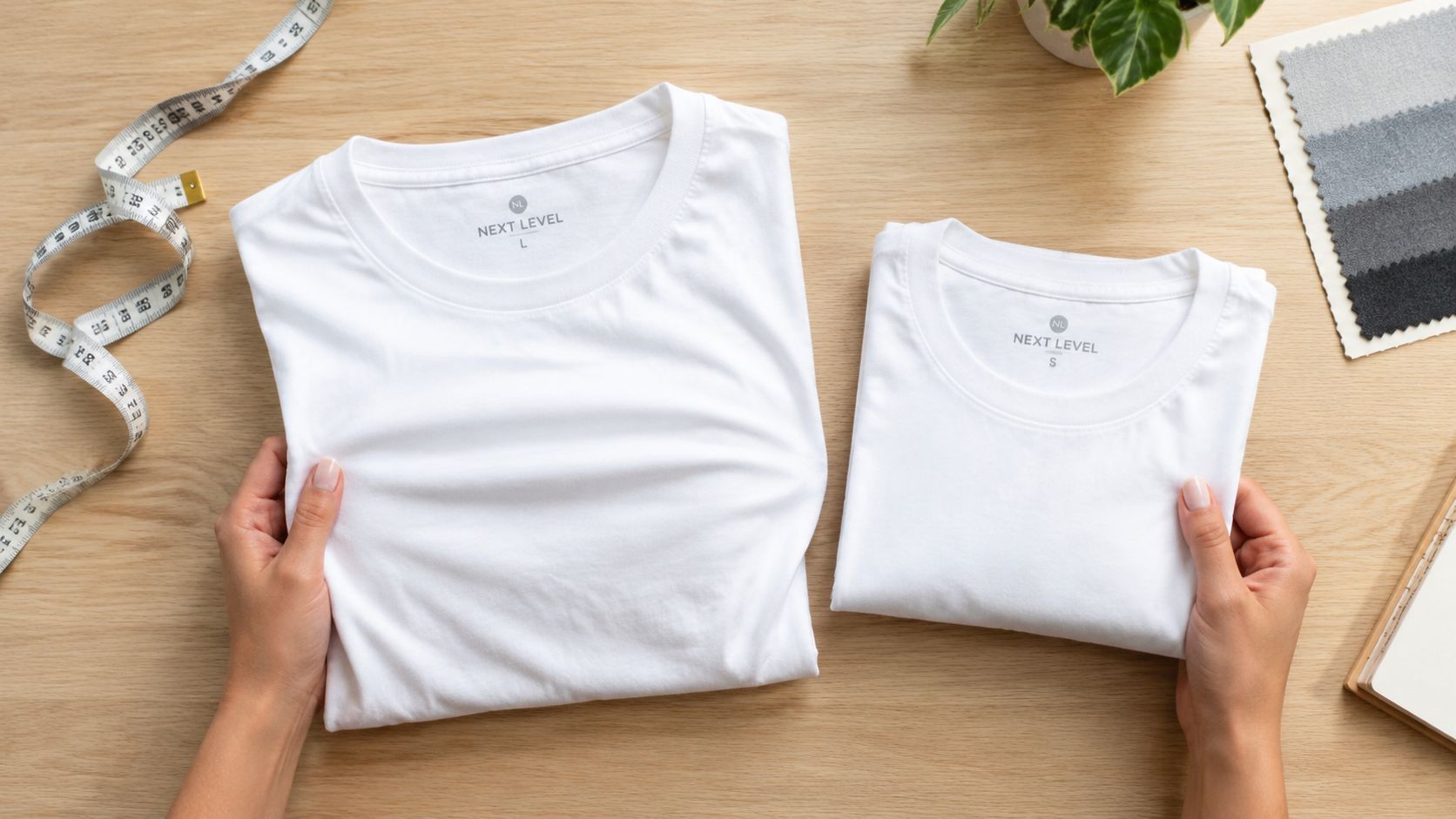
A better approach starts with three measurements: chest width, body length, and post-wash change. Chest width tells you whether the shirt will feel fitted or relaxed. Body length tells you whether a larger size will solve the width problem or make the shirt too long. Wash behavior tells you whether the first sample will continue to represent the garment after normal care.
Why generic size-up advice fails
A blanket “size up” recommendation can create new problems. If a shirt is narrow because the cut is intentionally fitted, moving up may improve chest comfort. If it feels small because cotton changed after laundering, the correct response may be to explain care instructions and record the post-wash measurement. If the issue comes from comparing a women's style with a unisex style, sizing up may distort the shoulder and sleeve proportions.
Colorway can matter too. Different dyes and fabric treatments may produce different hand-feel or dimension behavior, so resellers shouldn't assume every color in one style will behave identically. The review source includes before-and-after wash measurements showing measurable shrinkage differences even within the same model, which is why a sample check is more useful than a generic internet answer.
Here's a practical repeat-order routine:
- Measure a new sample flat, without stretching it.
- Record chest width and body length by style and size.
- Wash and dry it according to the care method you plan to recommend.
- Measure it again and save the result with the SKU.
- Use those measurements in listings and buyer messages.
For group orders, ask for a garment measurement rather than relying only on “medium” or “large.” For resale, photograph the tag and describe the cut plainly. Customers can accept a fitted shirt when the listing makes that fit clear. They're less forgiving when the listing promises a standard fit and the garment arrives narrow.
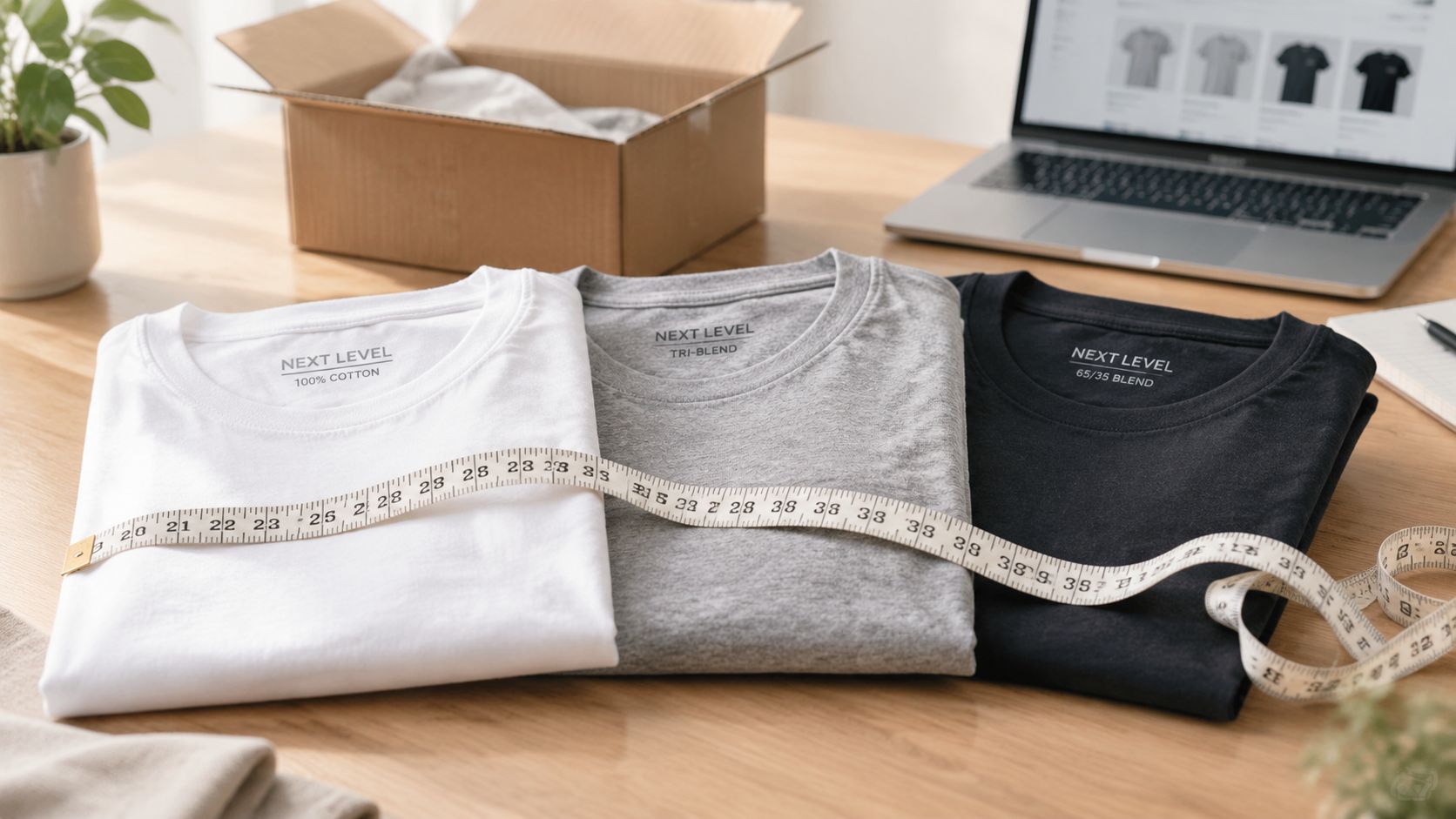
A visual check can make this issue easier to communicate to customers and staff:
Sizing rule: Keep one approved sample for each recurring style, and compare future inventory against it before publishing measurements.
Sustainability and Sourcing Claims Behind the Label
Sustainability language needs the same careful reading as a size chart. A label may discuss waste reduction, recycled fibers, or cotton sourcing, but those statements don't automatically describe every style, color, mill, or production stage.
Next Level Apparel states that its manufacturing-waste initiatives reduce scrap fabric by more than 2 million pounds per year, and it says the Sustainable Collection has recycled millions of plastic bottles. The company also says it was transitioning polyester-blended fabrics to recycled polyester. These are brand-stated initiatives described on its responsible business page, so buyers should distinguish between a stated program and independently verified performance for a specific SKU.
Separate the material questions
Cotton, polyester, and blended fabrics create different sourcing questions. For cotton, ask whether the claim identifies the fiber origin and whether the product line participates in a traceability program. For polyester blends, ask whether recycled content applies to the particular style rather than to the collection generally. For a tri-blend, check whether the claim covers all three fibers or only the polyester portion.
The company said in 2025 that its trust-US-cotton membership was in progress and expected to be fully onboarded by the end of 2025, according to the same responsible business information. That wording describes a transition or commitment, not proof that every current garment has identical traceability documentation.
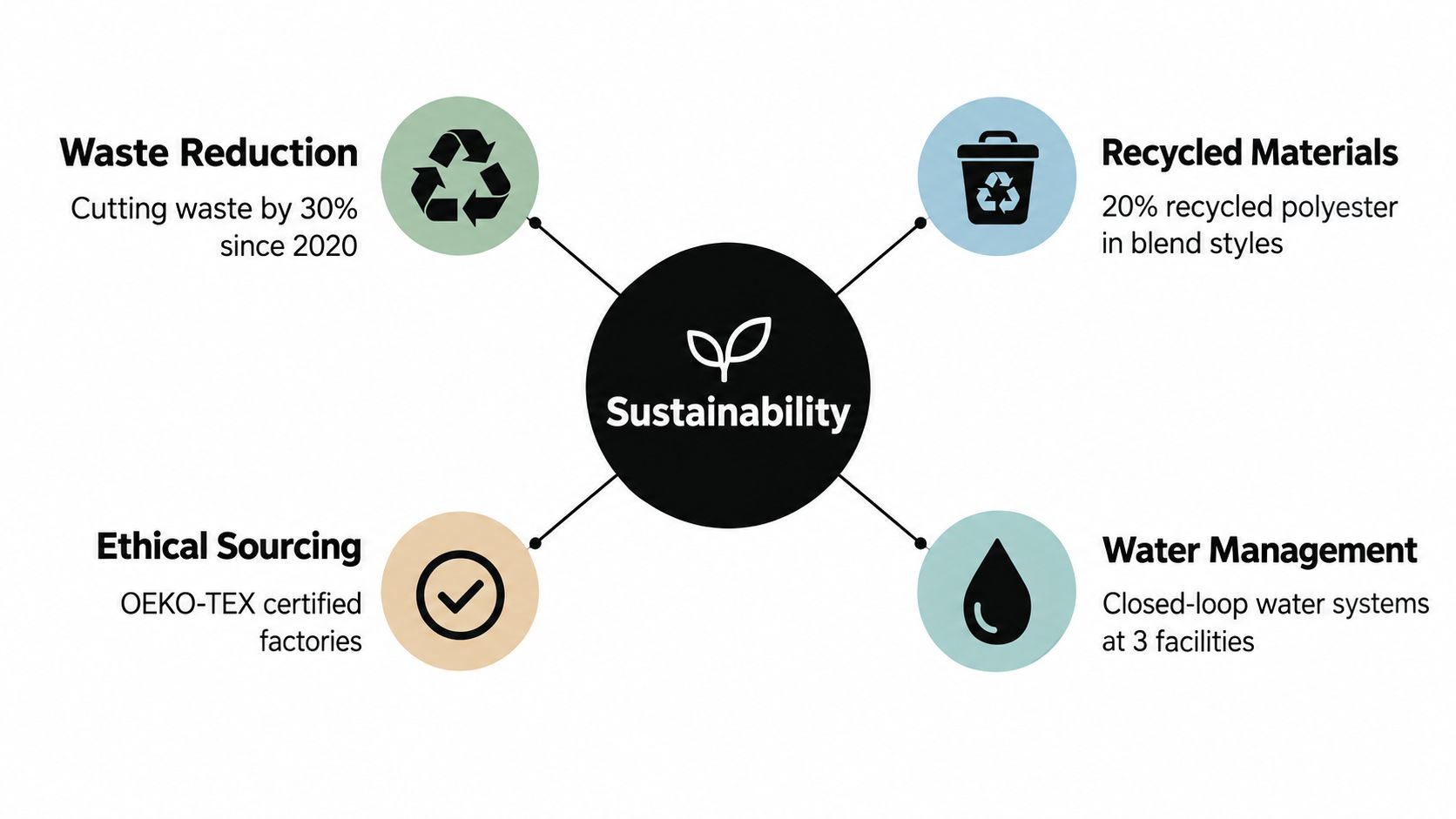
For bulk buyers, keep a record of the product page, fiber content, supplier communication, and any available certification documents at the time of purchase. If a customer asks whether a shirt is “eco-friendly,” answer with the specific claim you can verify. A careful description might identify recycled polyester in a stated blend, while avoiding a broad environmental promise that the product information doesn't support.
Wholesale Sourcing and Liquidation Math for Resellers
A liquidation purchase succeeds or fails on recovery rate, not on the discount printed beside the lot. Independent industry coverage reports that only about 10% to 20% of online returns are restocked at full retail, while the rest moves through liquidation and secondary channels, as described in this 2026 liquidation-market analysis. That flow creates opportunity, but it also means the reseller inherits sorting, grading, shipping, listing, and return risk.
Two lot types deserve separate treatment:
| Lot Type | Typical Discount Off Retail | Condition and Labor Impact |
|---|---|---|
| Overstock | 50% to 70% off retail according to independent liquidation guidance | Usually new, so inspection and listing work tend to be lighter |
| Return or exchange lots | 70% to 90% off retail according to the same liquidation guidance | Mixed condition requires inspection, sorting, defect checks, and clearer grading |
The table uses typical ranges reported by the cited source. Actual lot terms can differ, so treat them as a starting framework rather than a purchase guarantee.
Calculate the landed basis first
Suppose a lot contains Next Level shirts at different conditions and sizes. Don't divide the purchase price only by the number of pieces. Start with landed cost, including freight and any handling charges. Then estimate the number of units you can list as new, the number that need a condition note, and the number you may not sell.
The relevant calculation is:
Expected net recovery = expected sale proceeds minus platform fees, shipping, returns, sorting labor, and other selling costs.
Then compare expected net recovery with landed cost. The 2026 analysis says apparel pallets commonly clear at about 15% to 20% of retail value, while fashion-clearance recovery can fall below 7% at the wholesale write-off stage. Those figures appear in the liquidation-market analysis, and they show why a sticker discount can mislead you. A low auction basis may still be expensive if the lot contains damaged garments, incomplete size curves, or styles that require heavy explanation.
Let assortment quality guide the buy
A balanced size curve usually sells more smoothly than a box dominated by one narrow size. Strong brand recognition can help a listing earn attention, but it won't rescue every color, season, or condition grade. Item-level selectivity matters because some pieces will generate cash quickly while others sit until you discount them.
Before buying, ask:
- Condition: Are garments new overstock, customer returns, or a mixture?
- Documentation: Does the manifest identify style, color, size, and condition?
- Labor: How long will inspection, steaming, measuring, and photography take?
- Channel fit: Will the inventory work better on Poshmark, eBay, Mercari, a boutique rack, or a live sale?
- Exit plan: Can slower pieces become bundles, decorated blanks, or clearance stock?
OneTrendyCloset offers curated brand-name apparel liquidation boxes, mix-and-match brand selection, and custom quotes for boxes or pallets. For a reseller testing demand, that type of staged sourcing can provide a path from a smaller box to a more customized order, while the buyer still needs to confirm whether the available assortment includes the desired Next Level styles. The wholesale supplier guide offers additional context on evaluating a supplier and matching inventory to a selling model.
Smart Ways to Buy List and Resell Next Level Shirts
Start with the customer, not the carton. Decide whether your buyer wants a lightweight fashion tee, a fluid tri-blend, or a more structured cotton shirt. Then choose styles that match that expectation and document measurements before you list the inventory.
A repeatable workflow looks like this:
- Approve a sample: Measure chest width and body length before and after laundering.
- Separate by style: Don't combine 3600, women's, tri-blend, and heavier cotton pieces under one generic fit description.
- Grade: Mark new, inspected, flawed, and unlisted units separately.
- Photograph the details: Show the tag, fabric surface, print area, color, and any defect.
- Price from net recovery: Subtract platform fees, shipping, packing, and expected returns before setting your target.
- Watch size balance: Prioritize lots with a usable spread of sizes instead of a stack concentrated in one measurement.
- Test before scaling: Use a smaller purchase to learn which styles and colors move in your channel.
- Keep records: Save SKU-level measurements, wash notes, listing language, and sell-through observations.
A clear listing might say “lightweight, fitted unisex jersey” rather than “premium T-shirt.” That phrase gives the buyer a useful expectation without promising a universal fit. If you're building a marketplace operation, the guide to starting on Poshmark can help connect inventory decisions with the demands of a listing-based sales channel.
The strongest resale strategy is selective. Buy the styles your customers understand, the condition you can process, and the size mix you can sell. Next Level shirts can support premium positioning, but the profit comes from accurate fit information and disciplined lot economics, not softness alone.
OneTrendyCloset offers curated brand-name apparel liquidation boxes, mix-and-match options, and custom lots for boutiques, marketplace sellers, and live-sale hosts. Visit OneTrendyCloset to review available sourcing options and ask about inventory that fits your preferred brands, sizes, budget, and resale channel.