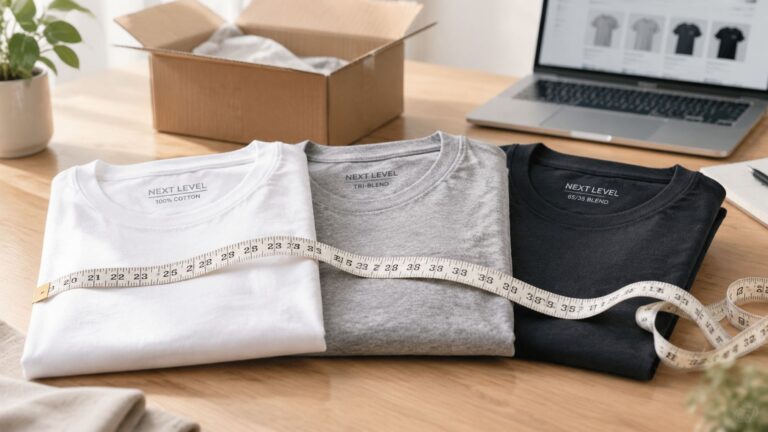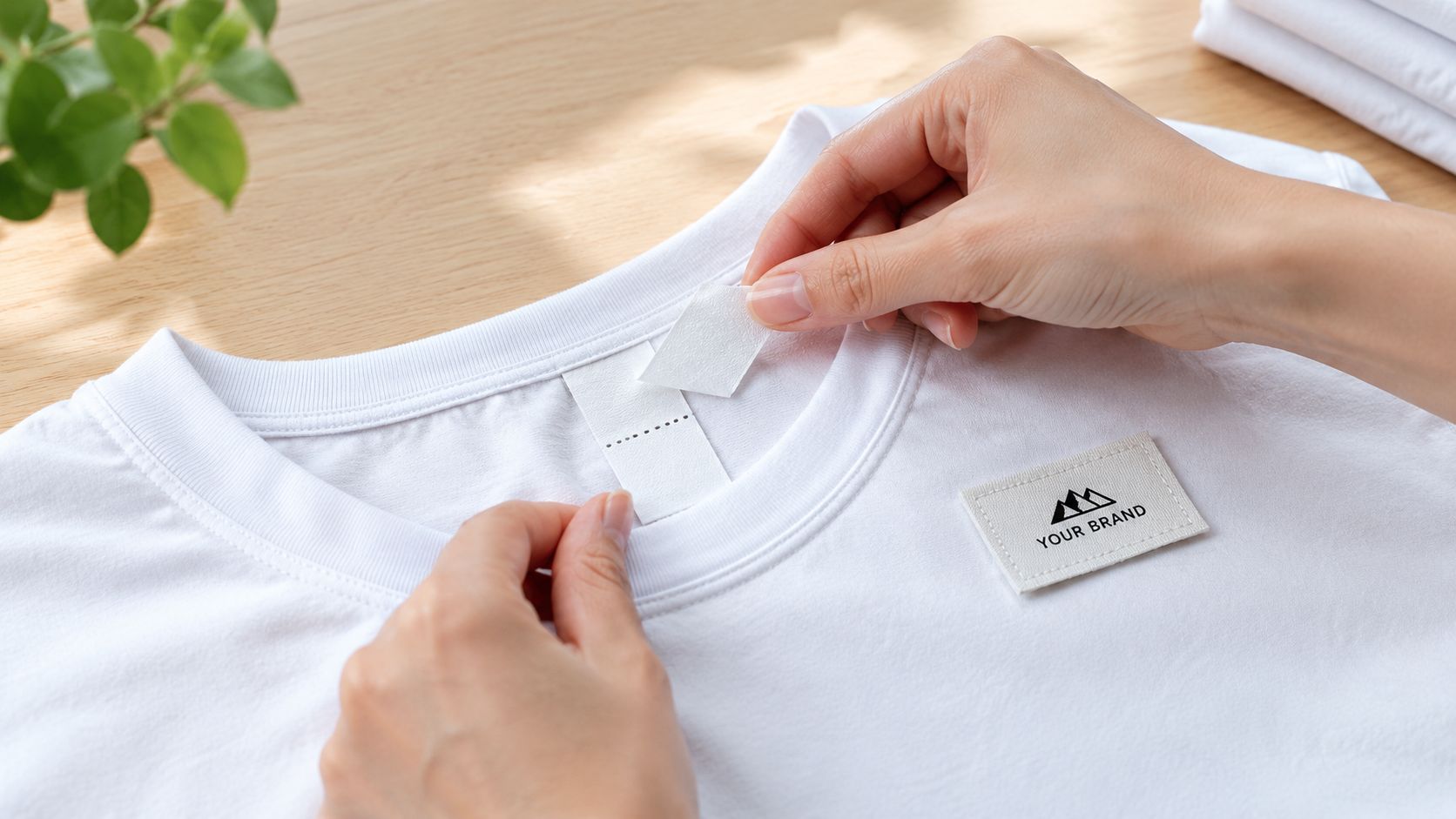
Your first wholesale shipment has arrived. The shirts fit your product plan, the colors work for your boutique, and the fabric feels right, but the original neck labels make every piece look like generic inventory. You want customers to remember your brand, not the blank apparel supplier behind it.
That's where tear-away tag T-shirts become useful. They let you remove a manufacturer's interior neck label and replace it with your own printed branding, without manufacturing a shirt from the ground up. For a reseller, this small construction detail can affect comfort, presentation, relabeling time, and the way a basic garment supports a larger collection.
Table of Contents
- Unlock Your Brand Potential with Tear Away Tags
- Understanding the Mechanics of Tear Away Tags
- Why Tear Away Tags Are a Reseller's Best Friend
- The Relabeling Process From Start to Finish
- Sourcing Blanks and Staying Legally Compliant
- Turning Blank T-Shirts into Branded Assets
Unlock Your Brand Potential with Tear Away Tags
A boutique owner might begin with a small run of blank shirts, apply a graphic, and sell them under a carefully chosen brand name. Without a tear-away label, the inside neck often becomes a problem. Cutting out a sewn-in tag can leave loose threads, damage the collar seam, or create an uneven area that feels unfinished. With a properly made tear-away tag, the first step toward private labeling is much simpler.
The label is designed to come out by hand, leaving the neckline ready for a new brand mark. That gives a reseller room to create a consistent presentation across shirts sourced from different production runs, provided the garments have compatible construction and the required information remains available.
Why this matters beyond appearance
A removable neck label supports three commercial goals:
- Brand consistency: Your name, logo, size presentation, and visual style can appear inside the garment rather than only on packaging.
- Customer comfort: Removing a scratchy or bulky tag can create a cleaner neckline for people who prefer tag-free clothing.
- Flexible production: You can source blanks, decorate them, and add branding as orders or collections take shape.
This workflow can be especially useful for a new apparel line that isn't ready to invest in custom manufacturing. You're not buying a finished branded product, but you can turn a suitable blank into a more cohesive branded asset through decoration and finishing.
Practical rule: Treat the tear-away label as a production feature, not a marketing promise by itself. The shirt's fit, fabric, stitching, print quality, and compliance details still determine whether the finished product deserves repeat sales.
The strongest result comes from matching the blank to your customer and your decoration method. A soft everyday tee may suit a comfort-focused boutique, while a polyester style may be better for a particular print process. The label gives you more control over the final presentation.
Understanding the Mechanics of Tear Away Tags
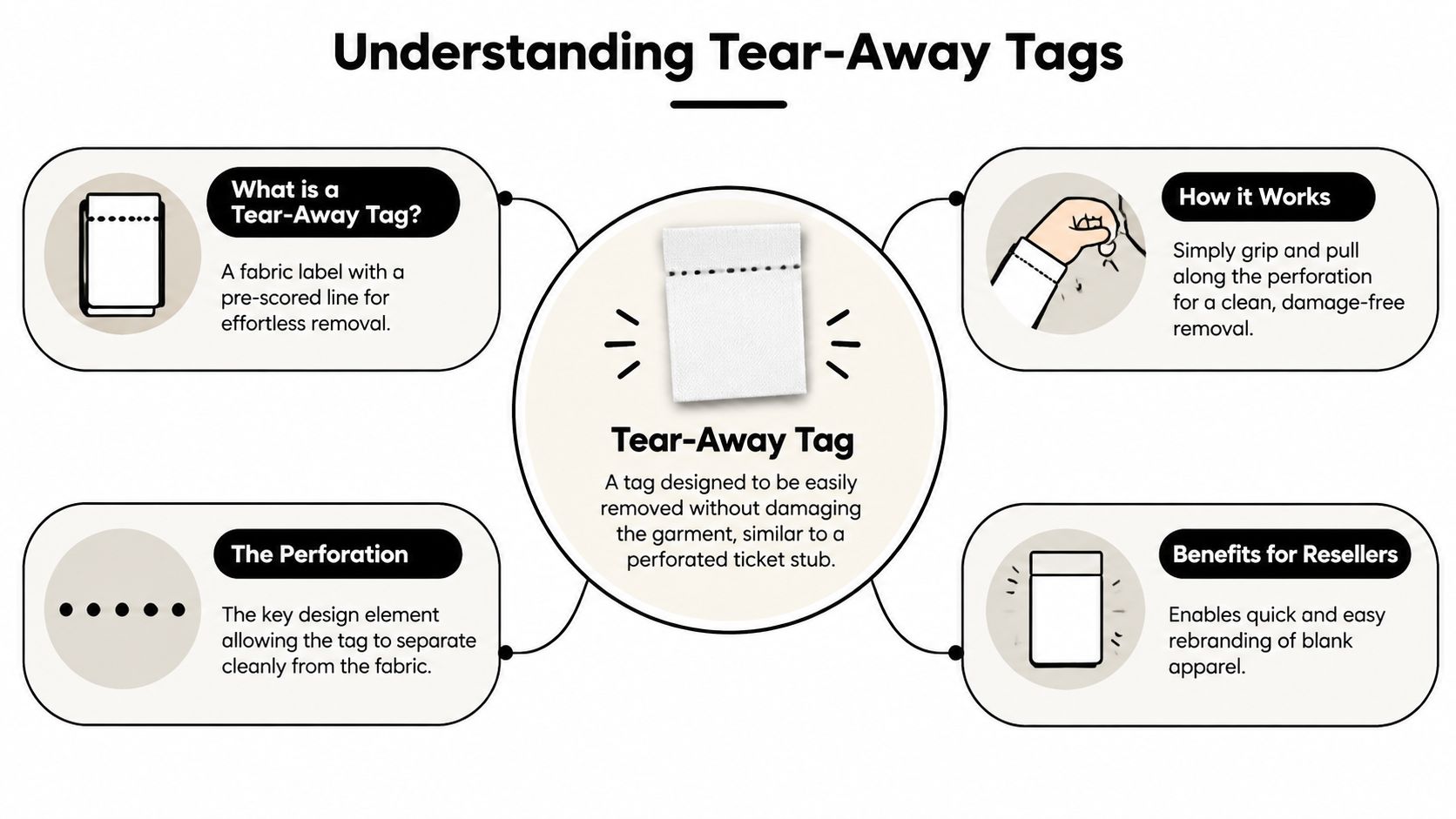
A tear-away tag works much like a perforated ticket stub. The material stays attached during normal handling, sewing, packing, and laundering, but a prepared separation point lets you grip the label and pull it away when you're ready to rebrand the garment.
In practical terms, tear-away tag T-shirts use an interior neck label attached along a perforated or lightly stitched seam. The seam must be weak enough to separate cleanly, yet strong enough to survive production and distribution before removal. Some constructions attach the label to the neck tape instead of directly to the body fabric, helping reduce the chance of a visible scar after the tag comes out. This construction is described in more detail by Viseprint's tear-away label glossary.
How to identify a suitable shirt
When you're checking samples or wholesale listings, look for a label that:
- Pulls away by hand, without requiring scissors or a seam ripper.
- Separates along its intended seam, rather than tearing into the collar.
- Leaves minimal thread ends or fabric damage after removal.
- Sits in a practical location, ideally where the neckline can accept a replacement print or label.
- Leaves compliance information accessible, instead of removing every legally required disclosure with the branding tag.
A standard sewn-in label isn't equivalent. Cutting one out may remove the label, but it can also cut the garment's neck tape or leave a rough edge. A heat-applied tagless print is different again. It may feel comfortable, but it generally isn't designed to be removed and replaced in the same way.
The broader move away from sewn-in labels
The category grew from a wider apparel shift toward tagless and removable identification. In the United States, contemporaneous New York Times reporting described Hanes replacing the traditional sewn-in neck tag on its T-shirts with a heat-applied label in 2002. The reporting noted that the company had used tags for more than 100 years, with tags attached by seamstresses as early as 1920.
That history helps explain why removable labels aren't just a decoration trend. Apparel makers were trying to reduce neck irritation and improve comfort while still preserving the information required for textile products.
Why Tear Away Tags Are a Reseller's Best Friend
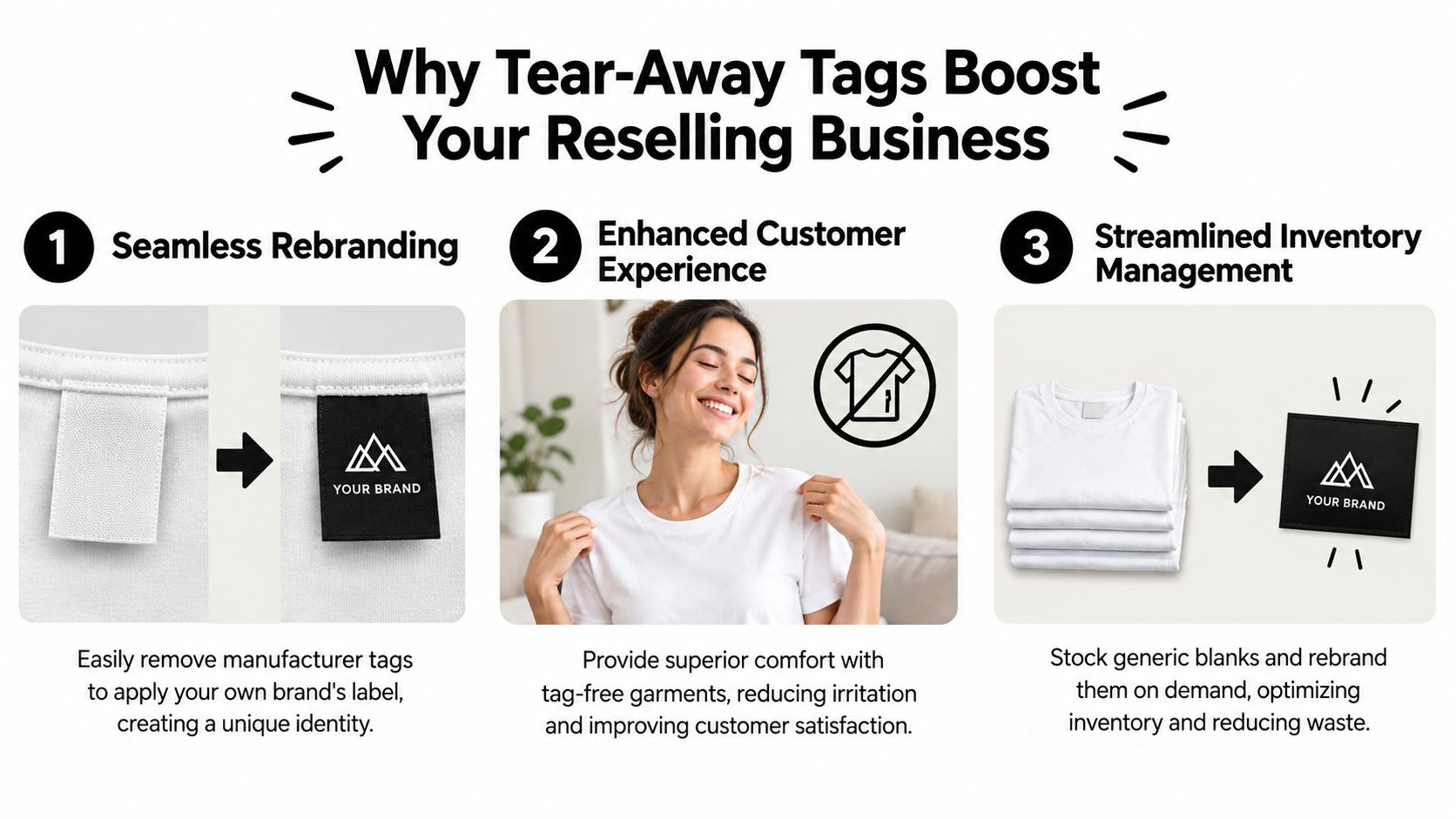
A tear-away label can make a generic blank easier to turn into a product with a recognizable identity. It doesn't guarantee stronger sales, but it removes one obstacle between sourcing and presenting the garment as part of your own collection.
Rebranding without starting from zero
A reseller can use the same brand treatment across a small group of shirts, such as a logo in the inside neck, a consistent size mark, and matching packaging. That visual consistency helps a boutique build a core collection from sourced blanks rather than commissioning a completely custom garment.
It also gives you flexibility. You can test a design, adjust the branding, or change the collection direction without being locked into a large manufacturing commitment. The limitation is that the underlying shirt still comes from the blank supplier, so your brand promise must match the garment's actual quality.
Comfort becomes part of the product experience
Many customers dislike scratchy labels, especially around the back of the neck. Recent removable-label research found that 8 in 10 consumers experienced difficulty removing a label in the last year, as reported in Prints LA's discussion of T-shirt tag printing. That finding supports a practical point for sellers: easy label removal addresses a familiar usability problem.
You can make comfort part of your product selection, alongside fabric weight, fit, and finish. Guidance on comfort and color considerations for bulk apparel can help you evaluate the broader customer experience instead of treating the neck label as an isolated feature.
Presentation can support perceived value
A clean inside-neck print looks more intentional than a damaged label area or a visible manufacturer tag that conflicts with your packaging. Customers may never describe this as “private labeling,” but they notice whether the garment feels finished.
That doesn't mean relabeling automatically allows a higher price. Your margin still depends on the blank cost, decoration, labor, packaging, selling fees, returns, and customer demand. The advantage is control. You're building a product presentation that can support a coherent collection rather than selling an anonymous shirt with a design placed on the front.
The Relabeling Process From Start to Finish
Start with a sample, not your entire inventory. A tear-away label can remove cleanly on one garment and behave differently on another because of stitch tension, neck tape, fabric stretch, or label material.
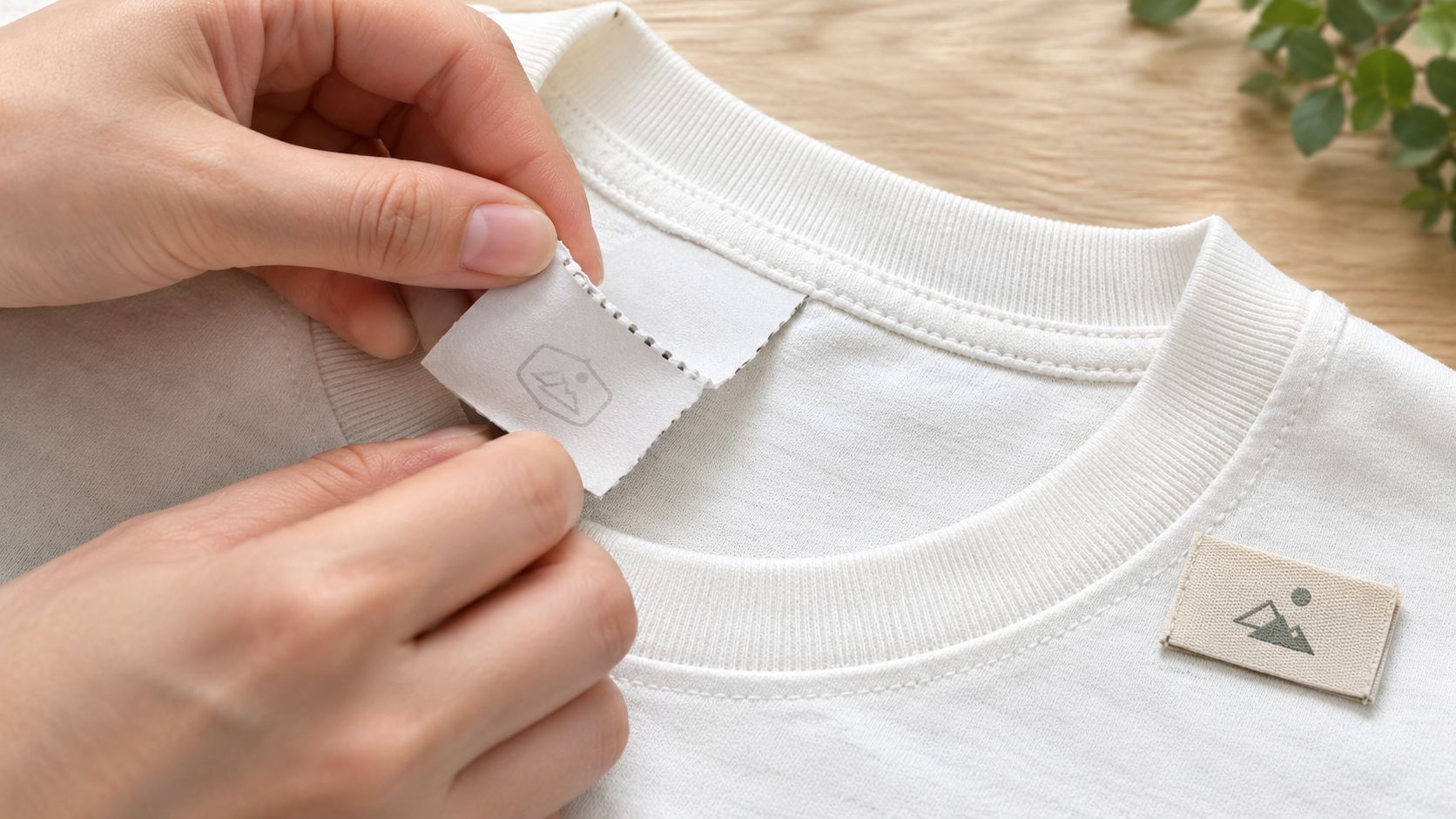
Remove the original label carefully
Turn the shirt inside out and locate the intended tear line. Hold the neck tape or the stable edge of the collar with one hand, grip the label with the other, and pull along the prepared seam with controlled force. Don't yank upward or twist the fabric, because that can stress the neckline even when the label is designed to tear away.
After removal, inspect the area under good lighting. Trim only loose fibers that remain. If the fabric shows stretching, holes, or a visible seam scar, stop and reassess the blank before processing the rest of the batch.
Choose the replacement method
Your method should match the order size, desired hand feel, artwork, and equipment available.
| Method | Cost Per Unit | Feel & Durability | Best For |
|---|---|---|---|
| Heat transfer | Usually efficient for small or variable runs | Can create a smooth, controlled finish when applied correctly | Testing designs, small batches, and detailed neck marks |
| Screen printing | Requires setup, but works well for repeat production | Durable when properly cured, with a more traditional printed feel | Consistent larger runs and simple artwork |
| DTG printing | Flexible for detailed artwork and changing designs | Softness and durability depend on the garment and process | Small runs with complex or full-color branding |
A transfer is often the easiest entry point because you can change designs without building a full screen setup. Production guidance places many inside-neck transfers at around 350 degrees for about 15 seconds, followed by a cold peel after cooling, as explained in Emulsion Print House's shirt tag printing guide. Treat that as a production benchmark, not a universal setting. Transfer instructions, fabric content, press pressure, and finish can change the correct application process.
Screen printing makes more sense when the same neck design will run repeatedly. DTG offers flexibility for detailed graphics, but you should test the result on the exact blank because cotton, blends, and polyester can accept ink differently. Some wholesale tear-away styles are available in 100% cotton, 50/50 blends, and 100% polyester, and each substrate affects print behavior and final feel.
A short production video can help you visualize the removal and application workflow:
Inspect the finished garment
Check that the new neck mark is centered, readable, and comfortable against the skin. Wash-test a sample before listing the product, especially if your brand depends on a soft or barely noticeable interior finish.
Keep a simple record of the blank style, decoration method, press settings, and any cleanup required. That record makes reordering easier and helps you identify which shirt constructions are worth processing again.
Sourcing Blanks and Staying Legally Compliant
The right blank starts with a clear sourcing request. Ask suppliers whether the shirt has a genuine tear-away neck label, where the label is attached, whether a separate care or compliance label remains, and which decoration methods suit the fabric. Request samples when possible, because a product listing may use “tagless” and “tear-away” as if they mean the same thing, but they serve different workflows.
Evaluate the shirt as a complete product, not just as a relabeling surface. Check collar recovery, stitching, fabric consistency, sizing, color availability, and how the neckline looks after the original label is removed. A blank that tears cleanly but feels poor to wear won't protect your brand.
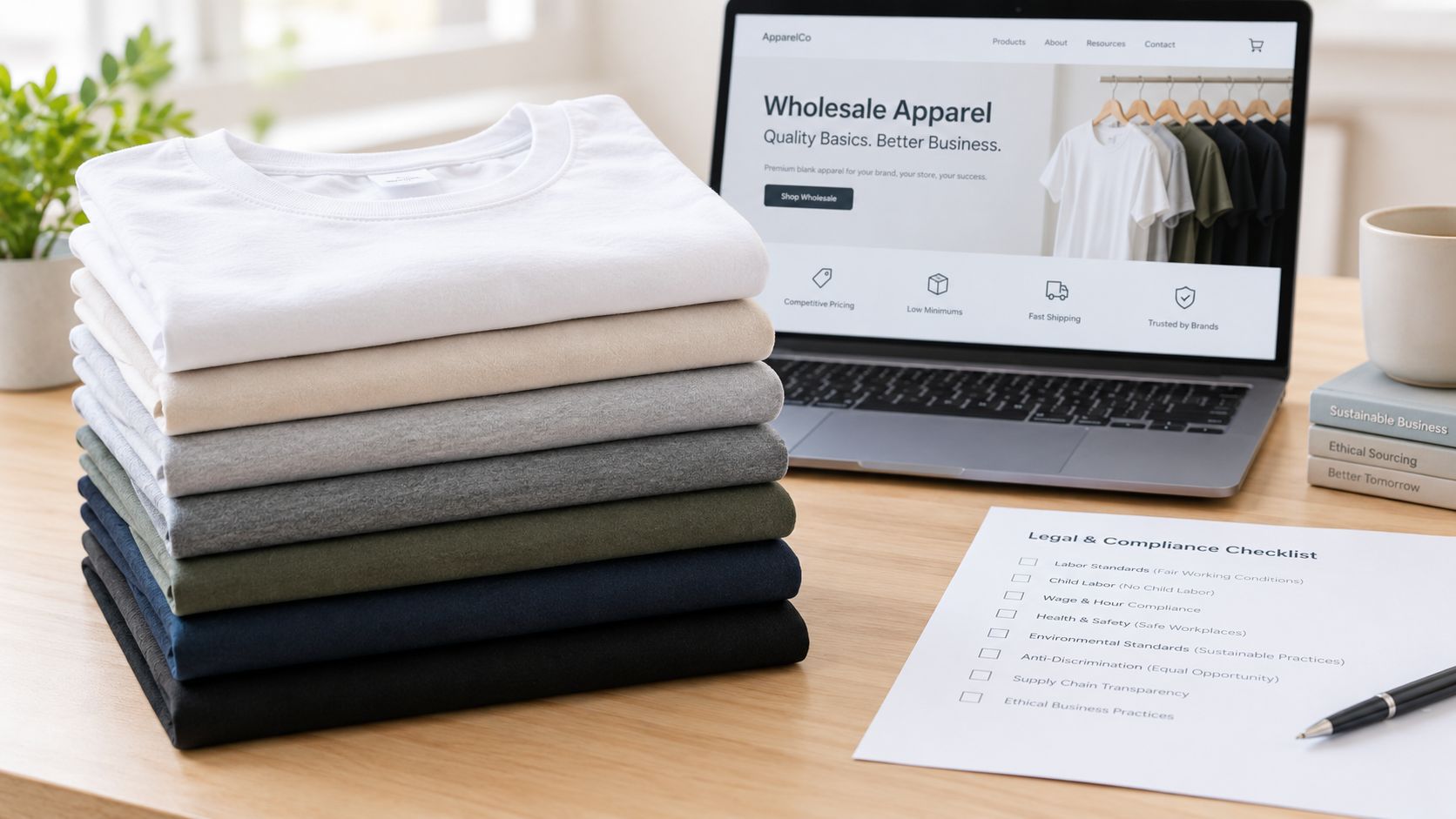
Keep required information with the garment
Removing a marketing label doesn't remove your labeling responsibilities. In the United States, the Federal Trade Commission's textile and apparel labeling rules require most textile and wool products to carry fiber content, country of origin, and the identity of the manufacturer or another responsible business. The FTC also says care information must remain attached or be easily found during the product's useful life.
That means you need to distinguish between the removable branding label and the information that must stay with the product. Before processing a shirt, identify every label and determine what can be removed, what must remain, and whether required information needs to be transferred to another compliant label or packaging format.
Rules vary by market. In the European Union, textile products made of at least 80% textile fibers must be labeled or marked with fiber composition, and the label must be firmly attached to the product. In Canada, textile labels must include fiber content, the generic names of fibers present at 5% or more, and dealer name and business location or a CA identification number. Those requirements are summarized in the same FTC-linked regulatory reference above only for the U.S. context, so sellers should verify the rules for every market they serve.
Compliance check: Never assume that a clean neckline is a compliant neckline. Keep fiber, origin, responsible-business, and care information available in the required form before the shirt reaches a customer.
Supplier selection also affects this workflow. A practical guide to choosing a wholesale clothing supplier can help you compare inventory consistency, communication, order terms, and product information before you commit to a large lot.
Turning Blank T-Shirts into Branded Assets
Tear-away tag T-shirts give resellers a useful middle ground. You don't have to manufacture every garment from raw materials, yet you aren't limited to selling a blank shirt exactly as it arrived. With a suitable label construction, you can remove the original neck branding, apply your own mark, and create a more consistent product experience.
The opportunity becomes stronger when you make deliberate choices at every stage. Select blanks that fit your customer, test the removal process, choose a decoration method that matches your run size, inspect the finish, and preserve all required product information. If your designs depend on polyester or heat-sensitive materials, review the practical considerations for sublimated T-shirts before selecting inventory.
A blank shirt is only the starting material. Your brand value comes from the combination of fit, fabric, artwork, finishing, presentation, and reliable customer expectations. Tear-away labeling supports that process, but your operating discipline turns the feature into a profitable product line.
If you're ready to source apparel for a boutique, marketplace shop, or live-sale business, visit OneTrendyCloset to explore curated brand-name liquidation boxes, flexible lots, and custom sourcing support. Ask the team about inventory that fits your product direction, then test the garments before committing to a larger rebranding run.