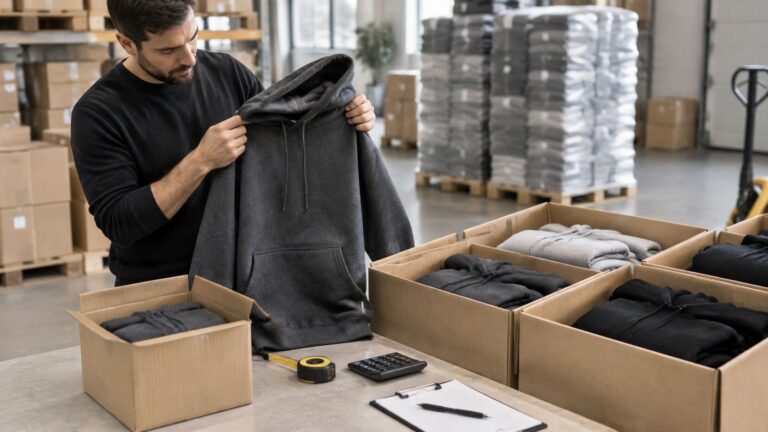
You cut through the tape, lift the first layer, and see exactly the kind of clothing your customers already ask for. A branded dress sits beside folded basics, a crushed shoebox leans into the corner, and one garment still has its retail tag attached. The excitement arrives before the questions: Why did this inventory leave a department store, and what condition will the next layer reveal?
That uncertainty is the defining feature of clothing liquidation lots. You're not just buying cheap apparel by the piece. You're buying a sorting and recovery problem, then trying to turn the sellable portion into revenue through the right channel. The buyers who make money aren't necessarily the ones who negotiate the lowest unit price. They're the ones who understand condition, channel fit, labor, compliance, and realized margin before ordering more.
Table of Contents
- The Moment You Open Your First Liquidation Box
- What Clothing Liquidation Lots Actually Are
- How Grading and Condition Shape What Arrives
- Matching Lots to Boutique, Marketplace, and Live Sale Channels
- Sourcing From a Curated Liquidation Supplier
- Modeling Real Margin Before You Scale to Pallets
- The Hidden Cost of Cheap Boxes and Missing Labels
- A Practical Buying Checklist for Your Next Lot
The Moment You Open Your First Liquidation Box
The pallet jack drops the skid with a blunt thud. Cardboard gives slightly under the utility knife, and the warehouse smell comes out first, a mix of packaging, fabric, dust, and whatever fragrance a returned garment picked up in transit. You fold back the flaps and find branded polybags, loose hangers, a pair of trousers with a missing size sticker, and a contemporary dress whose inner tag has been cut.
That first box can look remarkably good from the top. The visible garments may be clean and current, while the less obvious work sits underneath. A crushed package needs inspection. A returned blouse may need steaming. A garment with inconsistent labeling may need to be separated from the normal listing workflow.

The central question isn't whether the box contains clothing that once had retail value. It almost certainly does. The question is why that clothing is in a liquidation lot instead of on its original sales floor, and whether your business can recover enough value from it after sorting, preparation, listing, selling, shipping, and handling returns.
What the box is telling you
Apparel reaches liquidation through several ordinary retail failures. A retailer may have produced too much, misread demand, carried the wrong size balance, cancelled a wholesale order, closed a store, moved into a new season, or received merchandise back from customers. An estimated 10% to 40% of garments produced each year are never sold at full price or require significant markdowns, according to Roland Berger's analysis of fashion inventory waste and recovery.
Online clothing returns make the sorting problem harder. Average return rates are reported at approximately 30% for online clothing purchases, compared with about 10% in offline channels, while dresses have been reported at up to 54% and skirts at up to 47% online, as documented in the same Roland Berger fashion report. Those garments don't always return in their original condition or packaging.
A pallet is therefore a record of decisions made before it reached you. Some units are clean overstock. Others are shelf-pulls, customer returns, discontinued colors, incomplete assortments, or markdown merchandise that remains saleable. Your job begins when the original retail system has already decided that normal sell-through is no longer efficient.
The second piece of media should help you compare the polished listing with the less polished receiving reality.
Treat the unboxing as an intake inspection, not a reveal show. Photograph the condition, separate obvious categories, record missing tags, and resist valuing every piece at its projected retail price. The box becomes profitable only after you know which units can move.
What Clothing Liquidation Lots Actually Are
A clothing liquidation lot is a grouped quantity of apparel being moved through a secondary distribution channel because the original retail or wholesale route can't absorb it efficiently. That makes it different from a standard wholesale order, where the buyer generally selects a known assortment with predictable specifications, packaging, and condition.
Liquidation inventory can come from department-store overstock, cancelled retailer orders, seasonal transitions, factory overproduction, store closures, and customer returns. The seller wants to recover value and clear space. The buyer accepts more variability in exchange for access to branded apparel at a reduced acquisition cost.
The container changes the buying problem
The most common formats are easy to confuse:
- Mixed-brand boxes: A smaller assortment combining brands, categories, sizes, and conditions. These can suit a reseller who wants to test demand, but sorting and photography take more judgment.
- Single-brand case packs: A narrower group of garments, often easier to merchandise when the brand and category match your audience. Size imbalance can still make the pack difficult to sell.
- Full pallets: A larger operational commitment with more units, more handling, and greater exposure to slow-moving styles. Pallets work best when the buyer already has a receiving process and several sales channels.
The words “new,” “shelf-pull,” and “customer return” describe the inventory's history, not its complete resale potential. A new garment may still have an awkward size mix. A shelf-pull may have a missing hanger or shop-handling marks. A return may be perfectly sellable, or it may require cleaning, repair, or quarantine.
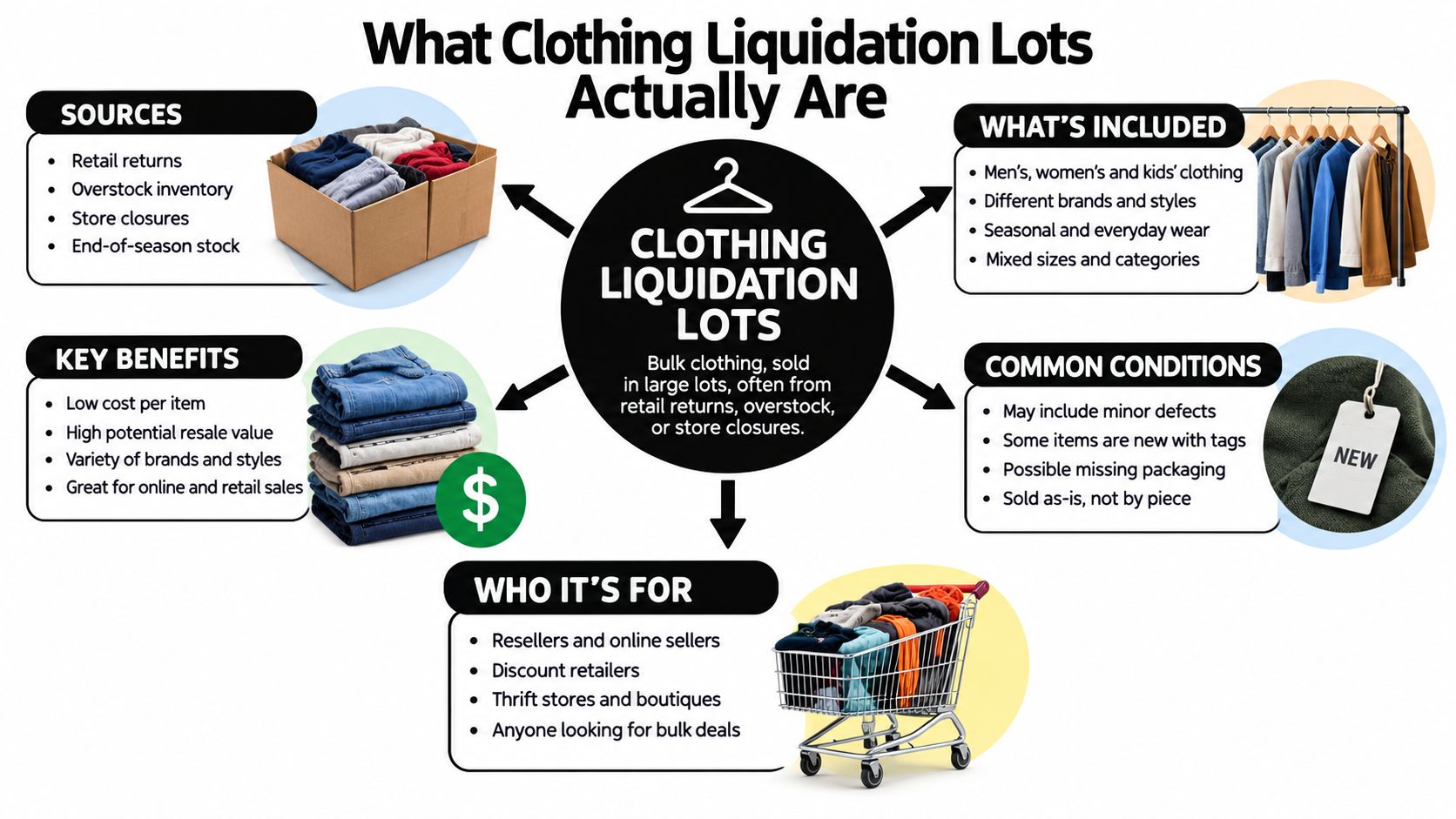
A useful way to think about the purchase is recovery value per sellable unit. The lot cost is only the entry point. You still need to receive, inspect, grade, measure, photograph, write descriptions, clean or repair selected pieces, store the inventory, collect payment, fulfill orders, and handle items that don't sell.
Practical rule: If you can't describe how the lot will be sorted and sold before you order it, you haven't evaluated the lot yet.
Before buying, read the supplier's lot description alongside the guidance in this overview of wholesale clothing boxes. Ask what the supplier means by each condition label, whether the assortment is manifested, and whether the photos represent the actual lot or a general example. A discounted box is useful only when its uncertainty fits your operation.
How Grading and Condition Shape What Arrives
A letter grade isn't a universal quality standard. It's a supplier's shorthand, and the definition can change between vendors. Grade A customer returns and Grade A shelf-pulls may share a label while arriving with very different inspection, packaging, and preparation needs.
Condition categories add the detail that the letter alone can't provide. Read them together rather than treating “Grade A” as a guarantee.
| Grade / Condition | Typical Condition | Tags & Packaging | Best Fit For |
|---|---|---|---|
| Grade A, new | Unworn inventory with little or no handling evidence | Original tags or packaging may be present, but verify the listing | Boutiques, curated marketplace listings, and premium presentation |
| Grade A, shelf-pull | Retail-ready merchandise removed from a store or sales floor | Tags may be attached, replaced, or inconsistent; packaging may vary | Boutiques and marketplaces with a receiving inspection |
| Grade A, customer return | Returned apparel that may be clean and saleable after review | Packaging and tags can be mixed or missing | Resellers with a structured inspection and measurement process |
| Grade B | Merchandise with minor flaws, repacking, handling marks, or incomplete presentation | Tags and packaging may be mixed; some units need preparation | Value-focused marketplaces and live sales |
| Grade C, salvage | Damaged, heavily mixed, incomplete, or otherwise difficult inventory | Packaging and labeling may be compromised | Repair, parts, textile recovery, or specialist clearance channels |
The condition label must meet your workflow
Grade A is not automatically boutique-ready. A customer return may have deodorant marks, makeup transfer, pet hair, stretched fabric, or a missing belt. A shelf-pull may look new but have a security-tag hole or a tag that doesn't match the garment. These issues don't make every unit worthless, but they change the labor required before listing.
Grade B can work for an experienced seller who already has a discount channel and a clear threshold for cleaning or repair. It often performs poorly for a boutique that needs consistent presentation and fast rack readiness. Grade C is a different business altogether. If your operation has no repair, salvage, or textile recovery outlet, a low acquisition price won't rescue a high-damage assortment.
Ask for the supplier's historical grade distribution, representative photos, and a written explanation of what counts as a defect. You should also confirm how missing tags, wrong sizes, stains, damaged closures, and counterfeit concerns are handled. A manifest can tell you what the seller intended to ship, but your receiving notes tell you what arrived.
The letter grade is a starting point. The condition category, defect allowance, and your own receiving records determine the real grade.
Matching Lots to Boutique, Marketplace, and Live Sale Channels
The same lot can be useful in one channel and dead weight in another. A boutique needs a coherent rack, a marketplace seller needs searchable individual listings, and a live-sale host needs enough visual variety to keep a broadcast moving. Channel fit determines realized margin more reliably than the headline price per piece.
Use the same questions for every potential lot:
| Channel | Sell-Through Speed | Listing Labor | Fees & Commission | Markdown Risk | Best Lot Type |
|---|---|---|---|---|---|
| Boutique | Steady when the assortment matches the store | Moderate, with emphasis on steaming and merchandising | Retail transaction costs and staffing must be covered | High if colors, sizes, or silhouettes don't fit the customer | Curated, cohesive, current-looking assortments |
| Marketplace | Can be gradual because each unit needs discovery | High, especially for measurements and photography | Platform and payment fees reduce realized price | Moderate to high if listings compete on price | Recognizable brands, searchable styles, clear condition |
| Live sale | Fast for visually appealing, easy-to-explain pieces | Lower per unit before the show, higher during sorting and presentation | Platform commission and selling costs must be modeled | Can be high if bidding is weak or the audience dislikes the mix | Varied, presentable inventory with simple selling points |
A boutique may reject a mixed box because the rack becomes visually uneven. A marketplace seller may welcome that same box if the brands have search demand and the seller can photograph every garment efficiently. A live-sale host can move pieces that would sit in individual listings, but only if the assortment creates energy and the seller can explain flaws without slowing the show.
Score the lot against the sales floor
Start with the customer, not the supplier's brand list. Ask whether the lot has the sizes your audience buys, the seasons you can sell now, and the categories your channel can present well. A box of contemporary dresses may look attractive, but it becomes a poor purchase if your audience prefers casual separates or if the size distribution leaves most units difficult to place.
For marketplaces, listing labor is often the hidden constraint. Measurements, fabric details, condition notes, keyword research, photography, storage locations, and order handling can consume more capacity than the initial sorting. A shelf-pull basic may move steadily online because buyers know what to search for, while a boutique may pass over it because it lacks the visual distinction needed for a rack.
Live selling changes the economics again. Items should be easy to show, describe, and price in sequence. Mixed brands can work when the garments share a clear audience. They become a problem when every piece requires a long explanation or carries a condition exception.
Use this guide to auctions for clothes to sharpen your channel decisions, but don't confuse auction activity with guaranteed demand. Test a small group in the intended channel, record how much work each unit requires, and compare the result with the same units in another channel when practical.
Sourcing From a Curated Liquidation Supplier
A reliable sourcing process begins before checkout. You want a supplier that can explain how it builds a box, what condition categories it uses, how closely the final assortment follows the request, and what happens when the received lot differs materially from the description.
Start with a test order that your team can inspect without disrupting normal operations. The point isn't to chase the smallest possible purchase. It's to observe the supplier's packing, communication, brand mix, size balance, defect handling, shipping process, and response when you ask a detailed question.
Build the order around a sales plan
Give the supplier useful constraints:
- Target customer: State whether you sell contemporary women's apparel, basics, occasionwear, menswear, children's clothing, or another defined category.
- Preferred brands: Ask whether the box can be built around selected brands or whether the assortment is blind.
- Condition tolerance: Specify whether you can handle shelf-pulls, customer returns, minor flaws, or only new-looking units.
- Channel: Explain whether the inventory is for a boutique rack, individual marketplace listings, or live selling.
- Budget and cadence: Decide how much cash you can deploy while the first order is still being sorted and sold.
A curated supplier may offer multiple box sizes, mix-and-match brand selection, and custom quotes for larger orders. Those options matter because they let you align the purchase with your merchandising plan rather than accepting a completely unrelated assortment. They don't remove the need for inspection, and they shouldn't be treated as a substitute for written condition expectations.
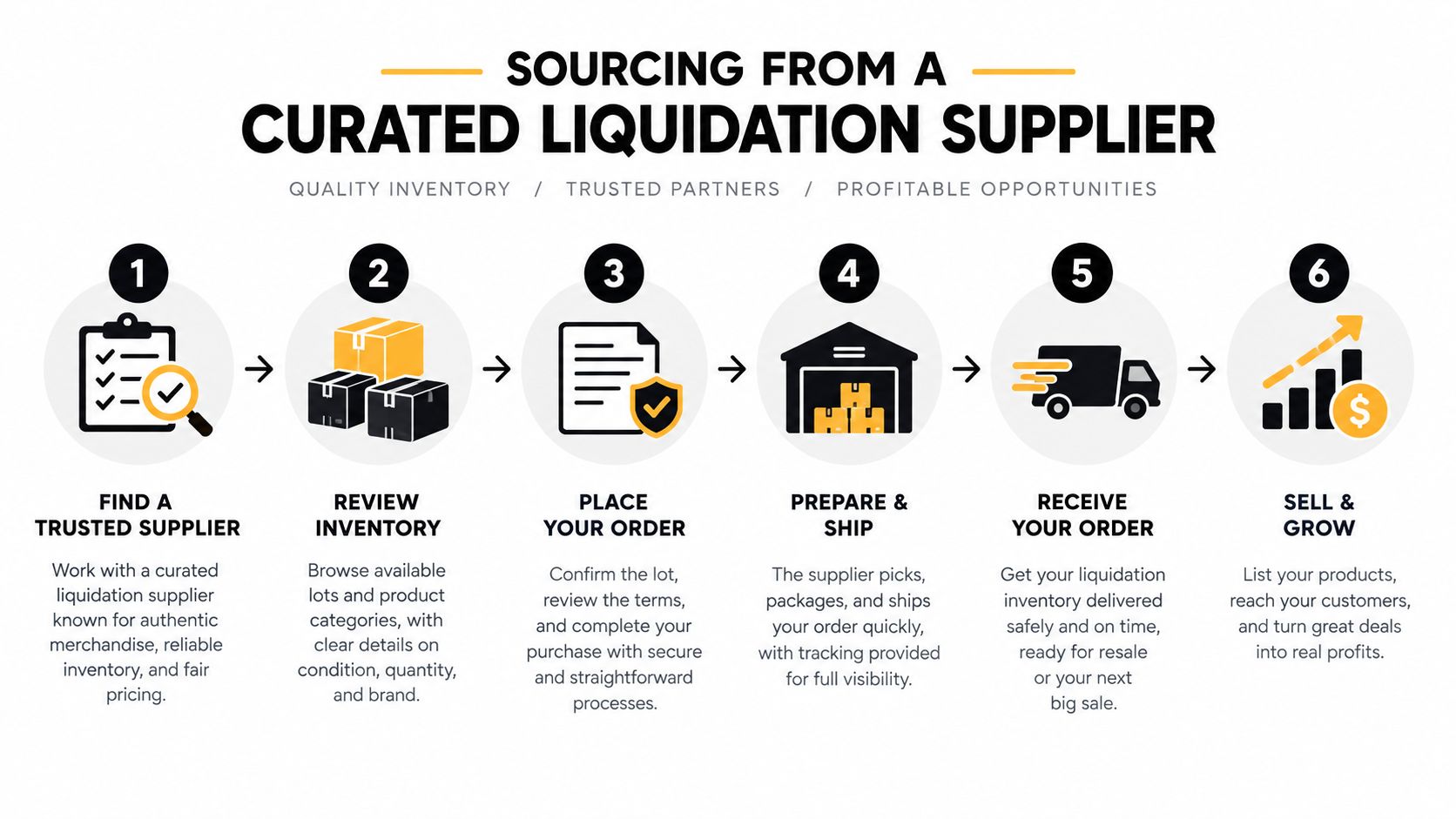
Before scaling, request a manifest when available, representative photos, the expected shipping window, and the supplier's policy for discrepancies. Keep a record of what was promised and what arrived. Your second order should be based on observed sellable rate and labor, not on the optimism you felt while opening the first box.
A recurring program can make inventory planning easier, but only after the supplier's grading standards fit your business. Ask how often inventory changes, whether preferred brands are consistently available, and how far ahead you need to place a larger order. Predictability is valuable because cash tied up in unsorted apparel can't fund your next purchase or your marketing.
Modeling Real Margin Before You Scale to Pallets
Gross margin per box is a tempting shortcut. It hides the units that need cleaning, the garments that never receive a listing, and the orders that create returns or customer-service work. A more useful measure is realized contribution margin per sellable unit:
(Total sales revenue − landed lot cost − inbound freight − inspection and cleaning − repairs − marketplace and payment fees − outbound fulfillment − expected returns) ÷ sellable units
The denominator matters. Dividing by total received units makes a damaged or unlisted garment look as if it contributed to the result. Dividing by sellable units shows whether the pieces that reached customers created enough contribution to support the whole operation.
Use a three-scenario worksheet
Create conservative, expected, and strong cases without assigning every garment the same projected selling price. Include:
- Received units: The quantity physically delivered.
- Sellable units: Pieces that pass condition, measurement, labeling, and channel checks.
- Realized price: The amount customers pay, not the original retail price or an aspirational listing price.
- Variable costs: Freight, cleaning, repair, packaging, platform fees, payment processing, and fulfillment.
- Unsold inventory: The value and storage cost of pieces that remain after your planned selling period.
Fashion inventory carries substantial markdown exposure. An industry estimate reports that only about 60% of inventory sells at full price, while the remainder requires discounting, as discussed in Avantex's analysis of apparel inventory management costs. That doesn't predict your lot's result, but it's a useful warning against building a model around full-price assumptions.
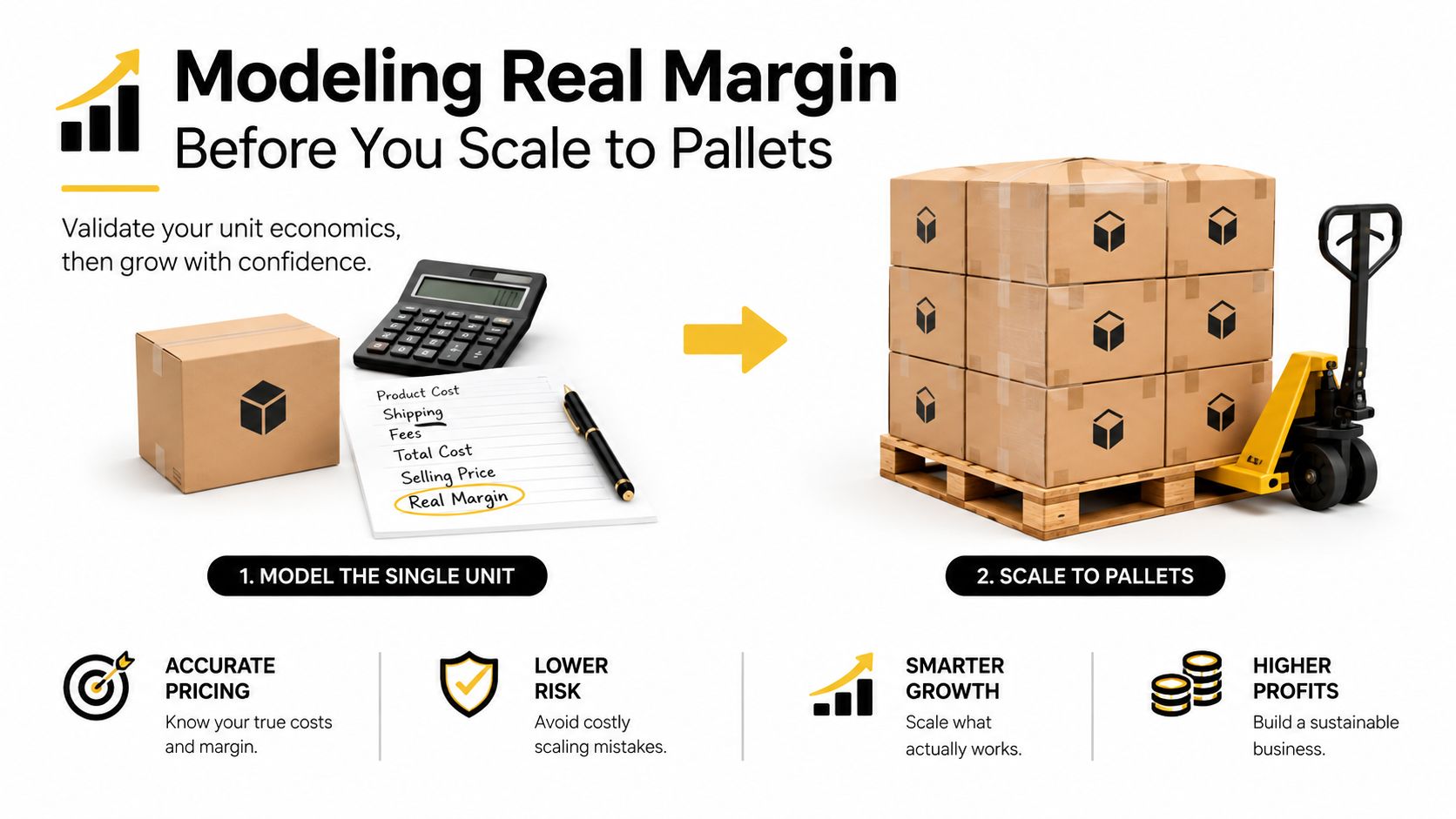
Record three operating figures after the test: realized sell-through, blended average selling price, and actual defect rate compared with the manifest. Add days to sale and return rate if your channel provides them. These numbers show whether the supplier's description matches your experience and whether your team can process more volume without creating a backlog.
Your maximum purchase price should fall when defects rise, labor takes longer, or the channel requires heavier discounting. If the test box only works under the optimistic scenario, don't scale. Pallet sourcing guidance for apparel resellers is useful for understanding larger formats, but the decision to buy a pallet should come from your own receiving and sales records.
The Hidden Cost of Cheap Boxes and Missing Labels
The cheapest box can carry the highest effective cost. A garment with a cut inner tag, missing care information, or inconsistent fiber description may consume receiving time, create listing uncertainty, and expose your business to customer complaints. If you can't verify what the garment is made from or where it was produced, you may need to quarantine it rather than publish a confident listing.
In the United States, most textile and wool products offered to consumers must identify fiber content, country of origin, and the responsible manufacturer or marketer, while care instructions must also be available under applicable labeling rules. The Federal Trade Commission's textile and apparel labeling guidance also distinguishes consumer-ready goods from intermediate-stage shipments, with invoice disclosures required when products aren't properly labeled at that stage.
Inspect labels before you photograph
Create a separate compliance tray during receiving. Put garments with missing, altered, contradictory, or unreadable labels there until someone can determine whether the problem can be resolved. Don't let a visually attractive garment move straight from the box to a marketplace draft.
Check:
- Fiber information: Confirm that the fiber description is present and matches the garment.
- Origin information: Record the country-of-origin information required for the target market.
- Care instructions: Verify that care information is available and usable.
- Responsible party details: Keep relevant manufacturer or marketer information with your inventory notes.
- Listing accuracy: Never infer fabric content from touch, brand reputation, or a similar product photo.
A cheap unit with no usable documentation isn't worth its advertised price if you spend time researching it, can't list it accurately, or eventually discard it. The correct calculation is cost per sellable, compliant unit, not cost per item received.
Cross-border sales make this more complicated because the destination market may impose additional rules. Even within one country, wholesale handling and final consumer sale can involve different documentation expectations. Ask suppliers what they can verify before purchase, then make your own receiving checks part of the standard process.
A Practical Buying Checklist for Your Next Lot
Use this checklist before you commit cash:
- Confirm the grade in writing. Ask what Grade A, B, or C means for that supplier, and request definitions for new, shelf-pull, customer return, and salvage.
- Request evidence of the actual mix. Prefer a manifest, representative photos, historical grade information, or a clear explanation of how the assortment is built.
- Calculate sellable-unit cost. Deduct expected defects, cleaning, repairs, freight, fees, fulfillment, and returns before deciding what the lot is worth.
- Match the lot to one primary channel. Decide whether a boutique, marketplace, or live sale can present the assortment with the least friction.
- Check label and documentation risk. Separate apparel with missing, altered, or inconsistent information before listing it.
- Plan the receiving day. Have tables, garment racks, steamers, measuring tools, storage locations, and a defect log ready before delivery.
- Set a scale-up rule. Decide what sell-through and defect results justify another test order or a larger purchase.
- Track labor accurately. Record sorting, cleaning, measuring, photography, listing, packing, and customer-service time.
- Review residual inventory. Count what remains unsold and identify whether the problem was price, season, size, condition, or channel.
- Recalculate after every lot. Use realized contribution margin per sellable unit, not the supplier's suggested retail value or the box's gross margin.
A smart liquidation operation is a repeatable system, not a single lucky deal. Consistent receiving records, channel-specific testing, and disciplined pricing will beat the buyer who keeps chasing the lowest advertised unit cost.
A curated apparel supplier can help you source brand-name clothing liquidation boxes, shape the brand mix, choose an order size, and request a custom lot or pallet around your budget and resale channel. If you want to compare a test box with a more tailored sourcing plan, visit OneTrendyCloset and review the available options before your next purchase.