You've found a men's jeans lot with an attractive price per pair. The photos show recognizable labels and useful washes, but the size breakdown is vague, and you can't tell whether the stock needs measuring, cleaning or repairs before it reaches your sales floor.
That's where a cheap purchase can become expensive inventory. When comparing wholesale jeans men will buy, fit data and condition grading matter more than the carton average. Buy against a measurable size run and a realistic processing budget, not just a piece count.
Table of Contents
- Men's Jeans Sizes and Measurements to Track
- How to Grade and Measure a Lot Before Listing
- Brand-Name vs Generic Lots Compared
- Sustainability Claims Worth Verifying
- Matching Men's Jeans Stock to Buyer Demand
- Fit Losses and What a Lot Really Costs
- Confirm Minimum Order and Brand Mix Before You Buy
Men's Jeans Sizes and Measurements to Track
| Measurement | How to Take It | Why It Matters |
|---|---|---|
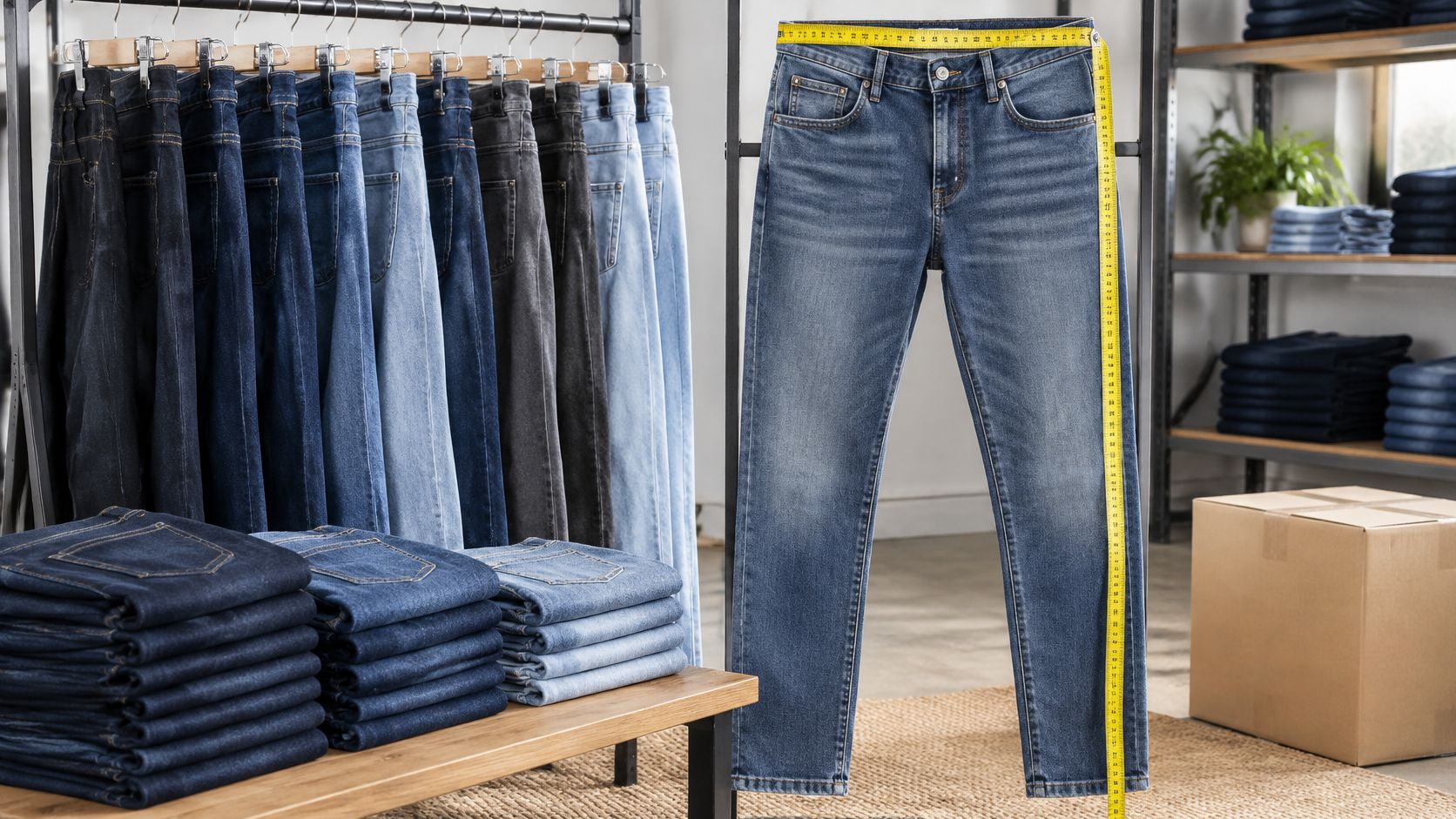
| Natural waist | Lay the garment flat, measure seam to seam across the waistband, then double it | Labeled waist often differs from measured waist |
| Inseam | Measure from the crotch seam to the hem along the inside leg | Drives length sorting and marketplace size filters |
| Front rise | Measure from the top edge of the waistband to the crotch seam at the front | Helps buyers judge waistband position and seated comfort |
| Thigh width | Measure across the widest point of the upper leg, laid flat | Helps separate slim blocks from relaxed blocks |
| Leg opening | Measure across the hem edge, flat, seam to seam | Helps identify straight, tapered and wide cuts |
| Fabric and stretch | Read the composition label and check gentle crosswise stretch | Distinguishes rigid denim from stretch denim |
Which measurements decide whether a pair belongs in the right size run? Start with waist and inseam, then use rise, thigh and opening to describe the fit within that run. A pair can have the expected waistband measurement yet feel wrong because the rise is low or the thigh is narrow.
The waist row records a garment measurement, not the wearer's natural waist. Primark's men's sizing guidance identifies natural waist, hip, inseam and thigh as relevant body measurements, with inseam taken from the top of the inside leg at the crotch to the floor and thigh measured at the widest upper-leg point.
Keep body measurements separate from garment measurements
For resale, measure the actual garment from crotch to finished hem. Don't describe that measurement as crotch to floor, and inspect for shortened hems before assigning a length filter. Retain the labeled size alongside the measured size, rather than replacing it.
Button and zip the jeans, smooth them without pulling, and use a flexible tailor's tape on a firm table. Align the waistband before measuring, and state whether you measured it straight across or along its curve. Don't stretch the waistband to make it match the label.
Front rise helps buyers compare waistband position with a pair they already own. Thigh width describes usable room, while leg opening helps explain the silhouette, although opening alone doesn't establish the whole cut. Record elastane from the composition label; a hand-stretch check doesn't establish fiber percentages.
Measurement rule: Use the same method across every brand, and state whether your figures are in inches or centimeters.
Keep a photo showing tape placement with your intake instructions. That gives anyone helping with listings a repeatable method instead of a personal interpretation of flat measurements.
How to Grade and Measure a Lot Before Listing
Open the shipment at a clear inspection table with a tape measure, removable inventory labels, good lighting and a spreadsheet. Keep packaging until you've reconciled the delivery, and photograph damage before moving garments into saleable stock.
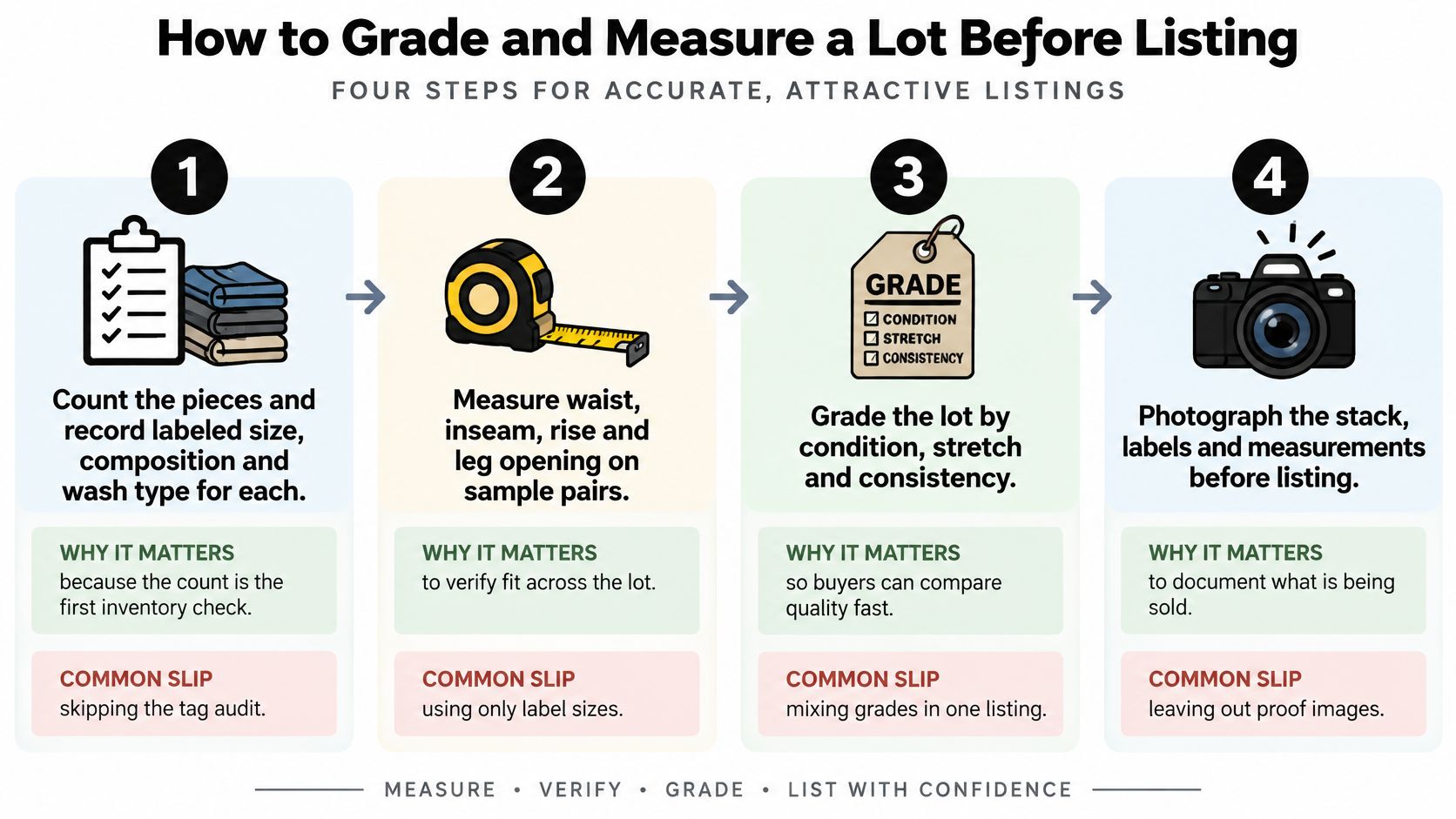
Run the intake in a fixed order
Count and identify every piece. Record an inventory ID, labeled size, composition and wash description. Count garments individually against the order, not from the carton label. The common slip is accepting the packing description before checking the contents.
Measure across each brand group. As a practical sampling protocol, start with at least five pieces per brand, or every piece when fewer are present. Include different cuts and labeled sizes rather than choosing the easiest stack. Sampling checks consistency; it doesn't replace individual measurements for individually listed pairs.
Assign a condition grade before photography. Use consistent descriptions such as new with tags, like new, minimal wear and visible repair. Check the crotch, seat, pocket corners, zipper, button attachment and hems. Distinguish intentional distressing from damage, and record both. The common mistake is grading from attractive photos instead of examining the garment.
Sort by waist and inseam. Build physical stacks or spreadsheet groups around the size combinations you can sell. Sorting only by brand can hide missing lengths and an oversupply of less useful sizes.
Separate rigid and stretch denim. Record fabric type and any known cleaning treatment. Don't combine both into a single fit promise, and don't assume a waistband that stretches easily has good recovery.
Create the listing specification. Carry forward labeled size, measured waist, inseam, rise, thigh, opening, composition and elastane presence. Photograph labels, repairs and measurement placement before putting the pair into storage.
Our wholesale clothing lots guide provides additional buying context, but your intake sheet should document the actual delivery. We guarantee the total item count and quality grade specified in the order; specific items, styles and brand distribution can vary with inventory, and significant limitations are communicated before finalization.
Keep evidence attached to inventory
Use spreadsheet columns for inventory ID, order reference, labeled size, measurements, fabric, condition, defect photos and listing status. Give repaired stock a separate status so it can't be listed accidentally at its original grade.
Your release checklist is straightforward: count reconciled, tags audited, measurements recorded, grade assigned, fabric separated and listing specification complete. The intake sheet travels with the inventory through photography and listing. Before raising a discrepancy, match that evidence against the written quote, stated grade and shipment terms.
Brand-Name vs Generic Lots Compared
| Criterion | Brand-Name Lots | Generic Lots |
|---|---|---|
| Resale recognition | Labels buyers can search for by name | Relies on the seller's presentation and reputation |
| Sizing consistency | Repeated brand blocks can help, when styles match | Require confirmation of blocks within the lot |
| Price per unit | May carry a recognition premium | Can offer a lower entry cost |
| Sell-through speed | Known labels can help when demand matches | More dependent on styling, fit information and pricing |
| Available documentation | Brand fit guides may be available | Request composition and sizing specifications from the supplier |
| Best-fit channel | Search-led marketplaces and label-conscious boutiques | Budget testing and value-focused retail |
Treat these as buying considerations, not guaranteed outcomes. Brand recognition gives shoppers a search term, but it doesn't establish authenticity, condition or a profitable resale price. Repeated style codes can help with sizing consistency, whereas a mixed pile of labels cannot.
Compare unit prices only after checking equivalent grades and usable sizes. Judge likely selling speed from completed sales in your channel, not from how familiar a logo looks. Documentation must describe the stock you're buying, and channel fit should reflect how your customers shop.
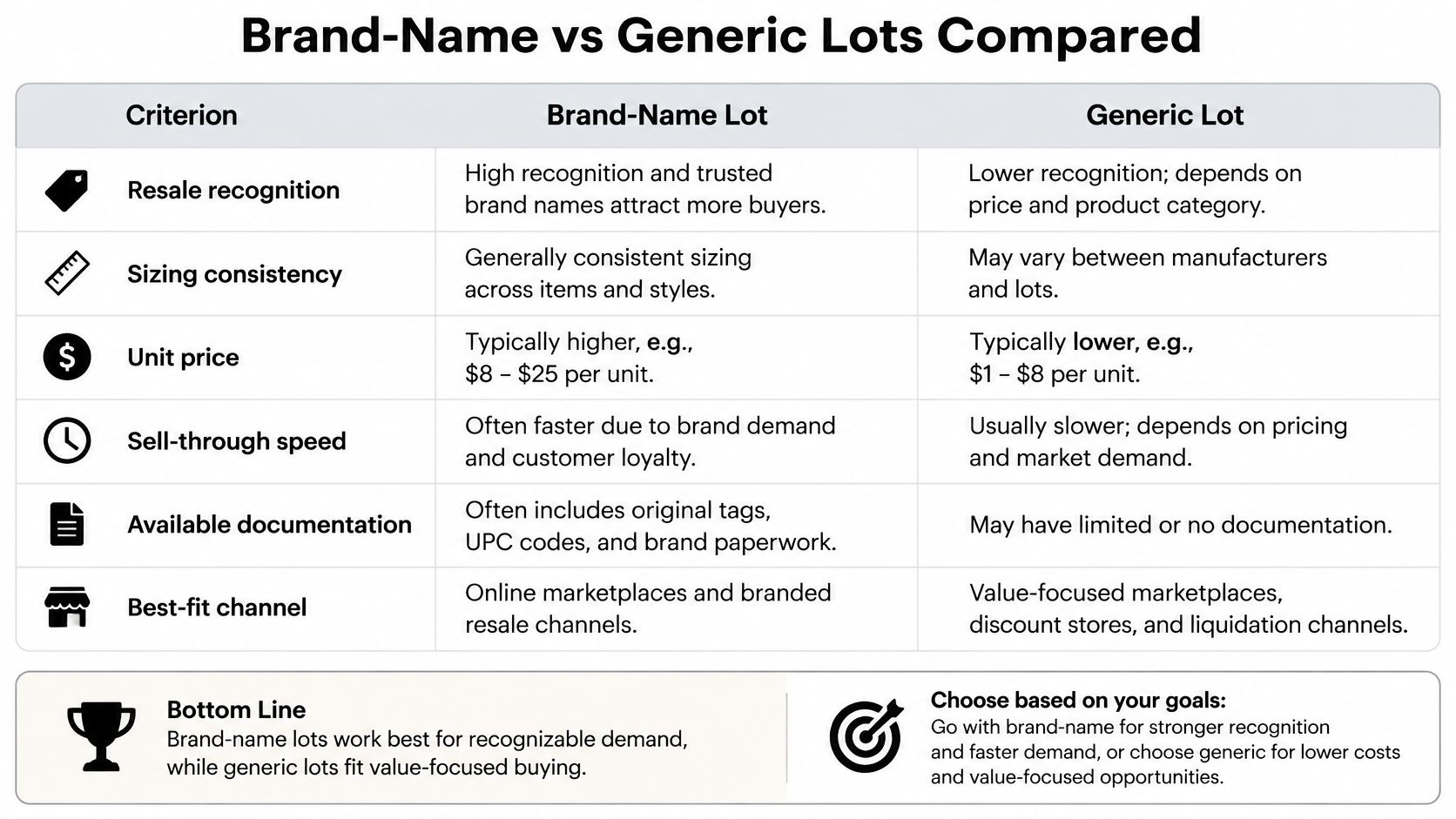
Compare the work behind the rack
Say a boutique is evaluating a hypothetical 50-piece weekday denim rack, choosing between recognizable labels and unbranded jeans in similar cuts. The branded option may be easier to introduce to shoppers who already request those labels. The generic option may work better if customers choose by fabric, comfort and ticket price.
The useful question is whether the branded premium saves enough selling effort or supports enough additional revenue to justify it. If the generic assortment has a coherent size run and reliable construction, it may be the better rack purchase. If it needs extensive fit explanation for every pair, the lower acquisition price buys more work.
A private-label concept also needs permission and suitable merchandise documentation. Unbranded stock isn't automatically ready for relabeling.
Choose by selling situation
- Test budgets: Favor the assortment with the clearest specifications and manageable processing burden, not automatically the generic option.
- Marketplace resellers: Recognizable labels can support search-led discovery when comparable completed sales show demand.
- Defined-customer boutiques: Prioritize the fit and price your existing customer accepts, even when another label looks more impressive.
- Live-sale hosts: Choose understandable size groups and clearly disclosed grades that you can present without lengthy qualification.
Use the brand-name clothing wholesale guide to sharpen supplier comparisons. A brand label still doesn't guarantee identical fit across seasons, styles or fabric constructions.
Sustainability Claims Worth Verifying
Cotton content alone isn't enough to establish that a pair of jeans has a lower environmental impact. A peer-reviewed jeans life-cycle study published in the Journal of Cleaner Production modeled a 340 g pair of 100% cotton jeans, estimating 33.4 kg of CO2-equivalent emissions and 3.781 m³ of water consumption across its life cycle; denim production contributed more than 80% of the measured environmental impact.
That's a modeled benchmark for supplier questions, not a footprint you can assign to every pair in a liquidation box. Different manufacturing processes, finishes and use assumptions make a universal garment-level claim inappropriate.
Request evidence behind the description
For stock sold with an environmental claim, request documentation covering:
- Cotton origin: Where the cotton came from and what evidence supports any organic-origin claim.
- Recycled fibers: The stated recycled-fiber percentage and documents connecting that claim to the product.
- Dyeing methods: Process information behind any lower-impact dyeing description.
- Washing and finishing: Evidence for claimed water-saving washes or other finishing improvements.
- Product identity: Style references or labels that connect the supporting documents to the actual garments.
Bleaching, abrasion and washing matter because finishing can change environmental performance after fabric formation. A general supplier brochure doesn't prove that every style used the process described.
Merchandise what you can substantiate
Record composition labels and visible finishes during intake. Use cotton denim, stretch denim or recycled-cotton blend only when the garment label supports the description. Keep deadstock, previously worn stock and recycled-fiber content separate in your records because they describe different things.
Heavier rigid denim may suit a customer seeking a substantial feel, while washed stretch styles may suit fit-led listings. Neither appearance establishes a verified durability or sustainability claim. Describe weight, hand feel, condition and construction without turning them into unsupported environmental promises.
Clear composition records and honest condition grades are more useful than an unexplained green label.
Sustainability also isn't automatically a price premium. Before paying more, check whether your customers value the documented feature enough to cover sourcing and processing costs. If they don't, transparent resale merchandising can still be worthwhile without a higher ticket price.
Matching Men's Jeans Stock to Buyer Demand
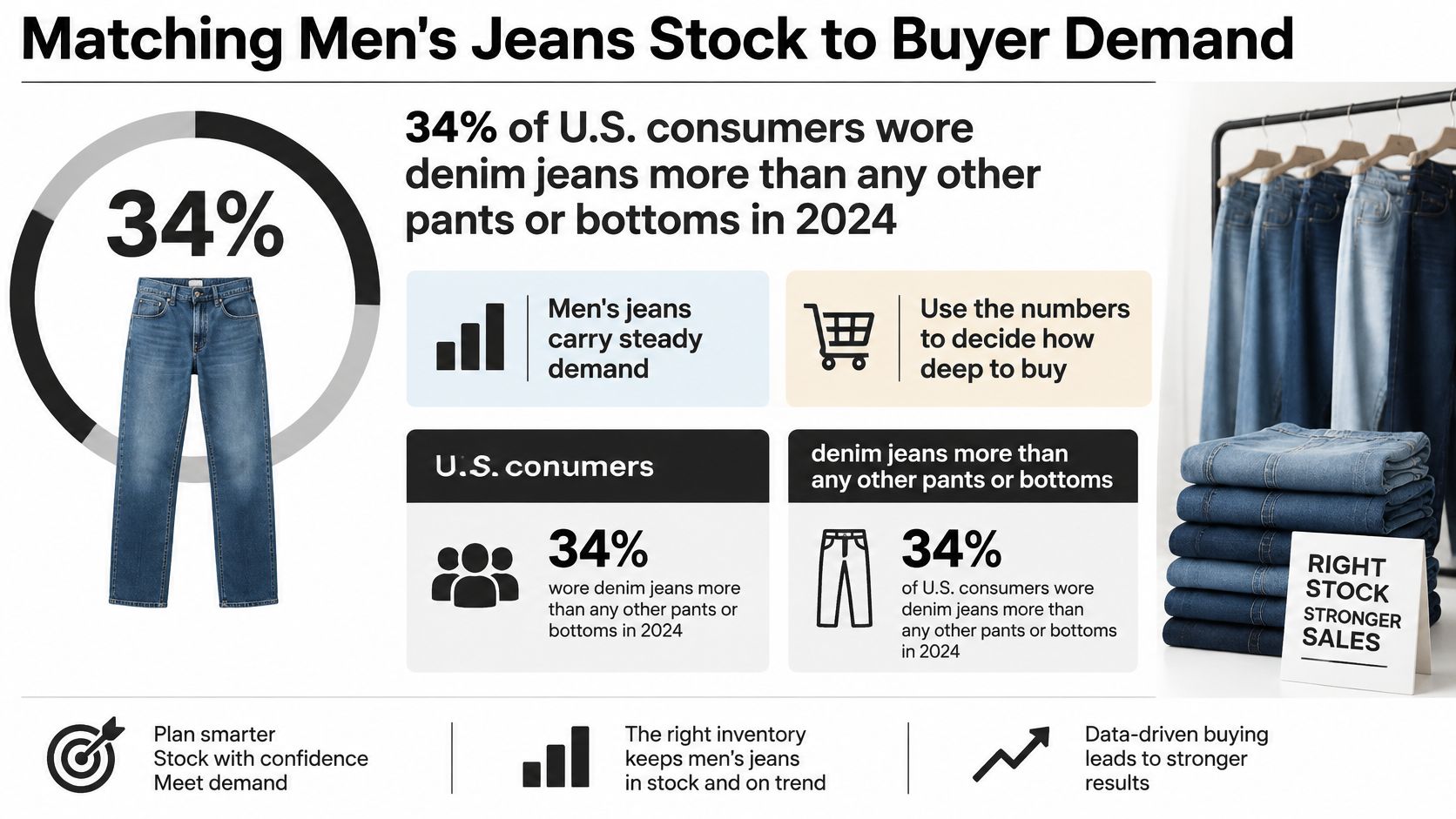
Cotton Incorporated's Lifestyle Monitor survey reported that 34% of U.S. consumers had worn denim jeans more than any other pants or bottoms during the preceding month, with 40% of men compared with 30% of women reporting denim jeans. That supports treating men's denim as an everyday category, but it doesn't tell you which waist, length or wash your customers will buy.
Buy depth in proven combinations
Build your buying plan around the intersection of size, fit, condition and realized price. A strong category can still leave you with slow stock if you buy the wrong lengths.
- Core fits: Start with regular and straight fits as a working baseline, then adjust depth to your own completed sales.
- Fashion washes: Keep experimental finishes in a rotating allocation rather than letting a discounted offer dictate the whole purchase.
- Size-level tracking: Record waist and inseam together, with fit and fabric, instead of judging performance by brand totals alone.
Consider a hypothetical reseller processing a 50-piece lot. Regular straight jeans labeled 32-inch waist and 32-inch inseam sell within three weeks, while slim washed styles remain. A sensible next order favors the successful combination rather than repeating the original proportions.
That example isn't a market benchmark. Before increasing the order, check whether the fast sellers were priced unusually low or were the only pairs photographed well. Otherwise, you may attribute success to fit when presentation or discounting did the work.
Separate inspiration from a buying signal
Style browsing, including a category resource such as the Wax Jeans collection guide, can help with presentation ideas. Your men's assortment still needs evidence from your own customers.
Check season, platform, price band and the balance of core sizes against fashion items before committing cash. Compare completed sales, remaining inventory and actual proceeds after discounts. I'd look for the same pattern across successive selling cycles before materially increasing depth, especially when a larger purchase would crowd out other proven stock.
Fit Losses and What a Lot Really Costs
Fit is a cost line, not a listing footnote. A returns overview from INTO THE AM reports that 53% of surveyed brands and retailers identified size or fit as the top return reason, while U.S. online apparel returns were estimated at 24.4% of orders. Those apparel-wide figures justify planning for fit losses, not assigning that return rate to your own denim business.
Calculate the usable yield
Use this working formula:
Cost per full-grade sellable pair = total lot cost, intake labor, cleaning, photography and shipping ÷ pairs ready to sell at the intended grade.
In a hypothetical 50-piece purchase, suppose eight pairs cannot be sold through your intended channel and six more require repair. That leaves 36 pairs ready at the intended grade, so allocating the same preparation cost across those pairs produces a per-pair cost about 39% higher than dividing by the original count. These are illustrative assumptions, not a supplier quote or expected defect rate.
Keep repairable stock in a separate recovery calculation. If repaired pairs later sell, credit their net proceeds after repair labor and any grade reduction. Don't count them as full-grade revenue while also ignoring their processing cost.
Compare box quotes on the same basis
| Box option | Piece count | Size spread |
|---|---|---|
| Test lot | 50, the stated minimum subject to adjustment | Request the waist-and-inseam run |
| Larger lot | Exact count in the written quote | Require the proposed spread in writing |
Our minimum order is subject to inventory availability and business conditions. Request the box price, freight charge, grade mix and size spread for each option; there's no useful universal price band for mixed stock. Set expected selling prices from your own comparable sales.
We transfer risk of loss and title upon shipment from the OneTrendyCloset facility. Confirm those terms in the written order, inspect transit damage and count discrepancies at receipt, and preserve the supporting photographs and packaging.
Finally, subtract marketplace fees, expected markdowns, return handling and fit-related losses from expected revenue before comparing lots. A lower invoice price isn't a saving if you spend the difference measuring inconsistent stock and resolving avoidable fit complaints.
Confirm Minimum Order and Brand Mix Before You Buy
Set your acceptable size spread and condition targets before requesting a quote. A buying request should describe the customer you're serving, the inventory you can process and the stock you don't want, not merely ask for cheap men's jeans.
We can tailor a box or pallet through a custom quote based on your budget, preferred brands and category needs, including requested size ranges where inventory permits. Treat preferences as purchase requirements only when the written quote confirms them.
Make the quote specific enough to check
Use this pre-order checklist:
- Piece count: Confirm the agreed quantity and any applicable minimum-order adjustment.
- Grade mix: Obtain the condition descriptions against which you'll inspect the delivery.
- Size spread: Identify acceptable waist-and-inseam combinations and whether the breakdown is confirmed or requested.
- Brand mix: Separate essential labels from acceptable substitutions.
- Environmental documentation: Retain evidence for any sustainability claims you intend to repeat.
- Written quote: Keep the final version, limitations and shipment terms with the order record.
We may modify or withdraw quotes based on inventory availability. Don't commit your retail assortment or advertise specific incoming styles until the order terms support those expectations.
Understand the remedy before paying
Our sales are final, and we don't accept returns or provide refunds except for significant quality discrepancies from stated grade descriptions. For quality disputes, we may offer credit toward future orders at our discretion. A slow-selling size or an unpopular wash isn't the same as merchandise that materially differs from its stated grade.
Buy the assortment you can evaluate, process and sell, not the largest shipment your available cash can cover.
Start with a test lot that fits a season of realistic demand and your available processing capacity. Scale only when size-level sales and retained margin justify the next commitment. If the minimum purchase is larger than your credible demand, holding back is better than turning uncertain stock into a storage problem.
OneTrendyCloset offers brand-name liquidation boxes and custom lots for resellers sourcing men's apparel. Visit OneTrendyCloset with your budget, preferred brands, waist-and-inseam targets and acceptable grades to request a quote you can evaluate on cost per sellable pair.