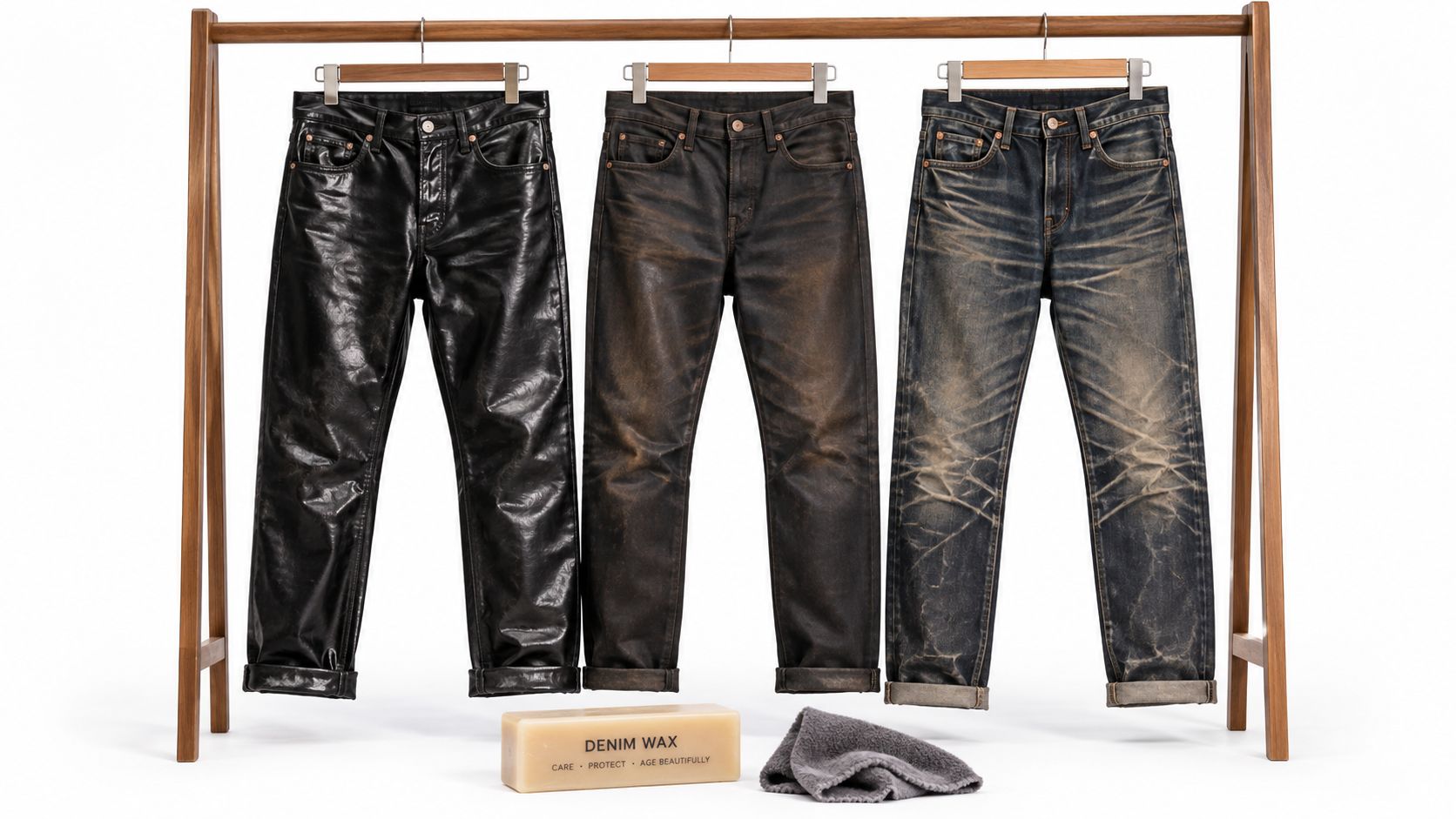
A liquidation manifest can make wax jeans look like an easy win: familiar denim silhouettes, a premium-looking surface, and enough visual drama to stand apart from ordinary inventory. Then the first product photos go live, the black finish turns gray under flat lighting, shoppers ask whether the fabric is plastic, and the stock sits longer than expected.
A successful wax jeans collection depends on more than finding a glossy pair at a low cost. You need to identify the coating, judge how it will age, photograph the surface, explain the care burden, and match each finish to a buyer who wants that specific look. The following workflow is built for resellers and stylists who need to protect both sell-through and reputation.
Table of Contents
- Why Resellers Are Paying Attention to Wax Denim Right Now
- What Wax Denim Means When You See It on a Rack
- How Wax Denim Went From Workwear to Runway
- Caring for Wax Jeans Without Killing the Finish
- The Main Looks Inside a Wax Jeans Collection
- Sourcing and Listing Wax Jeans Through Wholesale Liquidation
- Deciding Whether Wax Jeans Belong in Your Store
Why Resellers Are Paying Attention to Wax Denim Right Now
A liquidation pallet can look promising until the first listings go live. One boutique owner received 40 pairs of coated black jeans that looked strong in hand, then photographed them under fluorescent bulbs. Online, the finish appeared flat and almost plastic. The listings sat for five weeks without a sale. The silhouette was workable. The product photos failed to show why the fabric deserved attention.
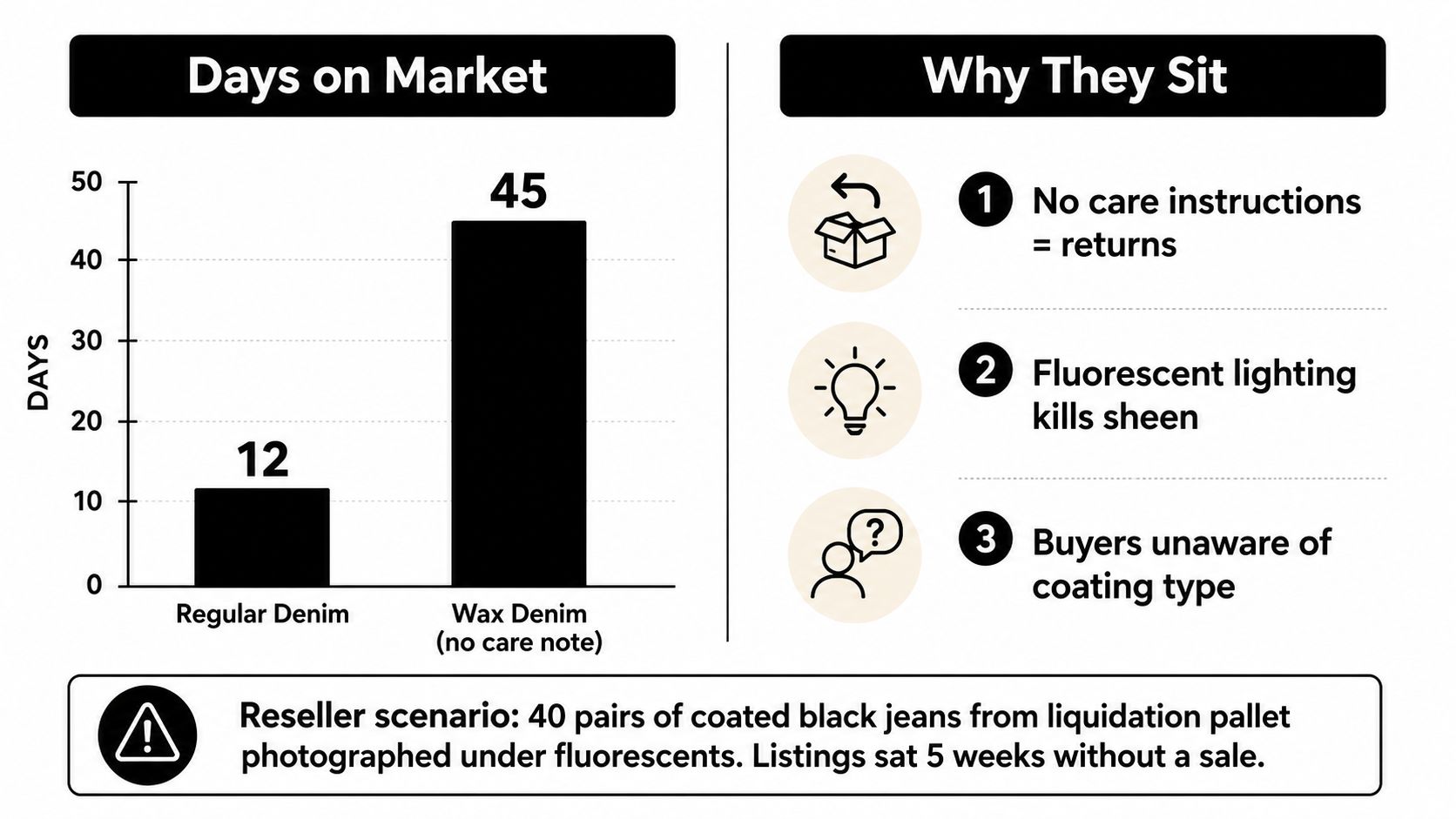
Wax denim earns a place in a reseller's inspection process because its visual appeal depends on accurate presentation. On a rack, shoppers notice the sheen. Online, they ask whether the garment is leather-look denim, resin-coated denim, or actual waxed cotton. They also want to know whether the finish will crack and whether normal washing is safe. A listing that leaves those points vague invites hesitation or mismatched expectations.
Why the finish can improve an assortment
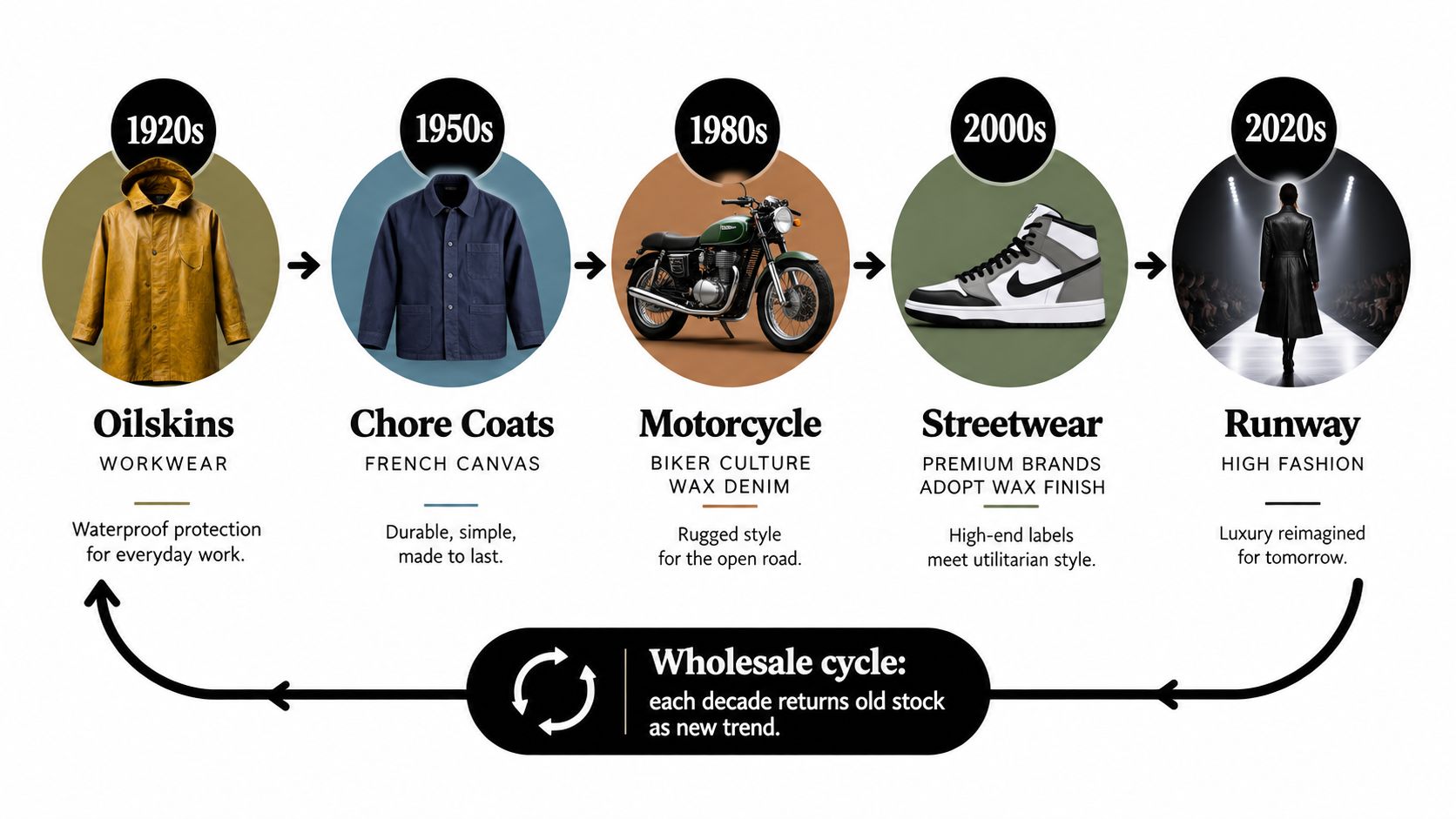
Waxed denim has a long utility-to-fashion history. Sailors and outdoor workers used wax- or oil-treated cotton for water resistance. By the 1920s, paraffin wax had become the preferred treatment because it was more flexible and durable than earlier linseed-oil methods, as documented in this history of waxed denim. The coating adds sheen and some water resistance while keeping denim's underlying structure.
That combination gives a store more styling range. A black wax jean can sit under a blazer, pair with a motorcycle jacket, or sharpen a simple knit. Strong resale candidates typically show an even coating, clean hardware, a wearable rise, and enough stretch or room through the seat to limit stress lines during try-on.
What I check before buying a lot
I treat the wax label as a starting point, not a quality guarantee. First, inspect the finish under angled light. Then bend the knees and seat, check for cloudy patches or early cracking, and photograph both the overall silhouette and close-up texture. A deep, even black with controlled movement at the knees is more useful than a high-gloss pair already showing uneven wear.
I also review brand, size distribution, and fit before committing money. Sellers shaping a broader assortment can use this apparel assortment guide to frame that inventory decision. Wax denim rewards buyers who explain the finish and care burden before listing, because clear expectations protect both sell-through and customer trust.
What Wax Denim Means When You See It on a Rack
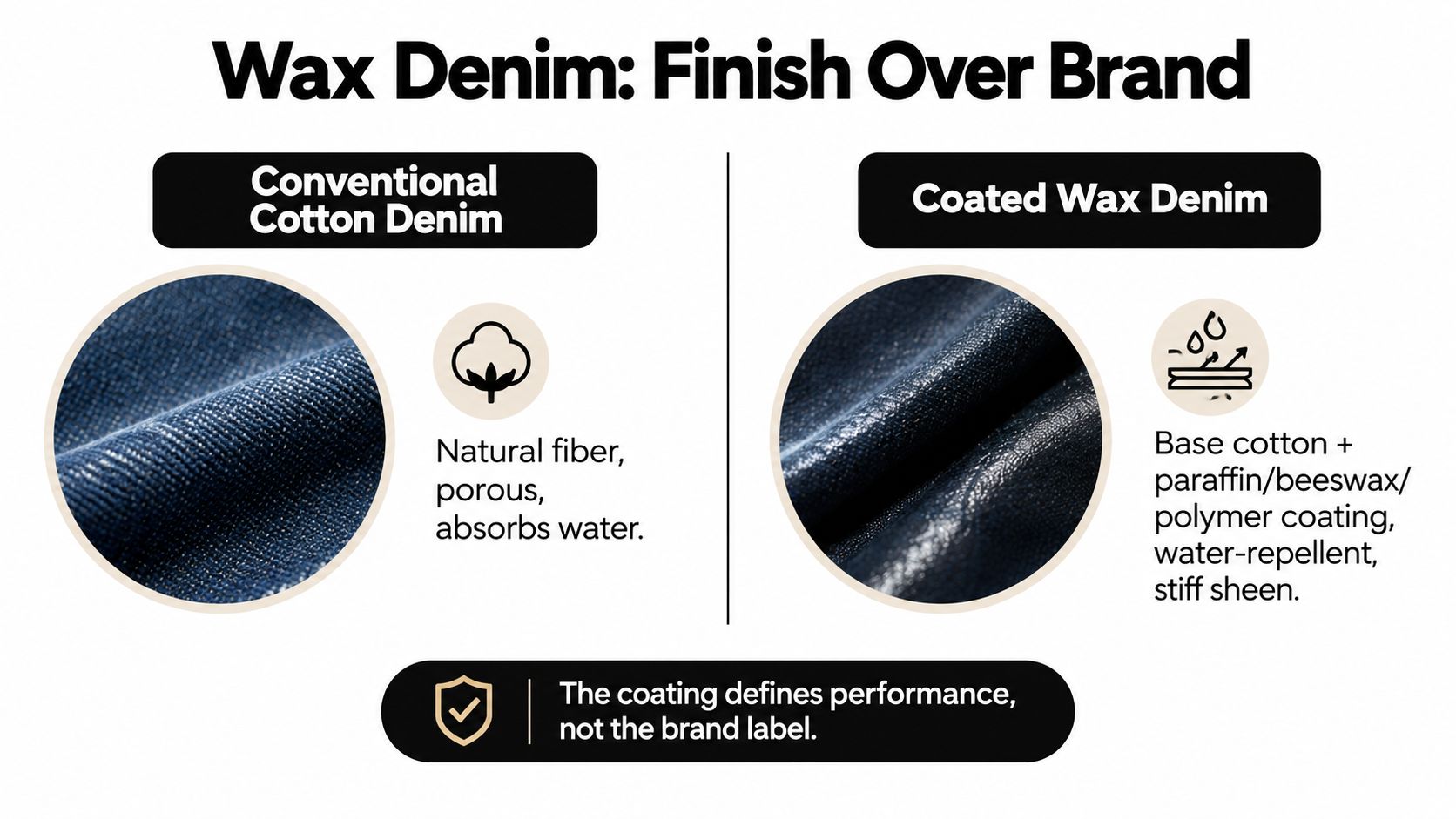
Wax denim describes a surface treatment, not a brand category. The base is usually cotton denim, and the face side receives a wax-based or resin-based coating. That layer changes how light reflects from the cloth, how moisture behaves on the surface, and how the jeans feel when you bend them.
Think about a candle being polished with wax. The material underneath hasn't changed, but the surface becomes smoother, more reflective, and less receptive to moisture. Waxed jeans use the same basic visual logic. The coating sits over the denim, creating a subtle sheen or a much stronger wet-look effect depending on the formula and application.
Read the surface before the label
A true wax-like finish tends to show movement when the fabric bends. High-friction areas may develop a leather-like pull-up effect, where the surface lightens or shifts as the coating flexes. A synthetic polymer or polyurethane coating can imitate that appearance, but it may feel more uniform, slick, or film-like.
Run your hand over the thigh and knee. A good pair often feels denim-first, with a coating that adds body rather than replacing the textile character. If the surface feels sticky, brittle, or excessively hard, the garment may have been stored poorly or may be closer to a plastic film finish than a flexible wax treatment.
Three fast rack tests
Bend the knee. Look for fine cracking along the crease. A clean bend with controlled color movement is healthier than a pale, broken line.
Check the pocket opening. Overspray, uneven edges, or a noticeably different texture can indicate inconsistent factory application.
View the garment from several angles. A strong coating should have an intentional sheen. Patchy glare, cloudy areas, and random dull zones are warning signs.
The coating determines performance more than the brand name. A recognizable label can support resale, but the buyer will experience the finish directly, especially at the knees, seat, waistband, and pocket edges.
How Wax Denim Went From Workwear to Runway
Waxed denim began with a practical job. Wax- and oil-treated cotton helped sailors and outdoor workers resist water, while later treatments improved flexibility and durability. That working origin still matters on the sales floor: the finish gives familiar denim a harder, more directional surface without erasing its utility roots.
The historical pattern buyers should understand
A useful milestone arrived in 1924, when Barbour introduced its first waxed cotton motorcycle jacket, as documented in the historical account of waxed denim. Waxed and coated denim later entered rebellious youth styling during the 1960s, returned through punk fashion in the 1970s, and resurfaced in 1990s grunge and runway looks, according to this overview of waxed denim's revivals.
The pattern matters more than any single era. Wax denim returns when shoppers want the comfort and recognition of denim with a sharper visual finish. That repeat demand gives buyers a clearer reason to test the category than a short-lived runway flash.
Why revivals create wholesale opportunity
Brands often revisit coated styles alongside workwear, motorcycle references, punk, and luxury streetwear. Those shifts can leave mixed inventory behind. Liquidation channels then offer a practical route for placing that stock with boutiques, online stores, and live-sale sellers.
Recent industry coverage also connects renewed interest in wax finishes with Japanese selvedge launches and 2026 denim direction, as reported in FashionNetwork's coverage of Wax London's AW26 activity. That signal does not make every coated lot a good buy. Inspect the finish, photograph its sheen and creasing honestly, and list the jeans around the customer and price point they can serve.
Caring for Wax Jeans Without Killing the Finish
Wax jeans aren't ordinary everyday denim. Repeated washing, agitation, and heat can strip or damage the coating, so care guidance recommends cleaning sparingly, using cold water around 20 to 30°C, selecting a gentle cycle or hand wash, turning the garment inside out, and air drying. Specialist waxed-denim care guidance also warns against tumble drying and high heat because the coating can suffer irreversible damage.
Spot cleaning is the sensible default for light marks. Use a soft cloth, cold water, and a mild soap, then test on an inconspicuous area before touching a visible thigh or pocket. Don't scrub aggressively. You may remove the stain and the finish together.
A practical care routine
Between wears: Air the jeans out rather than washing them automatically. Odor and visible dirt require different responses, and moisture isn't always the answer.
For small marks: Dab, don't rub. Work from the outside of the mark toward the center so you don't spread residue across the coating.
After washing: Reshape the jeans and let them air dry away from direct heat. A radiator, hot dryer, or strong heat source can soften, distort, or dull the finish.
For fading sheen: Consider re-waxing only when the garment shows genuine wear and the product is designed to accept additional treatment. Apply a small amount to a test area first.
Practical rule: Sell the care requirement as part of the product description. A buyer who understands the finish is less likely to treat the jeans like standard machine-wash denim.
Before resale, inspect the high-friction zones closely. Cracked or flaking coating, white stress lines at knee creases, sticky patches from heat exposure, and persistent odor trapped under the finish should either block the listing or trigger a clear condition disclosure. Store pairs flat when possible. Repeated tight folding creates permanent creases, and those creases can become failure points when the coating flexes.
The care burden is the trade-off for the appearance. Wax denim works for customers who value the finish enough to handle it carefully, but it won't suit shoppers who want to wash every pair with a normal weekly load.
A visual care reminder can help customers understand the limitations before purchase.
The Main Looks Inside a Wax Jeans Collection
A useful wax jeans collection needs internal variety. “Shiny black jeans” is too broad for buying, styling, or listing. The finish determines the customer, the photography approach, and the number of condition questions you'll receive after purchase.
Match the finish to the buyer
Coated sheen is the most immediately dramatic option. It reflects a hard highlight and creates a wet-look black or indigo surface. It works with evening dressing, clubwear, and streetwear, but it also reveals every fold and pressure mark. Photograph it with directional light, not a flat overhead setup.
Matte wax has a quieter surface and a softer visual read. It can develop a pull-up effect that resembles worn leather, making it a better fit for heritage, Americana, and understated wardrobe customers. The finish is easier to style with flannels, chore jackets, and textured knits.
Black wax remains the practical anchor of most collections. It works across seasons and fits, from slim silhouettes to relaxed utility shapes. I usually prefer several clean black options over a large assortment of experimental colors because black gives the shopper an immediate styling reference.
Distressed wax comes pre-aged through sanding, whiskering, or controlled abrasion. It suits trend-led buyers who want character without waiting for the garment to break in. The risk is that shoppers may mistake intentional distressing for coating failure, so the listing must describe which marks are designed and which are damage.
| Finish | Appearance | Target Buyer | Styling Cues | Handling Notes |
|---|---|---|---|---|
| Coated sheen | Strong reflective surface | Evening and streetwear shopper | Black boots, cropped jacket, sharp knitwear | Shows creases and glare easily |
| Matte wax | Low sheen with softer depth | Heritage and Americana shopper | Flannel, work jacket, suede footwear | Inspect for uneven dull patches |
| Black wax | Versatile dark finish | Broad boutique customer | Monochrome outfits, tailoring, casual layers | Safest core assortment, but still needs care disclosure |
| Distressed wax | Pre-aged surface with visible variation | Trend-driven shopper | Graphic tees, oversized outerwear, motorcycle styling | Distinguish intentional wear from flaking |
Don't promise a margin because a finish looks premium. Your return exposure, photography time, inspection labor, and care communication all affect the actual result.
Sourcing and Listing Wax Jeans Through Wholesale Liquidation
Wax denim requires a hands-on receiving process. A manifest can tell you the brand, style, and size, but it won't show whether the coating has dried out in storage or cracked along the knees. Open the lot before you build a sales forecast.
Inspect the finish before sorting by size
Start with a clean pair in natural or controlled light. Run a fingernail lightly across the surface to check for tackiness, but don't gouge the coating. Bend the knee and seat area, then inspect the creases for micro-cracks. Check pocket linings and pocket openings for overspray, which can signal inconsistent application or factory-second quality.
Separate stock into three groups:
Ready to list: Even finish, clean hardware, no odor, and no visible cracking.
Needs presentation work: Wrinkled from packing, dusty, or difficult to photograph, but structurally sound.
Do not list as new: Flaking, sticky, badly stained, strongly odorous, or materially uneven pairs.
For broader pallet-buying discipline, this guide to liquidation by the pallet is a useful reference point. With wax jeans, the inspection standard needs to be stricter than it is for ordinary denim because the coating is part of the product.
Photograph the sheen instead of hiding it
Use one hard light source angled at roughly 45 degrees to the garment. That creates a controlled highlight across the thigh and lets the shopper see the surface response. Flat fluorescent lighting often produces muddy gray images, while uncontrolled multi-light setups can make a finish look glossier than it is.
Take both a full front image and close-ups of the knee, seat, waistband, pocket edge, and hem. Include one angled photograph that shows how the coating catches light. If the finish varies naturally, show the variation instead of smoothing it away through editing.
Write the listing like a buyer
Don't use “shiny jeans” as the whole description. Name the finish and explain the base fabric.
A strong listing might read:
“Black coated denim jeans with a smooth wax-look finish, structured hand, traditional five-pocket construction, and visible sheen under direct light. The coating may develop natural variation with wear. Wash sparingly in cold water, turn inside out, and air dry.”
If the garment is resin-coated rather than wax-treated, say resin-coated or polymer-coated when the label or supplier documentation supports that wording. Never promise waterproofing. A wax finish improves surface water resistance, but it doesn't turn jeans into rain gear.
Pricing should start with comparable non-wax denim, then account for brand strength, condition, fit, and the labor required to sell the finish correctly. Avoid copying fixed markup assumptions from another category. A pair that photographs beautifully can justify a stronger position, while a difficult-to-explain coating with visible irregularity needs more conservative pricing.
Package each pair with tissue between the legs to reduce rubbing. Use a poly bag, but don't vacuum seal the garment because compression can create sharp permanent folds. Disclose every finish irregularity in the description, and photograph the exact issue when it affects appearance.
Deciding Whether Wax Jeans Belong in Your Store
Wax jeans earn space in a store when the customer, presentation setup, and supplier quality align. A suburban boutique may sell matte or black wax styles more easily when they sit beside practical wardrobe pieces. A live-sale host can demonstrate the finish by bending the knee on camera, showing how a soft matte surface differs from a harder coated sheen.
A vintage-focused thrift reseller has another advantage. Pull-up marks, patina, and controlled distressing can read as character, as long as the garment has no flaking or odor. The same pair may feel premium in one sales channel and unclear in another.
Use the channel as a quality filter
Ask these questions before committing to a lot:
Can customers see the finish? If photography or livestream lighting flattens the sheen, you will need more presentation work.
Can you explain the care? A short care card and clear listing note help prevent mismatched expectations.
Can you handle condition questions? Buyers may ask about creasing, shine variation, and washing instructions.
Can your supplier describe the coating? Different surfaces without useful documentation make inspection and quality control expensive.
For boutique-specific buying guidance, see this wholesale clothing guide for boutique owners.
The go or no-go checklist
Proceed only when these points are in place:
Demand signal: Your shoppers already respond to dark, coated, motorcycle, streetwear, or heritage styling.
Supplier reliability: You can inspect samples or receive consistent condition information before increasing the order.
Return tolerance: Your operation can handle questions and occasional returns without treating normal finish variation as a defect.
Care-card readiness: Every sale includes realistic washing and drying guidance.
Pricing floor: The expected selling price covers inspection, photography, storage, packing, and the risk of slow-moving sizes.
A wax jeans collection requires active handling. The finish creates its appeal while adding inspection, care, and explanation work. If you can show the surface clearly and place it with the right buyer, it can earn shelf space. If that process is not practical, ordinary denim may be the better purchase.
OneTrendyCloset offers curated brand-name apparel liquidation boxes, mix-and-match sourcing, and custom lots for boutiques, marketplace sellers, and live-sale hosts. Visit OneTrendyCloset to explore apparel inventory for a carefully selected wax jeans collection.