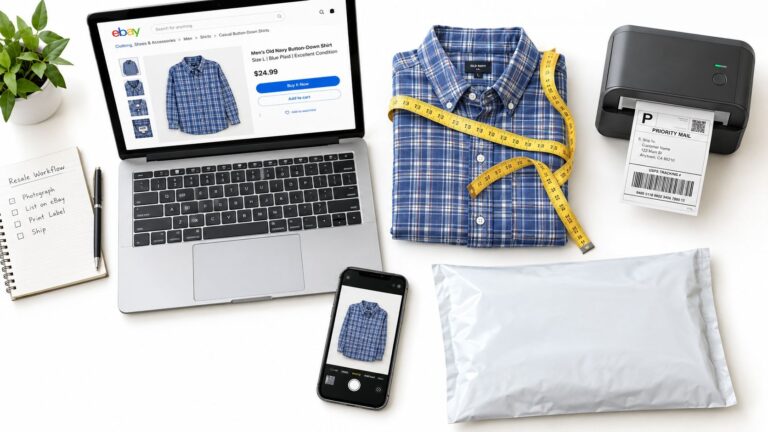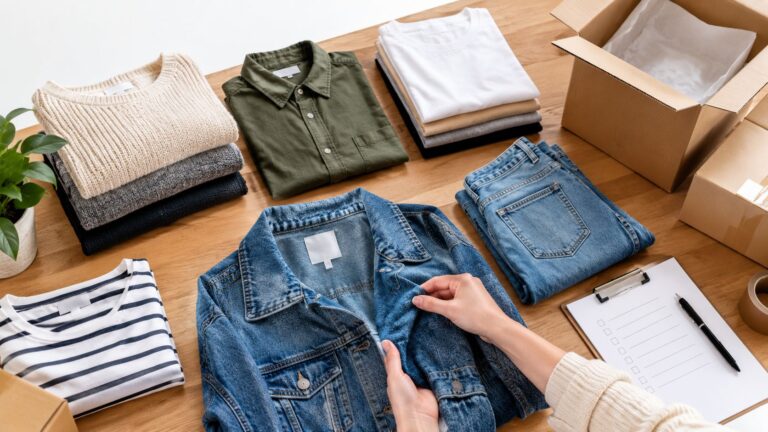
You're probably looking at a lot of tank tops right now and asking a simple question with expensive consequences: are these easy summer sellers, or are you about to buy a pile of basics that sit once the weather changes?
That moment catches a lot of new resellers. A wholesale listing can make tank tops look interchangeable. Same colors. Similar photos. Low-looking unit costs. But when the boxes arrive, the differences show up fast. One batch feels thin and clingy. Another fits short through the body. Another looks fine on a table but gets weak sell-through online because buyers can't tell whether it's meant for layering, gym wear, boutique styling, or plus-size comfort.
That's why wholesale clothing tank tops deserve more strategy than people give them. They're not just filler inventory. They're a category where fabric weight, fit control, and subcategory choice often matter more than chasing the cheapest cost.
If you resell through a boutique, Poshmark, eBay, Mercari, or live-selling formats, a better approach is to treat tank tops the way a grocer treats fruit. You don't just “buy apples.” You buy the right type, in the right condition, for the right customer, at the right time. The same logic applies here.
If you're still sorting out where to buy apparel in general, this overview of a wholesale supplier for clothing helps frame the supplier side before you narrow into tanks.
Table of Contents
- Introduction to Wholesale Tank Top Sourcing for Resellers
- Why Tank Tops Remain a Stable Wholesale Category
- Understanding Box vs Pallet vs Single Brand Packs
- Fabric Weight and Quality Signals That Affect Sell Through
- Sizing Consistency and Quality Control Before You Buy
- Pricing Benchmarks and Matching Inventory to Your Customer Profile
- Building a Profitable Tank Top Assortment That Sells Beyond Summer
Introduction to Wholesale Tank Top Sourcing for Resellers
A new reseller usually starts with a simple assumption: tank tops are cheap, basic, and easy to move. Sometimes that works. Sometimes it creates dead stock.
The difference usually comes down to three decisions. First, what kind of tank top you're buying. Second, how the inventory is packed and sourced. Third, who you expect to sell it to. A fitted rib tank for boutique styling isn't the same product decision as a loose cotton layering basic or a moisture-wicking workout top.
The reseller mistake that shows up late
Most buying errors don't feel like errors on order day. They show up later in the form of slow listings, return requests, or awkward live-sale explanations like “this one runs a little small” or “this one is a bit sheer.”
That's why experienced buyers don't start with color. They start with use case.
Practical rule: If you can't explain in one sentence who a tank top is for, you probably shouldn't order it in volume.
A good sentence sounds like this:
- Boutique use: A structured ribbed tank for high-rise denim and layering under open shirts.
- Marketplace use: A basic cotton tank that photographs cleanly, folds small, and sells as a practical staple.
- Live-sale use: A forgiving-fit tank with easy sizing and broad appeal, so you spend less time answering fit questions item by item.
What a smarter buying system looks like
When I teach new resellers to buy wholesale clothing tank tops, I tell them to stop asking “What's cheapest?” and start asking four better questions:
- Where will this sell best
- What fabric weight matches that channel
- How consistent is sizing from lot to lot
- Does this subtype still make sense after peak warm-weather demand passes
That shift changes everything. It turns tank tops from impulse inventory into a repeatable category you can restock with more confidence.
Why Tank Tops Remain a Stable Wholesale Category
Tank tops aren't a passing trend. They've had a long runway into everyday apparel, and that matters when you're deciding whether to build them into your inventory plan.
The modern tank top has a traceable commercial history in the early twentieth century. Its lineage is commonly linked to women's swimwear used at public swimming pools, with a widely cited milestone in 1912, when women competed in swimming at the Stockholm Olympics wearing sleeveless suits that closely resembled today's tank top. Another marker came in 1913, with a patent attributed to John L. Hammons for an early tank-top design, showing the garment had already moved beyond pure swimwear by the 1910s, as noted in this history of why it is called a tank top.
A long adoption curve matters to resellers
That history sounds academic until you translate it into buying logic. A garment that survives shifts in sport, casualwear, undergarments, disco styling, bodybuilding culture, and everyday fashion usually has staying power.
That's what happened here. Over the following decades, tank tops moved from niche athletic or undergarment use into mainstream casual wear, with a notable resurgence in the 1970s and 1980s tied to disco culture, bodybuilding, and broader acceptance of sleeveless apparel in daily dress.
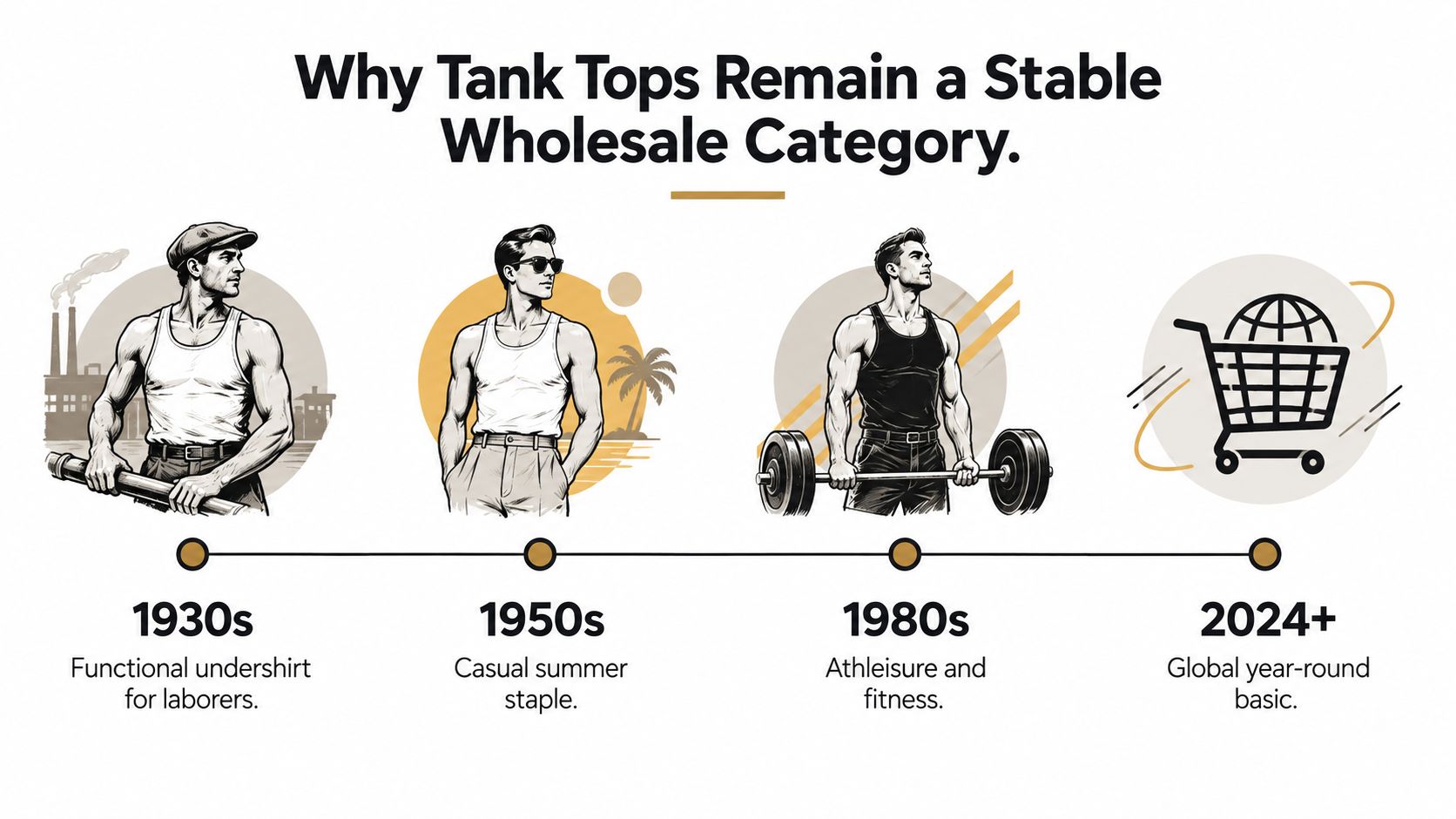
For a reseller, that means you're not betting on a novelty item. You're buying into a category customers already understand. They know how to wear it, when to wear it, and what problem it solves.
The scale behind the category
The wholesale side tells the same story. One market report valued the global tank tops and sleeveless market at $42.8 billion in 2025 and projected $68.5 billion by 2034, implying a 5.4% CAGR over that period. The same report identified cotton as the leading material segment with a 38.6% share in 2025, while women's apparel accounted for about 46.1% of revenue and Asia Pacific held 36.8% of global market share. In trade terms, cotton T-shirts, singlets, and other vests were exported worldwide at $35.1 billion in 2024, with Bangladesh, China, and India ranking as the largest exporters, and Bangladesh alone representing 21.8% of world exports at $7.6 billion, according to the global tank tops and sleeveless market report.
That's a lot of manufacturing depth for one “basic” category.
A stable wholesale category usually has two things behind it: repeat consumer use and deep supplier infrastructure. Tank tops have both.
What stability actually means in practice
Stable doesn't mean every tank top sells equally well. It means the category is replenishable. You can test, learn, reorder, and refine instead of constantly chasing one-off trends.
That makes tank tops useful in two situations:
- Small tests: You can trial a cut, fabric, or size run without building your whole season around it.
- Repeat sourcing: Once you find a shape and quality level your buyers trust, you can make it part of your regular inventory rhythm.
Understanding Box vs Pallet vs Single Brand Packs
New resellers often compare wholesale formats only by unit cost. That's too narrow. The better question is how much control, sorting work, and inventory risk each format creates.
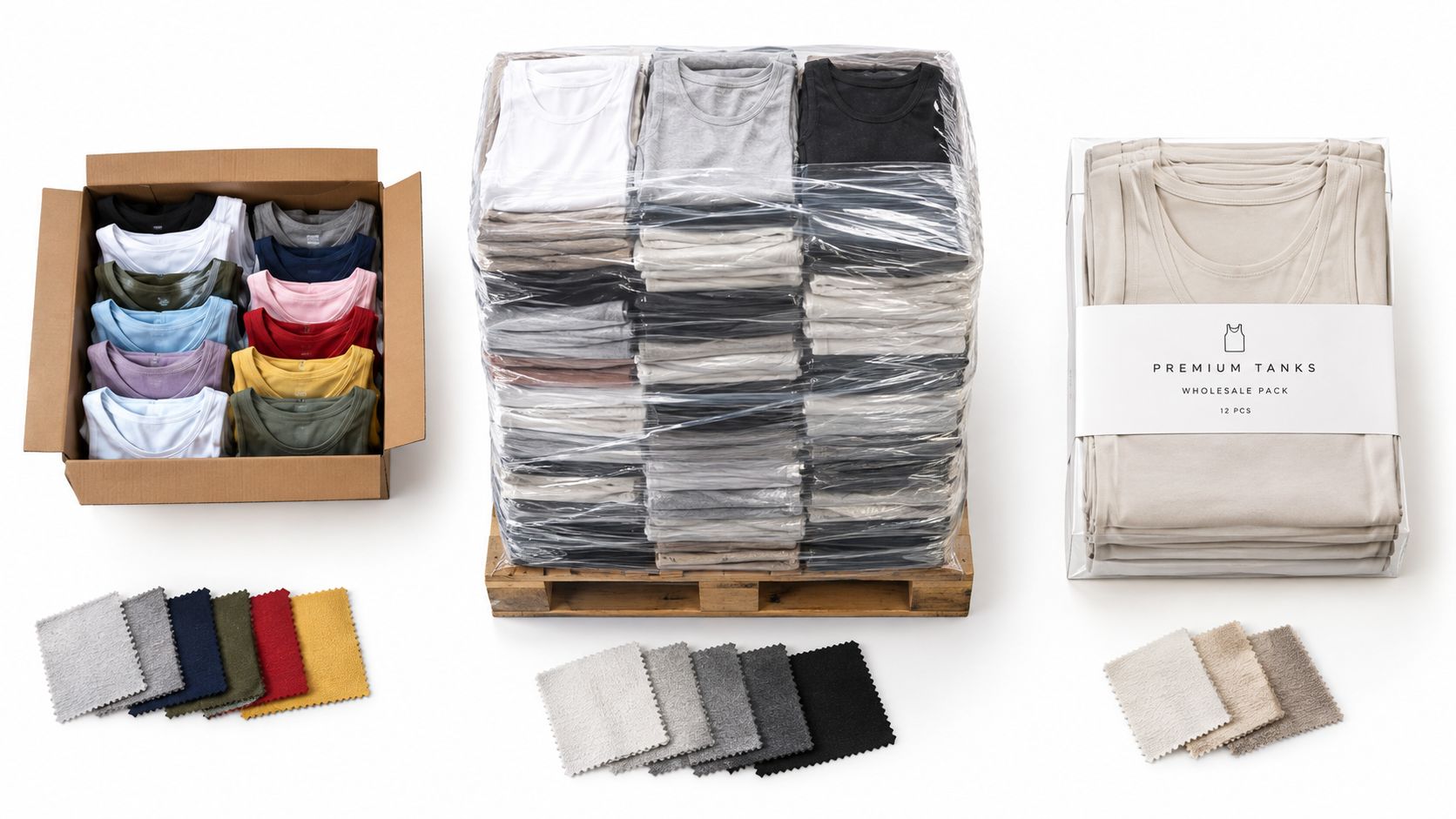
A box, a pallet, and a single-brand pack can all contain tank tops, but they ask very different things from your business. One asks you to test. One asks you to process volume. One asks you to commit to a more defined identity.
What each format is really buying you
A box usually buys flexibility. You can test categories, colors, brands, or style mixes without tying up as much cash or storage. This works well for boutique owners, marketplace sellers, and live hosts who are still learning what their buyers respond to.
A pallet buys scale, but it also buys workload. You'll spend more time receiving, sorting, measuring, photographing, and pricing. That's fine if you already have a process. It's not fine if your inventory room already feels one order away from chaos.
A single-brand pack buys consistency of look and expectation. That can help if your customers follow specific labels or if you're building a more recognizable aesthetic in your storefront.
Wholesale Tank Top Formats Compared
| Format | Best For | Brand Control | Volume and Risk |
|---|---|---|---|
| Box | Testing styles, smaller budgets, mixed-channel resellers | Moderate to flexible, depending on supplier | Lower volume, lower overbuy risk |
| Pallet | Established resellers with space and systems | Varies by lot structure | Higher volume, higher risk if the mix is off |
| Single-brand pack | Sellers targeting a specific label or consistent presentation | High | Moderate to high, depending on depth of buy |
For a visual breakdown of larger liquidation buying, this guide to pallets for sale is useful if you're deciding whether you're ready to move beyond box-level sourcing.
How to choose without overthinking it
Use your selling channel to decide.
- If you sell on marketplaces, boxes often make more sense because they let you learn fast. You can test what photographs best and what gets the least fit friction.
- If you run a boutique, single-brand packs or tighter curated assortments can create a cleaner rack story.
- If you host live sales regularly, pallets can work when you already know your audience likes volume and broad style variety.
Here's the simplest filter I use.
Buy the format your current operations can absorb, not the format your future self thinks sounds impressive.
Where mixed and custom formats fit
Some suppliers sit between these categories. For example, OneTrendyCloset offers curated brand-name apparel liquidation boxes in multiple box sizes and also provides custom quotes for boxes or pallets based on budget, preferred brands, and quantity needs. That kind of setup can make sense when you want to start with test volume and later scale through the same workflow.
That middle ground is often the safest path. You learn what moves before you commit to larger loads.
Fabric Weight and Quality Signals That Affect Sell Through
If you only judge tank tops by product photos, you'll miss one of the biggest resale factors: fabric weight.
Buyers don't use the term GSM in everyday shopping, but they react to it immediately. They feel it when a tank is see-through. They notice it when a rib tank snaps back into shape instead of stretching out. They mention it in reviews when a top hangs nicely instead of clinging in odd places.
How GSM changes the product
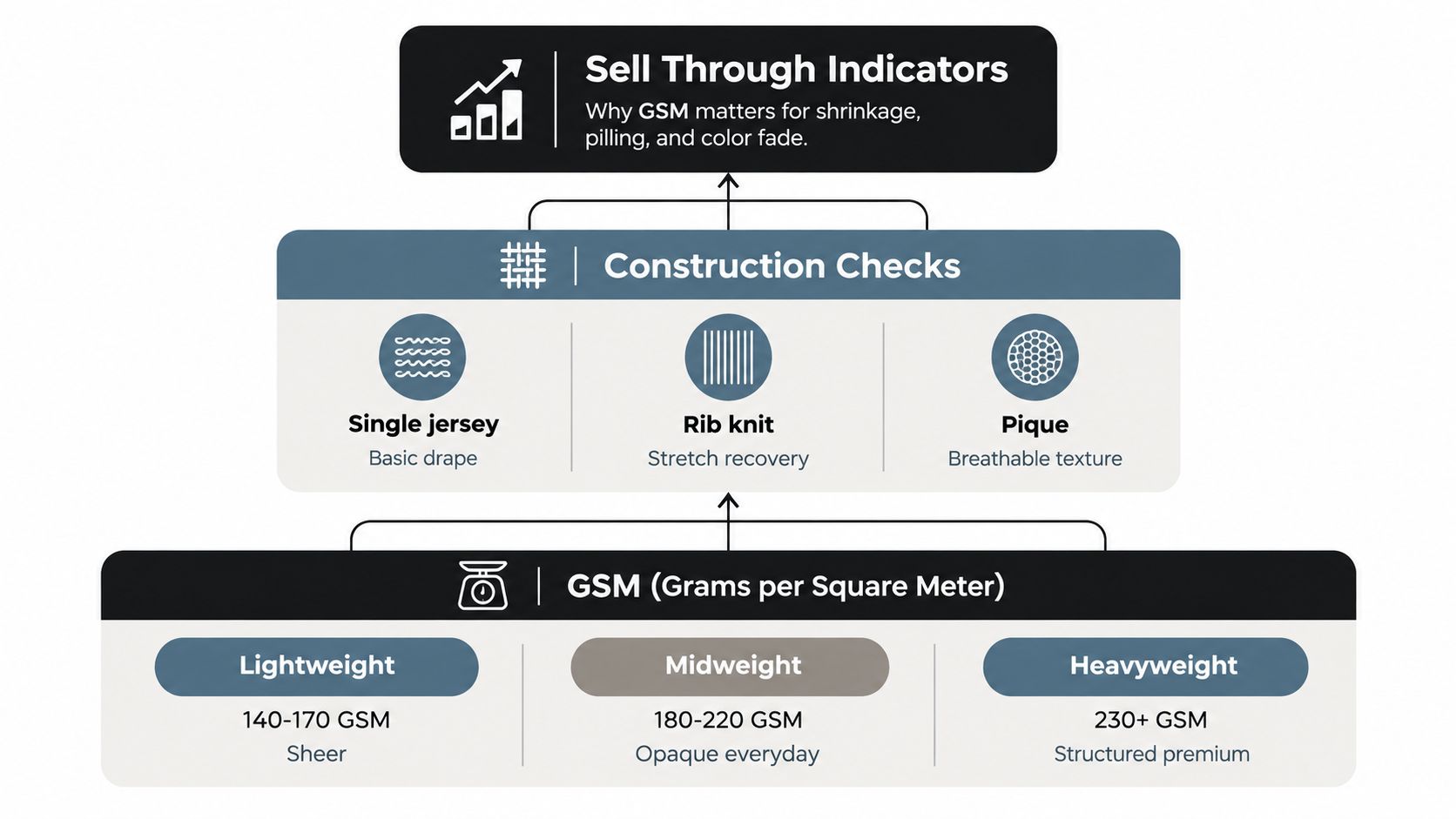
Industry references commonly place everyday cotton jersey tanks at about 150 to 170 GSM, fitted ribbed tanks at 200 to 220 GSM, and heavyweight cotton tanks at 220 to 240 GSM, based on this overview of tank top fabric weights and garment specs.
That progression changes both feel and merchandising outcome.
- 150 to 170 GSM: Lighter, cooler, easier for summer basics and simple layering.
- 200 to 220 GSM: Better for fitted women's tanks where buyers want stretch, recovery, and less transparency.
- 220 to 240 GSM: More structure, more opacity, and often a more premium hand-feel.
A thin flyer and a sturdy postcard can both carry the same design, but they don't create the same impression. Tank tops work the same way.
Heavier isn't always better
New buyers often assume heavier fabric always means higher quality. Not necessarily.
A heavyweight tank can feel excellent in a streetwear or premium basics setting. But it can also feel too warm, too stiff, or too structured for customers who want a soft summer layer. The right GSM depends on intended use.
That's why channel matching matters:
- Marketplace basics: Mid-light everyday cotton often works when your buyer wants a practical staple.
- Boutique styling: Ribbed midweight tanks often present better because they look less flimsy on a hanger and in photos.
- Streetwear or basics: Heavier tanks can justify stronger positioning when the silhouette is part of the appeal.
A related fabric question comes up when buyers compare blends for drape and wear. This article on cotton and polyester blend T-shirts helps if you're thinking beyond cotton-only options.
What to check besides GSM
GSM is the first filter, not the only one. Also check:
- Opacity: Hold the fabric to light in sample review if possible.
- Recovery: Rib knits should return to shape after stretch.
- Surface feel: Roughness can hurt repeat sales even when the fit is good.
- Drape: A tank can be opaque and still hang awkwardly.
A tank top doesn't need to feel expensive. It needs to feel appropriate for the promise in the listing.
Sizing Consistency and Quality Control Before You Buy
Sizing is where a “basic” category gets expensive. Tank tops look simple, but fit depends on more than chest width.
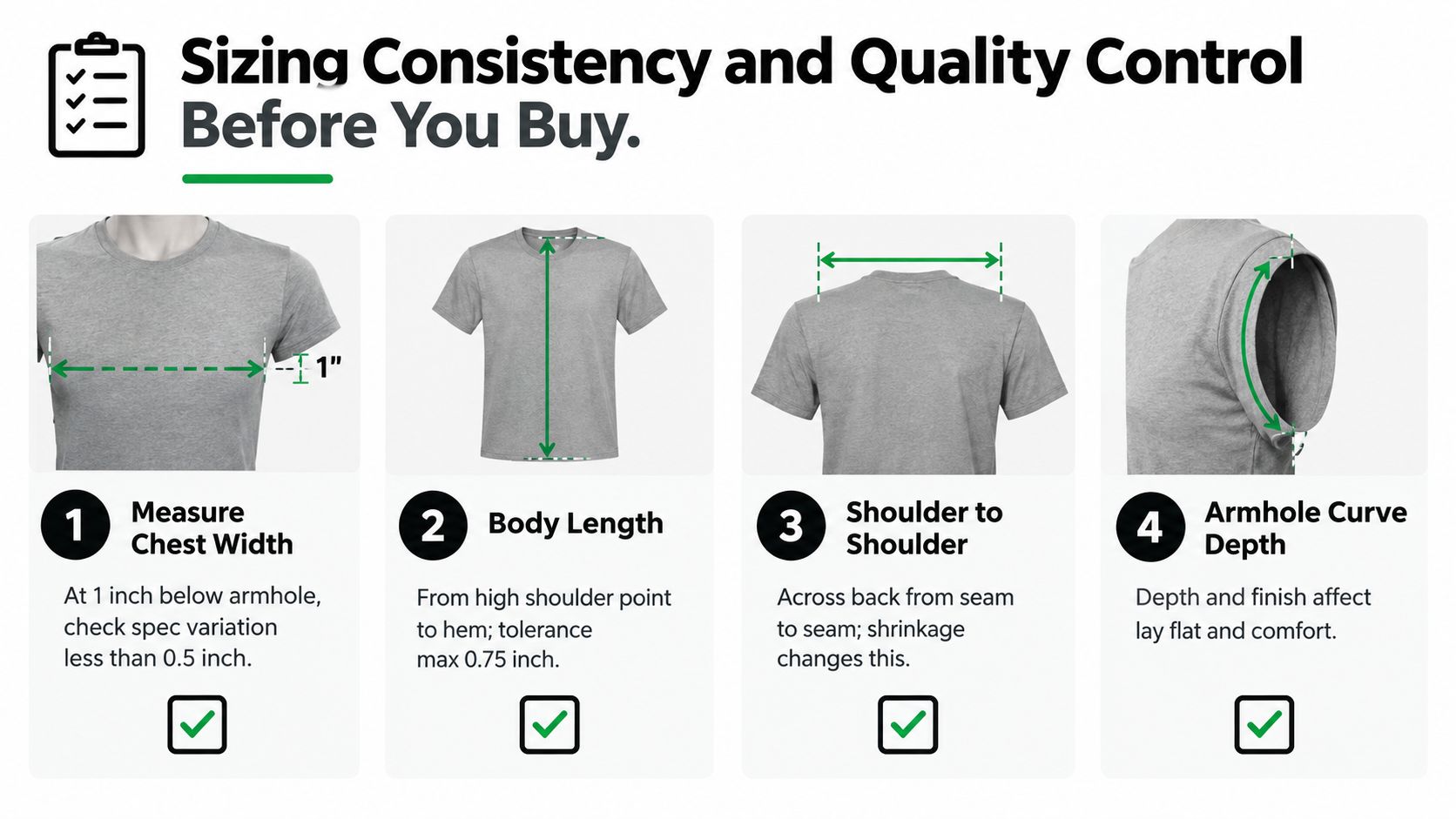
When buyers say a tank “runs weird,” they're often reacting to one of four measurement points that weren't controlled across lots. Industry size charts for tank tops typically specify chest, body length, shoulder strap length, and mid-torso width, with men's examples spanning roughly XS 36 inch chest to 4XL 59 inch chest, and body length increasing from about 27.5 inches to 34.5 inches, according to these bulk tank top measurement examples.
That's why mixing suppliers without standardizing the charting method can create return problems even when the label says the same size.
A visual measuring refresher helps when you're checking samples:
The four points you should standardize
Don't approve tank tops based on S, M, L labels alone. Ask for measurements on the same points every time.
Chest width
This affects whether the tank feels relaxed, fitted, or tight through the upper body.Body length
A tank can fit correctly in width and still disappoint if it wears too short or too long.Shoulder strap length
This changes neckline drop, armhole feel, and overall visual balance.Mid-torso width
This matters more than many new buyers realize, especially for fitted tanks and plus-size assortments.
A simple pre-production workflow
Use a checklist before you place larger orders.
- Request the size chart first: Make sure the supplier measures the same points across all styles you're comparing.
- Verify a sample physically: Don't rely on the chart alone if you plan to reorder the style.
- Match charts across repeat buys: If you reorder from a new lot or add another supplier, compare the spec method line by line.
- Record your own notes: Keep a file of what “true to size” meant in your store experience.
This video can help your team visualize garment measurement basics before checking incoming stock.
Why this matters more for tanks than tees
T-shirts forgive more. Sleeves, shoulder seams, and a looser frame can hide minor grading inconsistencies. Tank tops don't.
If a tank top misses in the strap, armhole, or body length, the customer notices immediately.
That's also why inclusive sizing can't be an afterthought. If you want tank tops to work as a real category, not just a seasonal add-on, your fit strategy needs to be deliberate.
Pricing Benchmarks and Matching Inventory to Your Customer Profile
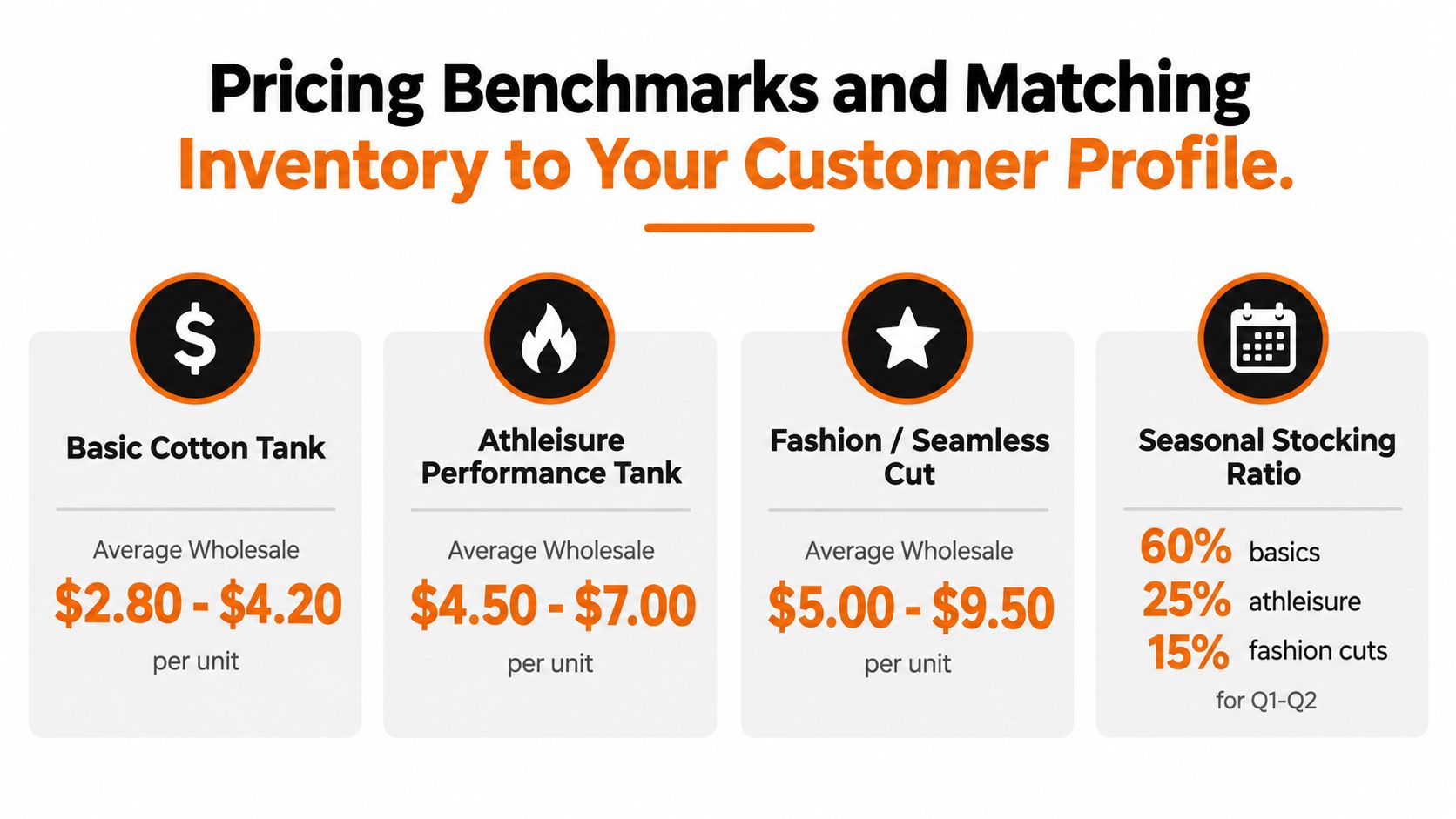
A lot of resellers lose margin on tank tops by buying too broadly. They assume “summer basics” is one bucket, then stock a little of everything or too much of the cheapest plain cotton option.
A tighter plan usually works better. The category isn't monolithic. Demand shifts by subcategory, by season, and by selling channel.
Recent sourcing guidance notes that buyer activity peaks in April and May and is lowest in December, showing a strong seasonal purchase cycle rather than uniform year-round demand. The same source points to stronger growth in sustainable tank tops at 87.2%, organic cotton tank tops at 82.1%, and moisture-wicking workout tanks at 65.4%, while the global tank tops and sleeveless market is projected to reach USD 51.40 billion by 2033, according to this women's tank top sourcing guide.
That tells you something important. The most profitable buy isn't always the cheapest plain tank. Often it's the tank with a clearer job.
Match the subtype to the customer
Think in customer profiles, not just in SKUs.
The practical basics buyer
This customer wants simple layering pieces, neutral colors, and predictable comfort. They usually care about value, but they still notice if the fabric is too sheer or the length is off.
Best fit: everyday cotton basics, stable sizing, easy-to-explain listings.
The activewear buyer
This customer isn't shopping for “a tank.” They're shopping for function. Moisture management, movement, and comfort matter more than lowest price.
Best fit: workout tanks, technical-feeling fabrics, clean athletic silhouettes.
The boutique styling buyer
This buyer wants shape, outfit potential, and a look that feels intentional. Ribbing, structure, neckline, and fit all pull more weight here.
Best fit: fitted rib tanks, fashion cuts, color stories that pair well with denim, layering shirts, or skirts.
A more selective market changes the playbook
Another industry report notes growing demand for sustainable materials, inclusive sizing, gender-neutral styles, and advanced fabric features such as moisture-wicking, anti-odor, UV protection, and construction. It also reports that in 2025, the overall women's tank-top trade volume declined 12.85% year over year, even as sustainable tank tops and plus-size sustainable tanks posted strong demand growth, according to the tank tops and sleeveless market report from Cognitive Market Research.
That's a useful warning for resellers. Broad demand doesn't mean lazy demand. Buyers are getting more selective.
A channel-based assortment lens
Use your main sales channel to guide your buy:
- Boutiques: Lean into fit, hand-feel, and styling value.
- Marketplaces: Favor tanks that are easy to photograph, easy to describe, and easy to size.
- Live sales: Choose straightforward winners with broad fit acceptance and quick verbal appeal.
- Sustainability-focused shops: Prioritize eco-minded and inclusive assortments where those values are central to the storefront.
Building a Profitable Tank Top Assortment That Sells Beyond Summer
The strongest tank top resellers don't treat the category like a clearance filler. They treat it like a set of small, distinct businesses living under one product name.
One tank solves layering. Another solves gym use. Another solves inclusive fit. Another works as a boutique styling piece. If you buy them all as “cheap basics,” you blur those jobs and make selling harder.
A better buying filter
Before you reorder wholesale clothing tank tops, run every option through this short filter:
- Use case first: Can you clearly name when and why the customer wears it?
- Fabric second: Does the GSM support that use instead of fighting it?
- Fit control third: Do you trust the size chart and sample consistency?
- Channel last: Does it belong in your boutique, marketplace store, or live-sale lineup?
If one of those answers is weak, the order probably needs to shrink, shift, or wait.
The safest inventory often isn't the cheapest piece. It's the piece that answers the customer's question fastest.
What tends to hold up after peak season
A lot of plain summer tanks cool off once warm-weather urgency fades. The styles that tend to hold attention longer are the ones with another purpose attached to them.
That might be:
- Layering basics that work under cardigans, shackets, or zip hoodies
- Athleisure tanks that stay relevant because they solve a workout or comfort need
- Inclusive-size options that serve customers who often have fewer reliable basics available
- Sustainable or feature-led tanks that appeal to a values-based or function-based buyer
This is why selective assortment beats bulk guessing. You don't need more tank tops. You need the right few groups of tank tops, bought in a format your business can handle, with fit and fabric you can defend confidently.
Build that habit, and tank tops stop being a seasonal gamble. They become a dependable inventory pillar.
If you want a sourcing path that lets you test before scaling, OneTrendyCloset offers curated brand-name apparel liquidation boxes plus custom box and pallet quotes that can align with reseller budgets, preferred brands, and category needs. For resellers building a smarter tank top mix instead of buying blind basics, it's worth reviewing the options at OneTrendyCloset.