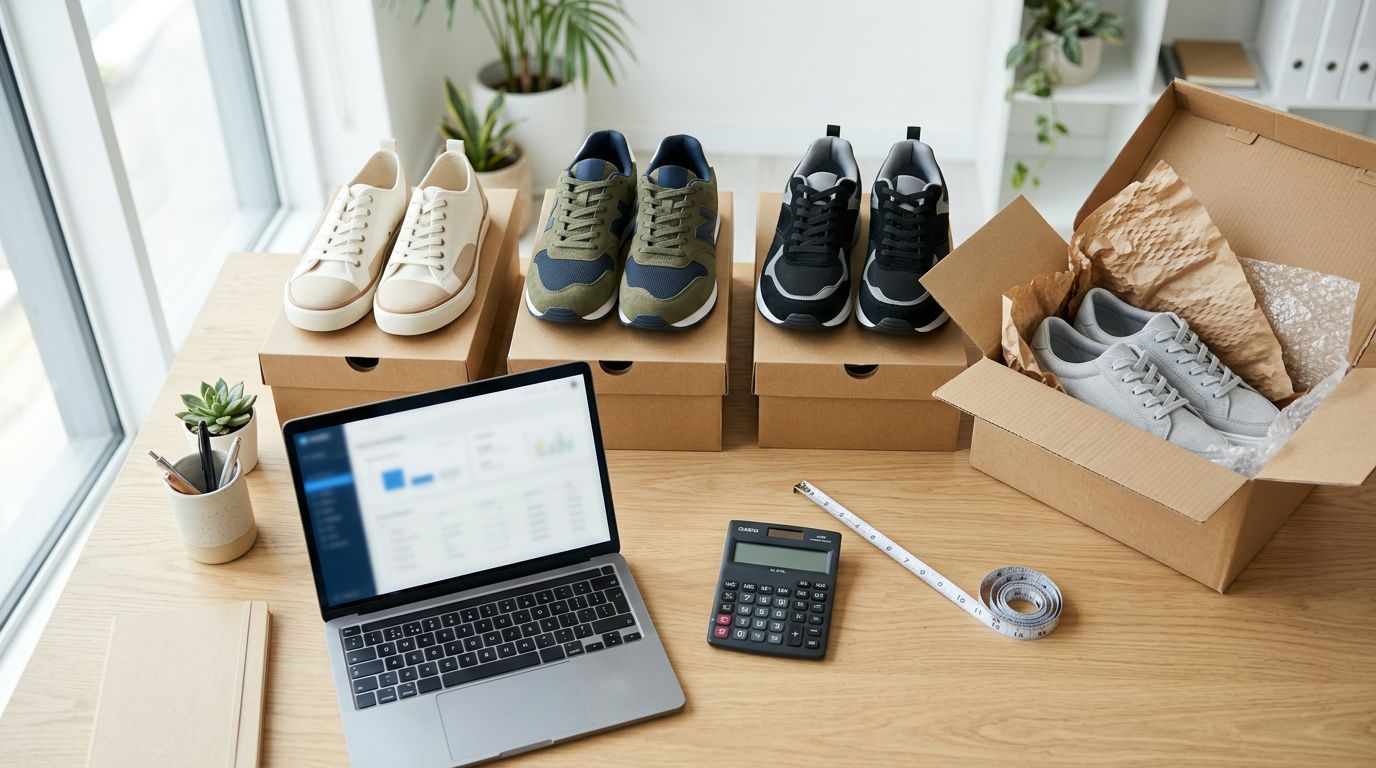
You've compared three wholesale shoe quotes. One vendor offers the lowest pair price, another promises better quality, and a third claims to have the most flexible minimum order. Yet none has shown the information that determines whether you'll make money: the size curve, model-level quantities, defect policy, freight terms, or the likely cost of returns.
That's the trap with shoes vendors wholesale. A low quoted price can hide slow sizes, incomplete pairs, inconsistent grading, and inventory that customers return because the fit doesn't match the label. The better buying question is not, “Which vendor is cheapest?” It's, “Which order gives me a predictable contribution margin after freight, fees, returns, inspection, and stranded stock?”
Table of Contents
- Why Sourcing Shoes Wholesale Is a Risk Decision, Not a Price Decision
- Mapping the Wholesale Shoe Vendor Channels
- Reading an MOQ the Way a Buyer Should
- Running a Quality Inspection Before You Pay
- Building a Landed-Cost and Returns-Adjusted Margin Model
- Spotting Red Flags and Negotiating From Strength
- Onboarding a Vendor and Planning Replenishment by the Numbers
Why Sourcing Shoes Wholesale Is a Risk Decision, Not a Price Decision
A first-time reseller often compares wholesale offers in a spreadsheet with only three columns: style, pair price, and minimum order. That comparison looks tidy until the cartons arrive. The vendor may have met the promised pair count, but the assortment contains too many unpopular sizes, several damaged boxes, and models that don't fit the customer base.
Footwear amplifies these problems because a pair isn't interchangeable with another pair. A seller can often combine apparel sizes or move a color through a promotion. A size 6 shoe cannot satisfy a customer looking for a size 11, and a left shoe without its matching right shoe is not saleable inventory.
The global supply base is enormous, but concentrated. In 2024, worldwide footwear output reached 23.9 billion pairs, after increasing 6.9%, while Asia produced 88% of the world's footwear. China alone manufactured about 13 billion pairs, more than 54% of global output, while India represented 12.5% and Vietnam 6.5%, according to World Footwear's 2024 industry report. That scale gives buyers access to remarkable production capacity, but it also exposes them to regional disruptions, freight changes, tariffs, exchange-rate movement, and factory minimums.
Practical rule: Treat every wholesale order as an inventory-risk decision first and a price negotiation second.
What the cheap quote leaves out
Suppose one quote looks attractive because the unit price is lower. Before accepting it, ask what happens if the vendor's size distribution leaves you with slow stock. Then add inspection labor, marketplace charges, outbound delivery, return freight, and pairs that arrive with defects or missing components.
A vendor offering a higher pair price may still produce the better result if it provides a usable size run, accurate manifests, dependable labeling, and a workable replacement policy. Conversely, a bargain lot can become expensive when you divide the total spend across only the pairs that are sellable.
The operational target is predictable contribution margin per sellable pair, not a low invoice price. That requires SKU-level information before payment, a written condition standard, and a returns-adjusted calculation that reflects how customers buy footwear.
Mapping the Wholesale Shoe Vendor Channels
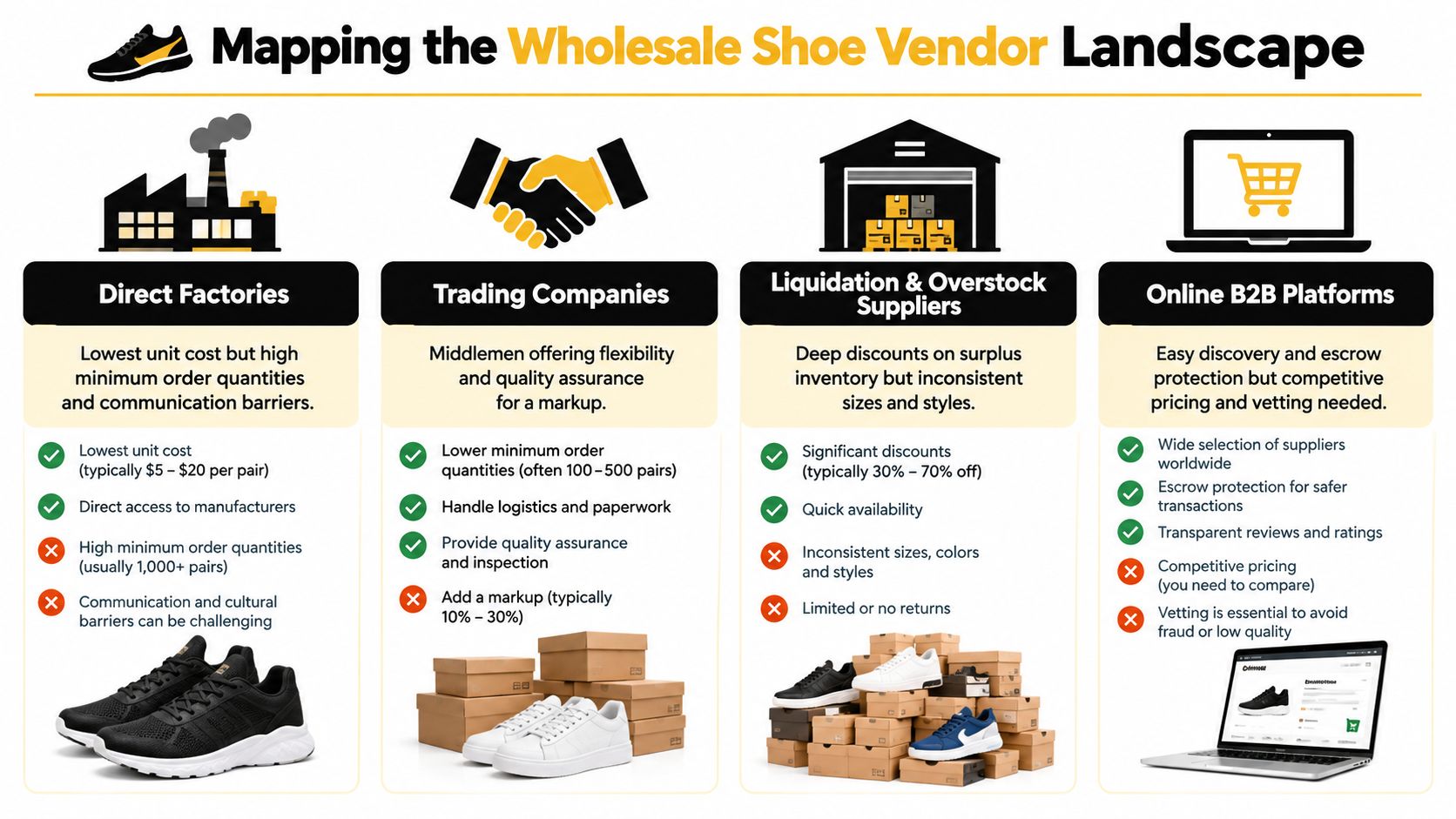
A supplier that looks cheap on paper can still create the wrong commitment. Judge each channel by the mix of sizes, styles, cash tied up, and uncertainty it places on your business. A direct factory may offer the lowest unit price, yet it can be a poor first choice for a boutique testing a new category. Liquidation suppliers can cut acquisition costs, but mixed assortments demand more sorting and more flexible merchandising.
Four channels and their practical trade-offs
| Supplier channel | Best fit | Main advantage | Main risk |
|---|---|---|---|
| Direct factory | Established brands with repeat demand | Lower unit pricing and product customization | High minimums, production risk, and communication friction |
| Trading company | Buyers needing coordination and flexibility | A middle layer for sourcing, quality checks, and logistics | Markup and less direct control over production |
| Liquidation or overstock supplier | Resellers comfortable with mixed inventory | Deep discounts and quick access to existing stock | Broken size runs, inconsistent styles, and variable condition |
| Online B2B platform | Buyers comparing many suppliers | Easy discovery and transaction tools | Competitive pricing, uneven vetting, and listing inaccuracies |
A factory fits once you understand your customer, can repeat an order, and can manage product development or production timing. It is a weak starting point while you are still testing silhouettes, materials, and size ranges. A lower pair price does not rescue a large commitment to a product that will not move.
Trading companies suit buyers who need one party to coordinate several factories, arrange inspection, or consolidate orders. Their service adds markup, but the communication and quality-control layer can reduce daily operational work. Ask what the fee includes, because coordination without useful inspection or documentation offers limited protection.
Liquidation and overstock suppliers serve a different buying case. They provide ready-made inventory for marketplace listings, pop-up retail, and live sales, without requiring a custom product. The trade-off is less predictable stock. Read a guide to buying shoes pallets wholesale and why manifest quality matters before committing, especially when the manifest does not clearly show styles, conditions, or size distribution.
Where online platforms fit
Online B2B platforms make supplier discovery faster, but a listing is not proof of available or accurate inventory. Use the platform to compare ranges, sample responses, and stated terms. Then request carton-level details, size-level quantities, condition information, and current product photographs before treating the offer as dependable.
The best first order matches evidence from your own sales. A small mixed lot usually belongs with a liquidation supplier or flexible trading company, not a factory selected only for its quoted pair price. Repeat demand for a specific model and size curve can justify a direct manufacturer, provided the extra production commitment improves the margin after unsold and returned pairs are accounted for.
Reading an MOQ the Way a Buyer Should
A minimum order quantity is not just a pair count. It's a commitment to a particular mix of models, colors, sizes, deposits, logistics costs, and leftover inventory. A vendor saying “minimum 300 pairs” hasn't told you enough to judge the order.
Ask for the commitment in a format you can sell against. Request quantities by model, gender, color, width, and US or EU size. Then identify which portions of the order are fixed and which can change. A pair count without a size matrix is a purchasing headline, not a usable inventory plan.
Turn the MOQ into exposure
Use this sequence before approving a production or mixed-lot order:
- Break the order into sellable SKUs. Count each model, color, width, and size separately. Don't treat a single sneaker style as one inventory item if it contains several distinct size and color combinations.
- List every cash requirement. Include deposit terms, balance timing, freight, duties, inspection, insurance, storage, and any below-batch surcharge.
- Mark the inflexible units. Identify sizes or colors you can't substitute if customer demand is weaker than expected.
- Estimate leftover exposure. Ask what happens to broken runs after popular sizes sell. Those pairs may require markdowns or a slower sales channel.
- Test a smaller version. Ask whether the vendor can use stock outsoles, shared materials, existing lasts, mixed colorways, or scheduled releases to reduce the first commitment.
Factories often prefer production batches that simplify purchasing and manufacturing. Buyers need an order structure that limits unsold inventory. Those goals can coexist, but only if you negotiate the structure instead of accepting the standard MOQ automatically.
Size curves decide whether the order works
A style can appear successful at the aggregate level while carrying too much stock in slow sizes. Calculate sell-through as units sold divided by units received, then separate the result by size. Practical footwear benchmarks place normal sell-through around 50% to 70%, while another retail benchmark uses approximately 45% to 55% for footwear. A conservative first-order target is at least 50% sell-through within the planned selling window, with a markdown trigger if the lot falls materially below target by the season midpoint, as outlined in this retail inventory markdown guidance.
Don't let a vendor replace a size-level manifest with a vague promise that the assortment is “balanced.” Ask for the actual matrix, confirm how returns or incomplete pairs are counted, and model the order using sellable units rather than headline pair count.
Running a Quality Inspection Before You Pay
“Grade A” doesn't mean much unless the vendor defines it. One supplier may include light box damage, glue marks, or minor scuffs in that grade. Another may reserve it for clean, matched, retail-ready pairs. Your inspection process should convert the vendor's language into evidence you can photograph and file.
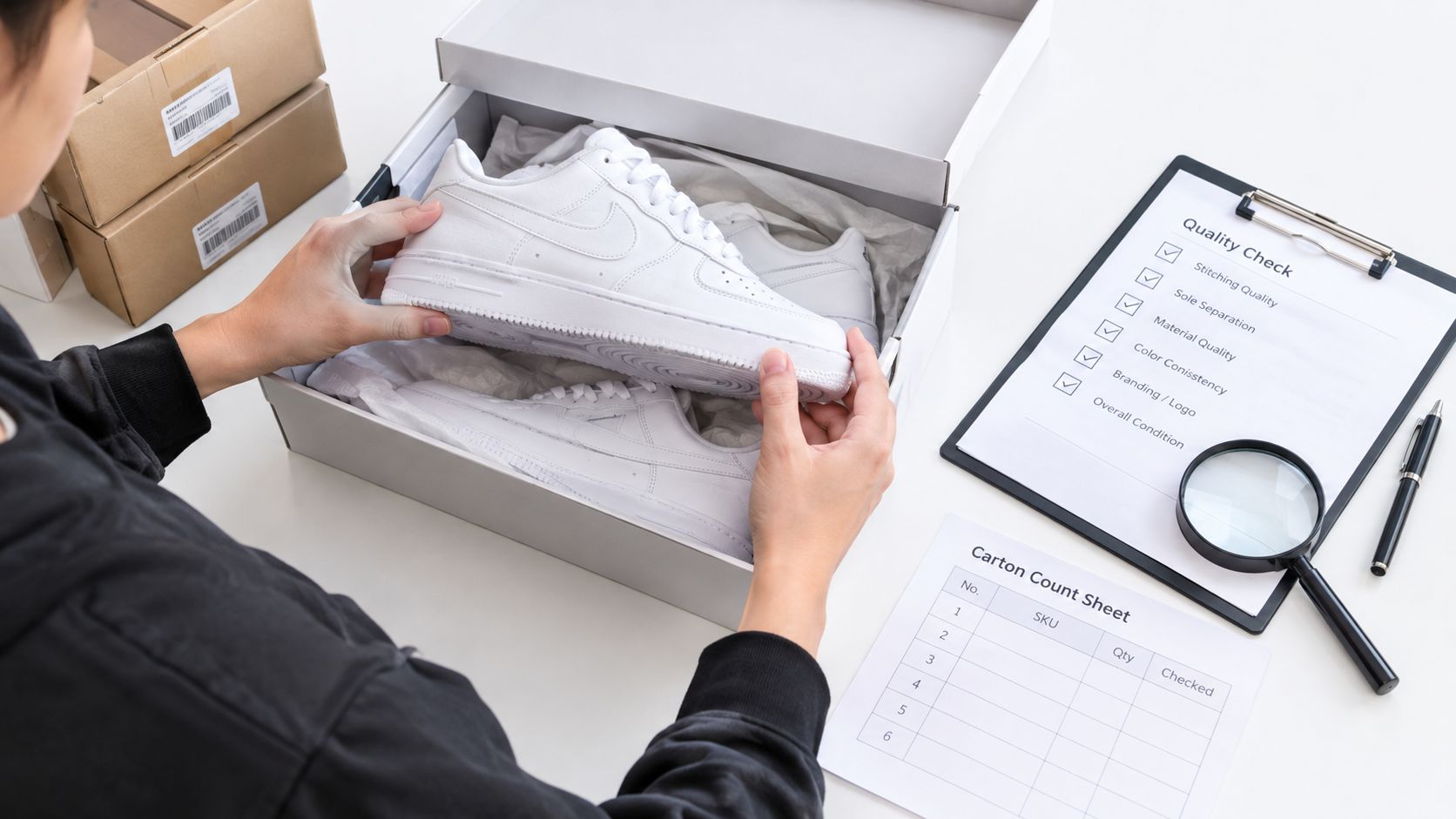
Start before opening individual boxes. Count the cartons, compare the delivered quantity with the packing list, and photograph the shipment as received. If the carton count is wrong, you want proof before the inventory gets mixed into other stock.
A repeatable inspection sequence
Open samples across every model and size, not just the most attractive cartons. Check:
- Pair matching: Confirm each box contains the correct left and right shoes, matching model, color, and size.
- Construction: Inspect outsole separation, stitching, panel alignment, loose threads, and excessive glue.
- Surface condition: Look for scuffs, stains, discoloration, creasing, crushed toes, and damaged hardware.
- Odor and storage damage: Record unusual odor, moisture exposure, mildew indicators, and deterioration from poor storage.
- Packaging and labels: Compare box labels, interior tags, size markings, brand elements, and country-of-origin information for inconsistencies.
- Authenticity concerns: Isolate anything with suspicious labeling, mismatched branding, or documentation that doesn't match the product.
Photograph every exception with the carton label and SKU visible where possible. Assign a condition grade that your team understands, such as retail-ready, minor packaging damage, cosmetic defect, incomplete, or unsellable. Keep the photos with the receiving record rather than relying on memory.
The inspection isn't a formality. It's the evidence that protects your margin when the delivered goods don't match the listing.
A consistent routine also improves your vendor conversations. If you're evaluating broader wholesale quality control practices, apply the same discipline to shoes, especially the connection between condition grades and listing language.
Don't advertise exact fit claims based only on a supplier's description. Measure insoles, record available width information, standardize size conversions, and state condition clearly. Customers can accept a cosmetic grade when you disclose it. They're far less forgiving when the listing suggests a fit or condition the pair doesn't deliver.
Building a Landed-Cost and Returns-Adjusted Margin Model
A wholesale shoe deal should pass a margin test before you pay a deposit. The quoted pair price is only one input. Your real cost includes the inventory that arrives, the units you can sell, the fees attached to each transaction, and the operational cost of pairs that come back.
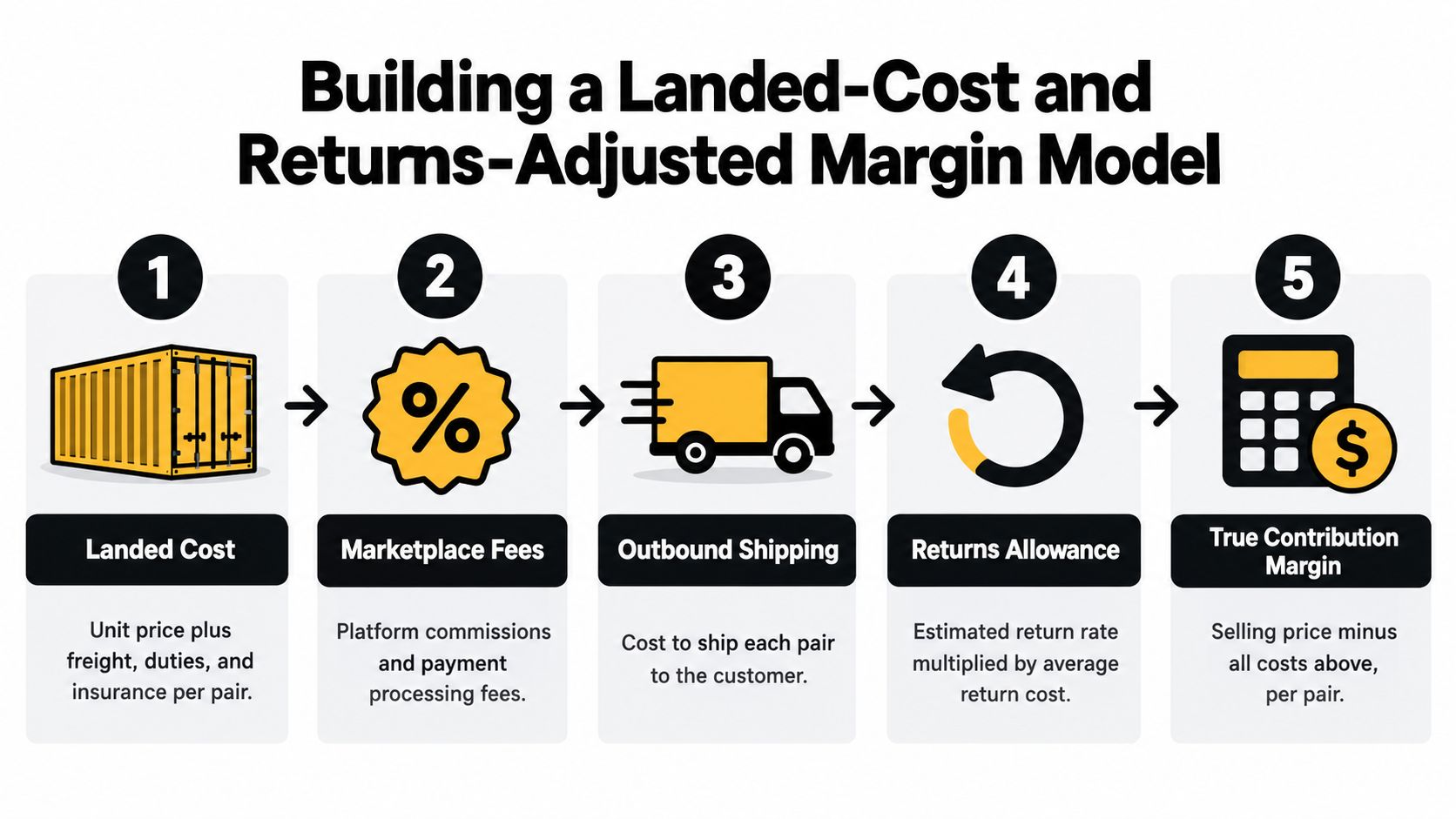
Use a simple contribution model:
Selling price minus landed cost, marketplace fees, outbound shipping, expected return freight, inspection labor, and the cost of unsellable returns.
Landed cost should include the vendor price plus freight, duties, insurance, and other charges required to get the pair into your operation. Divide the total purchase and inbound costs by the number of sellable pairs, not automatically by the number printed on the invoice.
Stress-test the return problem
Online footwear returns average about 18%, and fit is the dominant cause. One cited analysis attributes 57% of footwear returns to poor fit, while model-level research found 40% of women's running-shoe models did not fit true to labeled size, according to footwear returns and online fit research.
Use those figures as a stress test, not a promise about your own store. Model at least an 18% return rate and a $10 to $20 processing cost per returned pair, figures reported for footwear return operations in the same source. Then test a harsher scenario involving unsellable returns, repackaging, inspection labor, and additional customer-service time.
For example, if a lot contains a broken size curve, the financial damage appears twice. You may discount the slow sizes to clear them, then absorb return costs on the pairs that customers send back because fit information was unclear. A vendor with a slightly higher landed cost may outperform the cheaper quote if it provides a more accurate size mix and consistent measurements.
Here's the calculation workflow:
- Landed cost: Unit price plus freight, duties, insurance, inspection, and related inbound charges.
- Selling costs: Marketplace commissions, payment processing, outbound shipping, packaging, and listing labor.
- Returns allowance: Expected return rate multiplied by return freight, handling, inspection, and likely loss on damaged or unsellable pairs.
- Sellable-unit adjustment: Divide total exposure by the number of pairs you realistically expect to sell at the planned price.
- Contribution margin: Subtract all listed costs from the selling price.
Use the model before comparing vendors, not after selecting one. A deal that only works with perfect fit, zero defects, and full-price sales is not a deal. For broader context on liquidation pallet costs, focus on the same principle: the invoice amount is not the final inventory cost.
Spotting Red Flags and Negotiating From Strength
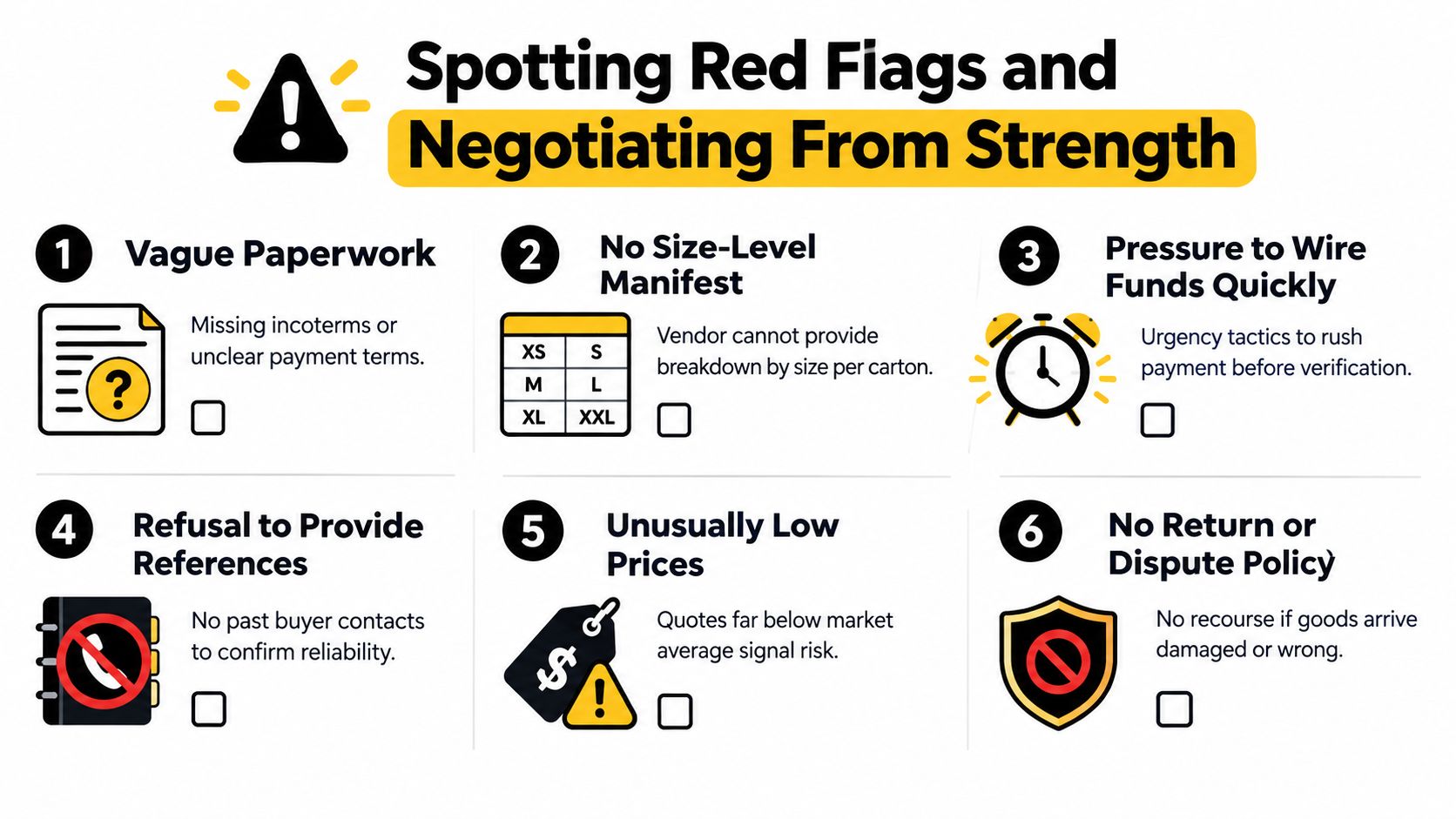
A polished catalog doesn't prove that a vendor can deliver the lot described. Risk usually appears in the details the supplier avoids: no size-level manifest, vague condition language, unclear payment terms, or pressure to transfer funds before verification.
Watch for these warning signs:
- Vague paperwork: The quote omits Incoterms, delivery responsibility, payment milestones, inspection rights, or defect allowances.
- No size-level manifest: The vendor can't show quantities by model, color, and size per carton.
- Pressure to wire funds quickly: Urgency replaces verification and discourages independent checks.
- Refusal to provide references: The supplier won't connect you with previous buyers or explain its dispute process.
- Unusually low prices: The quote sits far below comparable offers without a clear explanation of condition, age, branding, or volume.
- No return or dispute policy: You have no defined remedy if the goods arrive damaged, incomplete, counterfeit, or materially different from the listing.
Inconsistent branding on boxes and labels deserves special attention. It doesn't automatically prove a problem, but it should trigger questions about sourcing history, authenticity documentation, mixed inventory, and the condition standard used during packing.
Negotiate the structure, not only the price
Many buyers ask for a lower pair price and give away their strongest negotiating position. A vendor may be more willing to adjust the order format than the unit price. Ask for a small test lot, split style runs, mixed colors using existing materials, stock outsoles, staged releases, or replenishment against proven size demand.
The useful negotiation question is:
“What can you change so I can reorder the sizes that sell without taking another blind assortment?”
A supplier accepting smaller, repeatable replenishment orders can produce better contribution margins than a factory offering a lower unit price at a punishing MOQ. This is the central sourcing trade-off: a cheaper pair isn't cheaper if the order leaves cash trapped in broken size runs.
Keep the right to walk away. Before negotiating, set your maximum cash exposure, required documentation, acceptable condition grade, and return remedy. If the vendor won't provide enough information to calculate the order, the missing information is itself a cost.
Onboarding a Vendor and Planning Replenishment by the Numbers
The first order should create a buying record, not just a shipment. Track each SKU and size from listing to final sale so the next order reflects observed demand rather than the vendor's preferred assortment.
A practical onboarding file should contain:
- Receiving data: Carton count, pair count, matched pairs, condition grades, and exceptions.
- Listing data: Views, saves where available, conversion, description changes, and fit questions.
- Sales data: Selling price, days to sale, gross margin, return outcome, and markdown history.
- Size performance: Units received, units sold, units returned, and remaining stock for every size.
- Vendor performance: Response time, packing accuracy, defect resolution, replacement behavior, and invoice consistency.
Replenish at SKU-size level
Calculate sell-through as units sold divided by units received, then separate that result by size. A model may look healthy overall while one size sells quickly and another remains untouched. Replenish the winning SKU-size combinations instead of automatically buying the whole model again.
For a first order, pilot one small box or mixed lot. Record listing views, conversion, days to sale, gross margin, and size-level sell-through. Then use those results to constrain the next custom lot. Don't treat returned or incomplete pairs as saleable inventory when judging the supplier or planning the reorder.
Ask the vendor to preserve the parts of the assortment that worked and remove the parts that created exposure. That might mean fewer colors, a narrower style selection, or a different size curve. The best relationship is not the one with the lowest initial quote. It's the one that lets you test, measure, and replenish without repeatedly accepting inventory you can't explain.
A dependable workflow looks like this:
- Receive and inspect the order.
- Reconcile the manifest against actual SKU-size quantities.
- List with measured fit and condition information.
- Track sales and returns by size.
- Review margin after all selling and return costs.
- Send the vendor a specific replenishment request.
- Approve the next order only when the revised assortment fits your evidence.
That process turns shoes vendors wholesale from a search exercise into inventory management. It also gives you a defensible reason to reject a low-priced lot that fails the margin and size tests.
OneTrendyCloset offers curated brand-name liquidation boxes, flexible mix-and-match selections, and custom lots for boutiques, marketplace sellers, and live-sale operators. Start with a manageable test order, use the receiving and sell-through data to guide your next purchase, and visit OneTrendyCloset to explore inventory options built around your budget and sourcing needs.