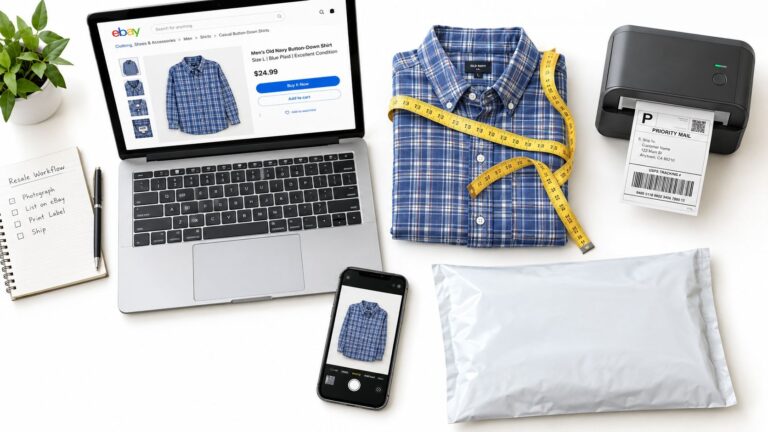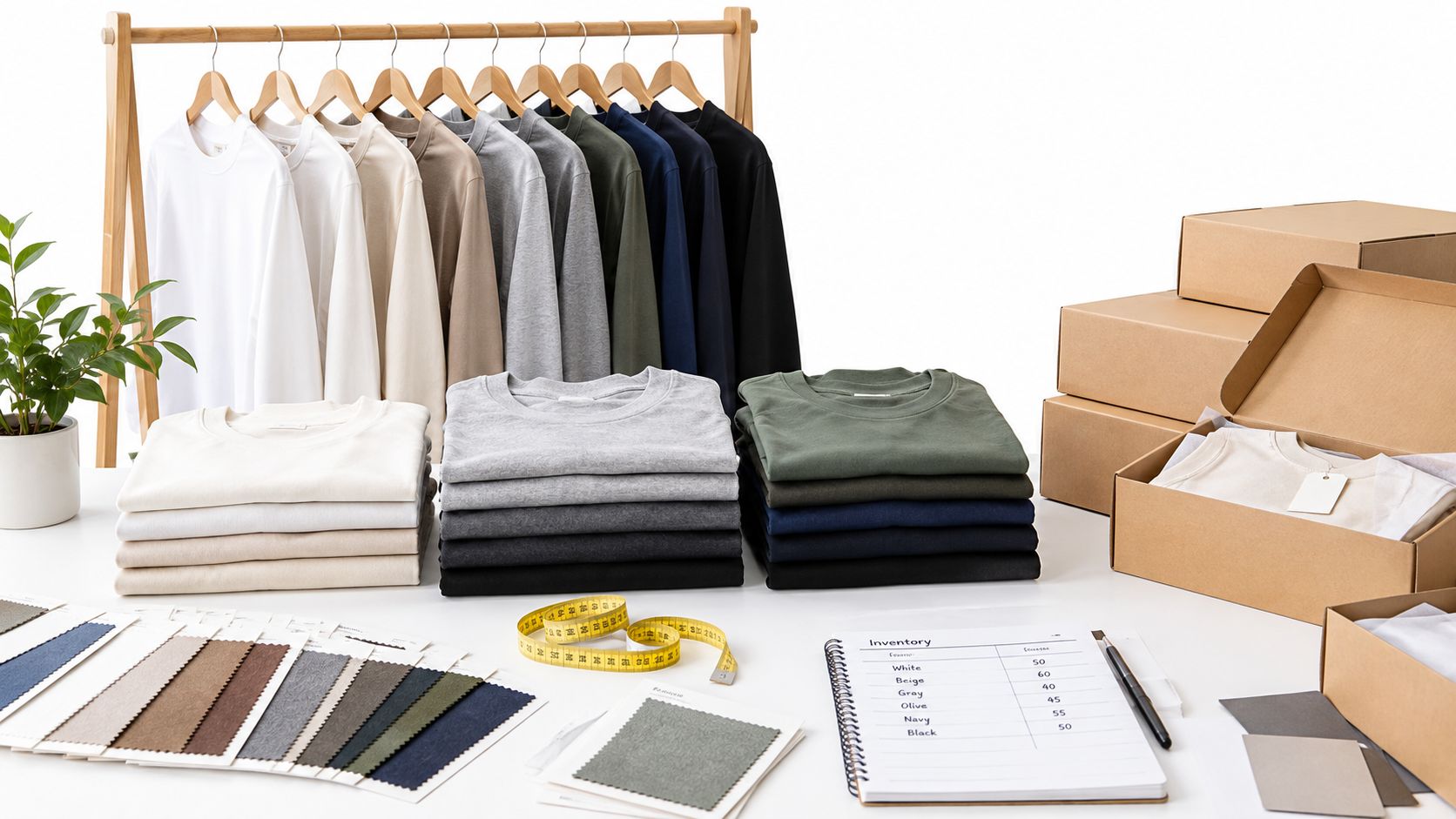
You've ordered long sleeve t-shirts for the cooler season, but the shipment arrives with the wrong weight, uneven sleeves, and colors that don't match your store. The heavier pieces sit untouched once temperatures rise, while your reliable sizes sell out first. Meanwhile, customer questions about fit and shrinkage consume time that should go toward listing and selling.
That's the central challenge of long sleeve t shirt wholesale. The product looks simple, but profitable buying depends on several connected decisions: fabric weight, construction, shrinkage control, minimum order quantity, lead time, packaging, and channel fit. A low unit price doesn't help if the garment generates returns or remains in storage.
This guide treats long sleeve t-shirts as a year-round layering and margin category, not merely a winter basic. You'll learn how to compare GSM ranges, match order types to cash flow, inspect bulk lots, plan replenishment, and turn technical specifications into listings that make sense to boutique shoppers, marketplace buyers, and live-sale audiences.
Table of Contents
- Introduction to Long Sleeve T Shirt Wholesale for Resellers
- Why Long Sleeve T Shirts Drive Year Round Wholesale Demand
- How to Evaluate Fabric Weight Fit and Construction Specs
- Understanding MOQ Pricing Benchmarks and Lead Times
- Quality Checks Grading and Size Consistency That Protect Margins
- Packaging Shipping and Inventory Planning for Wholesale Lots
- Listing and Selling Long Sleeve T Shirts Across Resale Channels
Introduction to Long Sleeve T Shirt Wholesale for Resellers
A boutique owner may start with a reasonable plan: buy a few colors, list them as fall basics, and reorder the winners. Then the problems appear. One supplier's medium fits like another supplier's small. A black shirt from the next lot has a different finish. The lightweight version sells well for layering, but the thicker version feels too warm for part of the audience. By the time the seller understands the pattern, the best sizes are gone and the slow colors are tying up cash.
Long sleeve t-shirts deserve their own buying framework because the sleeves change how customers use the garment. Shoppers can wear one alone, under a cardigan, beneath a jacket, for outdoor work, or as sun protection. That wider use makes the category relevant beyond a single weather window, but only when the fabric weight and fit match the selling context.
A wholesale buyer should think of each SKU as a small operating system. GSM affects feel, drape, warmth, decoration suitability, and cost. Shrinkage affects the fit customers receive after washing. MOQ and lead time affect how much cash sits in inventory and how quickly you can restock a proven color.
Practical rule: Buy the garment your customer will use repeatedly, not the garment that looks cheapest on a supplier spreadsheet.
The buying process becomes clearer when you separate it into decisions:
- Category role: Decide whether the shirt is a budget basic, a polished boutique layer, a workwear piece, or a heavyweight streetwear item.
- Technical specification: Confirm GSM, fiber content, measurements, ribbing, seams, and wash treatment.
- Commercial risk: Compare stock inventory, custom production, and premium programs by MOQ and timing.
- Sell-through plan: Match colors, sizes, photography, and descriptions to the channel where the product will move.
The rest of the process follows that order. First, understand why the category supports recurring wholesale demand. Then evaluate the garment, choose an order path, protect quality, organize the shipment, and sell the product with accurate expectations.
Why Long Sleeve T Shirts Drive Year Round Wholesale Demand
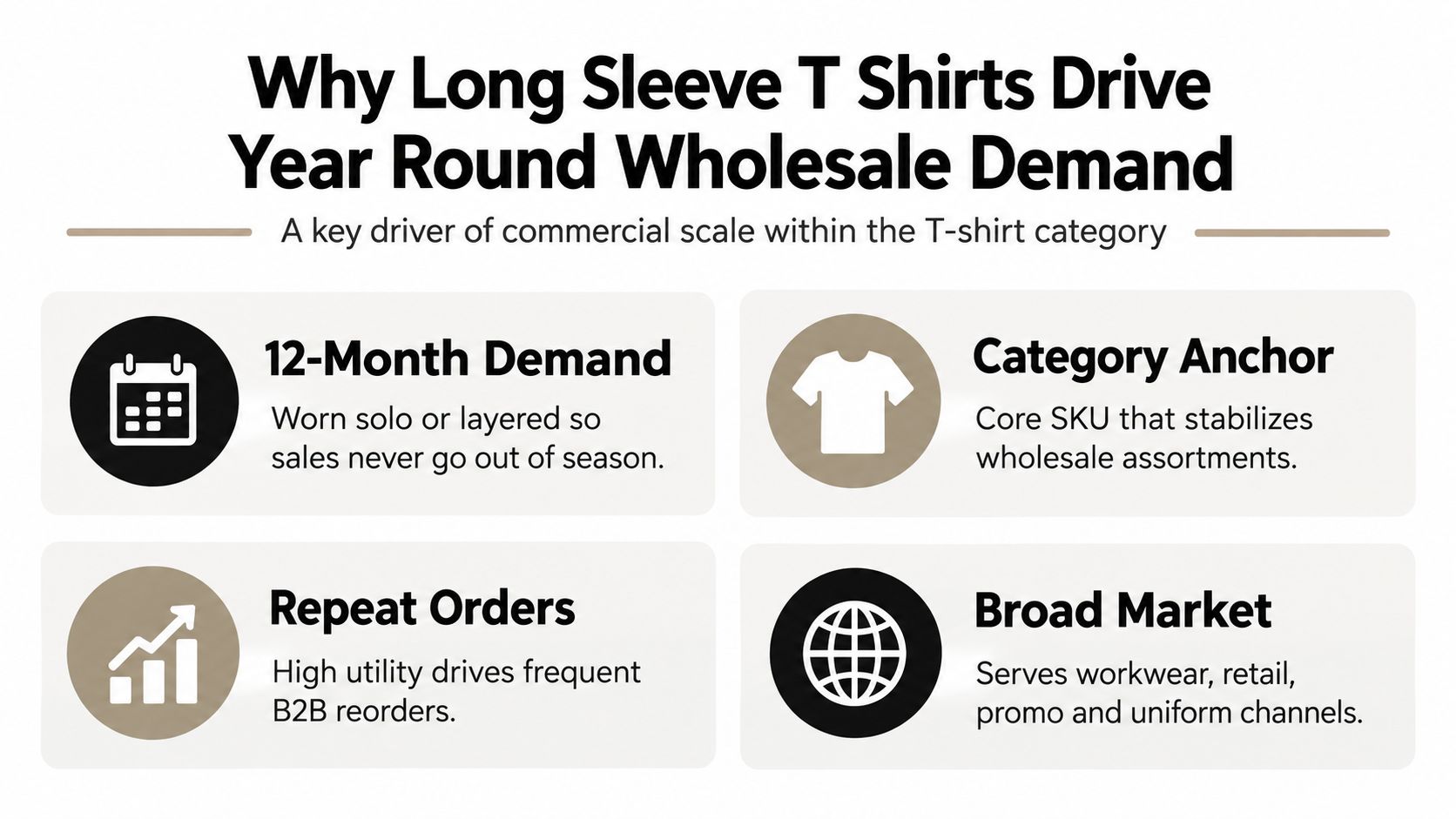
A boutique orders long sleeve tees for autumn, then discovers customers still want them under jackets, uniforms, and lightweight overshirts months later. A marketplace seller can promote the same blank for layering, sun coverage, or relaxed everyday wear. That range of uses gives long sleeve t-shirts a year-round role, positioned between a short sleeve tee and a sweatshirt.
One 2026 industry estimate valued the global long sleeve t-shirt category at USD 51.1 billion in 2024 and projected it to reach USD 80.1 billion by 2032, with a 4.5% CAGR, as reported in this Alibaba B2B long sleeve t-shirt sourcing guide. That scale helps explain why consistent sizing, dependable colors, and repeatable production matter. A reseller is building a replenishment product, not only filling a seasonal gap.
Think like a category buyer
Market size does not choose the right SKU. The selling plan does. A long sleeve tee can support several revenue occasions:
- Layering: Customers wear it under overshirts, jackets, vests, and sweaters.
- Work and uniforms: Buyers look for repeatable colors, stable sizing, and easy care.
- Outdoor use: Lightweight versions suit sun-conscious shoppers and active customers.
- Private label and decoration: Consistent blanks provide a practical base for printing or embroidery.
This broader use changes how you manage margin. A lower GSM garment may suit warm-weather live sales, while a heavier version can support a premium streetwear offer. Poor shrinkage control, however, can turn an attractive wholesale cost into returns and negative reviews. MOQ choices create a similar risk. Ordering deep in one color may lower the unit cost, yet slow sell-through can leave cash tied up in stock. Smaller controlled buys can test demand across boutiques, marketplaces, and live sales before a larger replenishment order.
Understand why wholesale supply stays central
The global blank apparel market was estimated at USD 16.45 billion in 2026 and projected to reach USD 24.25 billion by 2033. T-shirts represented 35.1% of that market, while B2B sales represented 67.9% of channel share, according to this plain T-shirt wholesale market overview. Those figures show why wholesale supply remains important for sellers who need repeatable basics rather than one-off fashion pieces.
The same source reports that Asia-Pacific accounts for 55% to 60% of worldwide T-shirt market share, with APAC T-shirt exports reaching 9.7 billion units in 2024, a 15% year-over-year increase. Broad production capacity can support availability, but a product listing and a production partner are not the same thing. Request samples, confirm grading, and check whether the supplier can reproduce the same measurements, fabric behavior, and color across repeat orders.
Build the assortment around repeatable core colors and sizes. Add trend-sensitive shades or heavier styles in controlled quantities, then reorder the winners. This approach treats long sleeve t shirt wholesale as a year-round layering and margin strategy, with inventory depth guided by sell-through rather than the calendar.
How to Evaluate Fabric Weight Fit and Construction Specs
A buyer may order one long sleeve T-shirt for warm-weather layering, another for a boutique's premium rack, and a third for live-sale bundles. The fabric specification should support all three selling situations. GSM, or grams per square meter, measures fabric density. It does not determine softness alone, but it helps predict structure, warmth, drape, and cost.
For year-round layering, wholesale guidance places a versatile range at 180 to 230 GSM. Garments above 230 GSM move toward a heavier streetwear or outerwear profile, according to this round-neck long sleeve layering guide. Every roughly 20 GSM increase can add approximately 8% to 12% to fabric cost, while moving from 160 GSM to 220 GSM can raise fabric cost by about 25% to 30%, before sewing, finishing, and logistics. These figures make GSM a margin decision, not just a hand-feel preference.
Choosing GSM by selling use case
| GSM Range | Best Use Case | Trade Off to Consider |
|---|---|---|
| Around 160 to 190 GSM | Warm-weather layering, budget basics, sun-protection styles | Lighter structure and potentially more show-through |
| 180 to 220 GSM | Year-round retail, boutiques, uniforms, everyday layering | Higher fabric cost than lightweight blanks |
| 230+ GSM | Heavyweight streetwear, premium casualwear, outerwear-inspired looks | Less drape and reduced layering flexibility |
A seasonal sourcing guide recommends 160 to 190 GSM for summer and 200+ GSM for winter or layering. It also describes 240 to 300 GSM heavyweight tees as a direction among streetwear buyers, as outlined in this seasonal long sleeve sourcing guide. Use these ranges as starting points rather than fixed rules. Warm-climate customers may want substantial sleeves for outdoor use, while boutique shoppers may need a fluid layer that fits beneath a blazer.
Read cost and feel together
A heavier fabric can improve shape retention and perceived quality, but the added cost must match the channel's selling price. A 220 GSM style may suit a boutique or curated marketplace listing, while a lighter version may sell more easily in price-sensitive bundles or live sales. GSM is like choosing the thickness of packaging: extra material can protect the product and strengthen its presentation, yet it also raises the cost of every unit.
Fiber content affects the result too. Cotton usually provides a familiar, breathable hand feel, while polyester can improve resistance to shrinking and wrinkles. Blends can balance comfort, durability, drying behavior, and price, but the ratio changes the product story. Use this cotton and polyester blend T-shirt comparison when deciding whether a blend fits your audience.
Construction details complete the evaluation. Check body length, sleeve length, shoulder width, cuff or rib recovery, neckline shape, side-seam alignment, and label placement. A smooth neck rib and secure sleeve cuff often influence repeat purchases more than a small difference in advertised weight. Request a measurement chart, test the physical sample against it, and confirm the same specifications before approving bulk production.
Understanding MOQ Pricing Benchmarks and Lead Times
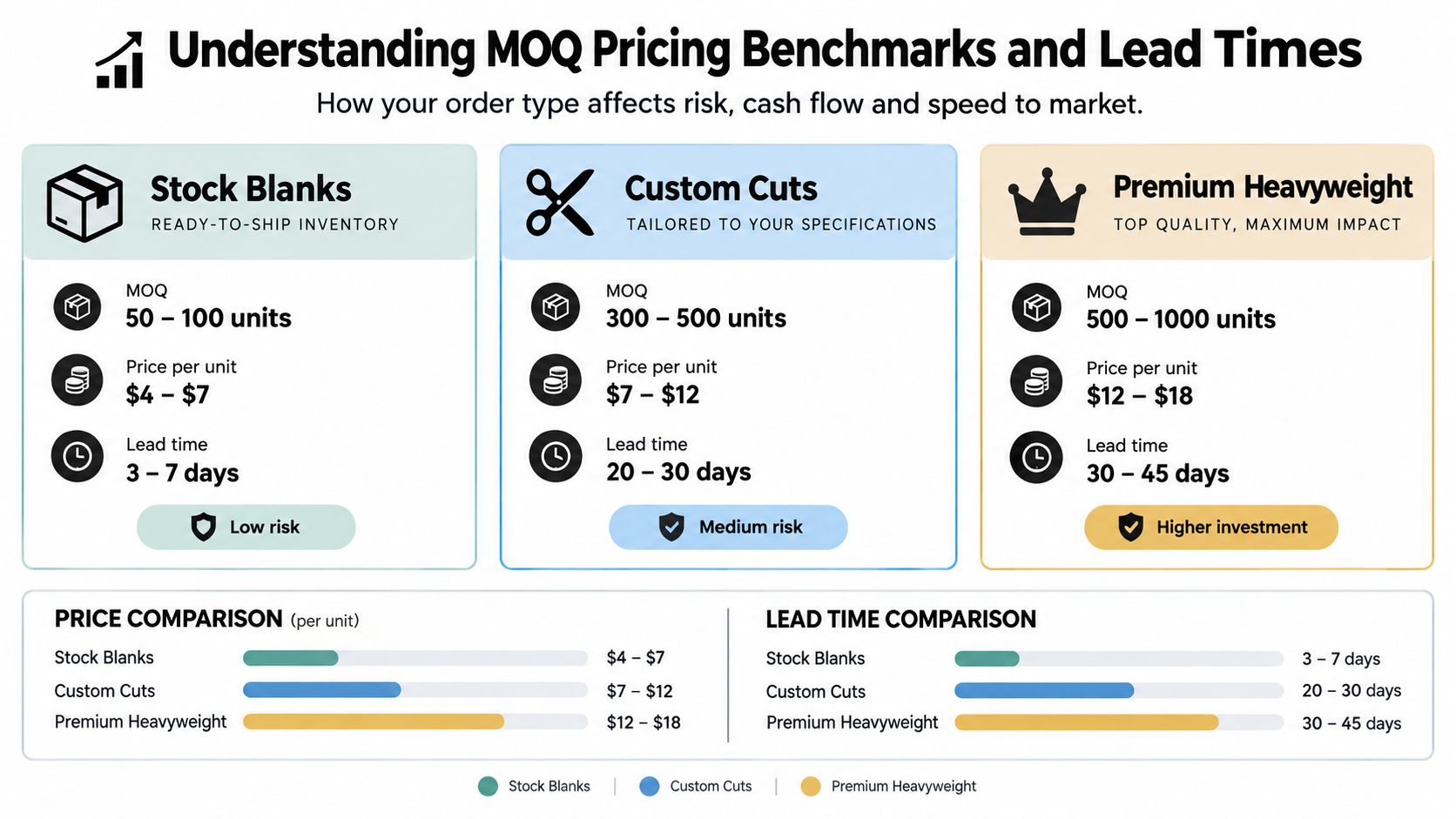
A reseller can lose margin before the first garment sells by choosing an order path that does not match demand. Stock blanks support quick testing. Custom cuts provide greater control but tie up cash in sampling and production. Premium heavyweight programs can strengthen a product identity, yet they require confidence in demand, pricing, and storage.
Factory-direct long sleeve orders often require MOQs of 100 to 1,000 units for first orders. Samples may take about 14 days, followed by 20 to 45 days for full production, plus shipping time, according to this long sleeve sourcing guide. Treat those figures as planning benchmarks, not promises. A small stock order carries less timing risk than a custom production run, while a heavier GSM style may need stronger sell-through to justify its larger cash commitment.
Compare the order paths
Stock blanks work well for testing a new silhouette, color, or selling channel. They limit customization, but they let you measure customer response through boutiques, marketplaces, or live sales before placing a larger order.
Custom cuts suit brands whose measurements, labels, sleeve proportions, or fabric specifications distinguish the product. That control can support a clearer identity, though the timeline must include sampling, approval, production, freight, and any corrections.
Premium heavyweight programs fit a seller with a defined lifestyle or streetwear position. Product photography should show the fabric's structure, and the selling price should explain its heavier hand feel. Without that connection, the higher unit cost becomes stock risk rather than perceived value.
Compare suppliers on the same specification. A low quote for a lighter GSM garment is not equivalent to a higher quote for a heavier, pre-treated style. Ask each vendor to state fiber content, fabric weight, wash treatment, measurements, labeling, packaging, and delivery terms.
Build the quote around cash flow
The same sourcing analysis recommends a 70-20-10 inventory mix for core basics, seasonal items, and experimental products, and advises securing stock 3 to 4 months ahead of peak seasons. Use that as a planning lens rather than a fixed formula. Core black, white, gray, and dependable neutrals generally deserve more budget than an untested fashion color, but your sales history should determine the final mix.
A useful quote answers five questions:
- What is the unit cost at the stated quantity?
- What is the total landed cost after freight, duties, packaging, and inspection?
- What happens if the sample differs from the bulk lot?
- How quickly can the supplier replenish a winning SKU?
- Which sizes and colors can remain available across reorders?
Reviewing how to choose a wholesale clothing supplier can help you compare communication, product fit, order policies, and fulfillment practices before selecting a sourcing path.
A faster reorder option may produce more profit than the lowest opening price if it prevents missed demand and limits dead stock. The strongest long sleeve wholesale buy aligns cost, speed, and product quality with your sell-through evidence.
Quality Checks Grading and Size Consistency That Protect Margins
Quality control starts before the cartons reach your warehouse. A sample can look excellent while bulk garments vary in measurements, color, stitching, or wash behavior. Your inspection process should create a record that future reorders can match.
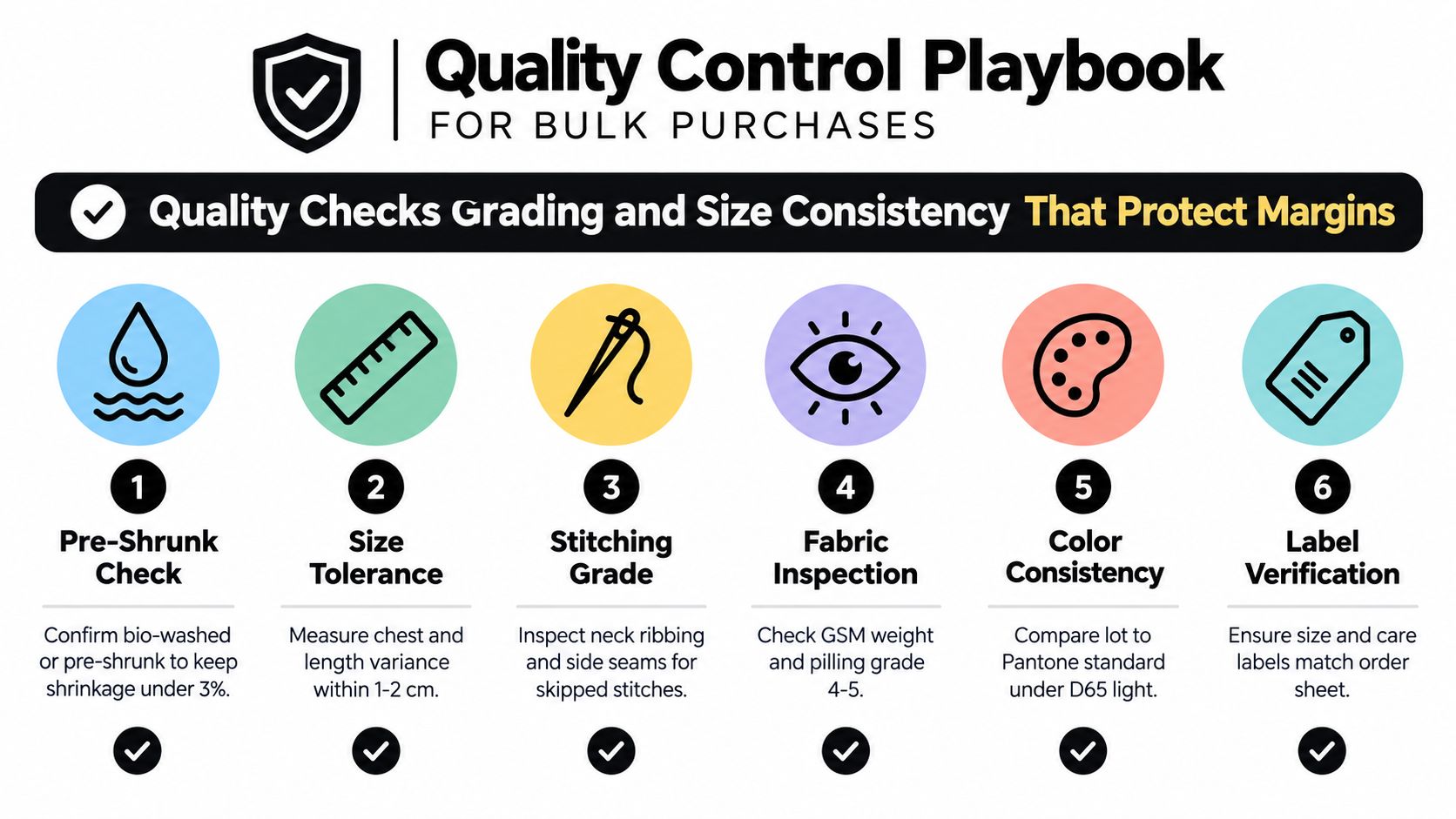
Shrinkage is especially important with cotton. Untreated 100% cotton commonly shrinks 3% to 5% after the first wash and dry cycle, while pre-shrunk fabric can reduce shrinkage to under 2% and bio-washed fabric can bring it below 1.5% at higher production cost, according to this T-shirt fabric and GSM guide.
Test the garment, not just the label
Ask whether the fabric is untreated, pre-shrunk, or bio-washed. Then test the sample through 3 to 5 wash cycles, because a single wash may not show the full change. Measure chest width, body length, sleeve length, shoulder width, and cuff opening before and after washing.
Record the results by size and color. A black medium that fits correctly doesn't prove that the navy medium from the same supplier will match. Dyeing, finishing, and lot changes can affect hand feel and dimensions.
Use a receiving checklist
- Measurement check: Compare garments with the approved size chart and document deviations.
- Shrinkage check: Wash and dry samples using a consistent method before final approval.
- Seam inspection: Look for skipped stitches, loose threads, puckering, and uneven side seams.
- Neck and cuff check: Stretch ribbing gently and confirm that it recovers without distortion.
- Surface review: Look for holes, stains, knitting flaws, excessive pilling, and inconsistent texture.
- Color comparison: Compare the approved sample with the bulk lot under consistent lighting.
- Label verification: Confirm size, fiber content, care instructions, and country information match the order.
Grade defects before listing
Separate cosmetic issues from functional failures. A small loose thread may be repairable, while an incorrect size label or badly twisted sleeve can create a customer-facing problem. Decide in advance whether imperfect pieces will be discounted, used for live-sale bundles, held for review, or rejected under the supplier agreement.
Keep the approved sample, measurement chart, wash results, color reference, and inspection photos together. That file gives you evidence when a later lot changes and helps you make a fair comparison instead of relying on memory.
Margin protection starts with consistent measurements. Every avoidable size complaint costs more than the garment adjustment alone, because it can also consume listing time, shipping resources, and marketplace goodwill.
Packaging Shipping and Inventory Planning for Wholesale Lots
A wholesale lot becomes sellable inventory only after it can be received, identified, stored, and picked without confusion. A boutique may need tidy cartons for back-room storage, while a marketplace operation may need faster SKU scanning. Mixed sizes, unclear labels, and damaged packaging create labor before a single shirt reaches a customer.
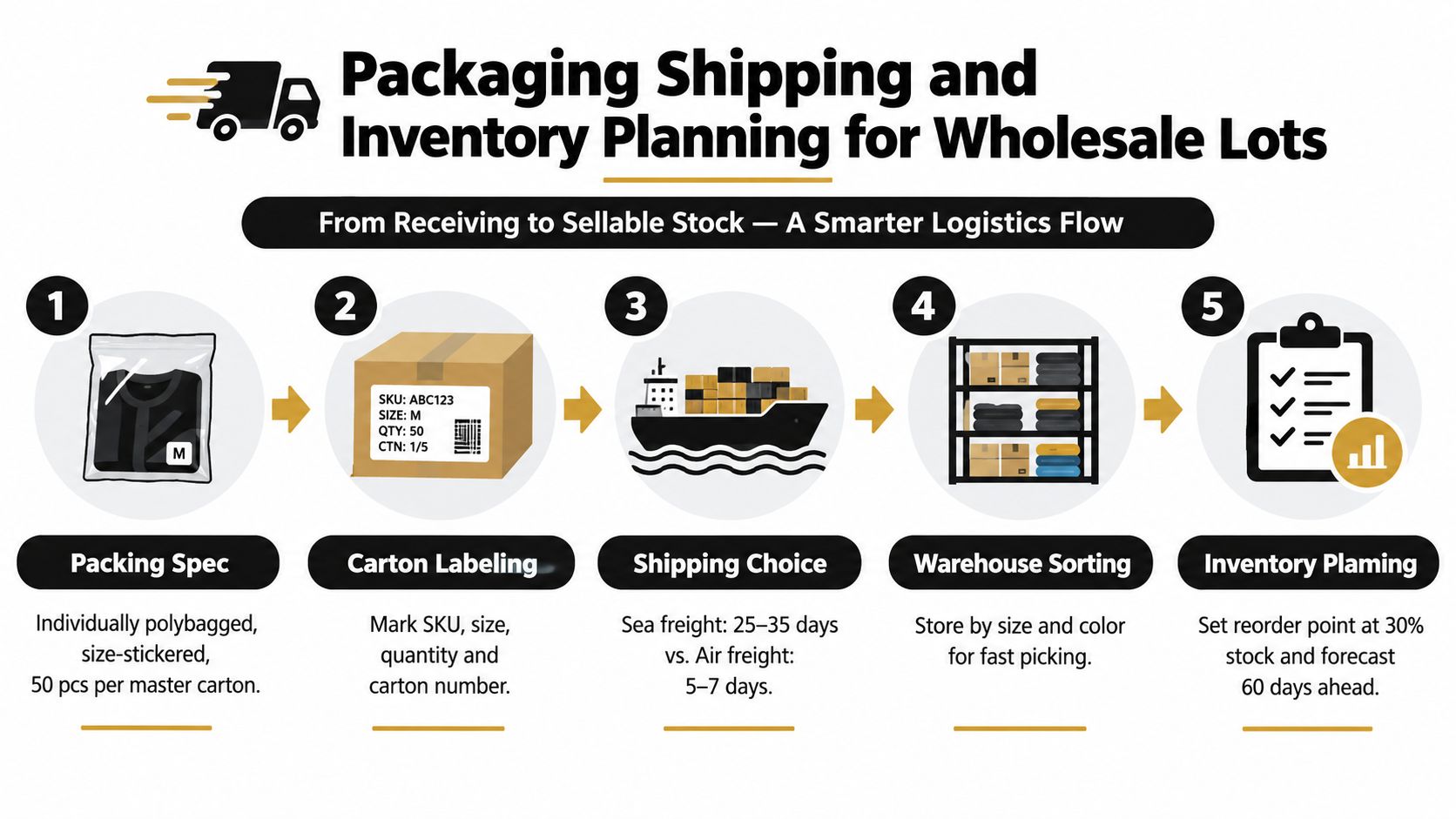
Give the supplier a written packing specification before production. State whether garments require individual polybags, size stickers, folded presentation, carton counts, and exterior labels. Request carton dimensions and gross weight before shipment so you can reserve storage space and compare freight quotes accurately.
Turn cartons into an inventory system
Use one SKU format that combines style, color, and size. A code such as LS-MID-BLK-M is easier to scan than a description that changes between spreadsheets and sales platforms. Put the same code on the supplier order, carton label, warehouse shelf, and product record.
Follow a fixed receiving sequence:
- Count cartons before opening: Photograph visible damage and compare the shipment with the packing list.
- Sort by SKU: Separate style, color, and size before shelving or bagging.
- Inspect a representative sample: Confirm the received lot matches the approved specifications and order records.
- Photograph the approved product: Capture front, back, cuff, neckline, fabric surface, and label details for internal reference.
- Update available stock: Publish quantities only after the physical count and receiving work are complete.
Plan buys around the selling calendar
Use the earlier ordering guidance as the timing reference. Stock secured 3 to 4 months before peak seasons leaves time for freight, receiving, photography, and listing preparation. Seasonal planning guidance also identifies September onward as a stronger period for long-sleeve demand. Review the seasonal long sleeve sourcing guide when setting the calendar.
Divide the assortment into three groups:
- Core neutrals: Repeatable colors and sizes for year-round layering.
- Seasonal shades: Colors tied to a collection or promotional window.
- Test products: New GSM levels, fits, or heavier styles purchased in controlled quantities.
Set reorder points from sales velocity, available stock, and supplier timing. A boutique might reorder a nearly complete neutral size run when one size begins thinning. A marketplace seller might reorder only the fastest color-size combinations. A live-sale operator can delay a full replenishment and use mixed remaining units in bundles. These choices connect MOQ and storage capacity to sell-through rather than treating every carton as equal.
Listing and Selling Long Sleeve T Shirts Across Resale Channels
A technical specification only creates value when customers understand it. Your listing should translate GSM, fit, fabric, and construction into a clear reason to buy. “Long sleeve tee” is a product label. “Midweight cotton layer with structured cuffs that works under a jacket or over a tank” gives the shopper a use case.
Photograph the garment in ways that reveal its behavior. Use a flat lay for accurate proportions, a close view of the knit surface for weight and texture, and a worn image that shows sleeve length and body shape. If the fabric is heavyweight, show how it holds a sleeve fold or sits beneath an overshirt. If it's lightweight, show the layering relationship instead of implying sweatshirt warmth.
Adjust the message by channel
A boutique floor benefits from a concise product story and coordinated colors. Marketplaces need precise measurements, condition details, fiber information, and searchable style language. Live-sale audiences need a quick explanation of feel, fit, stretch, and styling, followed by a clear size reference.
Use consistent wording across listings:
- Weight: Describe the garment as lightweight, midweight, or heavyweight, then include the measured GSM when verified.
- Fit: State whether the cut is relaxed, regular, slim, cropped, or oversized, and provide measurements.
- Layering role: Explain whether shoppers can wear it under a jacket, over a tank, or as a standalone top.
- Care expectations: Disclose wash instructions and whether the garment has been pre-treated.
- Condition: For liquidation or mixed lots, identify new, new-with-tags, or other verified conditions accurately.
Sellers learning how to start selling on Poshmark should treat measurements and photos as conversion tools, not administrative extras. Accurate information reduces the gap between what the shopper expects and what arrives.
Bundles can extend the season. Pair a lightweight long sleeve with a tank, offer neutral color sets, or create a “layering drawer” collection that includes several sizes and complementary shades. That approach gives customers a wardrobe solution instead of forcing you to mark down every piece when the weather changes.
For resellers who want branded assortment without starting with a factory-direct custom program, OneTrendyCloset offers curated brand-name apparel liquidation boxes, mix-and-match brand selection, and custom lot quotes for boutiques, marketplace sellers, and live-sale hosts. That model can provide a separate sourcing route for testing apparel inventory while you track which sleeve weights, sizes, and styles earn repeat demand.
Your next buy should be based on evidence. Review sell-through by color, size, weight, channel, and customer questions before increasing the order.
Start by auditing the long sleeve inventory you already own. Record the specification and landed cost for each SKU, identify the products that sell across more than one season, and request samples that match those proven use cases. For curated apparel lots and reseller-focused sourcing options, visit OneTrendyCloset and ask about a box or custom lot aligned with your budget, preferred brands, and selling channel.