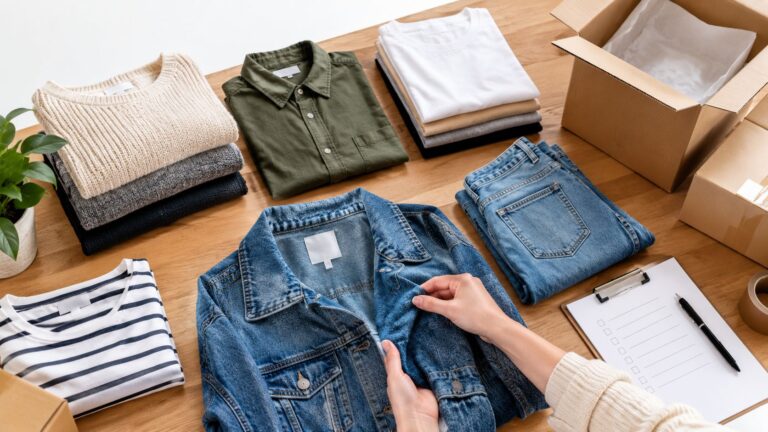
The best-selling clothes category on eBay moved about 1,807,213 items in 30 days, yet those sales came from a marketplace carrying roughly 10.2 million live listings. The lesson isn't just that demand exists. It's that demand has to be matched with the right category, price, measurements, condition details, and return-risk controls. (Market snapshot for best-selling clothes on eBay)
Selling apparel profitably on eBay is less about listing as many garments as possible and more about choosing inventory that can sell at a defensible price without creating avoidable customer-service work. A cheap item that sits for months or comes back because the fit was unclear can be less valuable than one carefully prepared piece with a stronger margin.
Table of Contents
- Why eBay Still Works for Apparel Resellers in 2026
- Researching What Will Sell Before You List
- Building Listings That Convert Browsers Into Buyers
- Photographing Apparel That Earns Trust and Reduces Returns
- Pricing, Fees, Shipping, and the Real Cost of Doing Business
- The Return Risk Nobody Talks About and How to Manage It
- Your Weekly Reseller Workflow and Common Questions
Why eBay Still Works for Apparel Resellers in 2026
eBay's fashion business is large enough to support a serious resale operation. Vogue reported that fashion generates more than $10 billion in annual gross merchandise value for eBay, while the marketplace has 134 million active buyers across 190 countries and several million sellers offering more than 2.4 billion products. (Vogue's report on eBay fashion)
That scale brings a difficult trade-off. Buyers are present, but so are competing listings. A generic title, incomplete item specifics, weak photos, or an optimistic condition grade can leave a garment invisible beside better-documented alternatives. eBay's own clothing guidance identifies Item Condition, Brand, Size, Style, and Color as essential specifics, which tells you how the platform works: structured information matters alongside presentation and price.
Search intent favors prepared sellers
eBay shoppers often arrive with a specific goal. They may be looking for a particular Levi's fit, a Nike jacket in a certain size, or a vintage dress with a recognizable fabric and silhouette. That search-led behavior differs from the more social, discovery-oriented feel many sellers associate with Depop, while Poshmark often depends more heavily on closet browsing and seller interaction.
That doesn't make one platform universally better. It means eBay favors accurate keywords, complete filters, and comparable pricing. A polished brand identity can help, but it won't compensate for a missing size type or a title that leaves out the product category.
Operating principle: Optimize for sell-through and margin per item, not for the number of listings you can upload in a weekend.
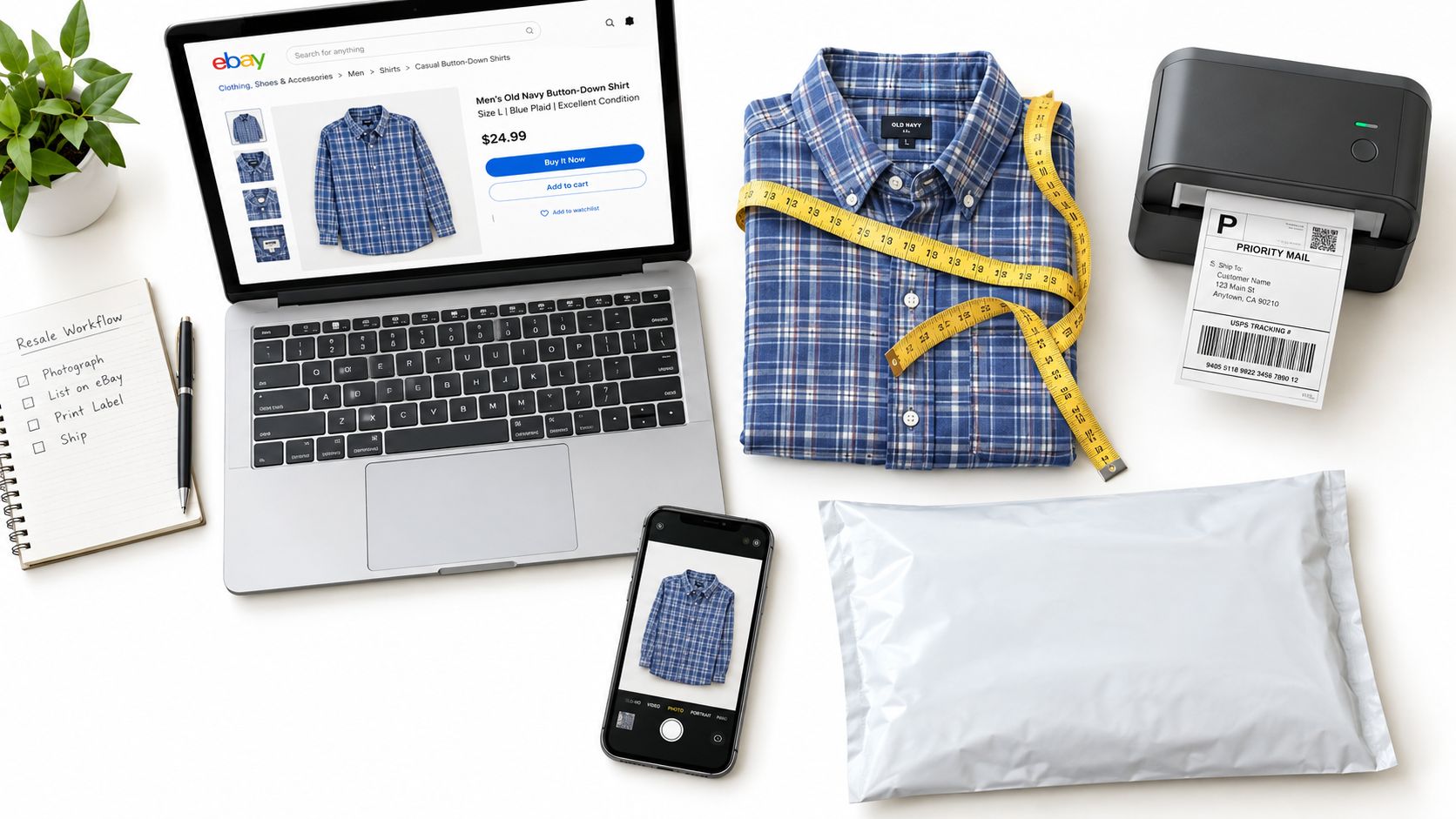
A disciplined reseller photographs the strongest pieces first, researches demand before buying more, and removes dead stock before it consumes storage and attention. The workflow below follows that order: validate demand, create comparable listings, disclose fit risk, calculate real costs, and review inventory based on what moves.
Researching What Will Sell Before You List
Research starts before the garment reaches your inventory shelf. Search eBay for an item as close as possible to the one you're considering, then filter for completed or sold listings. Asking prices show what sellers hope to get. Sold listings show what buyers accepted.
Use recent sales patterns, not one unusually high result that flatters the item. Compare the same brand, garment type, size range, condition, color, and season. A new-with-tags wool coat should not be benchmarked against a worn synthetic-blend jacket just because both sit in outerwear.
Use a repeatable buying screen
For each potential purchase, record:
- Comparable identity: Match brand, model, style, size, material, and condition as closely as possible.
- Recent activity: Give more weight to sales from the latest buying period than to older listings that may reflect a different season or trend.
- Competition: Study active listings for photo quality, item specifics, shipping terms, and pricing gaps.
- Return exposure: Flag garments with inconsistent sizing, alterations, missing tags, delicate fabric, or unclear condition.
- Exit price: Estimate a conservative selling price, not the most flattering sold result.
Category behavior varies. T-shirts can move faster at lower prices, while jackets may bring a higher dollar sale but sit longer. Analysts at eBay clothes category data found t-shirts at a 25.0% sell-through rate and an average sold price of $20.56, compared with jackets at 12.8% and $61.41.
Apparel category benchmarks on eBay
| Category | Avg Sold Price | Sell-Through Rate | Sourcing Difficulty |
|---|---|---|---|
| T-shirts | $20.56 | 25.0% | Moderate, strong competition |
| Jackets | $61.41 | 12.8% | Higher, condition and season matter |
| Jeans | Qualitative price range varies by brand and condition | Qualitatively slower or faster by fit and brand | Moderate |
| Dresses | Qualitative price range varies by brand and occasion | Seasonal and style dependent | Moderate |
Use the table as a starting point, not a buying guarantee. Before purchasing, try to find three comparable sold listings within the last 90 days at a price that can cover your acquisition cost, marketplace costs, packaging, shipping, and a cushion for returns. If you cannot find that evidence, leave the item behind or buy only at a cost low enough to make the uncertainty acceptable.
Auction-style listings can help when demand is thin and the item is hard to compare, which is why some sellers study auctions for clothes before choosing a format.
Building Listings That Convert Browsers Into Buyers
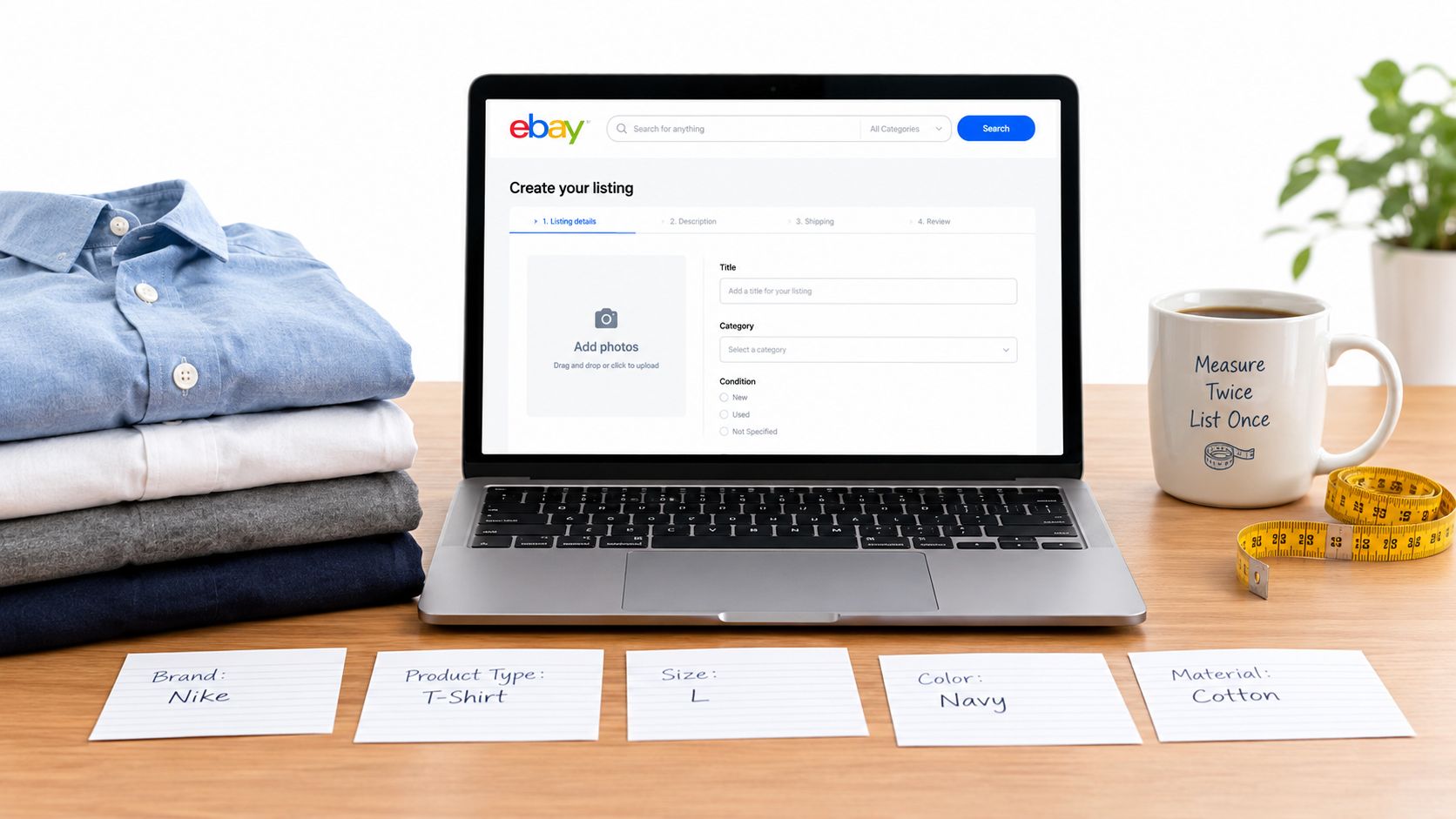
A converting clothing listing answers the buyer's main questions before they need to message you. Start with a title built around the words a shopper would search: brand, garment type, model or style, size, color, and material when it helps identify the piece. Remove decorative filler and repeated keywords. A title that says “Vintage Levi's 501 Straight Leg Men's Jeans 34×30 Blue Denim” is more useful than a string of vague fashion adjectives.
Complete the fields buyers filter by
Use the most precise available value for:
- Brand and product identity: Don't select a broad brand family when the label identifies a specific line.
- Department and size type: Distinguish men's, women's, unisex, juniors, or children's sizing when applicable.
- Size and measurements: Enter the tagged size, then provide measured dimensions because labels aren't standardized.
- Color, style, and material: Choose the closest structured values and clarify variations in the description.
- Condition: Separate new with tags, new without tags, pre-owned, altered, and visibly worn items.
eBay's clothing-selling guidance emphasizes precise titles, the best-fit category, condition, size, color, material, and brand fields. It also recommends measurements, multiple photos, and clear fabric or stretch details. Those fields don't merely make a listing look complete. They make your item comparable with the listings buyers see beside it.
Choose the format that fits the inventory
Buy It Now with Best Offer usually gives branded, repeatable apparel a cleaner pricing structure. Set the asking price from sold comparisons, allow offers only within a margin you can accept, and avoid negotiating below the point where shipping and return exposure make the sale unprofitable.
Auctions serve a different purpose. They can work for scarce vintage pieces, unusual graphics, or items with several interested buyers and little price history. A low starting price without a reserve can create price discovery, but it can also produce a disappointing result if demand is thin.
Place the practical information near the top of the description: flat measurements, fabric content, stretch, flaws, alterations, shipping method, and return terms. Buyers shouldn't have to search through a story about the garment to discover that the sleeves were shortened or the waist measures differently from the tag.
Photographing Apparel That Earns Trust and Reduces Returns
A clothing photo set should let a buyer inspect the item without holding it. A simple setup works well: a flat-lay surface, consistent neutral background, indirect daylight or a daylight lamp, and a hanger or mannequin for garments where drape affects the buying decision.

The first image should show the entire front of the garment clearly. Follow it with the back, the brand and size label, the fabric or care tag, and close-ups of every flaw. Pilling, fading, pulled threads, missing buttons, stains, repairs, and worn cuffs belong in the listing photos, not only in a buried sentence.
Build a consistent shoot sequence
Use the same order for every SKU:
- Front and back: Lay the item square, straighten seams, and fill most of the frame without cutting off hems or sleeves.
- Labels: Photograph the brand, tagged size, fabric composition, and care instructions.
- Measurements: Include a measurement photo when it can be read clearly, then repeat the figures in text.
- Condition evidence: Show flaws close enough for a buyer to understand their size and location.
- Drape or detail: Use a hanger or mannequin for shirts, coats, and dresses when shape is important.
A fabric-content photo prevents a buyer from assuming that a garment is cotton, wool, silk, or stretchy when it isn't. The same image can confirm the country or manufacturer information when that detail affects the search.
Keep the camera straight-on for flat lays, avoid shadows across the garment, and use a consistent background across your inventory. Shoes need both interior and sole views, including tread wear. Bags and accessories often benefit from a slightly angled image that shows depth, hardware, lining, and corners.
The apparel photography example below reinforces the value of a repeatable setup rather than elaborate equipment.
A buyer can't try on an eBay garment. Your photos and measurements have to replace that physical inspection as closely as possible.
Pricing, Fees, Shipping, and the Real Cost of Doing Business
Gross sales can make a weak inventory operation look healthy. Net margin tells you whether the work was worthwhile. Before you list, write down the expected sale price, acquisition cost, marketplace fees, payment costs, shipping, packaging, promotion, and a reserve for returns.
The exact fee depends on the seller's account, category, listing terms, and current eBay policies. The practical point is stable: a low-priced garment has less room to absorb a fee, a shipping mistake, or a return than a premium piece. eBay also states that insertion fees apply after the seller's included listing allowance, alongside final value and per-order fees, so inventory volume has a cost even before an item sells.
Price from the bottom up
Start with a conservative sold-comps range. Then calculate the lowest acceptable offer by subtracting every cost that will come out of the transaction. Don't copy the cheapest active listing automatically. That seller may have paid less for inventory, accept lower margin, or be using poor photos that you can outperform.
Calculated shipping is useful when package size and destination vary, especially for heavier coats, boots, and bulky outerwear. A flat rate is easier to understand for lightweight shirts and jeans when your historical package weights are consistent. Free shipping can simplify the buyer's decision, but only if you include the expected postage in the price rather than treating it as invisible.
| Line Item | $25 Sale | $120 Sale |
|---|---|---|
| Sale proceeds | Lower-ticket transaction with limited room for error | Higher-ticket transaction with more room for fees and shipping |
| Marketplace and payment costs | Can consume a meaningful share of the margin | Usually easier to absorb, but still must be calculated |
| Shipping and packaging | Must stay tightly controlled | More flexibility for protective packaging and insurance considerations |
| Sourcing cost | A small acquisition cost can eliminate profit | A higher acquisition cost may be acceptable if sold comps support it |
| Promotion | Use only when added visibility can produce a profitable sale | More room to test promotion, provided the offer remains above floor price |
| Net result | Margin depends on speed, low handling time, and low return exposure | Margin depends on authenticity, condition, demand, and accurate pricing |
Promotion needs a break-even test
Promoted Listings can increase exposure, but the ad fee is another deduction from the sale. Standard promotion is generally easier to control than paying aggressively for placement, while advanced options may provide more bidding control at greater cost. The decision should come from your own SKU data: compare the sale price and total costs with promotion against the result you could reasonably expect without it.
If promotion only wins a sale by pushing the net below your minimum, it isn't a marketing success. Improve the title, item specifics, images, or price first, then test advertising on inventory with enough margin to survive the experiment.
The Return Risk Nobody Talks About and How to Manage It
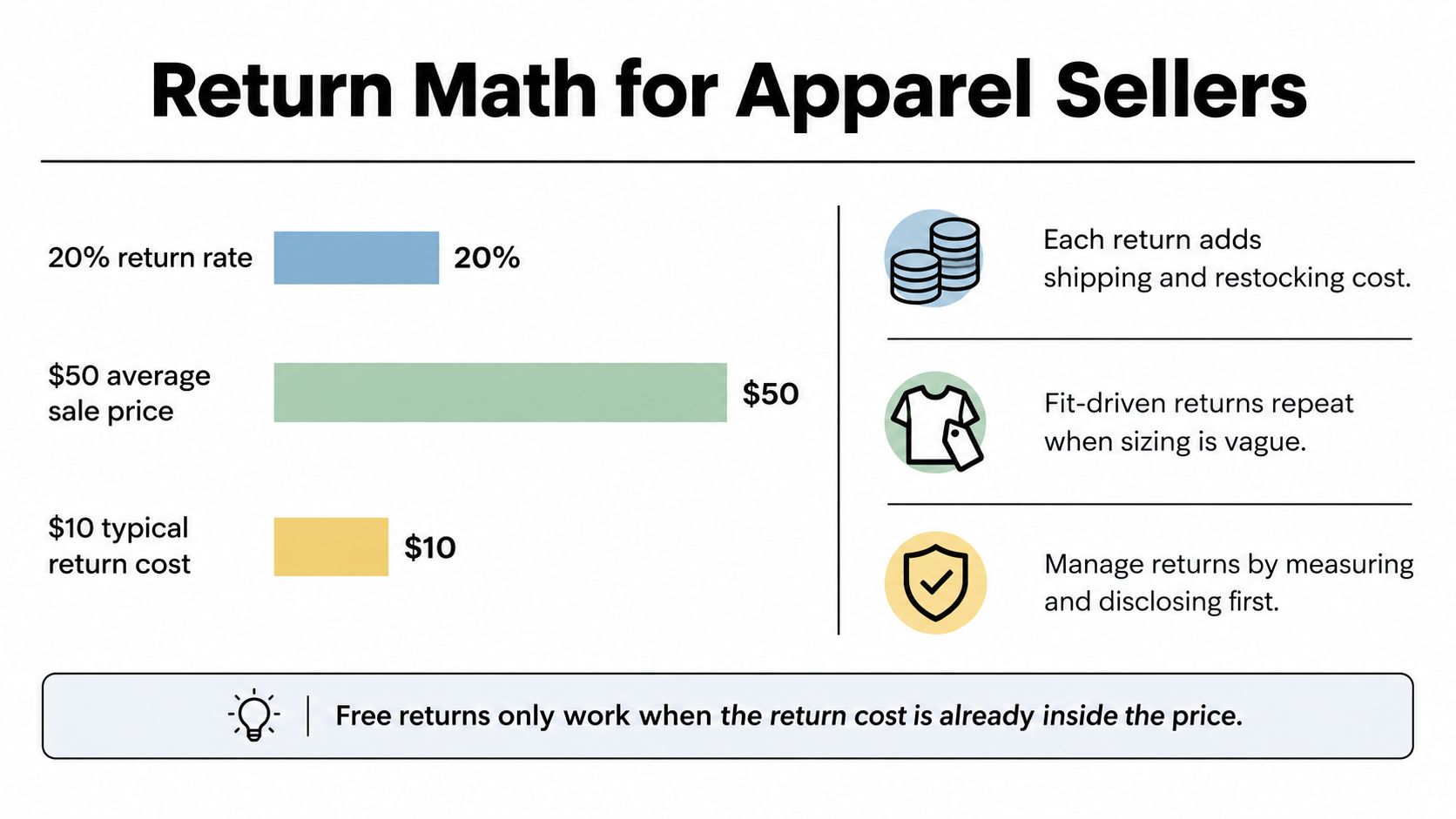
"Offer free returns" is not a complete apparel strategy. Fit-related returns can remove the profit from low-ticket items, especially when the listing gives the buyer a tagged size but no usable measurements. eBay's own guidance warns that clothing carries higher return risk because sizes aren't standardized and recommends exact measurements, multiple photos, and model shots. (eBay seasonal guidance for high-demand items)
Measure the garment flat and describe exactly how you measured it. For tops, record pit-to-pit, shoulder width, sleeve length, and total length. For bottoms, record waist, rise, inseam, leg opening, and whether the fabric stretches. Dresses need bust, waist, hip, shoulder, and length. Outerwear benefits from pit-to-pit, shoulder, sleeve, length, lining, and closure details.
Match the policy to the inventory
A return policy can't correct an inaccurate listing. If you sell vintage, altered, customized, or final-sale pieces, a no-returns policy may be appropriate where platform rules allow it, but condition and measurement disclosure still need to be excellent. For standard branded apparel, a more buyer-friendly policy can help conversion, but price the item with the likely handling and return burden in mind.
Before shipping, use a short control check:
- Verify the SKU: Match the sold listing, storage location, color, size, and photos.
- Recheck condition: Compare the actual garment with every flaw disclosed in the listing.
- Confirm package details: Weigh the parcel and select the shipping service that matches its actual dimensions.
- Invite communication: Add a brief packing note asking the buyer to message you if something seems wrong before opening a return request.
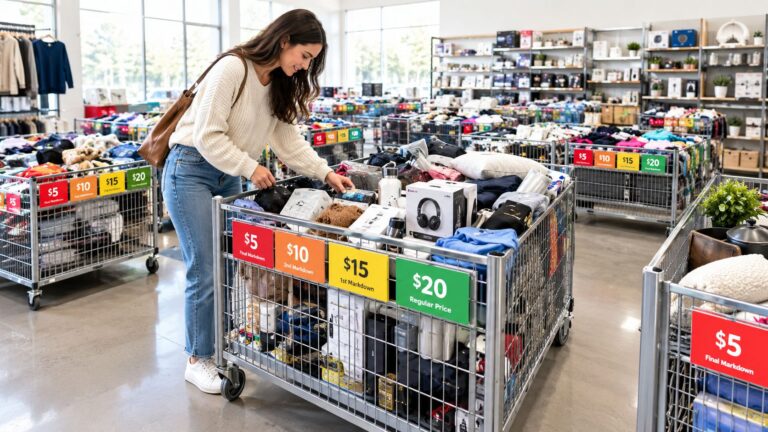
Fit problems repeat when the seller repeats vague sizing. The apparel liquidation sourcing context is useful here because mixed inventory must be screened, measured, photographed, and priced piece by piece rather than treated as uniform stock.
Your Weekly Reseller Workflow and Common Questions
A sustainable eBay operation needs a rhythm that protects listing quality. Use the start of the week for intake and sorting, reserve the middle for sold-comps research and lot batching, and set aside a focused listing session once the garments are measured and photographed. Keep a separate catch-up period for photography and shipping so unfinished inventory doesn't disappear into a storage pile.
Track each SKU with a simple record: acquisition cost, date listed, current price, days active, watchers, offers, sale date, and return reason. Review the records regularly. If an item has been active for a long period without meaningful interest, test a better title or photo set once, then consider a controlled markdown, bundle, or removal from the store.
Questions that affect inventory decisions
Can every branded item be listed freely? Category and brand restrictions can change, so check the current listing prompts and seller eligibility before buying heavily into a label. A recognizable brand doesn't guarantee that your account can list every product type.
How should luxury and streetwear be screened? Treat authenticity as an inventory requirement. Compare labels, stitching, hardware, date or style codes, material, construction, and provenance. Don't use stock photography to imply authenticity, and use an applicable authentication program when eBay offers one for the item.
Are replicas and used undergarments allowed? eBay bans counterfeit and replica goods and prohibits used underwear and socks. Bras are treated differently from underwear under the stated guidance, so sellers need to check the specific policy rather than rely on a generic clothing checklist.
What should happen with an item-not-received case? Keep the order, tracking, messages, packing record, and shipment details together. Respond through eBay and follow the platform's case process instead of moving the conversation or payment outside the marketplace.
For sellers building a broader operation, this guide to starting a clothing resale business can help connect sourcing, storage, listing, and fulfillment into one process. A monthly audit should check stale inventory, missing specifics, weak first photos, price gaps against sold listings, recurring return reasons, and any items that no longer fit your sourcing rules.
OneTrendyCloset offers curated brand-name apparel liquidation boxes and custom lots for marketplace sellers, including people sourcing inventory for eBay. Visit OneTrendyCloset to review available box options or request a lot aligned with your preferred brands, budget, and resale workflow.