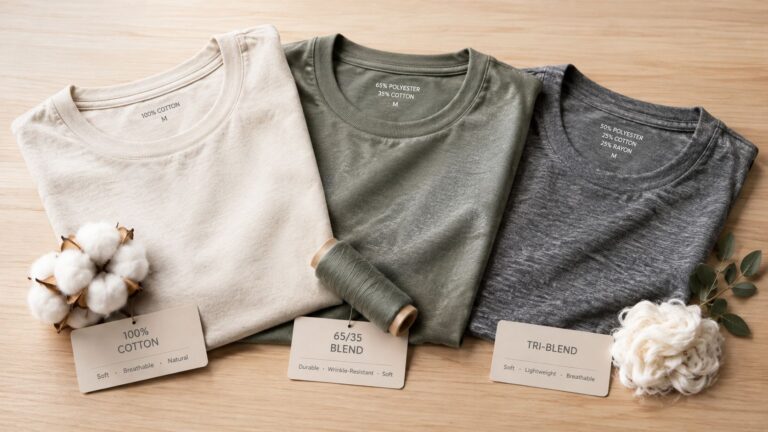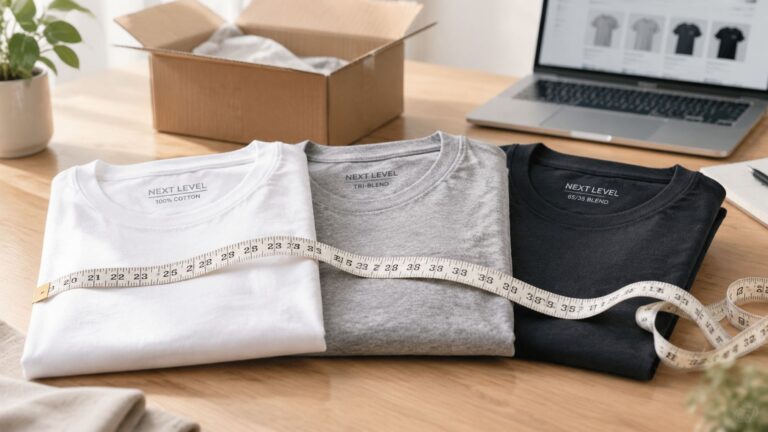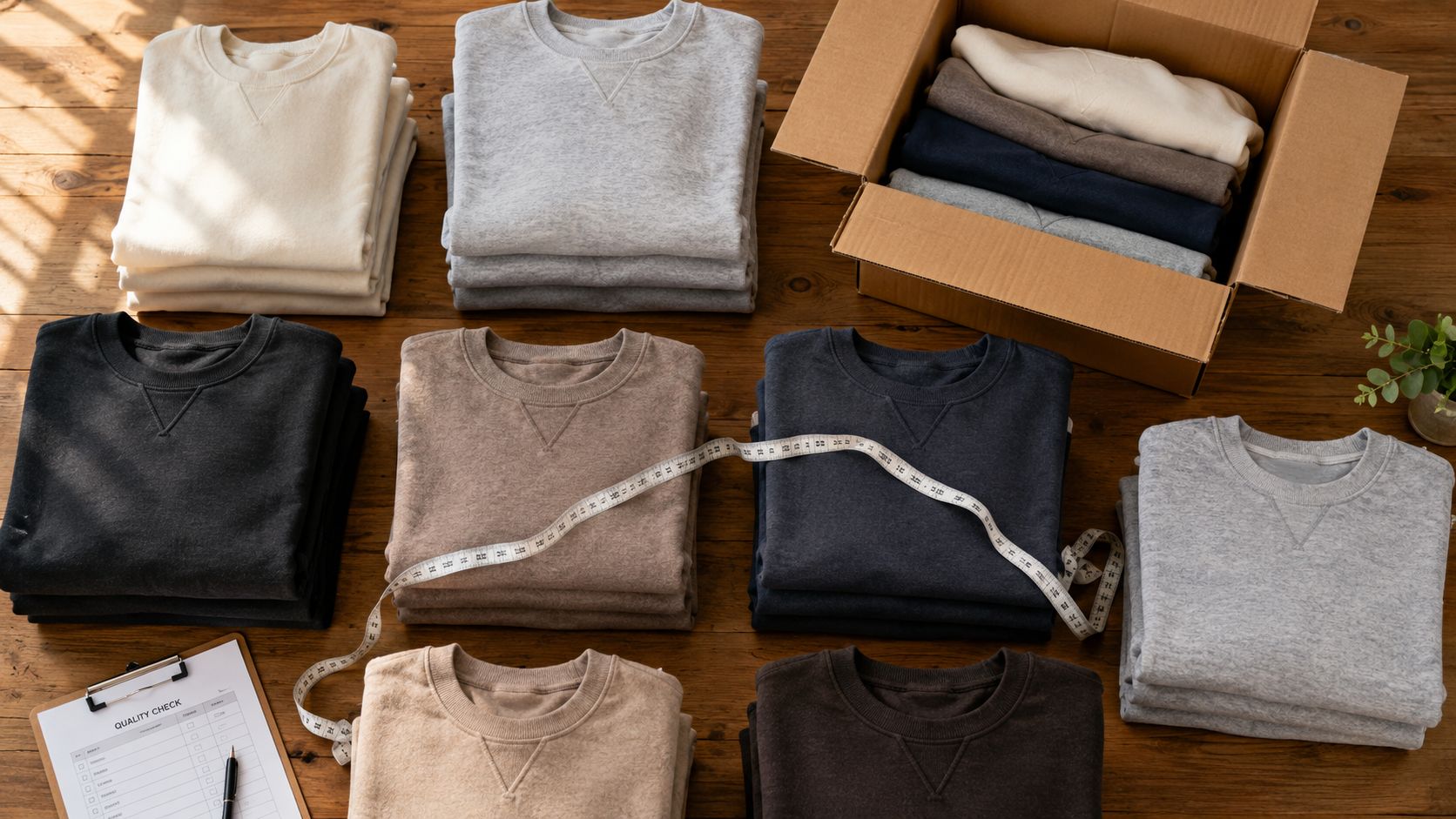
You're looking at a supplier's bulk order screen, comparing a low unit price with a heavier crewneck that costs more before freight, decoration, and marketplace fees. The cheaper lot looks attractive until you notice the limited size run, uncertain fabric specifications, and the possibility that customers will report shrinkage after the first wash. For a reseller, the profitable choice is rarely the lowest ticket price. It's the order that gives you a sellable size curve, dependable fit, useful fabric weight, and enough quality consistency to support repeat listings.
Bulk crewneck sweatshirts deserve that level of scrutiny because they sit between fashion and basic inventory. They can work in a boutique, a Poshmark closet, an eBay store, or a Whatnot sale, but each channel rewards a slightly different assortment. The buying decisions below focus on the operational details that determine whether a lot moves smoothly or becomes a stack of slow sellers.
Table of Contents
- Why Bulk Crewneck Sweatshirts Matter for Resellers
- Fabric Weight and Shrinkage Data That Affect Resale Returns
- Sizing Curves and the 2026 Oversized Fit Shift
- Crewnecks Versus Hoodies and Tees for Margin and Versatility
- Sourcing Crewnecks Through Liquidation Boxes and Custom Lots
- Pricing and Listing Strategies for Maximum Sell-Through
- Your Bulk Crewneck Buying Checklist
Why Bulk Crewneck Sweatshirts Matter for Resellers
A liquidation box can contain crewnecks beside hoodies, tees, and knit tops. That mix reflects how the category is sourced commercially. HS 6110 covers a broad knitwear group, including sweaters, pullovers, sweatshirts, waistcoats, and vests. The category represents $56.25 billion in global trade, according to Accio's crewneck trade overview. Crewnecks therefore move through established knitwear supply chains, where fiber costs, seasonal demand, and production scale affect wholesale pricing.
For a reseller, that supply-chain position supports a repeatable buying strategy. A crewneck has a familiar shape, broad use, and fewer fit complications than many trend-led garments. Customers can wear it over a tee, under a jacket, with denim, or as part of a relaxed outfit. A boutique may present the same silhouette as a polished neutral, while a marketplace seller may list it as branded casualwear or a vintage-inspired layer.
The category also holds practical value during assortment planning. Its stable silhouette lets sellers test color, branding, fabric weight, and fit without rebuilding the entire product story. In 2026, oversized styling can increase demand for roomier crewnecks, but it also changes the size curve. Ordering too many larger sizes may leave capital tied up if the channel's customers still prefer a conventional fit. The right bulk lot should match the intended customer and listing language, rather than follow a broad trend.
The design has long commercial recognition. Russell Athletic says Benjamin Russell Jr. developed an all-cotton practice football jersey in the 1920s, and production of its iconic crew neck sweatshirt began in its mills in 1930, as documented in Russell Athletic's crewneck history reference. The original garment replaced uncomfortable wool jerseys with softer cotton. Its adoption across athletics, casualwear, and everyday basics gives resellers a standardized product form that shoppers already understand.
Where crewnecks fit in a resale assortment
Crewnecks suit inventory plans that need flexible presentation. A black or gray piece can appear as a minimalist staple, a layered boutique item, or a quick live-sale listing. Branding may support a higher perceived value, provided the label, condition, color, and fit are shown clearly.
Familiarity creates a risk as well. A thin, poorly finished sweatshirt without a recognizable brand or appealing color has little differentiation. Buyers can compare it with new fast-fashion alternatives, so the listing needs a clear reason to buy, such as better fabric, a desirable oversized shape, a clean logo, or a strong condition grade.
Buying principle: Treat a crewneck as a repeatable inventory platform, not an automatic sale. Its familiar silhouette creates opportunity, while fit, quality, and assortment determine sell-through.
Fabric Weight and Shrinkage Data That Affect Resale Returns
A low-priced crewneck can become expensive after returns start. Fabric specifications affect post-wash fit, product photography, decoration results, and whether shoppers accept the listed price. For bulk crewneck sweatshirts, GSM, or grams per square meter, is the most useful thickness and density indicator. This wholesale fleece fabric guide places midweight fleece around 280 to 340 GSM, with heavyweight construction above 340 GSM.
For many resale assortments, 320 to 345 GSM offers a workable balance of warmth, structure, hand feel, and printability. Lighter fleece can reduce purchase cost, but may appear less substantial in listing photos and make a premium price harder to defend. Heavier fleece can feel more substantial, while construction above roughly 380 GSM may become stiff and less comfortable for layering. Choose weight according to the selling channel, season, and expected fit, not the GSM figure alone.
Read the specification sheet before comparing prices
Review the fiber blend, yarn construction, finishing treatment, and stated preshrink process. Two sweatshirts with the same nominal size may perform differently when one uses carded fleece and the other uses ring-spun yarn. A cotton-polyester blend may retain shape more effectively, while cotton-rich fabric may provide a softer or more natural hand feel. The right choice depends on whether customers prioritize softness, structure, print surface, or easy care.
Shrinkage needs a separate approval step. Testing of preshrunk 8 oz, 270 GSM, 50/50 crewnecks found approximately 2.8% length shrinkage and 1.2% width shrinkage with cold wash and low heat. Warmer washing and medium heat produced about 4.1% length shrinkage and 2.9% width shrinkage, according to the Gildan 18000 review and test data. Those changes can affect measurements, fit descriptions, and return rates.
| Fabric Type | GSM | Width Shrinkage | Length Shrinkage | Pilling Grade |
|---|---|---|---|---|
| Preshrunk 50/50 crewneck, cold wash and low heat | 270 | 1.2% | 2.8% | Not reported |
| Preshrunk 50/50 crewneck, warmer wash and medium heat | 270 | 2.9% | 4.1% | Not reported |
| Lower-grade carded fleece | 290 | 6.2% | 7.8% | Grade 2 |
| Premium ring-spun fleece | 345 | 1.7% | 2.3% | Grade 4 |
The comparison shows why a low invoice price does not always produce the best margin. Lower-grade fleece can create fit complaints and surface wear, while suitable weight and yarn construction may reduce dimensional loss. For marketplace listings, publish post-wash measurements when the supplier's sizing is uncertain.
Before approving a large lot, request a sample or detailed specification. Measure chest and body length before washing, follow the care label, then measure again. Record pilling, seam appearance, rib recovery, and print response. Broader purchasing considerations appear in this guide to sweaters for wholesale, but the supplier's actual sample should determine the order.
Sizing Curves and the 2026 Oversized Fit Shift
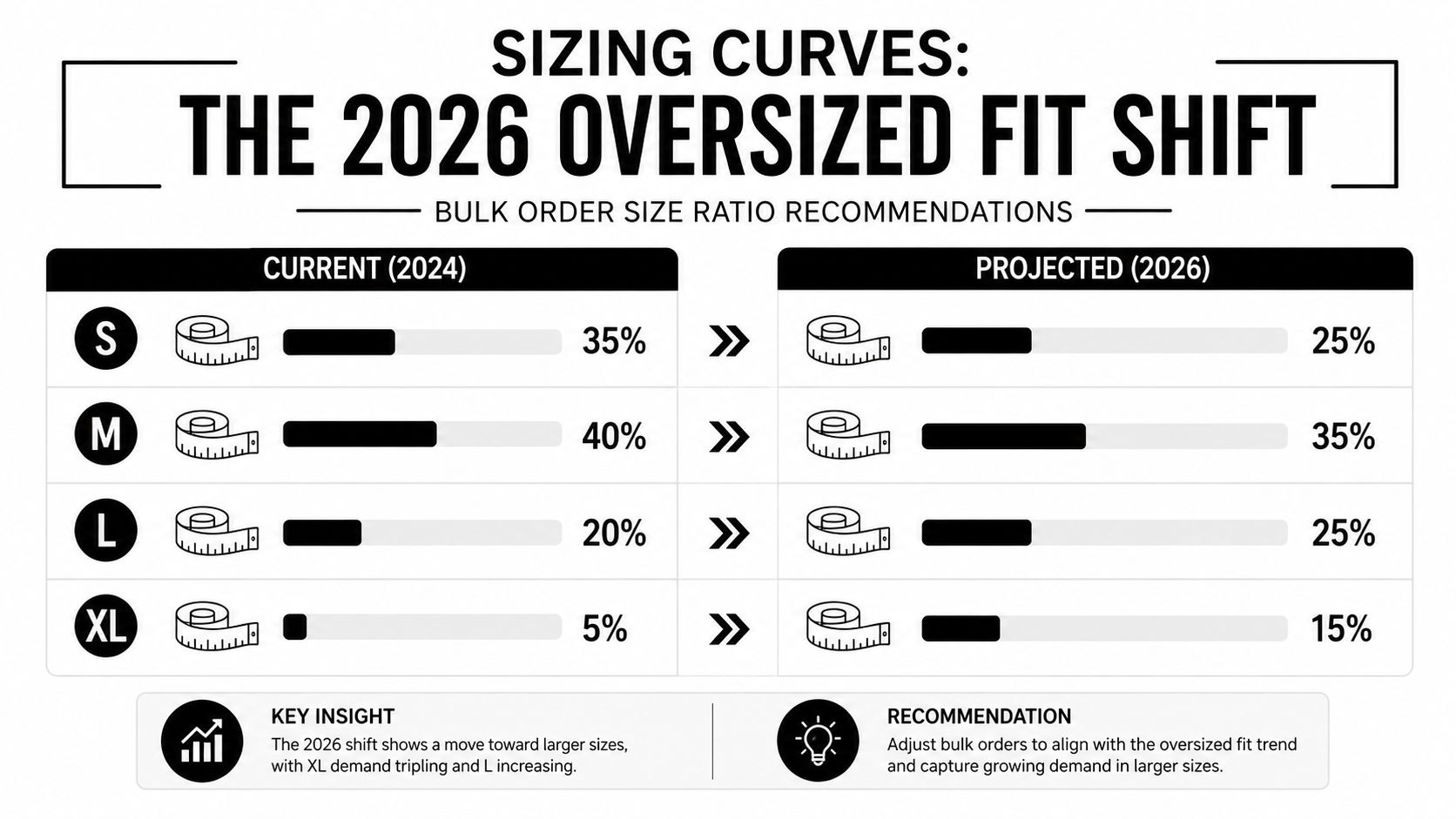
A sizing curve determines how much cash sits in sellable stock. Buy too many units in the usual size and attractive sweatshirts can become dead stock. Split every size evenly and you may miss buyers choosing larger units for layering or a deliberately oversized fit.
Wholesale commentary for 2026 identifies structured oversized silhouettes, clean preppy styling, and crewnecks as a continuing high-volume staple in this seasonal wholesale sweatshirt analysis. For resellers, the practical change is how a unisex size chart translates into inventory. A customer who normally buys medium may select large for a relaxed shape. A shopper seeking an oversized crewneck may move to XL or 2XL instead.
Set the curve by sales channel and intended fit. A larger-size allocation may suit an oversized unisex lot, while the same ratio can leave a fitted women's style with the wrong stock.
Match the curve to the customer and the cut
A boutique where customers can try garments on still needs smaller and middle sizes to maintain a complete visual run. Shoppers may want a structured oversized shape, but they can reject a sweatshirt that appears missized rather than intentional. Marketplace sellers have more control because each size can be listed separately, measured precisely, and described with terms such as “relaxed unisex fit” or “oversized crewneck.”
Unisex styles often give larger sizes more styling utility because buyers can wear them traditionally or size up. Women's-specific cuts require a separate review. A narrower shoulder, shorter body, or shaped waist can make a larger unit look fitted rather than relaxed. Shifting units upward without checking the cut can therefore miss demand for a genuine oversized fit.
Resale demand makes size planning more important. The global secondhand apparel market is projected to reach USD 367 billion by 2029, while the resale market is projected to rise from USD 202.39 billion in 2025 to USD 225.71 billion in 2026, according to the wholesale sizing and resale commentary. Those projections describe market direction, not the correct curve for your shop. Use order history, customer messages, and size-level sell-through to set the next buy.
Build separate buy sheets instead of one universal ratio
Start with the supplier's available size run, then adjust it using your own sales records. Track size, garment measurements, fit label, color, brand, sales channel, and days to sale. A large size that moves quickly in live sales may sit in a boutique where customers expect a neater silhouette. Marketplace listings need accurate measurements because buyers cannot try the garment on before purchase.
Use the oversized trend as a testable buying assumption. Add more L, XL, and 2XL to a clearly oversized unisex lot, then review sell-through before repeating the order. Keep a fitted women's style on its own curve. Match the units to the listing language, garment measurements, and customer who will see the offer.
Crewnecks Versus Hoodies and Tees for Margin and Versatility
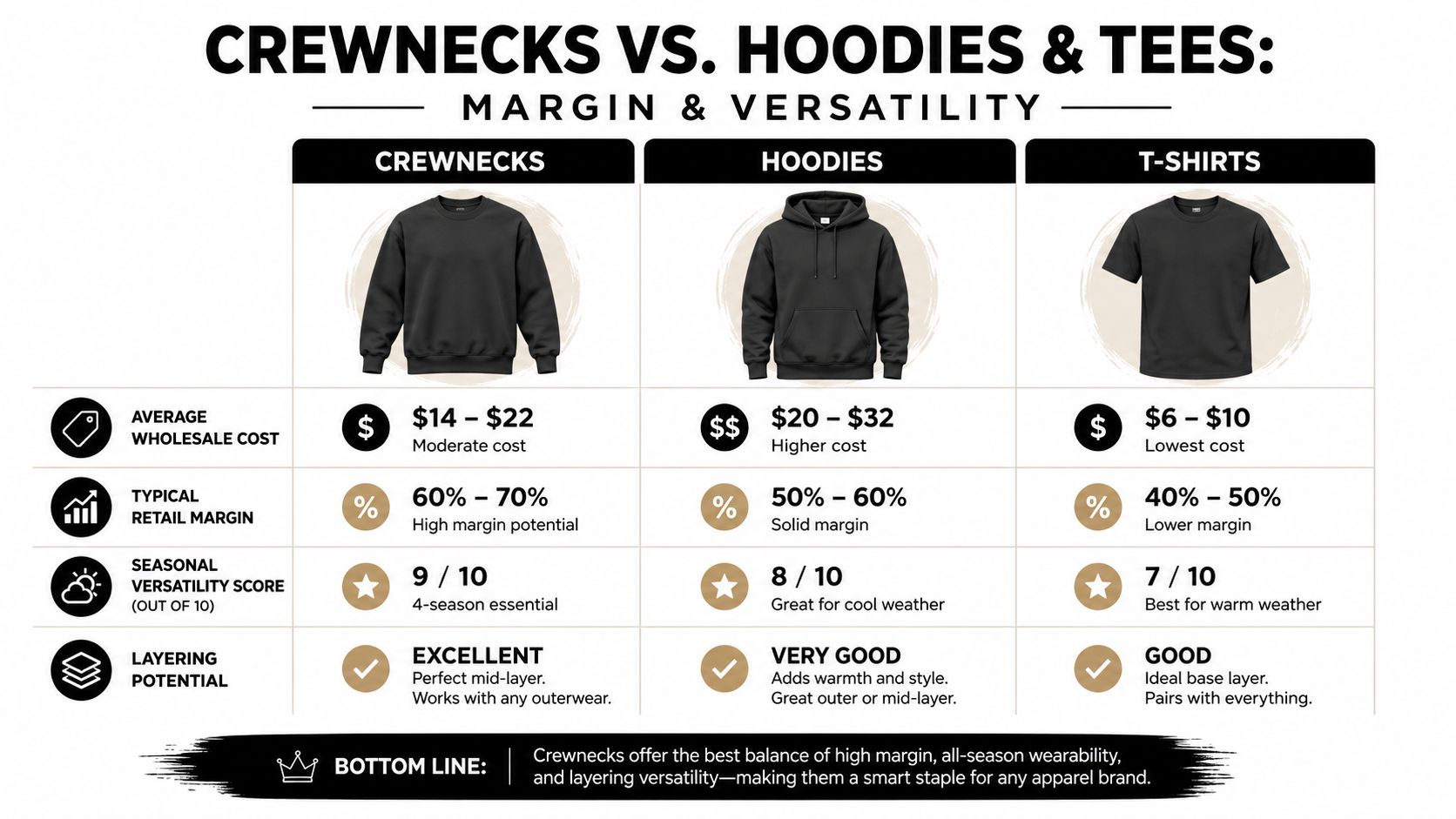
Crewnecks, hoodies, and tees compete for the same buying budget, but each supports a different resale job. Tees generally offer the widest volume potential and the simplest shipping profile. Hoodies add warmth, graphic space, and a strong casual identity. Crewnecks occupy the middle ground, giving customers more substance than a tee without the hood, drawcords, and added bulk.
Wholesale apparel coverage identifies T-shirts, hoodies, and polos as major volume categories, while crewnecks are gaining attention as cleaner layering pieces for comfort-focused assortments, according to this wholesale apparel trend overview. For a reseller, that positioning supports versatility, not automatic profitability. Your buy still depends on GSM, shrinkage, size distribution, freight, and expected sell-through.
Choose by selling situation
A crewneck can beat a hoodie when shoppers want a cleaner silhouette, when the item must layer easily, or when extra hood hardware would add unnecessary volume. Its simpler construction also reduces the visible defect points you inspect in a bulk order. A hoodie may support a higher ticket when the graphic, brand, or heavyweight build is compelling, but the hood, cords, eyelets, and pocket create more parts to check.
Tees work well for testing designs and colors. They are easier to photograph, store, ship, and bundle, and they often have a broader seasonal window. Their drawback is direct price competition. A blank tee must earn attention through brand, artwork, fabric, condition, or a clearly presented fit.
Crewnecks deserve a different assortment role in 2026. Oversized fits can increase demand for larger garments, but they also change how many units you need across the curve. Separate oversized styles from regular-fit crewnecks in your listings, and show garment measurements so buyers understand the intended shape. Do not use an oversized trend to justify excess stock without checking channel-level sell-through.
Sustainability can strengthen the product story when recycled fibers, durable construction, or sourcing records are documented. Avoid environmental claims that the supplier cannot support. Industry coverage also points to greater attention to quality assurance, authentication, and sustainable sourcing in secondhand and wholesale buying, as noted in the apparel trend discussion.
A lower unit cost does not protect margin if the garment needs markdowns, creates complaints, or takes too long to photograph and describe.
Use tees for accessible volume, hoodies for statement or cold-weather demand, and crewnecks for flexible mid-layer inventory. Compare contribution after freight, preparation time, platform fees, discounts, and unsold units. Crewnecks offer flexibility, but the right GSM, fit mix, and size curve determine whether that flexibility becomes revenue.
Sourcing Crewnecks Through Liquidation Boxes and Custom Lots
Blind lots create a familiar problem. You may receive attractive pieces, but the mix can be too random for your customer base, with the wrong sizes, too many similar colors, or a brand profile that doesn't match your store. A curated liquidation box gives you more control before the inventory reaches your prep table.

Start with a controlled test
Write the buying brief before requesting a quote. Include preferred brands, acceptable condition, target sizes, colors, garment type, and the sales channel you'll use. If you need unisex oversized pieces for marketplace listings, say so directly. If your boutique needs neutral, easy-to-display basics, don't leave the color mix open-ended.
Ask the supplier how the lot is graded and what information is available before payment. Confirm whether the order can be built around categories or brand preferences, whether substitutions are possible, and how defects are handled. A small test order lets you inspect actual measurements, labeling, fabric weight, condition, and packing quality before you commit more cash.
OneTrendyCloset offers curated brand-name liquidation boxes, mix-and-match brand selection within chosen box sizes, and custom quotes for custom boxes or pallets based on budget, preferred brands, and quantity needs. Its model is relevant when you want to influence the assortment rather than accept a fully blind mix. For a separate example of how box sourcing can be evaluated, compare the practical considerations in this box of hoodies guide.
Scale only after approval
When the test arrives, inspect every unit using the same checklist. Separate sellable stock from pieces needing cleaning, repair, additional measurement, or disclosure. Photograph representative examples and note whether the supplier's description matches the goods. That record becomes useful when you negotiate the next lot or identify which specifications affect sales.
Scaling from boxes to custom lots or pallets works best when you preserve the same approval criteria. Don't increase volume merely because the per-unit quote looks better. Increase it when the brand mix, size curve, condition, and fabric quality have already shown a fit with your sales channels.
Pricing and Listing Strategies for Maximum Sell-Through
Price crewnecks by their resale story, not just by what you paid. A recognizable brand, clean condition, substantial fleece, desirable color, and accurate oversized measurements can support a different listing position from an unbranded lightweight basic. Buyers need enough information to understand why one sweatshirt costs more than another.
For each unit, record brand, style, tagged size, measured chest, body length, sleeve length, fabric composition if known, GSM or ounce weight if verified, condition, and any visible wear. Don't claim shrinkage resistance based on a supplier's general language. Use a cautious description such as “preshrunk,” “ring-spun fleece,” or “measured flat,” only when the garment label or supplier documentation supports it.
Adapt the listing to the platform
On Poshmark and eBay, lead with searchable facts. Put the brand, garment type, color, tagged size, and fit in the title where appropriate. In the description, explain whether the fit is classic, relaxed, or oversized, then provide measurements and disclose fading, pilling, stains, cracking, or missing tags.
Marketplace shoppers need confidence before they buy. A clear photo of the label, cuffs, neckline, fabric surface, and measurements can prevent avoidable questions. If you're listing a premium heavyweight piece, show the ribbing and fleece density rather than relying on the word “heavyweight.”
Whatnot and other live-sale formats reward quick visual communication. Group pieces by brand, color family, fit, or theme so viewers understand the offer immediately. Bundles can work when the garments share a customer profile, but don't combine a premium branded crewneck with weak basics just to clear stock. That may lower the perceived value of both pieces.
For auction and live-selling decisions, use this clothing auction resource as a planning reference. Your floor price should account for acquisition, freight, preparation, platform costs, expected discounts, and the time required to sell. If a garment can't support that floor, change the bundle, channel, or presentation before lowering the price.
Your Bulk Crewneck Buying Checklist
A good buying checklist protects you from attractive but incomplete supplier offers. It forces the order conversation back to the details that affect fit, handling, presentation, and resale value. Use it before every purchase, especially when a lot includes mixed brands or inconsistent product descriptions.
Confirm the fabric before you confirm the quantity
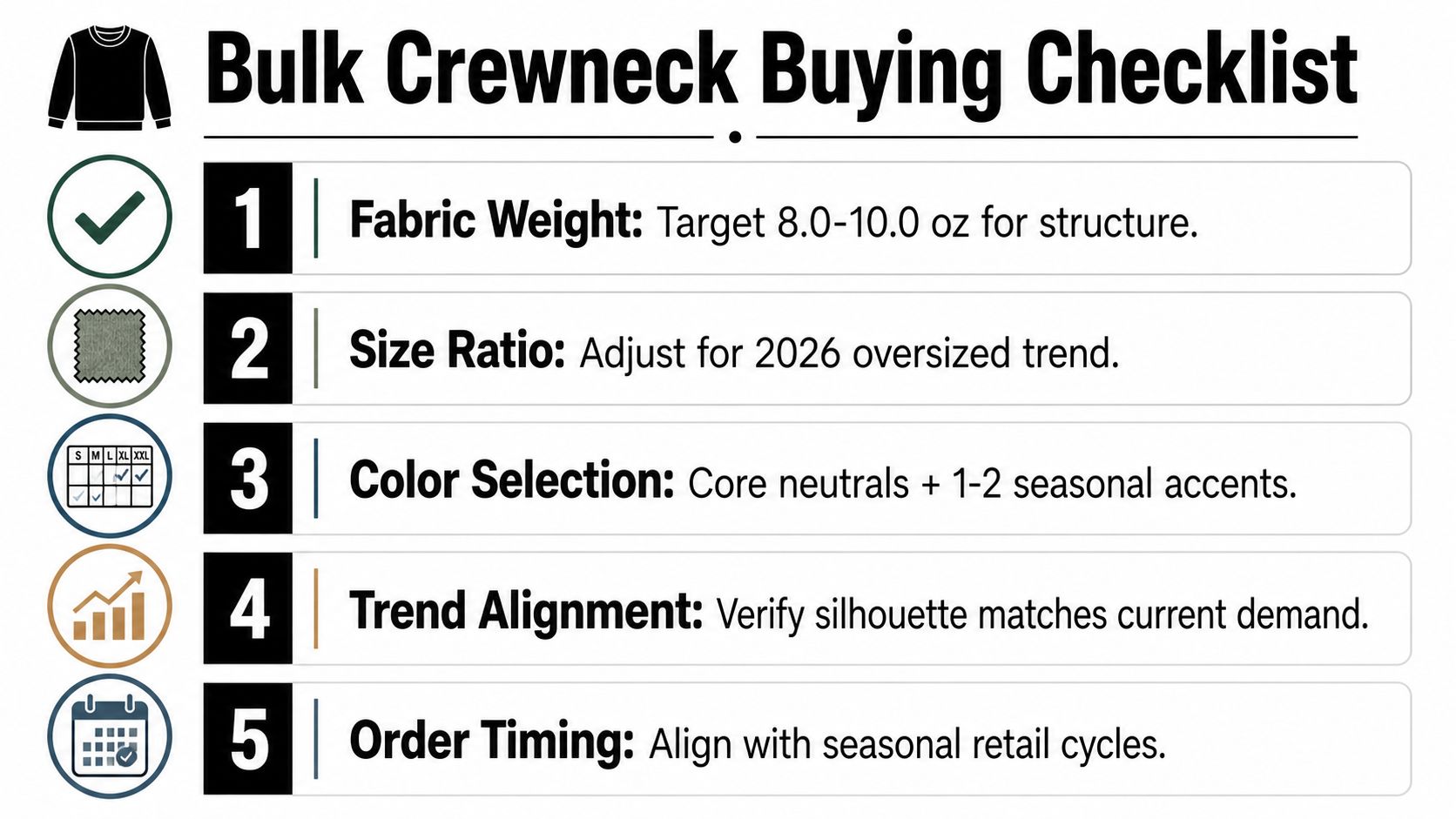
- Fabric weight: For structured inventory, assess whether the supplier's stated weight falls near the 8.0 to 10.0 oz target shown in the buying checklist, then verify the equivalent GSM where possible. Don't assume an ounce label and a GSM label describe the same construction without checking the supplier's specifications.
- Shrinkage and pilling: Request test information or approve a sample. Record prewash and postwash measurements, surface wear, rib recovery, and any change in drape.
- Fiber and yarn: Identify the blend and whether the fleece is carded or ring-spun. These details help you explain feel and performance without making unsupported promises.
- Size curve: Separate classic-fit, women's-specific, unisex, and oversized styles. Adjust the order toward larger sizes only when the cut and your customer data justify it.
- Color plan: Build around dependable neutrals, then add seasonal colors only when they fit your audience and channel. Too many similar shades can make a liquidation lot look repetitive.
- Supplier transparency: Ask for brand mix, condition standards, measurements, available sizes, substitution rules, and defect policies in writing.
- Sales preparation: Decide whether each unit is headed to a boutique rack, a marketplace listing, a bundle, or a live sale. The channel should influence your photography, measurements, and pricing.
- Repeatability: Keep records of the lot, including what sold quickly and what remained. Reorder the specifications that worked, not merely the supplier's cheapest available option.
The practical position is simple. Start with a manageable lot, measure what arrives, and let actual sell-through shape the next size curve. A disciplined reseller doesn't buy more inventory to solve an assortment problem. They improve the assortment first, then scale the purchase.
If you're ready to test bulk crewneck sweatshirts with a more controlled brand and category mix, review the curated liquidation boxes and custom lot options at OneTrendyCloset. Share your preferred sizes, brands, budget, and resale channel so the order can be planned around the inventory you can realistically sell.