You've just opened a liquidation box, and the first few pieces look promising. Then the problems appear: several garments are outside your usual size range, the brands don't match your buyers, and the condition is weaker than expected. The box may contain recognizable labels, but that doesn't make it useful inventory.
A build your own box approach starts with a different question. Instead of asking which brands are available, ask which products your customers will buy, on which channel, at what price, and within what selling period. That shift turns sourcing from a gamble into an operating decision.
Table of Contents
- Why Most Resellers Stop at Mystery Boxes
- Choosing the Right Box Size for Your Volume
- Specifying Brands, Sizes, and Conditions
- Submitting Your Build Request and Getting a Quote
- What to Expect During Fulfillment and Delivery
- Turning Your First Box Into Repeatable Profit
Why Most Resellers Stop at Mystery Boxes
A mystery box can look profitable on arrival, then stall once you match each garment to your actual customers. You pay for the assortment, sort the contents, photograph what fits your channel, and store the rest. The cost is not only the purchase price. It also includes handling time and inventory that may sit unsold.
A reseller focused on women's activewear could receive dresses, formalwear, or denim. A live-sale host may need visually distinctive pieces that create immediate interest, while a Poshmark seller may rely on accurate measurements and steady demand across sizes. The same carton can support one operation and create dead stock for another. Your selling channel and customer profile should determine the box specifications before you request a quote.

The market is growing, but so is the noise
The worldwide resale-apparel market grew 17.6% in 2024 to $204.7 billion, while the traditional apparel market grew 0.1%, according to GlobalData's resale-apparel market update. More demand brings more sourcing options, but it also increases the need to separate usable stock from inexpensive volume.
GlobalData's 2024 Resale Report projects that the global secondhand-apparel market will reach $350 billion by 2028, with a 12% compound annual growth rate. Online resale is projected to reach $40 billion by 2028, growing at a 17% compound annual growth rate. Those projections support demand for curated inventory. They do not make every branded garment profitable.
Practical rule: A recognizable label is an input. It isn't a profit model.
Reactive buying creates avoidable inventory
Mystery lots encourage resellers to judge value by brand count. Brand count measures a supplier's assortment, not your profitability. Check whether the sizes match your buyers, the category suits your channel, the condition supports your target price, and your team can list the items before cash remains tied up in storage.
A custom box puts those decisions before the purchase. The guide to mystery-box wholesale apparel explains the difference between a blind assortment and a more deliberate sourcing request. Define the customer, selling channel, acceptable condition, and target margin first. Then specify the inventory that supports those requirements.
Choosing the Right Box Size for Your Volume
The right box size is the amount of inventory your operation can process without slowing down. Piece count matters, but listing capacity, photography time, storage space, shipping materials, and available cash matter just as much.
Start with your actual listing velocity. Count how many complete listings you can publish in a normal week, not how many pieces you wish you could process. Then consider how quickly those listings turn into cash and whether your current storage can handle the unsold balance.
Work backward from your selling capacity
Use this sequence before requesting a quote:
- Measure listing output. Record the number of garments you can photograph, measure, describe, and publish each week.
- Set a cash limit. Include the box price, inbound freight, packaging, platform fees, markdowns, and a reserve for returns.
- Check storage. Leave room for incoming stock and separated items awaiting repair, bundling, or clearance.
- Choose a replenishment rhythm. A smaller test order may make more sense if you need frequent assortment feedback. A larger lot suits a seller with established demand and reliable processing capacity.
- Set a review point. Don't reorder just because the first box arrived. Review sell-through, realized margin, and return reasons first.
The wholesale clothing box guide is useful for comparing available formats, but the decision should come from your workflow rather than the lowest apparent unit price.
| Box Tier | Estimated Pieces | Best For | Typical Budget Range |
|---|---|---|---|
| Small test box | 20–40 | New marketplace sellers, small boutiques, focused category testing | $150–$300 |
| Medium box | 60–100 | Active sellers publishing regularly and restocking a proven assortment | Depends on the requested mix and quote |
| Larger custom pallet | More than 200 | Established operations with storage, staff, or consistent replenishment demand | Custom quote |
The ranges above describe the box formats in the supplied product information. Treat them as planning references, not guarantees of availability or final pricing.
Avoid the warehouse trap
A box becomes too large when your listing queue grows faster than your sales. If you can photograph and publish only a portion of an order before your next purchase, the unsold inventory starts competing with new stock for cash and attention.
A narrow test box can also reveal whether your audience responds to a category, size curve, or brand group before you commit to a larger lot. The cheapest piece is not necessarily the cheapest inventory if it occupies storage, requires repeated markdowns, or never reaches a listing.
Specifying Brands, Sizes, and Conditions
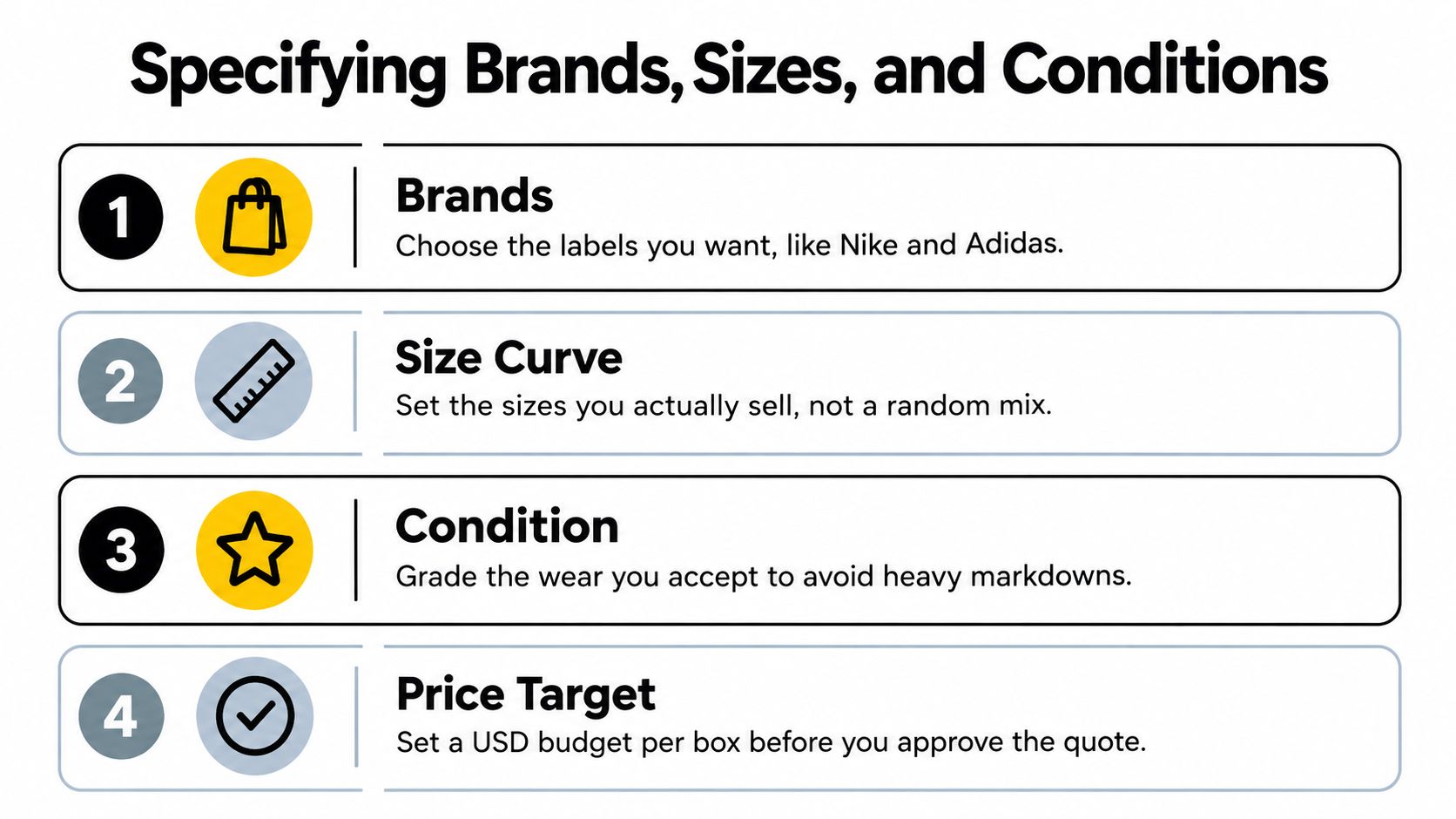
A useful build-your-own box request reads like a merchandise plan. “Send popular brands” leaves too much room for interpretation. A stronger request identifies the channel, customer, categories, size distribution, condition tolerance, season, and price ceiling.
Start with the channel because each channel rewards different inventory. Whatnot hosts often need pieces that are easy to show and explain quickly. Boutique buyers may want a cohesive visual identity. Poshmark and Mercari sellers need garments with enough information to support detailed listings, including measurements and condition notes.
Build a specification, not a wishlist
Use a request like this and replace the brackets with operating requirements:
- Selling channel: [Poshmark, eBay, Mercari, boutique, Whatnot, or another channel]
- Customer profile: [age range, style, use case, price sensitivity]
- Preferred brands: [primary brands, acceptable secondary brands, excluded labels]
- Categories: [activewear, denim, dresses, tops, outerwear, footwear]
- Size curve: [minimum and maximum quantities or proportions by size]
- Condition: [new with tags, new without tags, shelf pulls, customer returns, or other accepted grades]
- Season: [current season, transitional items, or year-round basics]
- Hard exclusions: [damaged goods, heavily fitted styles, certain categories, or missing labels]
- Budget ceiling: [maximum total spend and desired piece count]
- Documentation: [manifest, item-level descriptions, photos, or defect disclosures]
Size deserves special attention. Online apparel return benchmarks commonly fall around 20% to 40%, and sizing problems are repeatedly identified as a leading cause, as discussed in Richpanel's ecommerce return-rate guidance. Treat the size curve as a measurable constraint, not a preference.
Condition changes the economics
Ask how the supplier defines each grade. “Good condition” can mean different things to different sellers, and a box containing customer returns may require inspection, cleaning, repackaging, or markdowns before listing.
Request clarity on whether quantities refer to individual units or case packs. Ask for defect disclosures and, where relevant, item-level photographs of labels, tags, and visible flaws. Branded inventory still needs authentication confidence, demand, and acceptable processing costs. Proof matters to buyers, with 77% of surveyed fashion buyers identifying proof of authenticity as their top requirement, according to the 2025 AlixPartners Consumer Sentiment Index.
A request for every premium label may produce too few pieces or an unworkable price. A narrower mix of reliable categories, acceptable sizes, and manageable condition can outperform a more glamorous assortment.
Submitting Your Build Request and Getting a Quote
A supplier can build a useful box only when the request reflects how you sell. State the box tier, budget ceiling, target quantity, sales channel, customer profile, preferred brands, size matrix, category limits, condition standards, seasonal needs, and exclusions in one message.
Explain whether you sell through live auctions, a marketplace, a boutique site, or another channel. “Casual women's clothing” leaves room for interpretation. “Measurement-friendly basics for marketplace listings” sets a different requirement from “photogenic contemporary pieces for live auctions.” Your customer's expected price point should guide the mix more than a famous label.
Put the commercial limits in writing
Your request should answer five questions immediately:
- What are you buying? State the box or pallet format and desired quantity.
- Who will buy it? Describe the customer and sales channel.
- What may the supplier include? List brands, categories, sizes, seasons, and condition grades.
- What must stay out? Name hard exclusions, such as damaged items, specific categories, or unsuitable sizes.
- What can you spend? Give a ceiling and say whether shipping is included.
The liquidation-pallet cost guide provides context for sourcing costs. Use it as background, then judge the quote against your channel, customer demand, and handling capacity.
Read the quote beyond the total
Review the piece-count range, brand mix, condition language, substitutions, packing format, and any fees added at higher quantities. Ask whether a minimum number of sellable units is guaranteed or whether the count includes flawed or incomplete pieces.
Brand preferences and brand guarantees are different terms. Confirm which labels are committed, which are targets, and what happens when requested inventory is unavailable. Require approval before substitutions if a replacement would change the price point, size curve, or customer fit. Ask whether moving into a larger tier changes the per-unit price or triggers a new minimum.
Have the supplier state how disagreements will be handled. A written specification, substitution rule, and minimum-piece commitment give you a clear basis for checking the delivered box. They also prevent a low quote from becoming a different assortment after payment. If the supplier cannot define those terms, request a revised quote before approving the order.
What to Expect During Fulfillment and Delivery
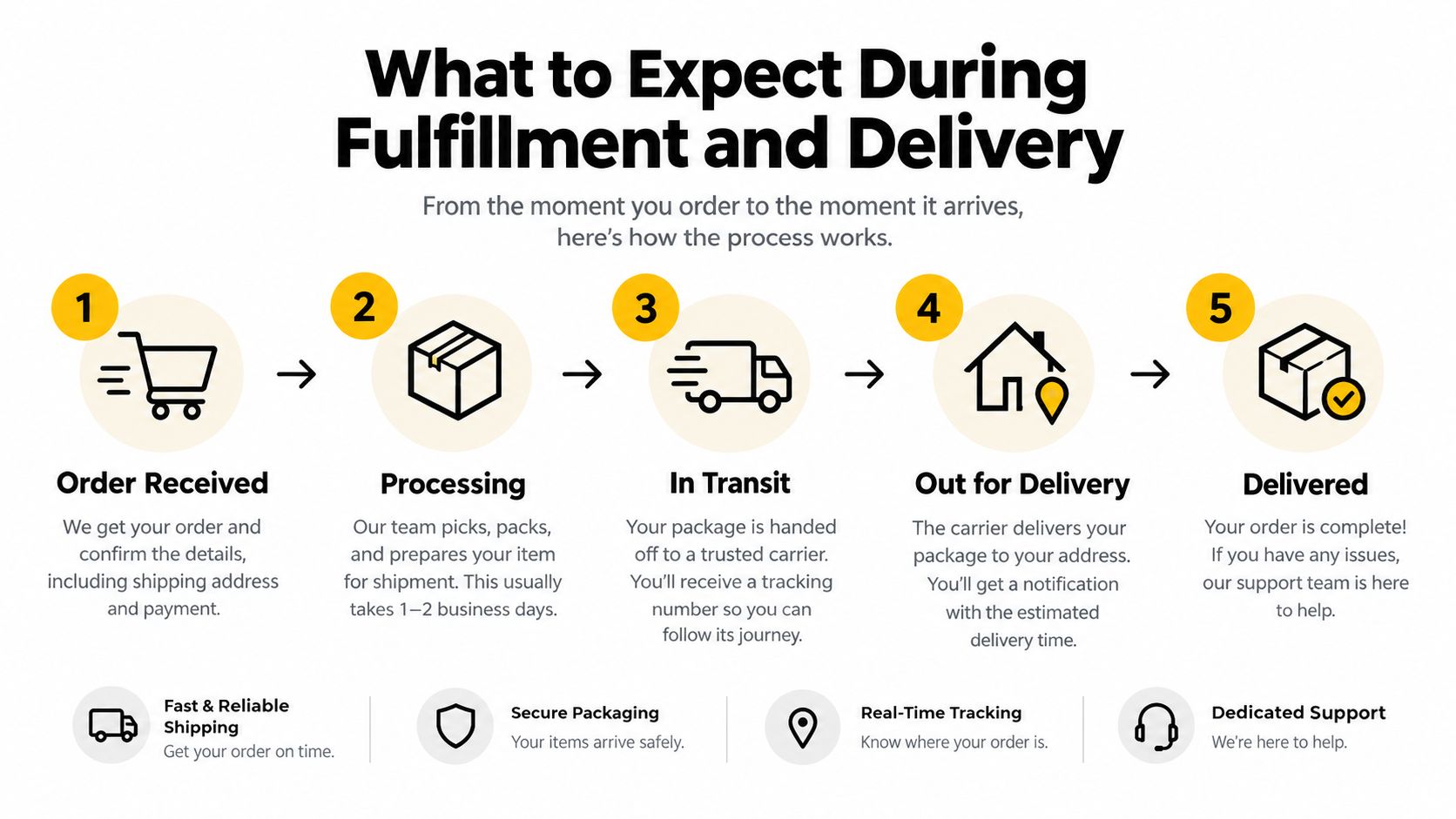
After approval, the order moves through curation, consolidation, packing, and shipping. The practical question isn't whether the box leaves quickly. It's whether the fulfillment process preserves the specifications you approved and gives you enough information to plan receiving and listing.
Inventory availability and box complexity affect timing. OneTrendyCloset's stated business-hour coverage is Monday through Friday, 9 AM to 6 PM EST, and Saturday, 10 AM to 4 PM EST, so quote questions and follow-ups should be sent with that schedule in mind.
Confirm the handoff
Before delivery, keep the approved quote and specification accessible. When tracking arrives, use the expected delivery window to reserve receiving time. Don't schedule a major listing event around an unconfirmed arrival if the box contains items that need sorting or measurement.
When the carton arrives, photograph the package before opening if there is visible damage. Then inspect the contents systematically:
- Count units: Compare the delivered quantity with the quote and clarify whether any count referred to case packs.
- Check sizes: Sort pieces by size and compare the distribution with your requested matrix.
- Review condition: Look for stains, holes, missing tags, odors, broken closures, and undisclosed wear.
- Verify categories: Separate substitutions or unexpected categories before they enter your listing workflow.
- Record discrepancies: Keep notes, photographs, and the relevant line from the approved request.
Handle substitutions before listing
A preferred brand may be unavailable when the box is assembled. That isn't automatically a problem if the substitute fits the same customer, category, size, condition, and price logic. It becomes a problem when a replacement changes the merchandise strategy without your approval.
Ask how substitutions are proposed and whether you can reject them before shipment. If an item arrives outside the agreed condition or category, contact support promptly and keep the item separate while the issue is reviewed. Waiting until after the garment sells, is returned, or is mixed into another bundle makes the discrepancy harder to document.
Turning Your First Box Into Repeatable Profit
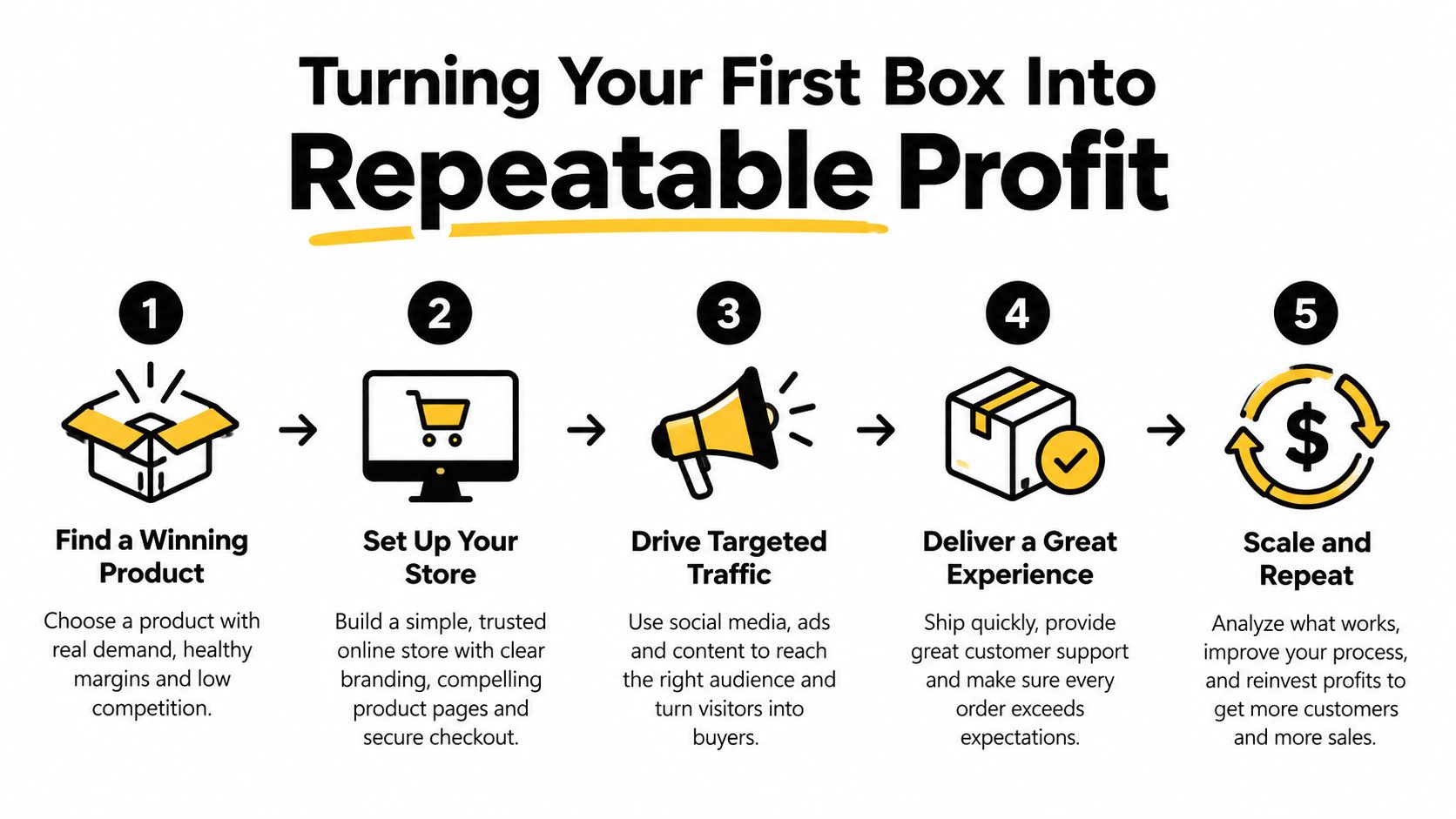
The first custom box should produce two outputs: sellable inventory and better purchasing information. If you judge it only by the most exciting garment in the carton, you'll miss the patterns that determine whether the next order improves.
Photograph and grade every unit when it arrives. Record acquisition cost, expected selling price, platform, measurements, condition, and the time required to prepare the listing. For online apparel, garment-level measurements such as chest or bust, length, sleeve, rise, and inseam are more useful than relying on generic S, M, or L labels, which vary between brands.
Sort before you optimize
Separate the received inventory into four operating groups:
- List now: Items with clear demand, acceptable condition, and a realistic full-price launch.
- Markdown: Pieces that need a lower initial price because demand, season, or condition limits the ceiling.
- Bundle: Related items that become more attractive together, such as coordinated separates or low-value basics.
- Unsellable: Items with damage, severe fit risk, missing information, or processing costs that exceed likely revenue.
This sorting prevents a common liquidation error, evaluating the box by brand count instead of usable demand. A genuine item can still be unprofitable if it takes too long to list, attracts disputes, has weak demand, or requires a markdown that removes the margin.
Use realized results to write the next request
Track sell-through and realized margin by SKU, size, brand, category, and channel at 30, 60, and 90 days. Record return reasons with consistent labels such as too small, too large, undisclosed flaw, inaccurate description, or changed mind.
Your next request should reflect what happened. If a category receives attention but doesn't convert, reduce it. If a less recognizable brand sells quickly at a healthy realized margin, give it more capacity. If one size repeatedly accumulates while another clears, revise the size curve.
The strongest box specification is built from your own sales history, not from a supplier's brand list.
Before reordering, calculate expected gross margin after shipping, platform fees, markdowns, and a returns reserve. Compare the result with the time your team spends measuring, photographing, listing, packing, answering questions, processing returns, and clearing slow stock. A smaller, more focused box can be the better purchase when it keeps cash moving and gives you cleaner evidence for the next build.
OneTrendyCloset offers curated brand-name apparel boxes, mix-and-match brand selection, and custom quotes based on budget, preferred brands, quantities, and other specifications. Visit OneTrendyCloset with your channel, customer profile, size curve, and condition requirements ready, then request a box built for the inventory you can sell.