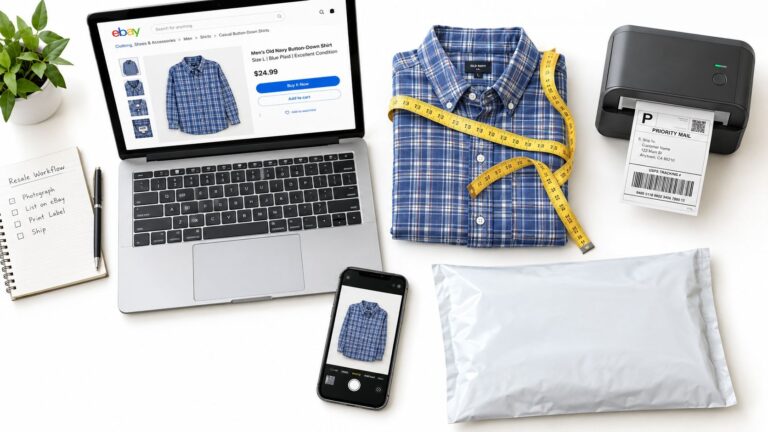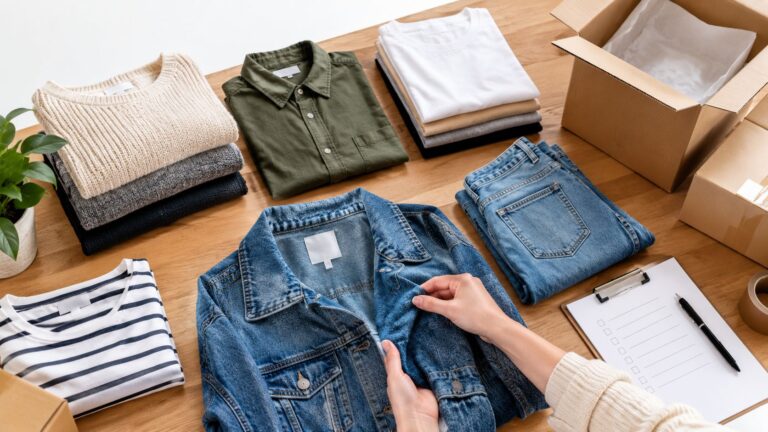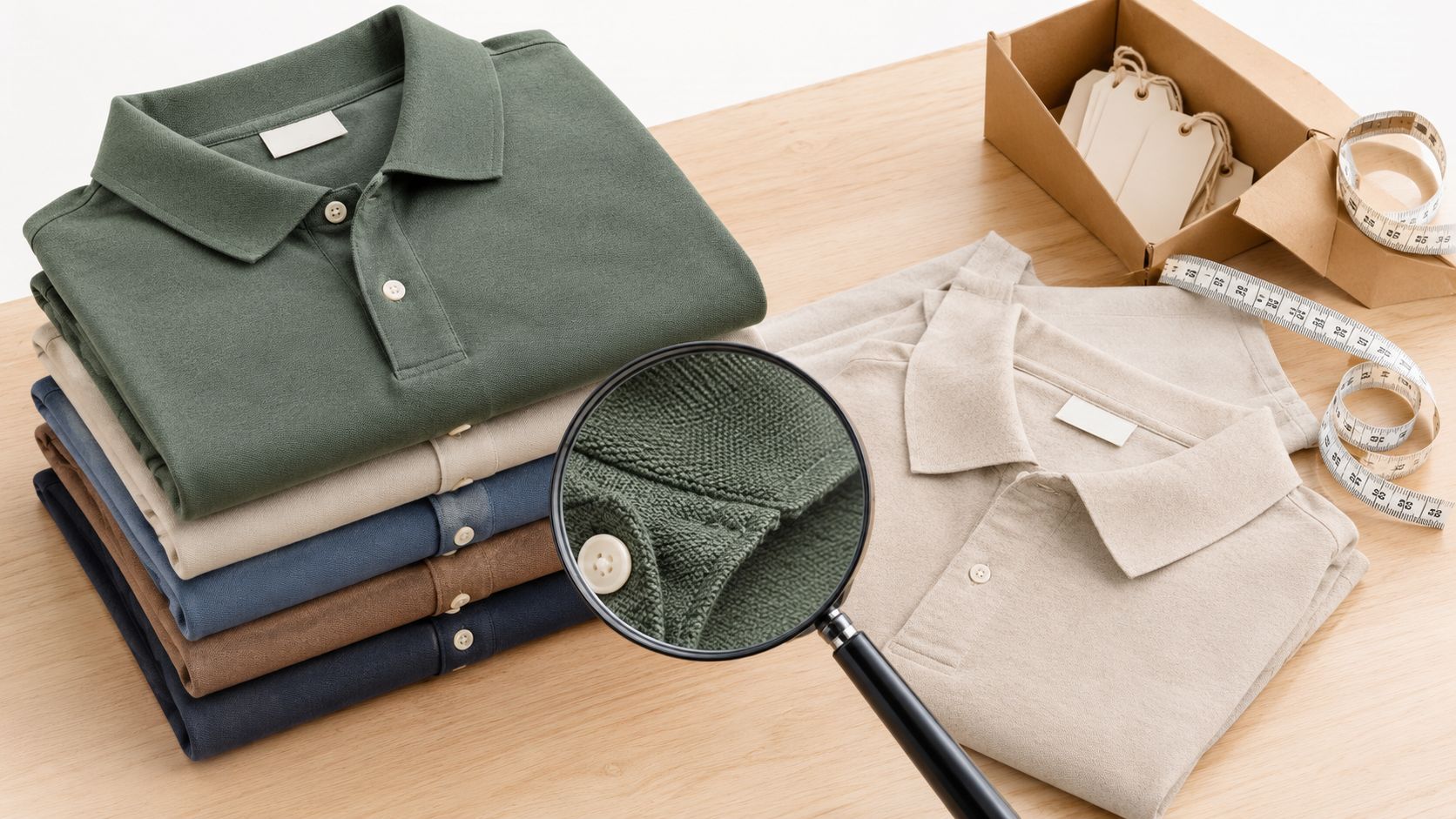
You've just opened a liquidation box and found polos in three very different categories: a thick, structured shirt with a recognizable heritage label, a lightweight performance style, and a thin basic that looks acceptable until you inspect the collar. They may all be the same nominal size, but they won't attract the same buyer, support the same price, or create the same return risk.
That's why profitable resale of brand name polo shirts starts before photography or marketplace pricing. You need a repeatable way to judge fabric, construction, fit, condition, brand positioning, and likely sales channel. The label gets attention, but the garment earns the sale.
Table of Contents
- The Reseller Opportunity in Branded Polos
- Evaluating Fabric Weight and Construction Quality
- Navigating Incomplete Size Charts and Fit Variability
- Sourcing Curated Liquidation Boxes and Custom Lots
- Aligning Inventory with Current Market Trends
- Pricing Strategies and Resale Channel Selection
- Merchandising and Listing Optimization Workflows
The Reseller Opportunity in Branded Polos
A mixed liquidation box rarely looks profitable at first glance. Colorways may be uneven, sizes may be scattered, and some shirts may carry decorative logos that appeal to one buyer but not another. The useful work happens on the sorting table, where you separate premium pieces from generic inventory by checking the label, fabric hand, collar, condition, and fit.
A polo with a recognizable heritage brand can anchor a small collection, while a performance polo may appeal to a completely different customer. The mistake is treating every shirt as interchangeable because the silhouette is familiar.
Why polos keep their place in resale
The category has unusual staying power. Brooks Brothers' John E. Brooks observed English polo players using button-down collars and introduced what became known as the “Original Polo Shirt” in 1896. René Lacoste launched a branded polo shirt in 1933, and Ralph Lauren later expanded the category's visibility by using “Polo” as a broader lifestyle identity in the 1970s. The history is documented in this overview of the polo shirt's development.
That progression matters to resellers. A polo can sell as sportswear, office-casual clothing, golf apparel, resort wear, uniform clothing, or a heritage fashion piece. The same basic garment serves several buying occasions, provided the brand and construction match the intended customer.
The category is also enormous. One industry report estimates that more than 1.2 billion polo shirts were manufactured worldwide in 2023, including about 650 million men's polos, 370 million women's polos, and 180 million kids' polos. Those figures come from the 2023 polo shirt market report, and they help explain why polos appear so often in wholesale, resale, and liquidation channels.
Buyer's rule: Don't ask whether a polo is recognizable. Ask which buyer would recognize it, and what evidence on the garment supports the price.
Sorting a box for margin
Start with four piles:
- Heritage and premium labels: Hold these for closer inspection, even when the color or size looks ordinary.
- Technical performance polos: Separate moisture-focused, stretch, golf, and athletic styles from traditional cotton piqué.
- Commercial uniform basics: These can move well in bundles or B2B lots when condition and sizing are consistent.
- Unclear or damaged pieces: Inspect for stains, odor, fading, collar distortion, missing buttons, and altered tags before assigning any value.
A familiar logo isn't enough. A heavily worn premium polo can be less useful than a clean mid-market performance shirt with accurate measurements and a flexible fit. Resellers earn more consistently by grading garments accurately than by forcing every branded item into a premium listing.
Evaluating Fabric Weight and Construction Quality
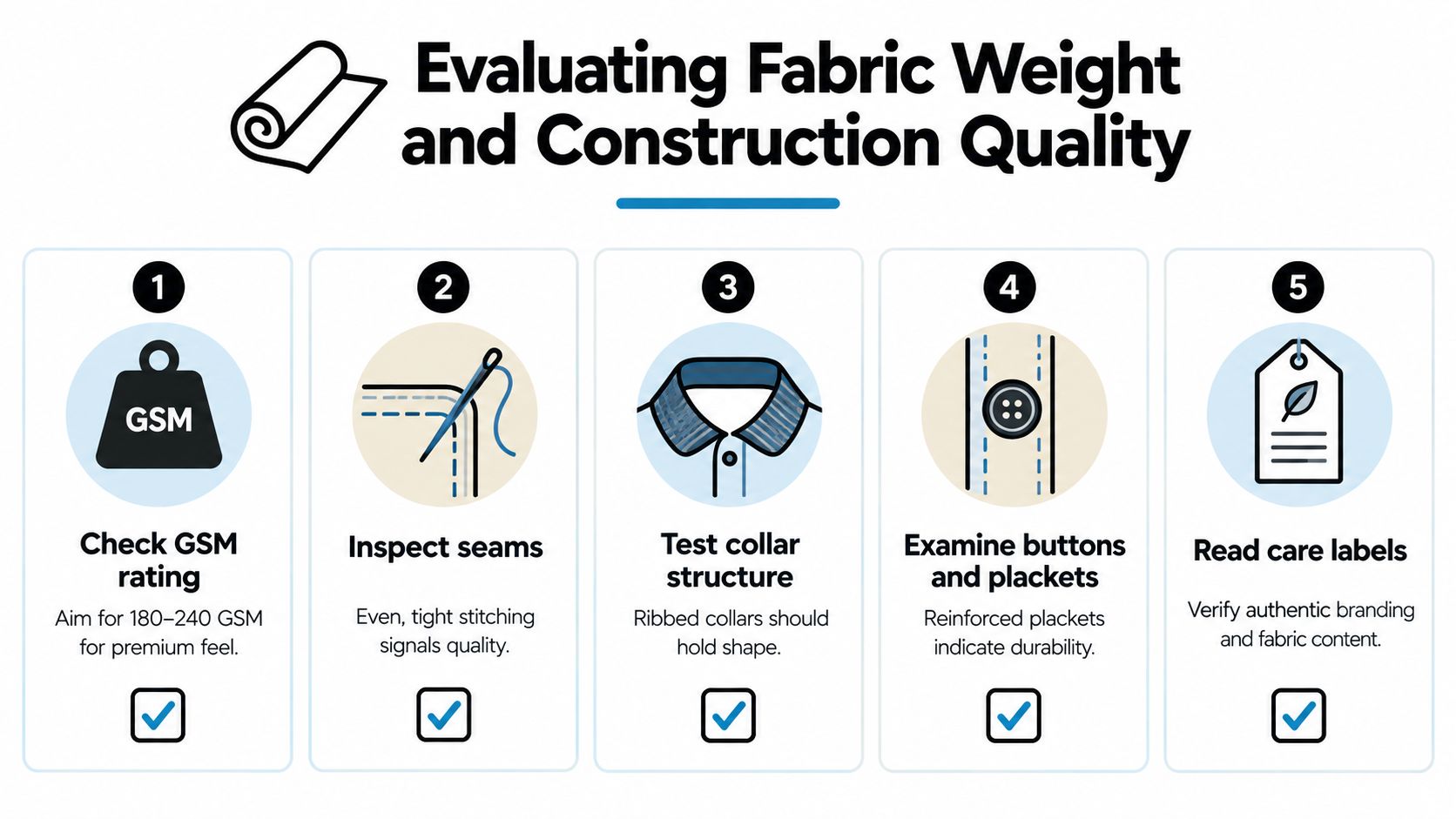
Fabric weight gives you a useful starting point, but it isn't a complete quality score. Industry sourcing guides generally place standard polos around 180–220 GSM, with heavyweight styles beginning near 220 GSM and premium versions reaching 250–280 GSM. These ranges are outlined in this polo shirt sourcing guide.
GSM means grams per square meter. You won't always find it on the care label, so learn to estimate it by comparing similar garments, holding the body against light, and judging how the fabric hangs. A heavier polo usually has better opacity and a more substantial drape, but weight alone doesn't guarantee softness, breathability, or a good resale experience.
What your hands should tell you
Use a fast inspection sequence before you steam or photograph anything:
- Estimate the fabric weight. Look for a body that feels stable rather than flimsy. A 200+ GSM polo often presents more cleanly, but assess it alongside fiber content and condition.
- Check the knit. Traditional piqué has visible texture, while jersey feels smoother and may drape more softly. Neither is automatically superior. Match the fabric to the buyer and intended use.
- Inspect seams. Even stitching, clean seam allowances, and secure joins suggest better manufacturing control. Loose threads and skipped stitches deserve a lower grade.
- Test the collar. Fold it gently, release it, and inspect whether it returns to shape. Ribbed or fused collars can resist rollover better than limp, unsupported collars.
- Examine the placket. Button spacing should look even, and the placket shouldn't twist or pull away from the body. Reinforcement is particularly important on polos likely to be worn and washed frequently.
Collar structure is one of the easiest quality signals to demonstrate in a listing. Photograph the collar standing naturally and disclose any waviness rather than hiding it with a flat lay.
Fiber choice changes the use case
Technical piqué and engineered polyester knits can create open micro-channels that support air exchange and moisture transport. Cotton-rich fabrics absorb more water and generally dry more slowly. In one comparison, a cotton polo stayed wet for about four hours at 90% humidity, while an engineered synthetic polo dried in about 45 minutes. The fabric comparison illustrates why a performance polo and a classic cotton polo should be marketed differently.
A cotton and polyester blend isn't automatically a downgrade. As discussed in this cotton and polyester blend comparison, blends can balance hand feel, drying behavior, maintenance, and cost. For resale, describe what the garment offers instead of using “premium” as a substitute for inspection.
Navigating Incomplete Size Charts and Fit Variability
A standard size label is not a measurement. Two medium brand name polo shirts can have different shoulder widths, sleeve proportions, body lengths, and degrees of taper. If you list only the tag size, you're asking the buyer to make a guess and accepting the return risk that follows.
Independent fit guidance points out that very few major brands publish garment-level dimensions, while Ralph Lauren is a notable exception. That makes this guide to choosing a polo shirt useful for one reason many generic style articles miss: buyers need garment measurements, not just body-size recommendations.
Build your own measurement standard
Lay every polo flat on a clean surface without stretching it. Use the same method for every brand, gender category, and condition grade.
Record:
- Chest: Measure straight across from underarm seam to underarm seam, then state whether the figure is flat or doubled.
- Shoulders: Measure from shoulder seam to shoulder seam. If the garment has no obvious seam, explain how you estimated the width.
- Sleeve: Measure from the shoulder seam to the sleeve opening. Mid-bicep or short-sleeve positioning affects how fitted the polo feels.
- Length: Measure from the highest shoulder point to the bottom hem. Note whether the hem is curved, straight, or visibly altered.
- Hem and vents: Check whether side vents affect coverage or create extra movement through the hips.
Use inches or centimeters consistently across your store. Also, photograph the tape measure when a marketplace format allows it, especially for unusual cuts or vintage-inspired styles.
Fit language should describe the garment
Avoid promising that a polo “fits true to size” unless you have a reliable brand-specific basis. Say classic cut, slim silhouette, relaxed body, or longer hem only when the garment supports that description. A performance polo with stretch may fit differently from a structured cotton piqué even when both carry the same chest measurement.
Practical measurement rule: Tag size identifies the manufacturer's category. Garment measurements tell your customer whether the shirt will work.
Keep a private fit database as inventory accumulates. Record the brand, product line when known, tagged size, measured chest, length, shoulder width, sleeve length, fabric composition, and fit notes. Over time, that record helps you buy mixed lots more intelligently and identify which cuts create the fewest customer questions.
Sourcing Curated Liquidation Boxes and Custom Lots
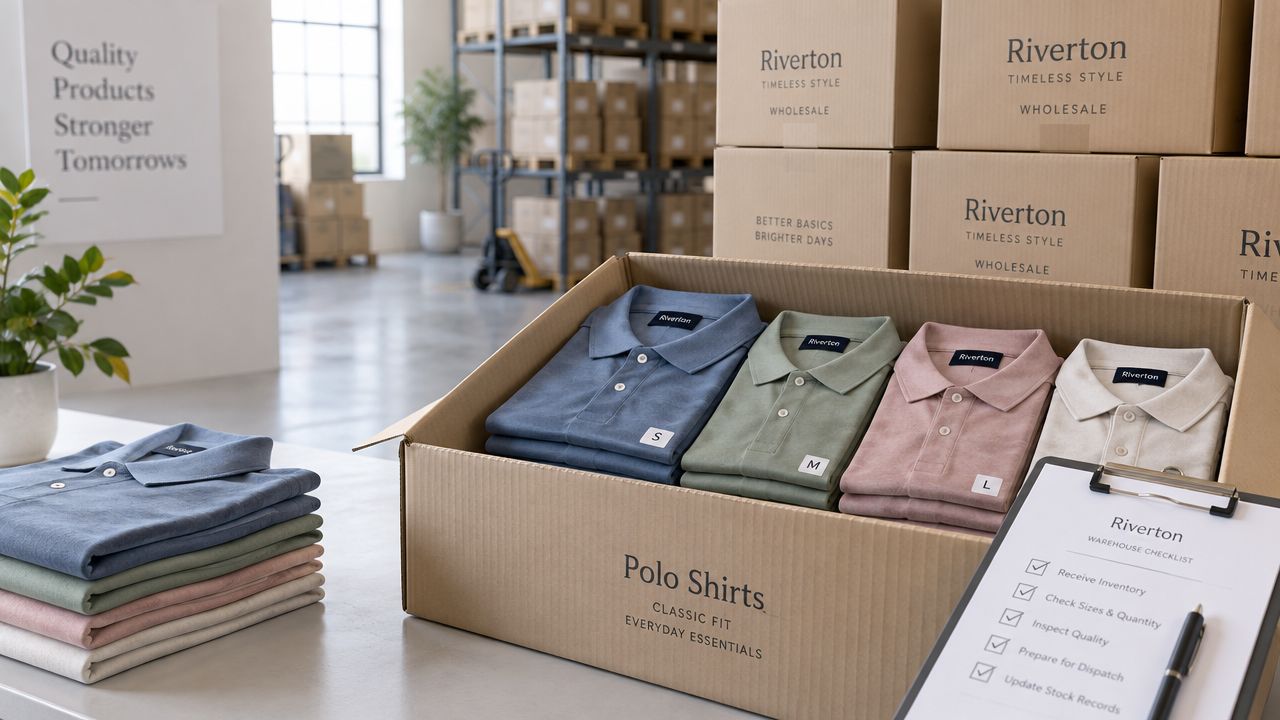
The quality of your sourcing process determines how much time you spend rescuing weak inventory. A blind lot may contain useful pieces, but a curated box or custom request lets you define the brands, categories, sizes, and price ceiling before money changes hands.
Start with a controlled test
Before ordering a large quantity, write a sourcing brief. Include the customer you serve, preferred brand tier, men's or women's mix, desired color range, acceptable condition, technical versus cotton preference, and the channels where you plan to sell.
A useful brief might request clean golf and office-casual polos, a preference for performance blends, limited visible damage, and measurements suitable for online listings. It should also state what you don't want, such as promotional uniforms, severe logo wear, missing tags, or heavily altered garments.
Request a quote from suppliers that can explain:
- Box composition: Ask whether the assortment is curated, mixed by category, or fully blind.
- Condition standards: Clarify how stains, odor, missing buttons, repairs, and label changes are handled.
- Brand availability: Treat brand lists as subject to current inventory, not as a permanent promise.
- Scaling options: Ask whether a successful test can expand into a custom lot or pallet.
- Packing and fulfillment: Confirm the expected process and any policy details before ordering.
OneTrendyCloset offers curated brand-name apparel liquidation boxes, mix-and-match brand selection, and custom quotes based on preferences such as budget, brands, and quantity. Its sourcing model serves boutiques, marketplace sellers, and live-sale hosts, so it's one option to evaluate alongside other wholesale suppliers. You can also review its guidance on brand-name clothing pallets before requesting a quote.
A test order should answer operational questions, not just product questions. Measure the time required to inspect, photograph, measure, list, store, and ship each garment. If the supplier's curation reduces sorting work but the lot lacks the sizes your customers buy, the apparent convenience won't translate into sell-through.
A short visual explanation can help new buyers understand how apparel lots are prepared and evaluated.
Move to a larger order only after you know your grading standards, average preparation time, storage capacity, and channel mix. Custom sourcing works best when you provide specific feedback after the test, including which brands, sizes, fabrics, and defects were useful or unworkable.
Aligning Inventory with Current Market Trends
Polo demand isn't moving in one direction. The category now divides between minimalist premium styles, traditional logo-led heritage pieces, and technical garments built for movement, heat management, or easy care.
Recent market coverage identifies athleisure, casual office wear, eco-friendly materials, and hybrid styles as important category influences. Another report describes return-to-office conditions in 2025–2026 as favorable to polos over traditional button-downs, while market projections place the global polo-shirt market at USD 2.63 billion in 2026 and USD 3.37 billion by 2031, representing a projected 5.10% CAGR. These are projections and market commentary from recent polo market coverage, not a guarantee for any individual reseller.
Choose by customer and channel
A logo-heavy polo can work well for buyers seeking recognizable sports or heritage branding. A logo-reduced polo may appeal more to customers building a quiet office-casual wardrobe. Performance polos tend to make stronger listings when you can name the relevant fabric behavior and show stretch, ventilation, or technical construction accurately.
Use your customer data to guide the next purchase:
- Office-casual buyers: Favor clean colors, restrained branding, stable collars, and measurements that support layering.
- Golf and outdoor customers: Prioritize lightweight technical knits, mobility, and quick-drying behavior.
- Heritage shoppers: Look for recognizable labels, classic piqué texture, traditional collars, and condition strong enough to support the brand story.
- Live-sale audiences: Select visually distinct colors, clear logos, and easy-to-explain features that can be demonstrated quickly.
Don't assume sustainable fabric claims or premium texture will sell without proof. Read the fiber label, photograph the construction, and describe the benefit in practical terms. A recycled-polyester polo, for example, still needs a wearable fit, clean condition, and a customer who values that attribute.
For a mixed order, request a deliberate balance rather than a random split. Keep enough conventional polos to serve dependable office and uniform demand, then test minimalist and performance styles as separate groups so you can measure which audience responds.
Pricing Strategies and Resale Channel Selection
Price brand name polo shirts from the garment outward, not from the label alone. Condition, measured fit, fabric weight, collar integrity, logo desirability, and channel fees all affect the amount a buyer can reasonably pay.
A premium, clean, heavyweight polo with a stable collar deserves different treatment from a thin basic with mild fading. The second shirt may still be useful, but bundling or local resale can protect your time better than creating a detailed single-item listing.
Match the channel to the work involved
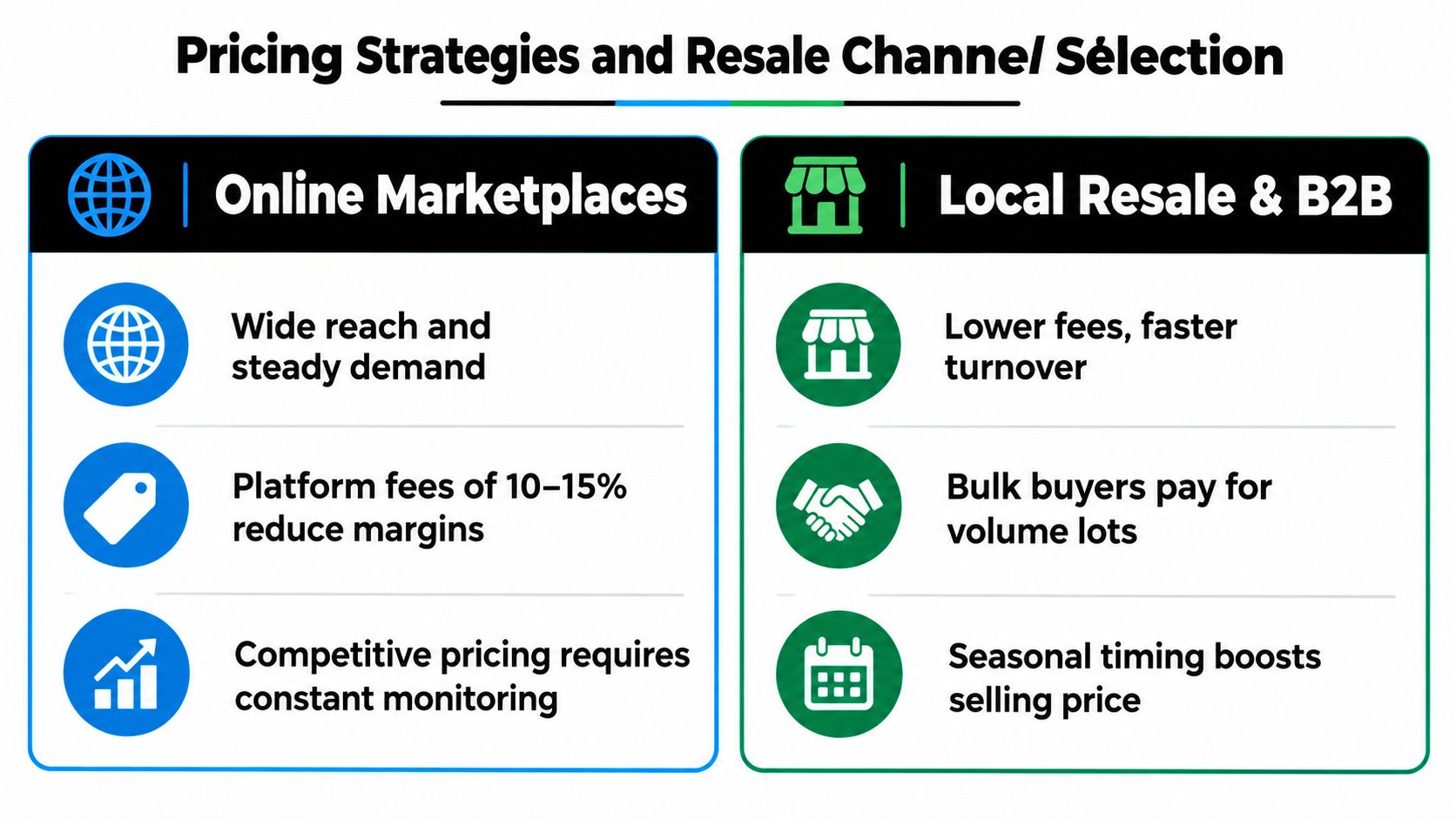
Online marketplaces offer reach and searchable demand, but they require measurements, photographs, descriptions, customer messages, packing, and fee control. Use this guide to starting on Poshmark for platform-specific workflow ideas, then compare the process with eBay, Mercari, or a store you control.
Local resale and B2B selling can reduce listing labor and move consistent basics in volume. Boutique merchandising supports stronger presentation and outfit-building, while live selling can turn color, logo, and tactile fabric details into part of the selling event.
| Inventory profile | Practical channel fit | Pricing approach |
|---|---|---|
| Clean premium pieces with strong measurements | Curated boutique or individual marketplace listings | Price around condition, brand desirability, construction, and presentation |
| Technical polos with clear performance details | Marketplace, golf audience, or live selling | Lead with use case, fabric content, stretch, and drying behavior |
| Similar basics across sizes and colors | Local resale, uniform buyers, or bundles | Offer coordinated lots and reduce per-item preparation |
| Slow colors or minor cosmetic flaws | Bundles or lower-labor channels | Disclose the issue and protect time rather than over-investing |
The infographic's platform-fee example refers to 10–15%, as shown in the provided pricing comparison visual. Treat any fee as part of your landed-cost calculation, alongside acquisition, cleaning, packaging, labor, and expected markdowns.
Bundle with a purpose. Pair compatible sizes or colors, create workwear lots, or group slower pieces with stronger sellers. Don't hide defects inside a bundle without disclosure. Buyers may accept a lower-value item when the lot is described accurately, but undisclosed problems damage repeat business.
Merchandising and Listing Optimization Workflows
A profitable intake process begins the moment the shipment arrives. Photographing first and inspecting later creates avoidable errors, so process every polo through the same sequence.
A repeatable intake routine
- Count and log the shipment. Record the supplier, order details, category, tagged size, brand, and initial condition.
- Quarantine questionable pieces. Separate stains, odor, excessive pilling, collar rollover, missing buttons, altered hems, and suspicious labels before they enter active inventory.
- Clean and steam appropriately. Follow the care label. Cotton-rich and heavyweight polos may need more careful steaming to restore shape without creating shine or stretching the collar.
- Measure flat. Capture chest, shoulders, sleeve, and length using the same format you use in every listing.
- Photograph the evidence. Show the front, back, brand label, care label, collar, placket, fabric texture, measurements, and any flaw.
- Write for search and confidence. Include the brand, garment type, tagged size, measured dimensions, color, fabric content, fit, condition, and relevant use case.
A title should make the item identifiable without stuffing unrelated keywords. For example, lead with the brand, men's or women's category when clear, polo style, color, and tagged size. In the description, distinguish cotton piqué, polyester performance knit, cotton-poly blend, or stretch fabric only when the label or construction supports it.
Make quality visible
Heavy fabric should be shown through a close-up of the knit and a description of how the body drapes. A structured collar deserves a clear collar photograph. If the placket has reinforcement, show the stitching rather than making an unsupported durability claim.
Use condition grades that your team can apply consistently. “Excellent” should mean the same thing across every order, and “good” should disclose visible wear. Add measurements even when the platform offers a brand size chart, because mixed-brand inventory rarely follows one reliable fit standard.
Create simple internal fields for source cost, preparation time, target channel, listing date, and final outcome. After sales accumulate, review which fabrics, brands, colors, and fit profiles justify individual listings and which should move through bundles. That feedback should shape your next custom lot request.
OneTrendyCloset supplies curated brand-name apparel liquidation boxes, mix-and-match selections, and custom lots for boutiques, marketplace sellers, and live-sale hosts. If you're building a polo-focused assortment, visit OneTrendyCloset to review available sourcing options and request a box aligned with your budget, preferred brands, and quantity needs.