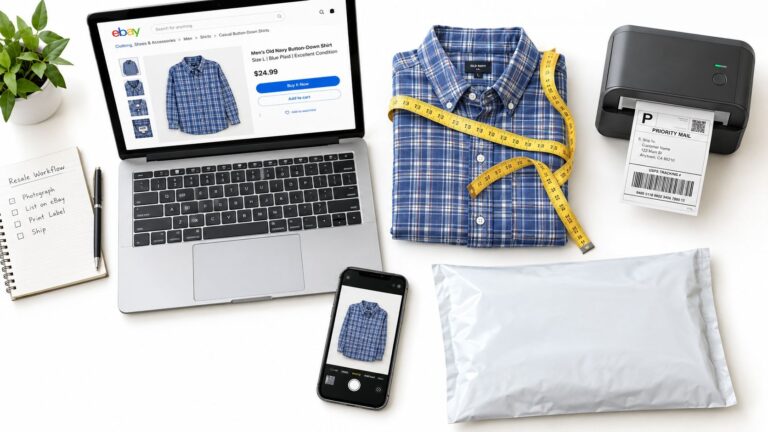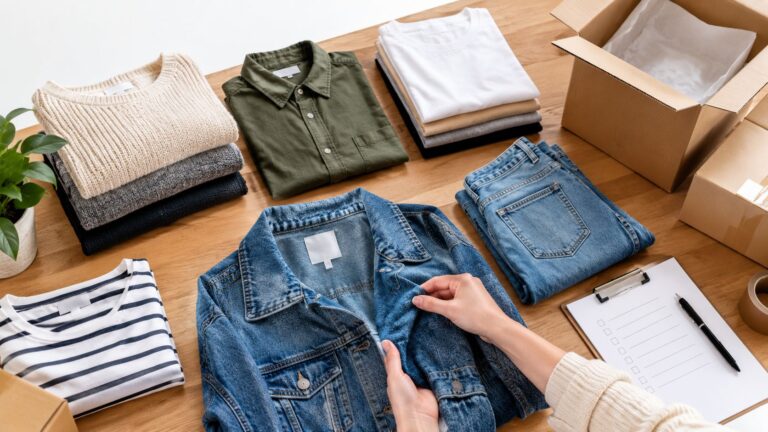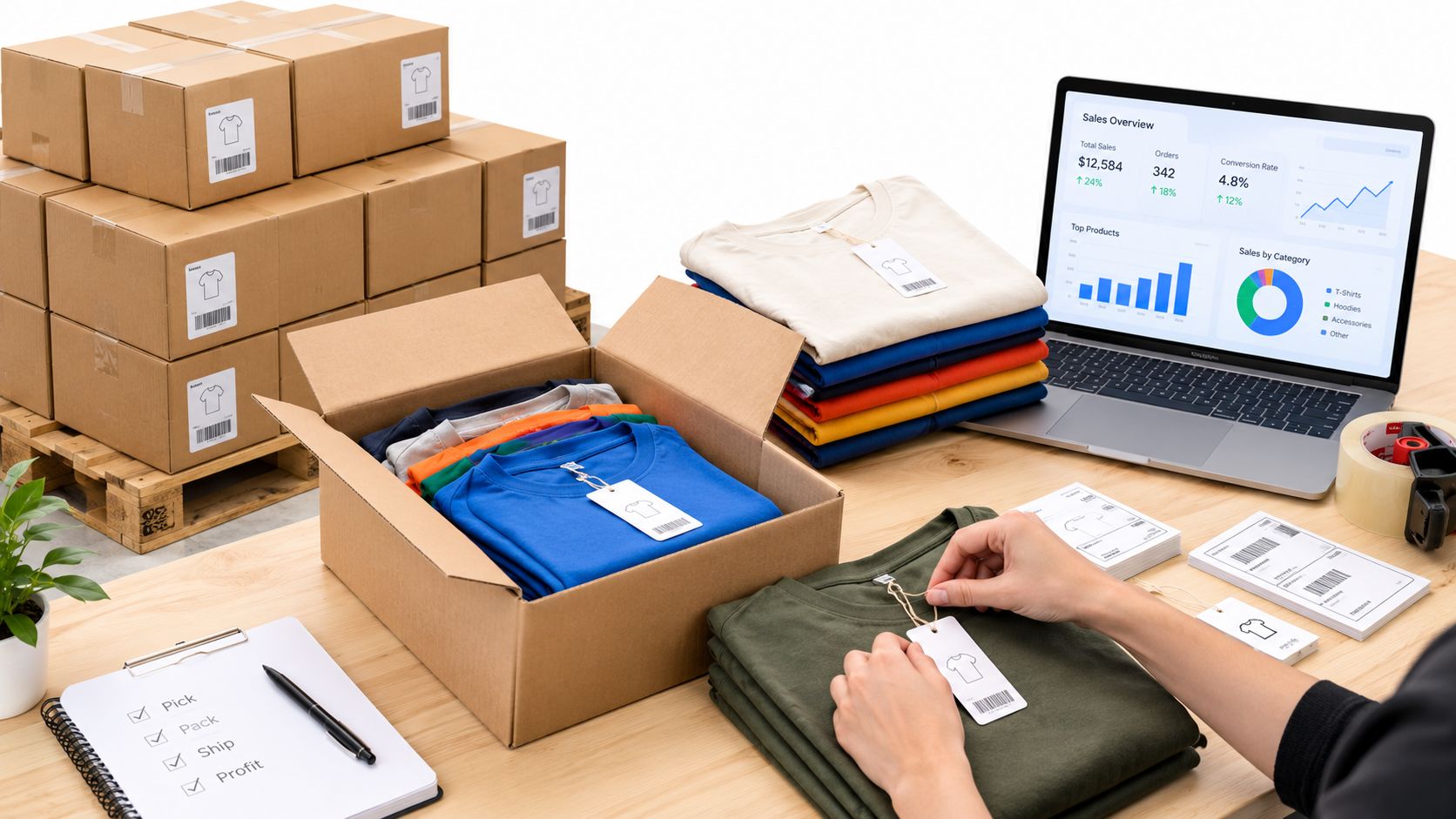
The pallet arrives wrapped in cloudy stretch film, and the manifest promises recognizable brands, fresh styles, and retail value that looks almost too good to ignore. Then you cut it open. One hoodie has a makeup mark on the cuff, several tops are missing tags, sizes are uneven, and the “premium” pieces are buried beneath slow-moving basics. That first sorting session, not the auction win or the final listing, determines whether the load becomes profitable inventory or an expensive pile of clothes.
Selling apparel pallets works when you treat every garment as a routing decision. Condition, brand, season, size, presentation, and expected selling speed matter more than the retail figure printed on a manifest. The practical process is simple to describe but demanding to execute: buy cautiously, grade carefully, prepare quickly, match each item to the right channel, and track what sells.
Table of Contents
- Understanding Pallet Economics and Realistic Margins
- Sorting and Grading Your Apparel Inventory
- Matching Inventory Conditions to Sales Channels
- Creating High-Converting Listings and Live Sales
- Streamlining Fulfillment and Managing Returns
- Scaling from Blind Bids to Custom Pallets
Understanding Pallet Economics and Realistic Margins
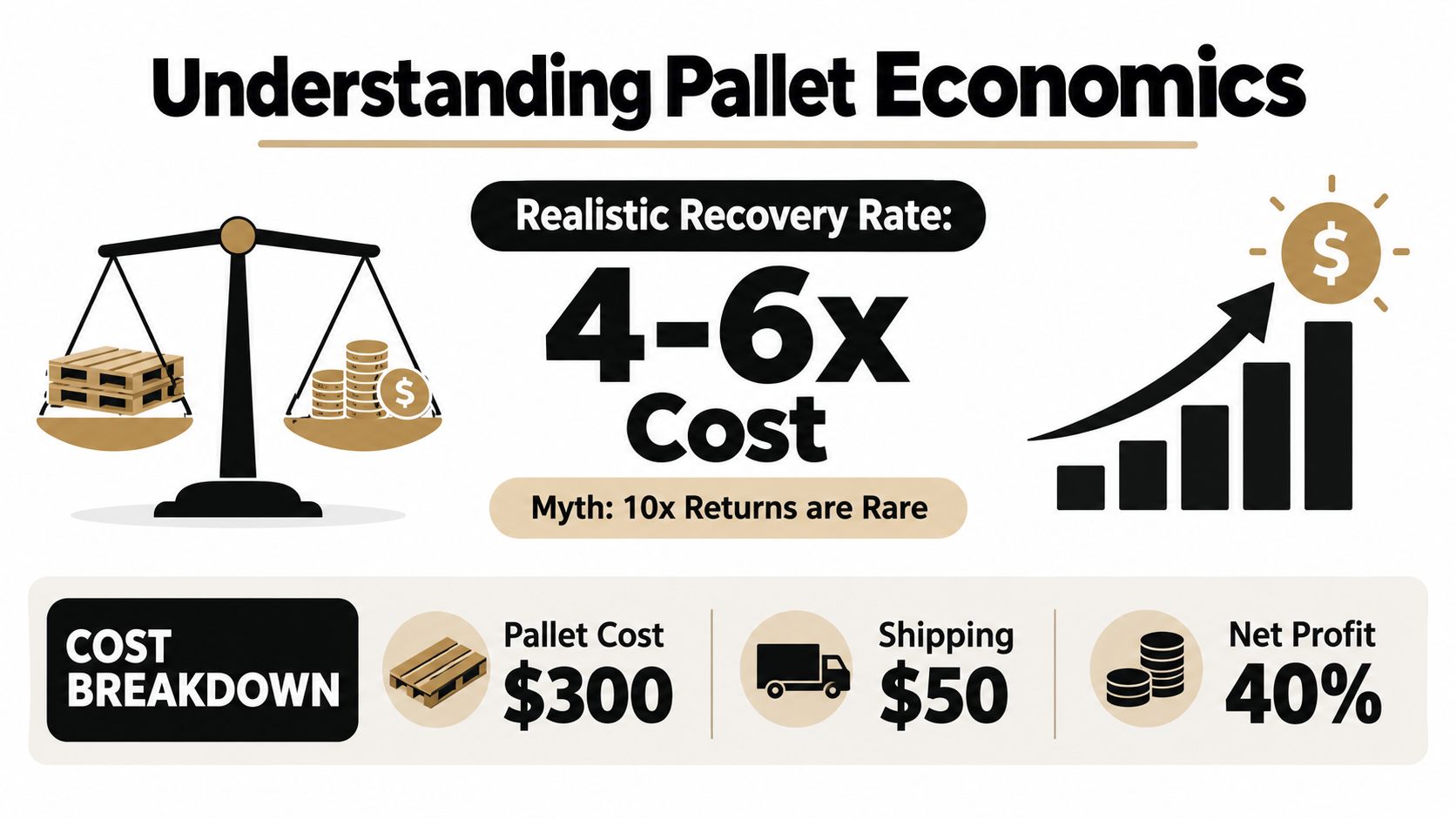
The first mistake new resellers make is treating suggested retail value as revenue. A liquidation pallet may contain desirable clothing, but the advertised retail total doesn't tell you how many pieces are complete, current, wearable, or worth listing individually. One industry breakdown advises beginners to treat roughly 15% to 30% of stated retail value as realistic resale value, while a strong pallet may return about 1.5 times to 3 times its purchase price and a weak pallet may return only 0.3 times to 0.8 times the purchase price. Those ranges are discussed in this liquidation pallet resale analysis.
That gap is why the phrase “10x return” creates bad buying decisions. In the example from the same breakdown, a $500 pallet advertised with $5,000 in retail value may include damaged or incomplete goods, low-value items, garments that take months to sell, quick sellers, and a small group of standout winners. The exact mix matters more than the headline multiple. Freight, platform fees, packaging, cleaning supplies, photography time, storage, discounts, and returns all reduce the amount left after a sale.
Calculate cost by usable garment
Don't divide the purchase price by the number of pieces shown on a manifest. Divide your total landed cost by the number of garments you can realistically sell after inspection.
Your landed cost should include:
- Purchase cost: Include buyer premiums or other transaction charges if they apply.
- Freight and delivery: A cheap pallet becomes expensive when transportation consumes the margin.
- Preparation: Count steaming, stain treatment, lint rolling, repairs, photography, and listing time.
- Selling costs: Account for marketplace fees, payment processing, shipping subsidies, and discounts.
- Inventory drag: Slow pieces tie up cash and occupy storage while your better items move.
A manifest should help you ask better questions, not remove uncertainty. Check whether the brands are current in your target marketplace, whether the size run matches your buyers, and whether the assortment is seasonal. A pallet filled with winter outerwear may be attractive in cold weather but difficult to move when shoppers want lightweight clothing.
Condition grading controls the entire pricing strategy. New with tags pieces can support individual listings and stronger pricing. New without tags items need clear measurements, close-up photos, and careful descriptions. Damaged or incomplete garments may be better suited to repair, bundles, donation, or textile recycling than to a marketplace listing that invites a return.
Practical rule: Buy the inventory you can process and sell, not the retail value you can highlight in a spreadsheet.
The broader logistics market reinforces why palletized inventory is a standard commercial format rather than a fringe resale tactic. One recent industry summary projects the global pallets market at USD 92.7 billion in 2026, growing to USD 154.5 billion by 2035 at about 5.8% CAGR, as reported in this overview of liquidation pallet economics. That scale doesn't guarantee profit for an apparel reseller. It does mean your operation competes inside a mature system built around freight efficiency, storage density, sorting, and fast turnover. For more context on sourcing formats, review this guide to pallets for sale.
Sorting and Grading Your Apparel Inventory
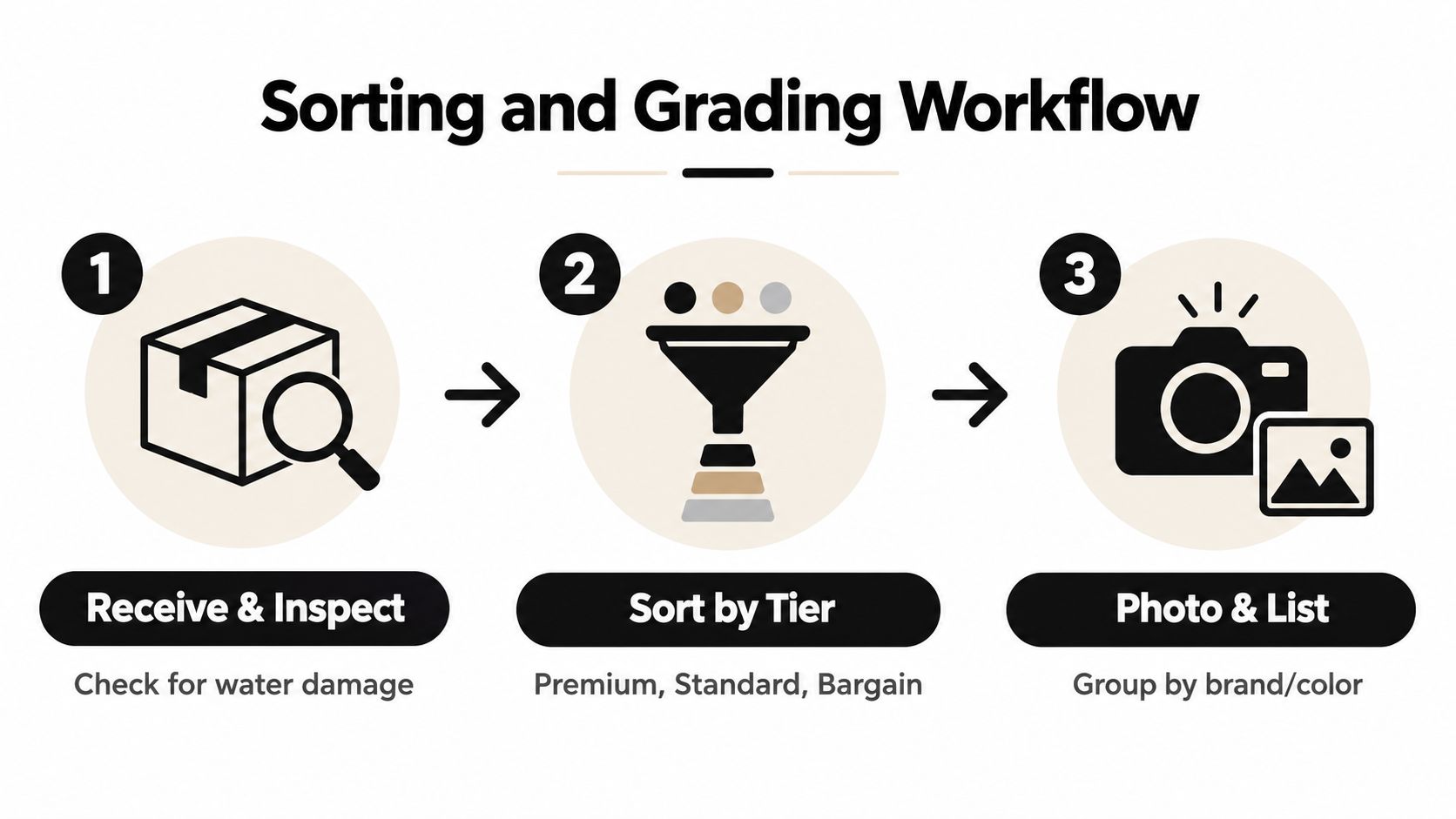
A pallet should never go straight from the loading area to your listing queue. Create a sorting station before delivery day with a folding table, garment rack, steamer, lint roller, stain-treatment supplies, measuring tape, clear bags, labels, and separate containers for rejects. Keep your phone or camera nearby, but don't photograph everything immediately. Inspection comes first.
Process the load in a fixed order
1. Inspect the outer packaging. Look for water exposure, crushed cartons, unusual odors, pests, and signs that the contents may have been stored poorly. Photograph visible freight damage before moving garments. Those records help you separate transit problems from pre-existing defects.
2. Empty one carton at a time. Don't scatter the entire pallet across your floor. Keep cartons together until you've checked the contents, because product grouping can help you identify a recurring defect or a particular return batch.
3. Perform a fast garment check. Examine collars, cuffs, underarms, hems, zippers, seams, pockets, and printed graphics. Check for stains, pilling, stretching, missing buttons, broken closures, odor, and altered labels. Open every pocket. Small defects become large problems when they appear after a buyer receives the order.
4. Assign a condition grade. Use labels your team can apply consistently:
- Premium: NWT or exceptionally clean NWOT garments with strong brands, desirable styles, and no visible defects.
- Standard: Wearable NWOT or lightly imperfect pieces that need accurate measurements and fuller descriptions.
- Bargain: Basic garments, dated styles, unusual sizes, minor flaws, or items that make more sense in a bundle.
- Reject: Severe stains, odor, damage, missing essential parts, or anything you can't describe accurately.
5. Prepare only viable inventory. Steam premium and standard pieces, lint-roll dark fabrics, remove minor removable surface debris, and recheck the garment under bright light. Don't spend ten minutes rescuing a low-value top when that same time could prepare several stronger listings.
6. Record the item before storage. Use a simple spreadsheet or inventory tool with SKU, brand, category, size, condition, cost allocation, storage location, listing date, and final channel. A clear SKU system prevents a sold item from disappearing into an unlabeled rack.
Sort for velocity, not vanity
Brand name helps, but it isn't the only predictor of movement. A recognizable label in an unpopular cut or difficult size can sit longer than a modest brand with a useful basic style. Apparel and footwear often show 85% to 95% unit sell-through, while shelf pulls and overstock can reach 85% to 95% or higher; furniture and large items often sit at 45% to 60% because freight damage and local buyer limitations interfere with conversion, according to this category sell-through guide.
Use three physical zones: fast, test, and exit. Fast inventory gets photographed and listed first. Test inventory receives a reasonable listing window and a planned price reduction. Exit inventory moves into bundles, local lots, repair, donation, or recycling. For bulky sweatshirt assortments, a focused box of hoodies can also be easier to evaluate when the category matches your audience and storage capacity.
Matching Inventory Conditions to Sales Channels
Every garment has a best buyer, and the best buyer isn't always the person willing to pay the highest theoretical price. A premium NWT jacket may deserve a detailed individual listing, while a group of basic NWOT tees may produce a better hourly return as a size-based lot. Routing prevents you from spending boutique-level effort on bargain inventory.
| Garment Condition | Brand Tier | Optimal Platform | Strategy |
|---|---|---|---|
| NWT, current style, clean photos | Premium or highly searched | eBay or Poshmark | List individually with measurements, searchable style terms, and room for offers |
| NWT, visually strong, trend-led | Premium or contemporary | Poshmark or Depop | Lead with styling, color, silhouette, and occasion-based keywords |
| NWOT, complete and wearable | Mid-tier | Mercari or Depop | Price for simple conversion, disclose missing tags, and show labels and measurements |
| NWOT, repeated sizes or colors | Mid-tier basics | Marketplace bundle or local lot | Group by size, category, or use case to reduce listing labor |
| Minor flaw, fully wearable | Any tier with modest demand | eBay, Mercari, or local sale | Put the flaw in the title or first description lines and photograph it clearly |
| Dated style or low-value basic | Entry tier | Live sale, mystery-style bundle, or wholesale lot | Move volume with transparent descriptions and a firm condition policy |
| Stained, damaged, or incomplete | Any tier | Repair, donation, textile recovery, or disposal | Don't disguise a reject as a bargain listing |
Reserve individual listings for high-value work
Individual listings make sense when the expected selling price justifies the labor. Premium NWT apparel benefits from multiple angles, measurements, fabric details, and a polished title. eBay can serve buyers searching for exact brands, models, sizes, and garment types. Poshmark works well when the item benefits from outfit context, closet browsing, and offers.
NWOT items need more trust-building because the missing tag creates uncertainty. Photograph the neck label, care label, fabric, closures, and any evidence that the garment is unused. If the item has been steamed or stored outside its original packaging, say so plainly.
Use bundles to protect your time
A bundle isn't an excuse to hide weak inventory. Build a useful lot around a clear buyer need, such as same-size work tops, neutral layering pieces, or mixed casual basics. State the number of pieces, sizes, brands if relevant, and known flaws. A buyer should understand what they're purchasing without guessing from a pile photo.
Live-selling platforms can move lower-priced inventory efficiently when the audience understands the condition and the host keeps the sequence organized. Group similar garments, announce measurements before the item runs, and maintain a visible sold log. Don't put a damaged item beside a premium piece without explaining the difference, because buyers will judge the entire presentation by its least transparent moment.
The operational test is hourly profitability. If photographing, measuring, cross-posting, answering messages, packing, and handling returns takes longer than the expected contribution from a single low-value garment, route it into a lot. Your best channel is the one that produces the strongest net return for the time and space consumed, not necessarily the highest displayed price.
Creating High-Converting Listings and Live Sales
A clean garment can still fail if the listing makes the buyer work too hard. Use one repeatable photo setup: bright indirect daylight or two consistent soft lights, a plain background, a stable hanger or flat lay, and enough room to show the full silhouette. Photograph the front, back, brand label, care label, fabric texture, measurements, closures, and every flaw.

Build listings around buyer questions
Start with a title that combines brand, garment type, style, color, size, and condition. “Women's black quarter-zip pullover, size medium, NWT” gives a shopper and a marketplace search system more useful information than “cute top.” Avoid claims you can't verify, especially around authenticity, fabric composition, or performance.
The description should answer practical questions in a consistent order:
- What is the garment?
- What size is on the label, and what are the measured dimensions?
- Is it NWT, NWOT, pre-owned, altered, or repaired?
- What material and care information appears on the label?
- Are there stains, pilling, odor, missing parts, or other defects?
- How will you package and ship it?
Measurements reduce avoidable disputes. For tops, record pit-to-pit, length, sleeve length when useful, and shoulder width if the cut makes it relevant. For bottoms, record waist, rise, inseam, and leg opening. Keep the garment flat and use the same measuring method across your inventory.
A strong listing doesn't promise perfection. It removes uncertainty.
Pricing should reflect condition, demand, labor, and the channel's buyer expectations. Set a starting price that leaves room for normal offers only when the platform encourages negotiation. For low-value pieces, use a firm price or bundle rather than allowing repeated small discounts to consume your time. Review watchers, messages, saves, and actual sales, then adjust the listing instead of waiting indefinitely for a perfect buyer.
Before a live sale, create a run sheet. Arrange garments in selling order, assign each item an SKU, prepare measurements, and place sold pieces in a separate bin immediately. Show the flaw before the auction or offer begins. Keep the pace consistent, but don't rush through material, size, or condition details.
This guide to selling on Poshmark is useful when you're building an individual-listing workflow, while live sales require stronger real-time controls. A simple spreadsheet with columns for SKU, buyer, price, payment status, and packing status can prevent a fast broadcast from creating fulfillment errors.
The video below can help you think about presentation and customer-facing apparel sales. Apply the visual principles to your own setup, but keep the inventory claims specific to each garment.
Streamlining Fulfillment and Managing Returns
Fulfillment begins during sorting, not after the sale. If every garment has a SKU, storage location, condition grade, and packaging plan, you can pick orders without reopening cartons or searching through unsorted racks. Store fast-moving apparel where it is easy to reach, and keep bundle inventory separated from individual listings so a live-sale purchase doesn't collide with a marketplace order.
Use packaging that fits the garment. Poly mailers work for soft, compact clothing and reduce unnecessary material. Boxes make more sense for structured jackets, shoes, fragile accessories, or multi-piece orders that could be crushed in transit. Fold consistently, protect light garments from moisture, and avoid overstuffing packages because excessive compression can create creases and increase the risk of a poor delivery experience.
Create a repeatable packing bench
Keep labels, mailers, tape, a scale, a measuring tool, thank-you cards if you use them, and a defect-check area within reach. Scan or mark the SKU when you pull it, again when you pack it, and once more when the shipping label is attached. That may feel repetitive, but it catches wrong-size and wrong-color errors before the parcel leaves.
Batch similar tasks when possible. Pick several orders, perform a final condition check, print labels together, and stage completed parcels by carrier or pickup. Compare actual shipping charges with your estimates and adjust listing settings when a category repeatedly costs more to send than expected.
Returns require clear boundaries and accurate descriptions. State the applicable platform policy, identify whether returns are accepted, and explain how an item must be returned. You can't use a private policy to override marketplace rules or consumer protections. If a buyer reports “item not as described,” ask for photographs, compare the issue with the original listing, and respond through the platform rather than making unsupported accusations.
A fair response might offer a return when the listing was inaccurate, while a documented mismatch may support a different resolution under the platform's rules. Keep photographs of flaws and packing records for higher-value orders. Don't alter a listing after a dispute begins, because the original description and images may be important evidence.
The cheapest order to fulfill is the order you don't have to correct.
Returns also provide operational data. If buyers repeatedly mention fit, improve measurements. If complaints focus on odor, change storage and inspection. If one source produces more undisclosed defects, lower your bid or stop buying that category. A return isn't only a cost. It signals where your grading system needs a sharper decision rule.
Scaling from Blind Bids to Custom Pallets
Blind auctions can help you learn, but they make planning difficult. You don't control the size run, brand balance, season, defect rate, or category mix, and every unexpected assortment creates more sorting work. A scalable operation needs inventory that fits the buyers you already understand.
Start with your own sales data. Record which brands moved, which sizes received attention, which categories required markdowns, and which garments generated returns. Then turn those observations into a buying brief that specifies preferred brands, acceptable conditions, target categories, size requirements, budget, and the sales channels you intend to use.
A supplier relationship becomes valuable when it reduces uncertainty without removing your responsibility to inspect and price carefully. Ask about:
- Custom composition: Can the lot reflect your preferred brands, categories, and size needs?
- Condition expectations: How are NWT, NWOT, returns, and flawed pieces separated?
- Order progression: Can you test with smaller boxes before requesting pallet-sized volume?
- Freight terms: Will the quote account for the destination and the size of the order?
- Restocking communication: Can you request similar inventory when a category performs well?
OneTrendyCloset offers curated brand-name apparel liquidation boxes, mix-and-match brand selection, and custom quotes for boxes or pallets based on budget, preferred brands, and quantity needs. That type of sourcing can suit boutiques, marketplace sellers, and live-sale hosts who want to move from generic assortments toward a more deliberate inventory plan.
Don't negotiate only on the purchase price. A recurring order may be worthwhile if it reduces sorting waste, improves category fit, makes freight easier to plan, and gives you a predictable restocking conversation. Protect cash flow by tying larger buys to proven sell-through, not excitement about a new brand or a favorable retail estimate.
The transition from blind bids to custom pallets is a shift in decision quality. You still need a strong receiving process, honest grades, and channel discipline, but the upstream purchase now reflects what your customers buy. That is how apparel pallet reselling becomes a repeatable retail system instead of a series of lucky unboxings.
If you're ready to build a more focused apparel inventory plan, explore OneTrendyCloset for curated liquidation boxes, mix-and-match brand options, and custom quotes for pallet-sized orders. Share your preferred brands, categories, budget, and quantity needs so the next lot supports the channels and customers you already serve.