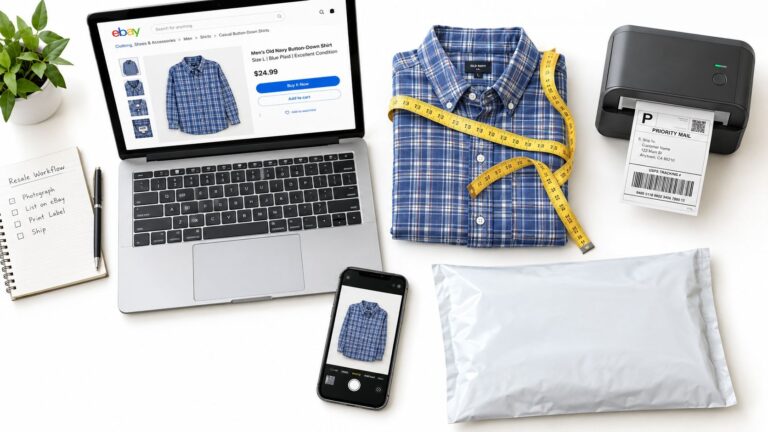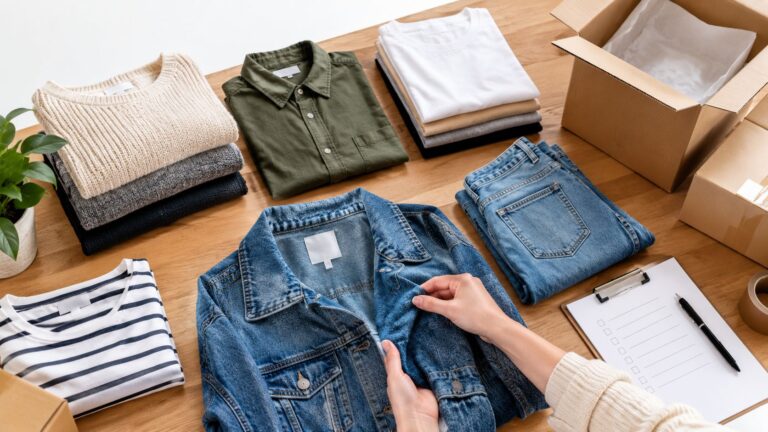
You've found a clothing lot that looks almost too inexpensive to ignore. The manifest lists familiar brands, the box price seems low, and the seller suggests that each piece could bring a healthy resale price. A few weeks later, your storage area is full, only the easiest items have sold, and the “cheap” inventory has started costing money through cleaning, markdowns, shipping, and tied-up cash.
That experience is common because bulk items for resale aren't automatically profitable. A low cost per unit only helps when the items match your customers, arrive in sellable condition, and move quickly enough to release your working capital. The decision involves condition mix, brand curation, listing effort, fulfillment cost, and sell-through velocity.
The opportunity is substantial. One industry report projects the global secondhand apparel market will reach $393 billion by 2030, representing about 10% of total global apparel spend, while another report places the market at around $257 billion in 2025 after 13% year-over-year growth. That shift makes resale a major retail channel, but it also raises the standard for inventory planning. Buyers have more options, and sellers need more disciplined sourcing.
Table of Contents
- Introduction Why Bulk Buying Feels Like a Shortcut Until It Is Not
- What Bulk Items for Resale Really Mean for New Resellers
- Comparing Bulk Lot Types and Their Trade Offs
- Where to Source Bulk Items for Resale Without Guesswork
- Pricing Bulk Lots and Protecting Your Margin
- Checklist for Evaluating Any Bulk Lot Before You Buy
- Conclusion Building a Repeatable Bulk Sourcing Strategy
Introduction Why Bulk Buying Feels Like a Shortcut Until It Is Not
A new boutique owner sees a box of apparel priced by the lot. Dividing the purchase price by the item count produces an appealing unit cost, and the plan seems simple: list each piece, collect the selling price, and keep the difference.
Profit depends on what happens after the box arrives. Some garments need steaming, stain treatment, measurements, repairs, or clearer descriptions before listing. Some brands will not fit the boutique's audience. Certain sizes and styles may sit for months. Even a sellable item can become unprofitable when storage, handling, fulfillment, and markdowns consume its margin.
Practical rule: A bulk lot is profitable only when resale revenue exceeds acquisition, handling, and fulfillment costs.
Bulk buying works like an inventory pipeline, not a bargain hunt. The lot type sets the risk profile. A curated box with consistent brands may cost more, yet reduce sorting and listing time. A blind pallet may offer more upside while bringing uneven conditions, duplicate styles, and items that do not suit the sales channel.
The 2025 resale market report describes continued momentum in secondhand apparel, supported by consumer demand, inflation sensitivity, and wider acceptance of used goods. That demand gives boutiques and online sellers room to grow, but it cannot make slow-moving inventory profitable.
Judge a lot by sell-through velocity as well as unit cost. Fast-moving pieces release cash for the next purchase, while slower inventory ties money to racks and storage. Leave a margin buffer for condition surprises, listing labor, shipping, and price reductions. Brand curation, condition mix, and the lot's fit with your customers determine whether the apparent savings become real profit.
The guide examines bulk inventory, lot types, sourcing channels, pricing, and pre-purchase checks. You'll learn how to match a lot to your audience, test its margin protection, and choose inventory that supports repeatable restocking.
What Bulk Items for Resale Really Mean for New Resellers
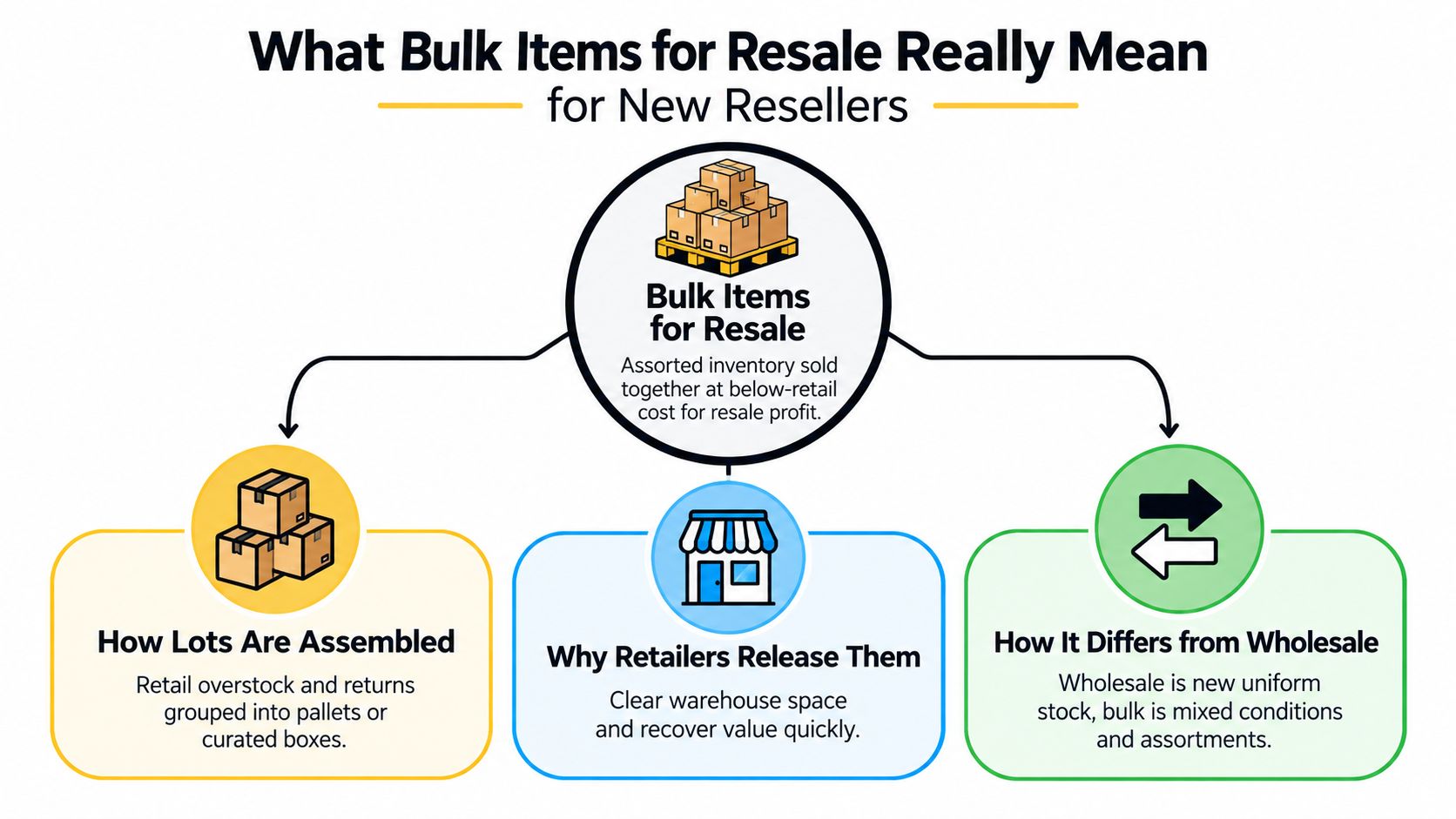
Bulk items for resale are multiple products sold together so a reseller can acquire inventory in one transaction and sell the units separately, in bundles, or through live selling. Apparel lots may contain overstock, customer returns, shelf-pulls, or items selected by brand, category, size, or condition.
A simple pantry analogy helps. Buying one meal at a time gives you maximum control, but it takes repeated shopping trips and usually costs more per item. Restocking the pantry in a larger trip saves time and may lower the average cost, but you must accept that some ingredients won't match your next meal. A bulk apparel lot works the same way. You gain purchasing efficiency, while accepting assortment and condition risk.
How the inventory gets grouped
Retailers release inventory for practical reasons. They may need warehouse space, want to recover value from goods that no longer fit the current selling cycle, or need a channel for returns and excess stock. A liquidation company or wholesale supplier then groups units into boxes, pallets, or curated lots for resale.
The listing language matters:
- Manifest: A document or listing that describes the lot's expected contents, such as brands, categories, quantities, or condition.
- Blind lot: Inventory where the buyer receives limited information about the exact units before purchase.
- Shelf-pull: Merchandise removed from retail shelves, often because of packaging changes, seasonal resets, or store-level decisions.
- Overstock: New inventory that remains after a retailer has more units than it can sell through its primary channel.
- Customer returns: Items sent back by shoppers. Their condition can range from unused to damaged or incomplete.
These terms don't guarantee a uniform outcome. A manifested lot can still contain variation, and “new” may describe an item's original retail status rather than the quality of its packaging. Ask how the supplier defines each condition grade and whether photographs represent the actual lot or a sample assortment.
How bulk differs from traditional wholesale
Traditional wholesale usually emphasizes uniformity. A boutique might order the same style in planned colors and sizes, with consistent packaging and predictable replenishment. Bulk liquidation focuses more on recovering value from existing inventory, so the assortment can be mixed by brand, style, size, and condition.
That distinction changes your workload. Uniform wholesale stock is easier to photograph, categorize, and reorder. Mixed bulk inventory may offer stronger brand variety, but each unit can require its own inspection and listing decisions. If a listing says only “name-brand apparel,” ask which brands, what size distribution, which condition grades, and how much of the lot is available for selection.
Comparing Bulk Lot Types and Their Trade Offs
A boutique with two staff members may need ready-to-list pieces, while a live-sale host can move varied items quickly through demonstrations and bundle offers. A marketplace seller who writes detailed listings may prefer fewer units with stronger resale potential. The suitable lot is the one your team can process fast enough to preserve sell-through velocity and a margin buffer.
Resale demand has expanded faster than traditional apparel retail, creating more potential buyers. That growth does not make every bulk lot profitable. Your real return depends on how quickly saleable units move after inspection, how much preparation the condition mix requires, and whether the brands fit your audience.
A practical comparison
| Lot Type | Typical Condition | Risk and Prep Level | Best Fit Seller |
|---|---|---|---|
| Liquidation boxes | Mixed, from new to previously handled | Moderate sorting and inspection | Newer resellers testing a category |
| Liquidation pallets | Broad mix, often uneven | Higher freight, sorting, storage, and condition risk | Experienced operators with space |
| Customer returns | Unpredictable, from unused to defective | High inspection and possible repair effort | Sellers with quality-control capacity |
| Shelf-pulls | Often new or lightly handled | Moderate packaging and presentation checks | Boutiques seeking current or recent styles |
| Overstock | Usually new and more consistent | Lower prep, but possible size or seasonal imbalance | Sellers seeking cleaner listings and repeatable presentation |
A liquidation box limits the first cash commitment and gives a new reseller a manageable quantity to inspect. Its broad brand mix can still make curation and listing work slow. A pallet may reduce freight per unit, yet that advantage matters only when enough units sell quickly to cover the larger purchase, storage, and processing burden. Review this guide to liquidation by the pallet before treating pallet volume as a simple cost-saving move.
Customer returns require the widest margin buffer. One returned sweater may be unworn, while another may carry makeup marks, missing tags, odors, or undisclosed wear. A return-heavy lot needs a grading process, repair rules, and an outlet for units that cannot meet boutique standards.
Shelf-pulls and overstock usually support cleaner photography and faster listings. Their risks are quieter: awkward size runs, discontinued colors, or seasonal timing can slow sell-through even when the merchandise is new. Match the assortment to your audience before buying. A low-prep lot with poor brand fit is still cash tied up in slow inventory.
Where to Source Bulk Items for Resale Without Guesswork
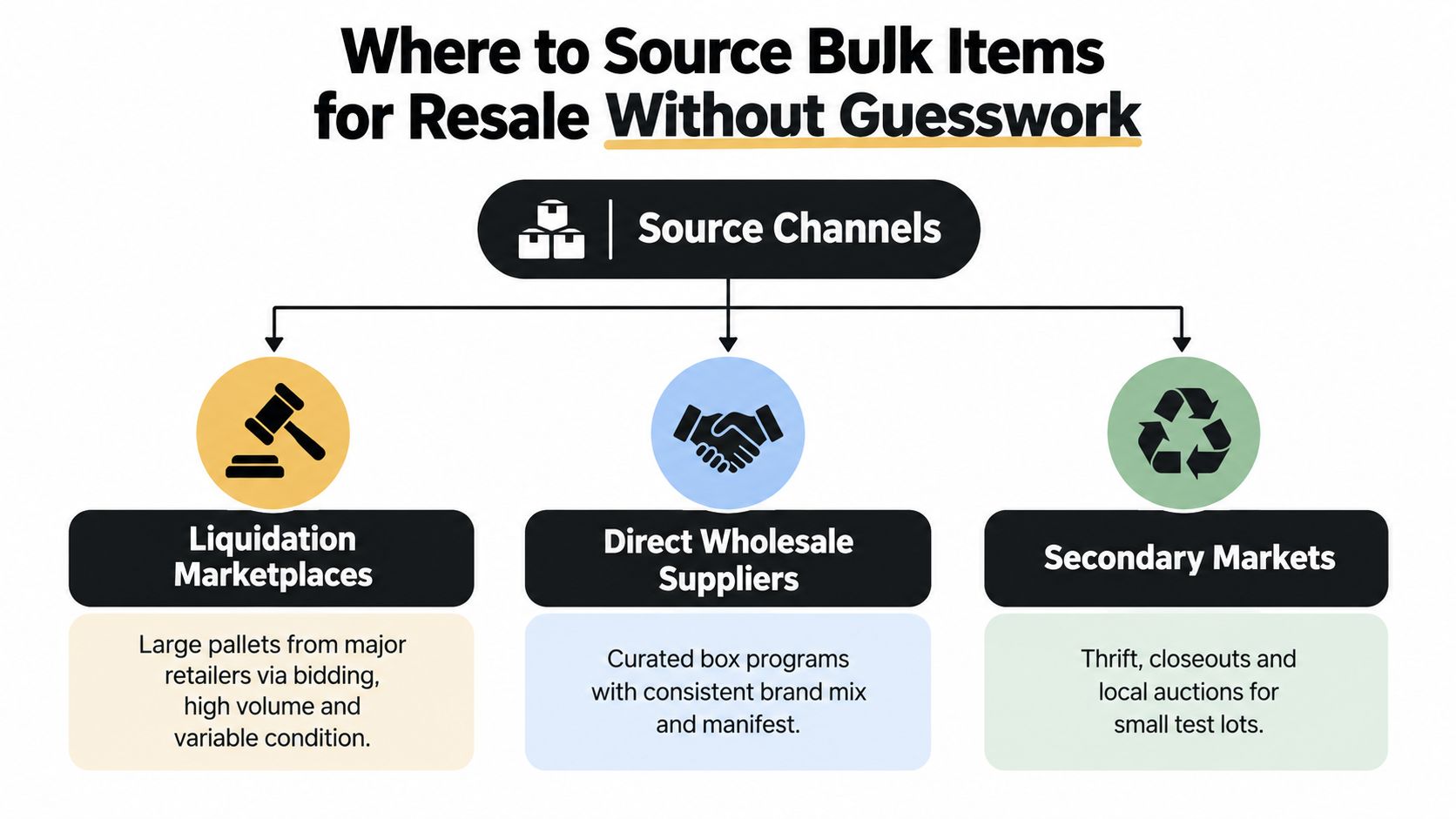
Sourcing channels are different supply paths, not interchangeable shopping destinations. Each path determines how much information you receive, how inventory is packed, whether you can influence the brand mix, and how easily you can reorder a successful lot.
Liquidation marketplaces
Liquidation marketplaces connect buyers with larger volumes of retailer inventory. Auctions can provide access to pallets and truckload-style assortments, but the buyer usually takes on more responsibility for freight, inspection, sorting, and disposal or discounting of poor units.
This channel can work for an established warehouse operation with a clear processing routine. It's less suitable for a new seller who has limited space or hasn't yet learned which brands, categories, and conditions their buyers will accept. A low bid doesn't compensate for a lot that takes too long to process.
Direct wholesale suppliers
Direct suppliers and curated box programs sit closer to a planned inventory model. They may provide clearer manifests, allow some brand or category preferences, and handle packing and fulfillment. That structure can make restocking easier because you can describe what worked in the previous order and request a more suitable mix.
For a boutique, curation can protect the store identity. For Poshmark, eBay, or Mercari sellers, it can reduce the number of irrelevant units that require separate research. For Whatnot hosts, a recognizable brand mix can make a live presentation more coherent, provided the condition and size assortment support the audience.
Secondary markets
Thrift aggregators, local auctions, closeouts, and regional resale channels can help you test a category with less commitment. They may offer smaller lots, but the supply is often inconsistent. You might discover strong inventory without having a reliable way to replenish it.
The broader market supports this careful testing approach. The U.S. secondhand apparel market recorded its strongest growth since 2021 and is projected to reach $74 billion by 2029, while the global secondhand market reached about $204.7 billion in 2024, according to the ThredUp resale themes report. As resale becomes more platform-driven, sellers need inventory that can be photographed, described, shipped, and replenished consistently.
Use the channel that matches your current constraint:
- Limited cash: Test through a smaller box or secondary-market lot.
- Limited time: Favor curated inventory with clear condition information.
- Limited storage: Avoid pallets until your sell-through supports the footprint.
- Need for restocking: Prioritize suppliers that can explain how future lots are assembled.
- Need for live selling: Choose recognizable categories and a condition mix you can describe quickly.
For local sourcing ideas, this guide to auctions for clothes can help you evaluate secondary channels without treating every auction as a guaranteed deal.
Pricing Bulk Lots and Protecting Your Margin
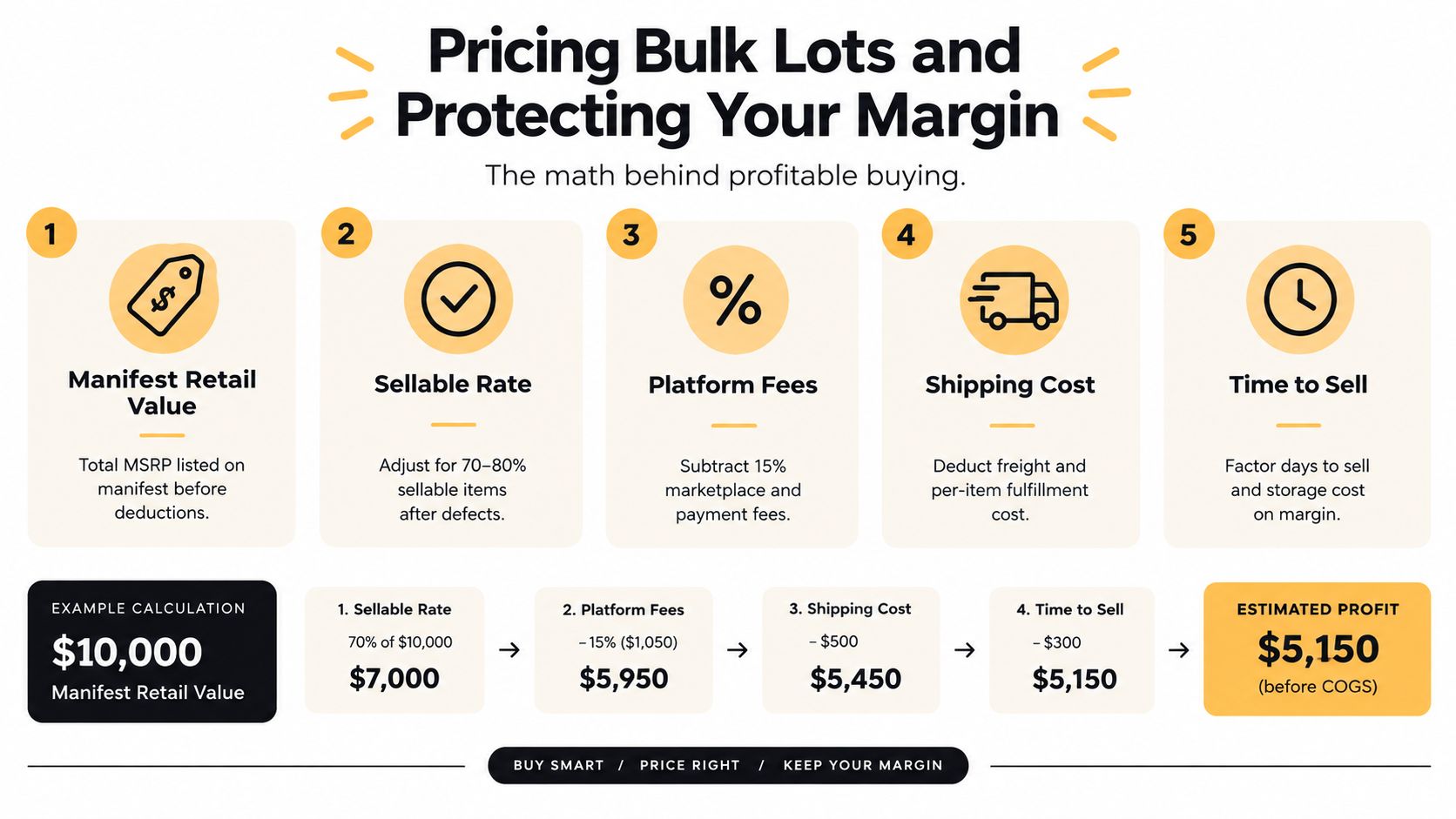
A bulk lot should pass a cost test before it passes an excitement test. Start with the manifest's retail value, then reduce that figure for units you may not sell, transaction fees, shipping, packaging, storage, and your own processing time. The amount left is the money available to pay for the lot and produce profit.
Build the calculation in layers
Use this sequence:
- Start with manifest retail value. Treat it as a reference point, not guaranteed revenue. The listed retail price doesn't tell you whether your audience will pay it.
- Estimate sellable inventory. Remove units likely to be damaged, incomplete, heavily worn, or unsuitable for your channel.
- Choose realistic resale prices. Mixed apparel often needs pricing below original retail to attract value-focused buyers.
- Subtract every operating cost. Include freight, marketplace fees, packaging, cleaning supplies, photography time, storage, and markdowns.
- Set a walk-away bid. Stop when the lot no longer leaves room for normal variance.
Independent liquidation guidance advises bidding no more than about 15–20% of manifest retail value, assuming 70–85% of items are sellable, and reselling at roughly 30–50% of retail to target a minimum 50% ROI after costs. These figures come from liquidation profit margin guidance, and they should be treated as a planning framework rather than a promise for every lot.
Why margin buffer matters
A margin buffer is the space between your expected revenue and your total cost. It protects you when a buyer negotiates, a platform takes its fee, a shirt needs cleaning, or a slower piece requires a markdown.
Consider two lots with the same unit cost. Lot A contains recognizable brands in common sizes and needs little preparation. Lot B contains more units, but many require measurements, stain checks, and individual style research. Lot B may look cheaper per piece, yet its labor and slower conversion can make it the weaker purchase.
Sell-through velocity also affects cash flow. Capital isn't freed when inventory arrives. It's freed when units convert into cash. Track how many items sell during a defined review period, which categories move first, and whether your remaining units need markdowns. A lot with a higher acquisition cost can outperform a cheaper lot if it sells steadily and avoids long storage.
Before you bid: Calculate the lot price, inbound shipping, expected sellable units, selling fees, preparation cost, and a realistic selling price for each major category.
Checklist for Evaluating Any Bulk Lot Before You Buy
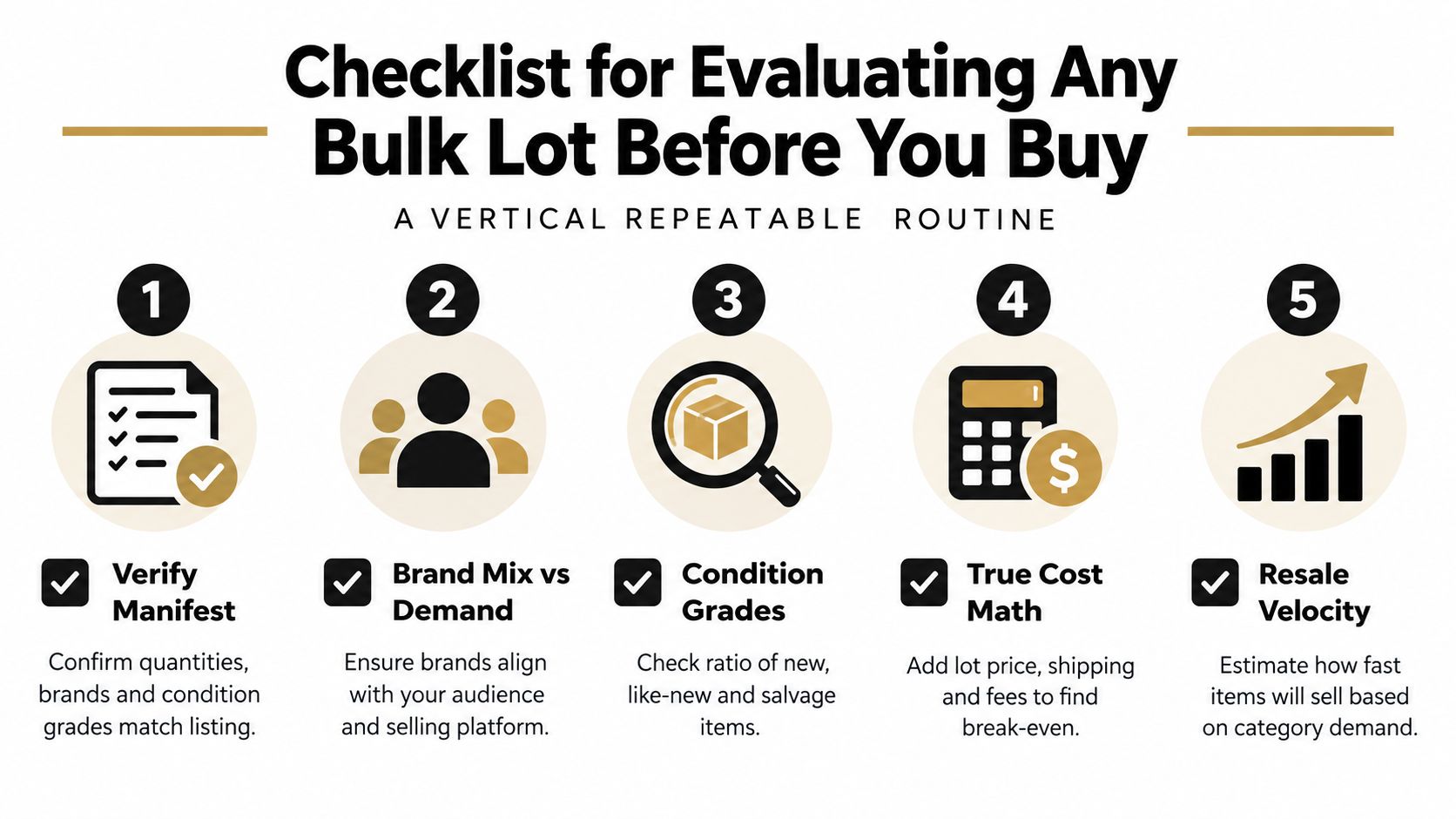
A repeatable inspection routine protects you from buying based on a persuasive photograph or a low headline price. Save the listing, manifest, seller messages, and shipping terms in one place so you can compare the promised lot with what arrives.
Verify the inventory description
- Read the manifest closely: Confirm the stated quantity, brand names, categories, sizes, and condition grades.
- Ask what “sellable” means: A supplier may consider an item sellable even when it needs cleaning, repair, or discount pricing.
- Check the photographs: Determine whether the images show the actual lot or a representative sample.
- Review fulfillment terms: Confirm shipping responsibility, expected dispatch timing, and the process for reporting discrepancies.
Match the lot to real demand
Brand recognition matters only when your customers recognize and want those brands. Compare the assortment with your sales history, marketplace search behavior, boutique price points, and the formats you use to sell.
A broad mix can work for a live-sale host who presents value quickly. A narrower selection may suit a curated boutique where shoppers expect a consistent aesthetic. Don't buy a brand-heavy lot because the names look impressive if the sizes, styles, or condition conflict with your audience.
Inspect the condition and assortment
Look for the ratio of new, like-new, gently used, and salvage units. Then check whether the lot is balanced across sizes, seasons, categories, and styles. A box dominated by one size or one seasonal category may create dead stock even when every garment is attractive.
Track the lot against apparel sell-through benchmarks. Industry benchmark pages commonly place healthy sell-through around 50–70% for fashion and 60–80% for wholesale-style inventory. Performance below those ranges can indicate markdown pressure and slow turnover, as outlined by apparel sell-through benchmarks.
Confirm your operational capacity
Before placing the order, answer five practical questions:
- Where will the inventory go when it arrives?
- How many pieces can you inspect and prepare each week?
- Which items will you list individually, bundle, or sell live?
- Can your cash flow tolerate a slower first cycle?
- What will you do with units that fail your quality standard?
A mystery box wholesale guide can help you think through the difference between discovery value and predictable inventory planning. The key is to decide your tolerance before purchase, not after opening the box.
Conclusion Building a Repeatable Bulk Sourcing Strategy
Profitable bulk sourcing starts with a small, controlled test. Choose a lot that matches your audience, record the condition and brand mix when it arrives, and track each unit from intake to listing to sale. Measure sell-through, realized selling price, preparation time, and total cost, not just the original unit price.
If the test performs well, scale gradually. Ask the supplier whether you can repeat the same brand preferences, category balance, size range, or condition standard. A reliable inventory pipeline should become more predictable with each order, rather than forcing you to gamble on a completely different assortment every time.
Your first lot doesn't need to produce a perfect result. It needs to teach you which inventory your customers buy, which pieces consume too much labor, and which pricing assumptions were unrealistic. That information is more valuable than a dramatic discount that leaves your cash trapped in unsold stock.
Return to the opening scenario and change the question. Don't ask, “How cheap is this box?” Ask, “How quickly can I turn the right units into cash, and how much margin remains after the difficult units?” That shift helps you choose boxes, pallets, and custom lots as an inventory planner instead of a bargain hunter.
OneTrendyCloset offers curated brand-name apparel liquidation boxes, mix-and-match brand selection, and custom quotes for larger lots, with packing and shipping handled for resellers, boutiques, and live-sale hosts. Visit OneTrendyCloset to review sourcing options and choose a bulk apparel lot that fits your budget, audience, and restocking plan.