You're staring at a wholesale listing that promises a low cost per shirt. The photos show bold graphics, familiar brands, and a mix that looks easy to resell. It's tempting to buy before someone else takes the lot, but a cheap tee can become expensive inventory once you account for cracked prints, awkward size mixes, weak demand, shipping, platform fees, and markdowns.
The better question isn't how much each shirt costs. It's whether the design family, garment construction, print quality, and resale channel fit together well enough to produce a sale. The global T-shirt market was valued at USD 185.2 billion in 2024 and is projected to reach USD 221.5 billion by 2032, with a projected 4.1% CAGR, according to Impressions Magazine's global T-shirt market forecast. Demand exists, but broad demand doesn't tell you which box belongs in your cart.
Table of Contents
- Why Most Resellers Get Graphic Tee Sourcing Wrong
- Which Graphic Tee Subcategories Deserve Your Wholesale Dollars
- Wholesale Channels That Actually Supply Graphic Tees
- Fabric Weight, Fabric Type, and Print Method Matched Together
- Sorting and Curating a Graphic Tee Box for Resale
- Where to Sell Graphic Tees by Category
- Pricing, Margins, and a Sourcing Rule for Next Order
Why Most Resellers Get Graphic Tee Sourcing Wrong
The first mistake happens before the order is placed. A reseller sees a low unit price and treats it as proof of value, even though the listing may hide inconsistent sizing, weak fabric, damaged collars, or graphics that only look attractive in supplier photographs. Wholesale graphic tees are a matching problem, not a price-shopping problem.
Low cost can conceal weak resale value
Print durability deserves attention before margin calculations. A graphic that's already lifting at the edges or showing deep cracks won't become more desirable after shipping and handling. Ask for close-up photographs of the print, request condition notes, and check whether the supplier separates new overstock from customer returns or shelf-worn stock.
The second error is accepting a “one-size-fits-most” mix. A box loaded with unusual sizes, cropped cuts, or inconsistent silhouettes may have a low average cost but force you to bundle, discount, or hold pieces far longer than planned. A dependable size run matters because buyers shop for fit first and graphic second, especially when your store doesn't have a strong niche identity.
The third error is ignoring the demand inside your selling venue. A licensed entertainment graphic may work on eBay or a live auction, while an oversized retro design could perform better on Depop. A personalized small-batch tee may suit a boutique storefront, but it can struggle on a marketplace where buyers compare it against established brands.
Practical rule: Don't buy a graphic tee because it's inexpensive. Buy it because you can name the buyer, the channel, and the acceptable selling price before the inventory arrives.
Use a matching decision before you order
Evaluate each potential lot against three questions:
- Product fit: Does the fabric support the graphic and feel appropriate for the intended price?
- Demand fit: Does the design belong to a repeatable category, or is it tied to a short-lived joke?
- Channel fit: Can your chosen platform present and sell that category without heavy discounting?
The rest of the buying decision follows those answers. You'll need to compare subcategories, choose a sourcing channel, pair fabric with print method, sort each incoming box, assign inventory to the right venue, and calculate the full cost before reordering.
Which Graphic Tee Subcategories Deserve Your Wholesale Dollars
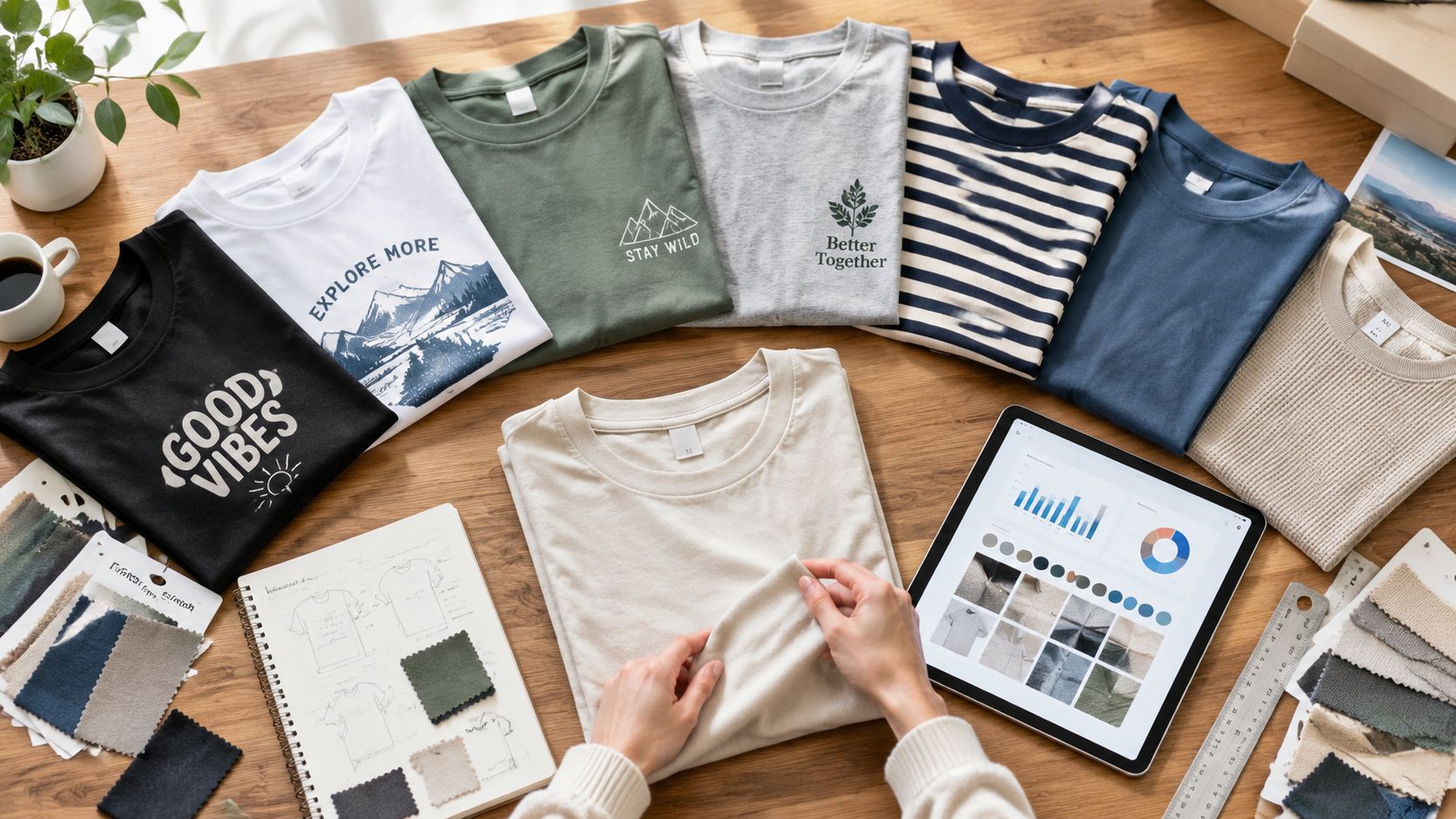
Not every graphic trend deserves equal inventory space. Recent reporting places the global graphic tees market at USD 31.8 billion in 2025 and projects USD 47.99 billion by 2031, with streetwear, entertainment merchandising, and e-commerce identified as growth drivers in Deep Market Insights' graphic tees market report. That broad outlook supports demand, but your buying decision still depends on the design family and how consistently you can source it.
Start with categories that have recognizable buyers
Licensed fandom and band merchandise often has the clearest buyer intent. Fans search for specific artists, franchises, teams, and eras, which gives you stronger listing language than a generic “cool graphic tee.” Authenticity matters, though. Unverified or off-licensed graphics create listing risk and can leave you with merchandise you can't responsibly sell.
Oversized and drop-shoulder fits work when your audience already shops streetwear or relaxed silhouettes. They photograph well from the front, and the larger print area gives a design more visual impact. The trade-off is fit uncertainty. Include measurements, shoulder width, body length, and sleeve shape, rather than relying on a generic size label.
Y2K and retro revival graphics can produce repeatable visual merchandising because buyers understand the references quickly. Washed colors, collegiate layouts, motorsport elements, old-school typography, and nostalgic entertainment themes can sit together in a coherent collection. Don't assume every vintage-looking tee is valuable. The graphic, condition, fit, and brand still determine whether it earns a premium.
Personalized and small-batch tees offer flexibility because you can test a narrow lifestyle theme without committing to a broad catalog. Market coverage identifies personalization and digital customization as important shifts, while also noting that niche-lifestyle graphics may scale more practically than generic sustainability messaging in Accio's graphic tee trend coverage. Labor, proofing, and customer communication become the cost here.
Categories that create dead stock
Hyper-niche meme shirts tied to passing news cycles can attract attention online and still sit in your inventory. The graphic may be instantly recognizable for a short period, but it lacks evergreen search demand and becomes difficult to explain once the reference cools.
Use tie-dye carefully, too. It can support festival, retro, and casual lifestyle collections, but color variation makes consistent reorders harder. If that look fits your assortment, compare the blank options in this guide to tie-dye blanks for resellers before buying a mixed lot.
| Subcategory | Turnover Profile | Seasonality | Wholesale Availability |
|---|---|---|---|
| Licensed fandom and band merch | Strong when authenticity and subject are clear | Event and release spikes, with evergreen fan demand | Often available through overstock, closeouts, and branded lots |
| Oversized and drop-shoulder | Good in style-led channels with accurate measurements | Can strengthen during fashion-led buying periods | Available through blanks, private-label suppliers, and trend lots |
| Y2K and retro revival | Repeatable when graphics share a recognizable visual language | Moderate, with occasional trend spikes | Common in printed assortments and custom production |
| Streetwear statements | Uneven, depends heavily on design quality and audience | Trend-sensitive | Available, but quality varies widely |
| Personalized and small-batch | Good for controlled tests and direct customer relationships | Can follow events, gifting, or local demand | Best through blank suppliers and print partners |
Rank categories by search intent, size consistency, photography appeal, and replenishment potential. If your channel is eBay-heavy, start with recognizable fandom and branded graphics. If you sell through Depop, prioritize oversized, retro, and visually distinctive pieces. If you run a boutique, give personalized designs room only after you understand the labor and return implications.
Wholesale Channels That Actually Supply Graphic Tees
The right sourcing channel depends on whether you need authenticity, consistency, speed, or design control. No channel delivers all four without compromise.
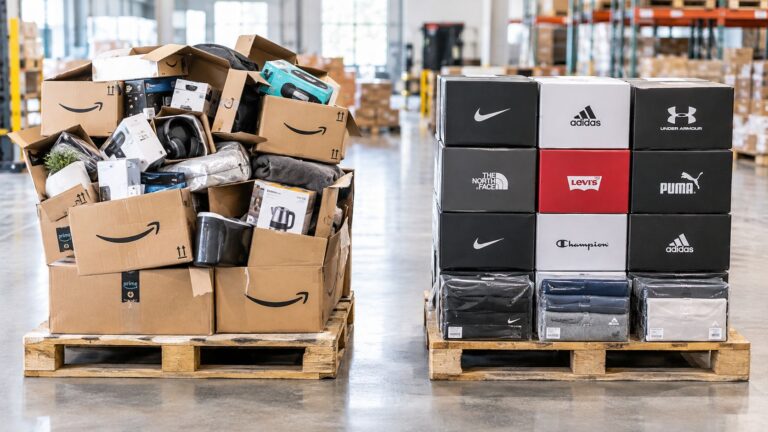
Branded apparel liquidation pallets suit resellers who can process volume and tolerate uneven assortments. You may find authentic overstock at an attractive acquisition cost, but condition, color, style, and size distribution can vary. Inspect the manifest carefully, ask how returns and defects are handled, and assume that some pieces will require a different selling channel.
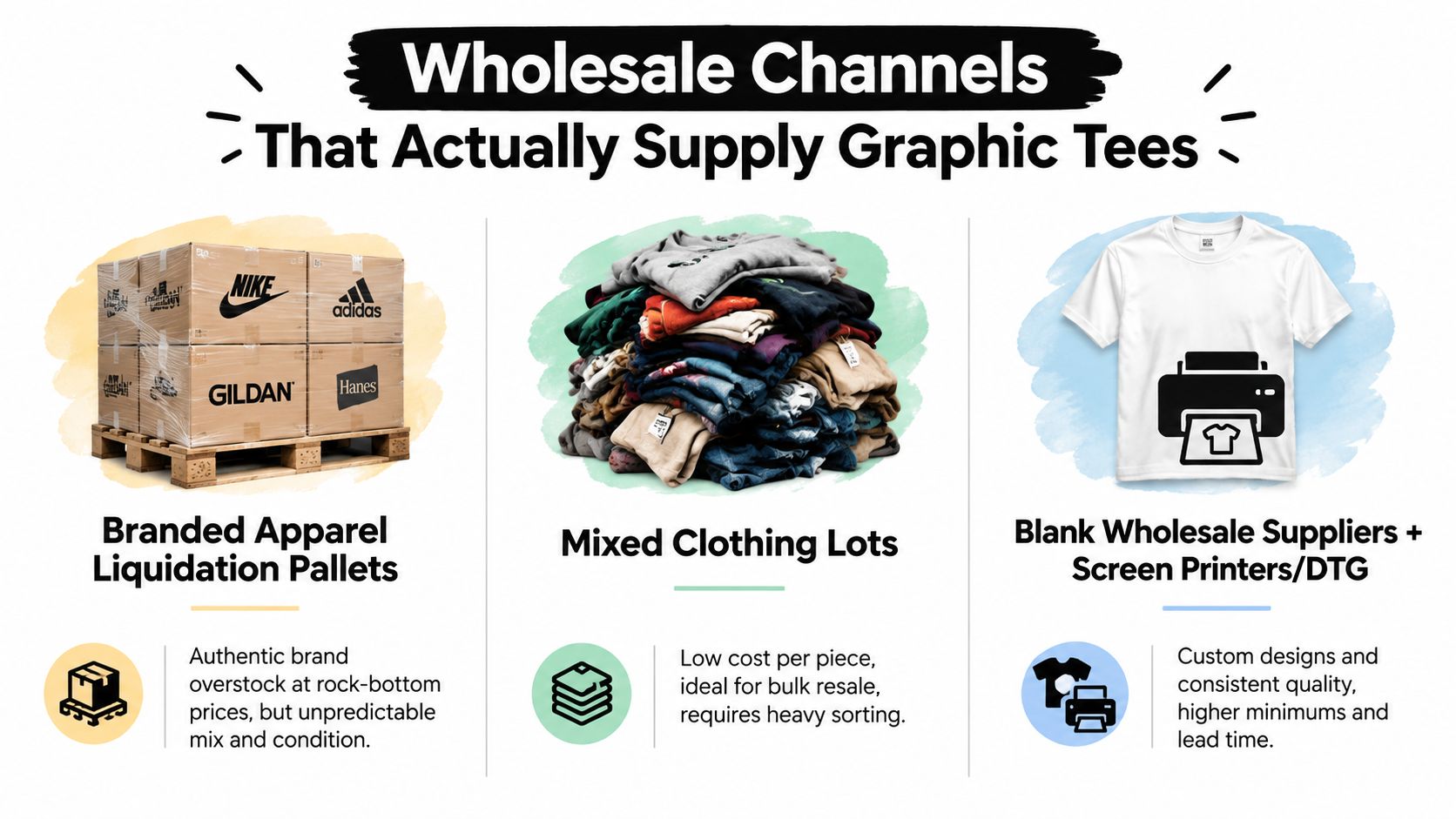
Mixed clothing lots lower the barrier to bulk buying, but they move the work onto your kitchen table. They're useful for live sales, bundle listings, and low-margin volume resale when you already have a sorting system. They're a poor fit for a tightly edited boutique collection unless the supplier gives you meaningful control over brands and categories.
Match the channel to the category
Blank wholesale suppliers paired with screen printers or DTG partners give you the most control over design, garment weight, and size runs. They're a practical route for personalized tees, niche lifestyle graphics, and small collections. The trade-offs are minimum order requirements, production lead time, artwork setup, and the possibility that an attractive design still doesn't sell.
Print-on-demand platforms are useful for testing artwork before holding finished inventory. They reduce upfront stock risk, but the per-unit economics, fulfillment experience, and quality control may be less favorable than a successful bulk run. Treat them as a demand-testing tool, not an automatic replacement for wholesale sourcing.
Closeout brokers and direct brand overstock can sit between liquidation and conventional wholesale. They're often more suitable for branded fandom, band, or fashion graphics when you need a cleaner assortment and stronger listing confidence. Verify authenticity, condition, size depth, and whether the lot contains discontinued styles that your buyers won't recognize.
Before paying: Ask for the actual size breakdown, defect policy, print-condition photographs, brand documentation where relevant, and the minimum quantity required for a reorder.
Choose liquidation for high-volume flips, blank-plus-print for controlled design tests, closeouts for cleaner branded inventory, and mixed lots only when your resale channel can absorb the sorting burden. A supplier's advertised unit cost means little if the lot doesn't match your category ranking.
Fabric Weight, Fabric Type, and Print Method Matched Together
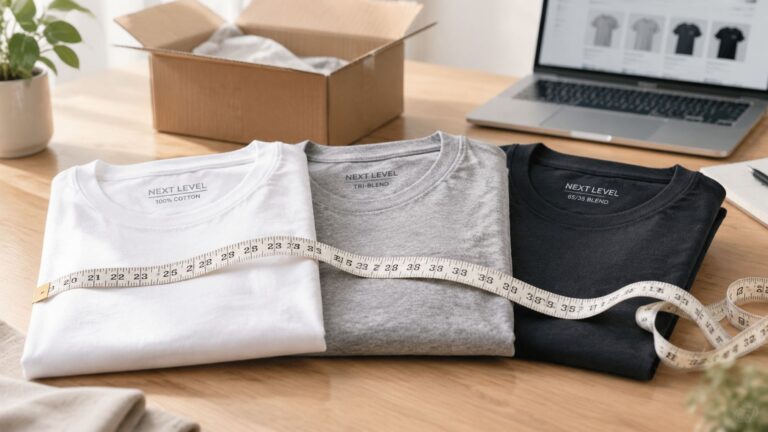
A tee's fabric weight, fiber content, and decoration method should be evaluated as one system. Fabric weight affects the surface and hand-feel, while fiber content influences ink absorption, stretch, color behavior, and wash performance. The print method then determines whether the finished garment feels flexible and integrated or stiff and poorly bonded.
For most print methods, 160 to 180 GSM is commonly identified as the practical sweet spot, according to Zorwild's wholesale tee guidance. Garments under 140 GSM may distort under print pressure and can experience ink bleed or faster fading, while 180 to 220 GSM creates a denser, more structured surface suited to premium retail and streetwear positioning. Those ranges are buying signals, not guarantees. Knit density, finishing, and print execution still matter.
Pair the surface with the decoration
A 180 GSM ringspun cotton tee gives plastisol screen printing a stable, substantial surface. The print can sit cleanly without making the garment feel flimsy, and the heavier hand supports a premium streetwear presentation.
A 140 GSM triblend behaves differently. Its softness and stretch can make it attractive for a worn-in fashion tee, but a thick plastisol patch may feel rigid against the lighter fabric. DTG, water-based ink, or a carefully tested transfer generally makes more sense when you want the print to remain flexible.
Discharge ink fits best with midweight natural fibers because it replaces or softens the dye inside the cotton rather than building a heavy layer on top. It can produce a comfortable hand, but results vary by dye, fabric treatment, and color. Always test a sample before committing to a wholesale run.
| Fabric Weight & Type | Best Print Method | Avoid | Resale Note |
|---|---|---|---|
| Lightweight 100% cotton | DTG, light transfers, selective water-based printing | Heavy plastisol coverage | Drapes well, but show measurements and inspect opacity |
| Midweight ringspun cotton | Screen printing, DTG, DTF after testing | Poorly cured heavy graphics | Strong everyday option with broad buyer appeal |
| Midweight triblend | DTG, water-based ink, flexible transfers | Thick plastisol on stretch fabric | Soft hand-feel helps premium positioning |
| Heavyweight cotton | Screen printing, selected DTF applications | Oversized graphics without a platen test | Structured silhouette suits streetwear and premium retail |
| Polyester-rich fabric | Sublimation where compatible, tested transfers | Unverified ink and heat settings | Color and performance depend heavily on the fiber mix |
Red flags include a “100% cotton” tag paired with a visibly sheer body, plastisol sitting like a plastic badge on a thin triblend, and an oversized design that looks warped across a heavyweight drop shoulder. For another decoration-specific comparison, review sublimated T-shirts for resellers. Buyers often forgive a modest graphic, but they rarely forgive peeling, cracking, or a cardboard-like print.
Sorting and Curating a Graphic Tee Box for Resale
A 50-unit mixed apparel lot arrives on a reseller's kitchen table. The profitable work starts before anything gets photographed. Open the box, separate the shirts by condition and category, and don't let the average cost persuade you to list pieces that will create complaints.
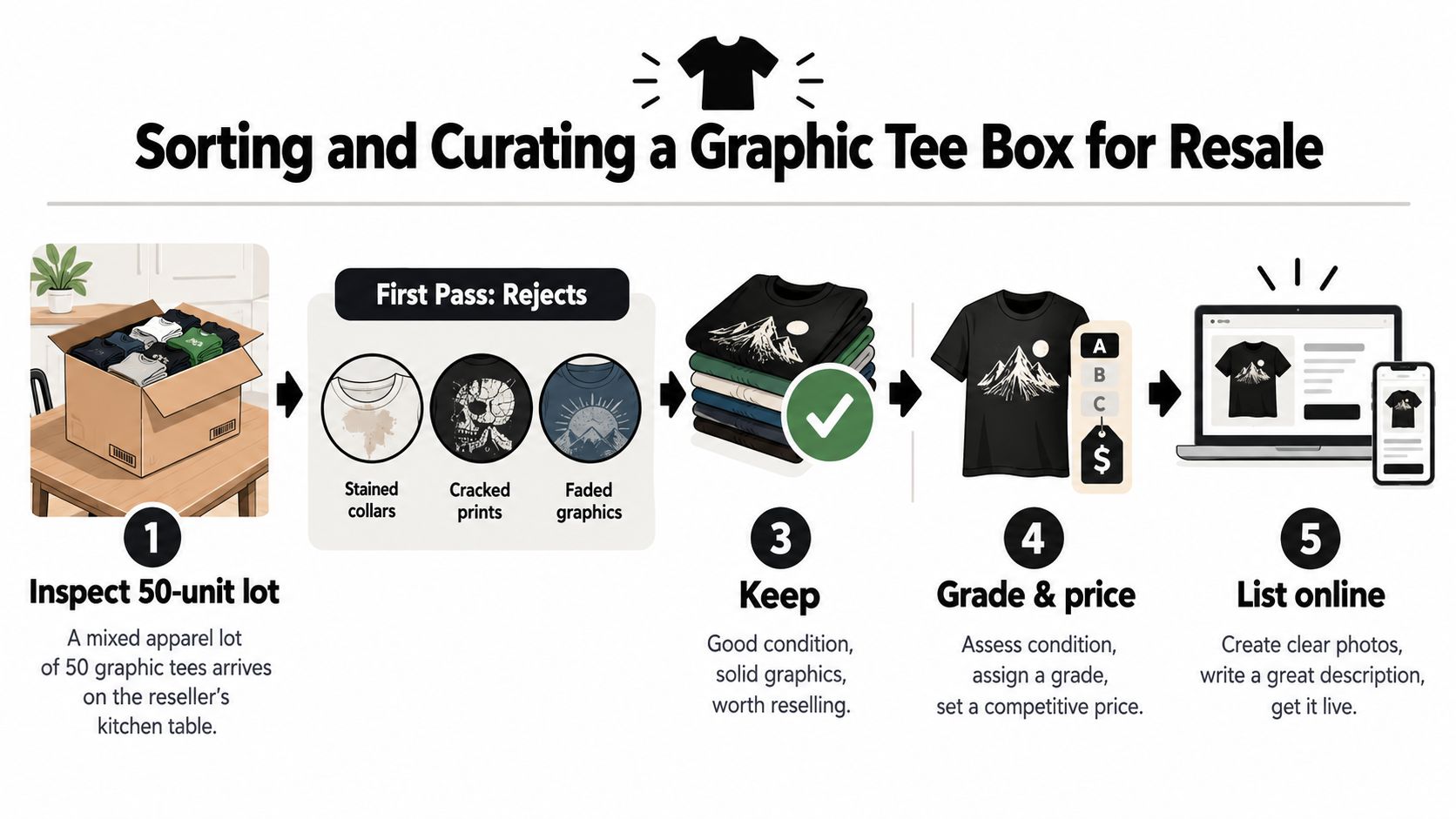
Make the first pass ruthless
Pull obvious rejects immediately:
- Stained collars: Small discoloration near the neck is highly visible in photographs and can suggest poor hygiene to a buyer.
- Cracked or lifting prints: Don't confuse an intentional vintage effect with uncontrolled peeling.
- Broken seams: Check underarms, side seams, hems, and shoulder joins before steaming.
- Faded graphics: A washed design can sell when intentional, but uneven fading usually reads as damage.
- Questionable licensing: Separate graphics that appear copied, altered, or unsupported from authentic branded merchandise.
The keep pile should contain shirts with a clear category, wearable construction, and a graphic that photographs without explanation. The bundle pile can include clean basics with weaker individual appeal, provided the sizes and style make sense together. A three-pack of coordinated casual tees may recover value that a single listing can't, but don't use bundles to hide defects.
Photograph the actual garment
Lay each keeper flat on a neutral background, smooth the sleeves, and show the full front graphic. Add a back photograph when the design continues across the garment, then photograph any flaw instead of burying it in the description. Supplier stock photos often look polished but convert worse for resale because they don't prove that the exact shirt, size, wash, and condition are in your possession.
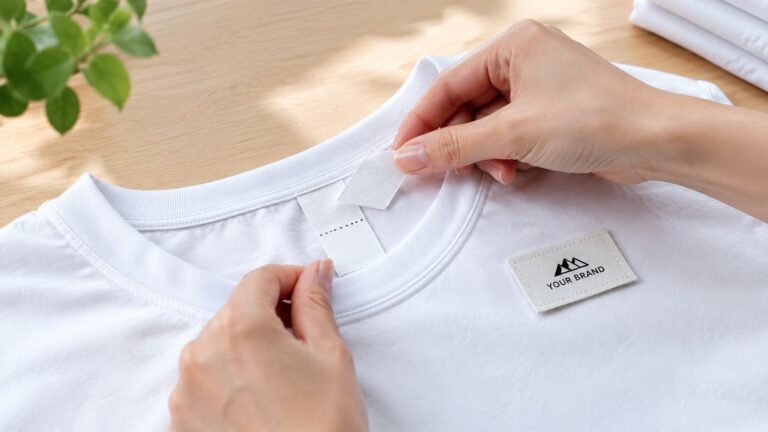
A real phone photograph on a clean white sheet can answer more buyer questions than a studio image of a different colorway. Include measurements, fabric feel, tag details, and a direct condition grade. For tag and relabeling considerations, see this guide to tear-away tag T-shirts.
The final sorting decision determines the channel. Clean licensed pieces can go to eBay or a live auction, oversized style-led tees belong in visual marketplaces, and lower-demand but wearable basics may work as bundles or lower-priced listings. Anything stained, structurally damaged, or legally questionable should be donated, recycled, or used as a rag, not pushed onto an unsuspecting buyer.
Watch the inspection sequence in action before you build your own repeatable workflow:
Where to Sell Graphic Tees by Category
A channel is part of the product decision. The same shirt can sell quickly in one venue and remain invisible in another because buyers use different search habits, price expectations, and style filters.
eBay and Whatnot are strong candidates for licensed fandom, band merchandise, and recognizable branded graphics. eBay supports specific searches and condition detail, while Whatnot lets a seller explain the graphic, size, and flaws in real time. Live selling can clear mixed inventory, but only if the audience already trusts your category knowledge.
Depop and TikTok Shop suit oversized, Y2K, retro, and streetwear-adjacent designs that depend on styling and visual energy. A flat-lay listing can work, but an outfit video or strong model presentation usually communicates the silhouette better. Don't send a generic basic tee into a highly style-led channel unless the graphic has a clear hook.
Build the channel around the buyer
Personalized and small-batch designs generally fit a boutique or Shopify storefront better than a broad marketplace. A direct storefront gives you room to explain the story, show related products, capture repeat demand, and price around design and service instead of competing only on garment cost.
Mercari can work for midweight vintage-style basics and accessible branded tees, especially when your photography and measurements make the listing easy to evaluate. Poshmark is convenient for casual branded resale, but low-priced basics can become a margin trap once shipping expectations, platform rules, and return-related handling enter the calculation.
| Graphic Tee Category | Strongest Channel | Secondary Channel | Watch Out For |
|---|---|---|---|
| Licensed fandom and band merch | eBay, Whatnot | Consignment | Authenticity questions and incomplete size runs |
| Oversized streetwear graphics | Depop, TikTok Shop | Boutique retail | Poor measurements and weak silhouette photography |
| Y2K and retro revival | Depop | eBay, boutique retail | Generic graphics without a recognizable reference |
| Personalized small-batch designs | Shopify, boutique storefront | TikTok Shop | Labor, proofs, customer changes, and returns |
| Midweight vintage-style basics | Mercari | Poshmark, consignment | Low price ceilings and slow listing economics |
| Mixed lower-demand tees | Whatnot bundles | Marketplace multipacks | Buyers may expect deep discounts |
A boutique DTC store can support a curated graphic tee at a higher retail position than a commodity marketplace, but the product needs better photography, presentation, and customer service. Don't copy one listing across every venue and expect the same result. Assign each piece to the channel where its category and presentation make sense.
Pricing, Margins, and a Sourcing Rule for Next Order
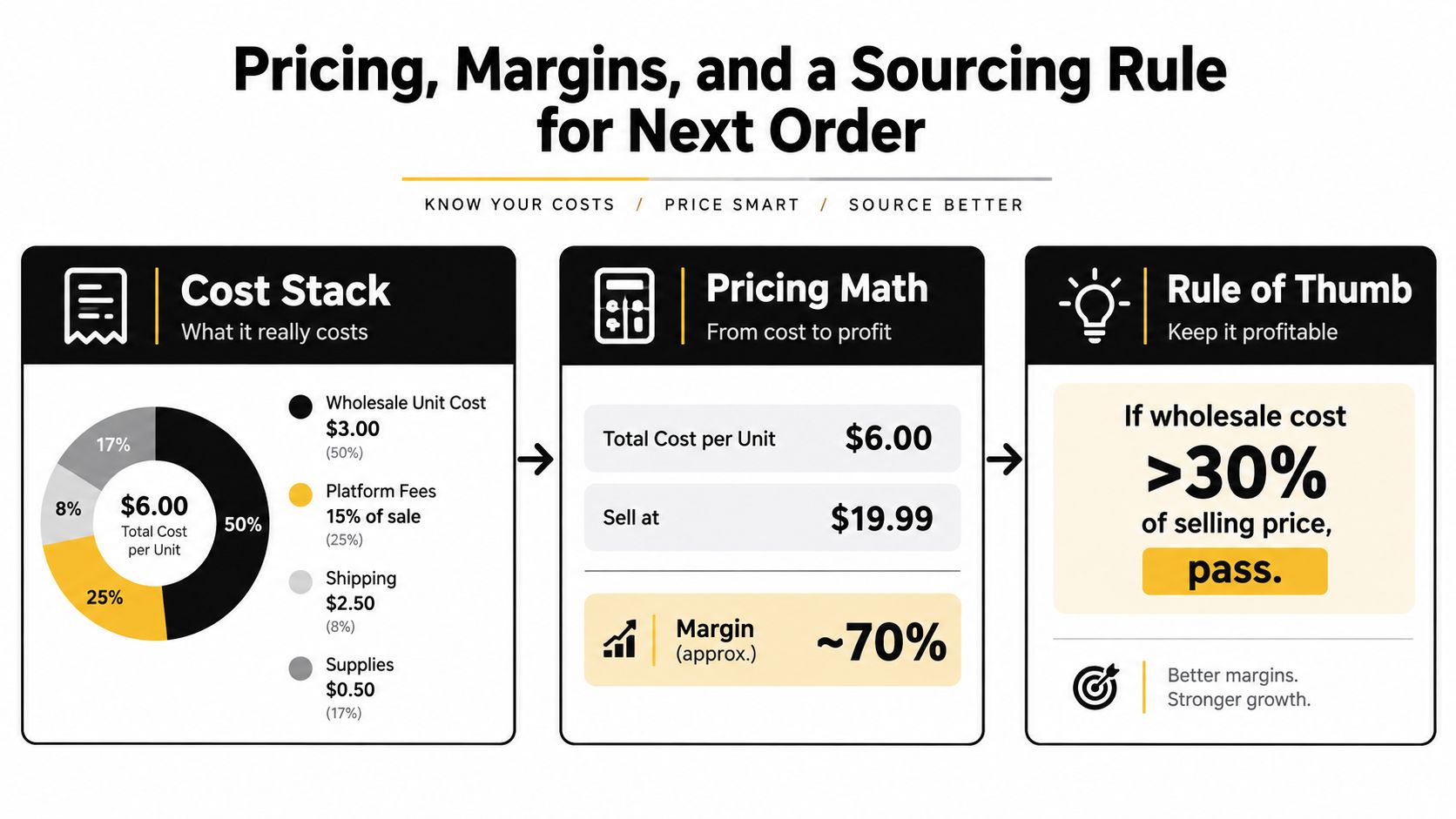
Pricing starts with the complete cost stack, not the supplier's unit price. Record the wholesale cost, inbound freight, packaging, platform fees, outbound shipping, labor, and a reserve for returns or defects. A shirt that appears profitable at checkout can become weak after every cost reaches the spreadsheet.
The infographic below uses the supplied example structure, but treat it as a framework rather than a universal margin promise.
Price by what creates the value
Licensed fandom tees price around authenticity, scarcity, condition, and subject recognition. If the design is common and the size is difficult, the market will push back even when the brand name looks impressive.
Oversized blanks and streetwear graphics need bundle and assortment math. Their value often comes from the total presentation, so calculate whether several coordinated pieces can produce a worthwhile order rather than assuming every individual shirt deserves a premium.
Personalized tees price around labor as much as fabric. Include artwork preparation, customer messages, proofs, production time, and the cost of replacing a misprint. A design that sells at a good retail price can still be a poor product if each order consumes too much manual work.
For a simple test, take the expected selling price and subtract every known cost before you buy. If the remaining contribution doesn't justify photography, listing, storage, packing, customer service, and return exposure, reject the lot.
Sourcing rule: If a tee can't clear your target multiple after fees, shipping, defects, and returns, it doesn't go in the cart, no matter how fashionable the graphic looks.
That rule protects you from the most common liquidation mistake, treating every unit as equally sellable. Price the best pieces individually, bundle coherent lower-demand items, and remove damaged or questionable inventory before it consumes listing time. Reorder only the categories that produced clean sales and manageable fulfillment, not the categories that generated the most excitement during sourcing.
OneTrendyCloset offers curated brand-name apparel liquidation boxes, mixed-brand assortments, and custom lot quotes for resellers who need graphic-friendly inventory without building every box from scratch. Review the available options at OneTrendyCloset, compare the lot format with your target resale channel, and request a mix that fits your budget and category plan.